We haven’t yet set foot on Antarctica and already I think this is going to be one of our most epic trips ever. As I write, we have been on the National Geographic Endurance ship for just over a day and we are already more than halfway across the infamous Drake’s Passage. We are making excellent time as we have been very fortunate with the sea conditions as they have been very smooth, with waves only up to about 3-4m and reasonable wind speeds. As a result, we may actually make land tomorrow morning, after breakfast, and so do our first expedition first thing in the morning!! Its VERY exciting. AND as a bonus, I haven’t felt in the least seasick – this boat is simply amazing.
This is going to be a quick post as we have already done so much, I don’t want to fall further behind! I will spend a bit longer taking you round the ship, our cabin and all the various different amenities and fun areas to explore (including, hopefully, the igloo on the deck of the ship where we will spend a night!) -but for now, here’s what we’ve already done over our last 2 days that will give you a flavor of what our life on board is going to look like.
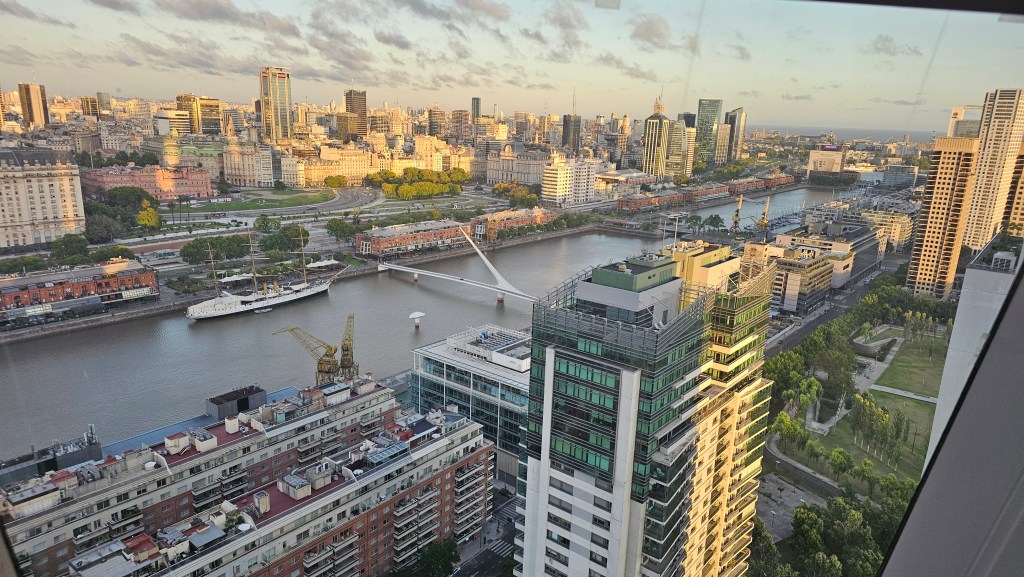
- Officially started our Nat Geo trip by checking into the Alvear Icon hotel in Buenos Aires
- Attended the welcome dinner and mandatory briefing about our transit to Ushuaia
- Early morning transfer to EZE airport at 6.40am
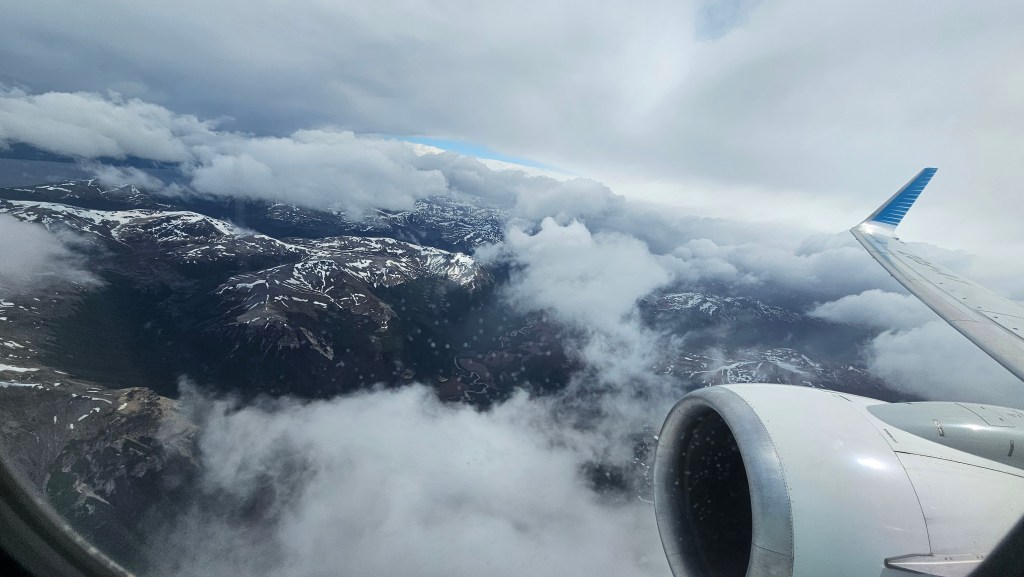
- 3hr flight to Ushuaia
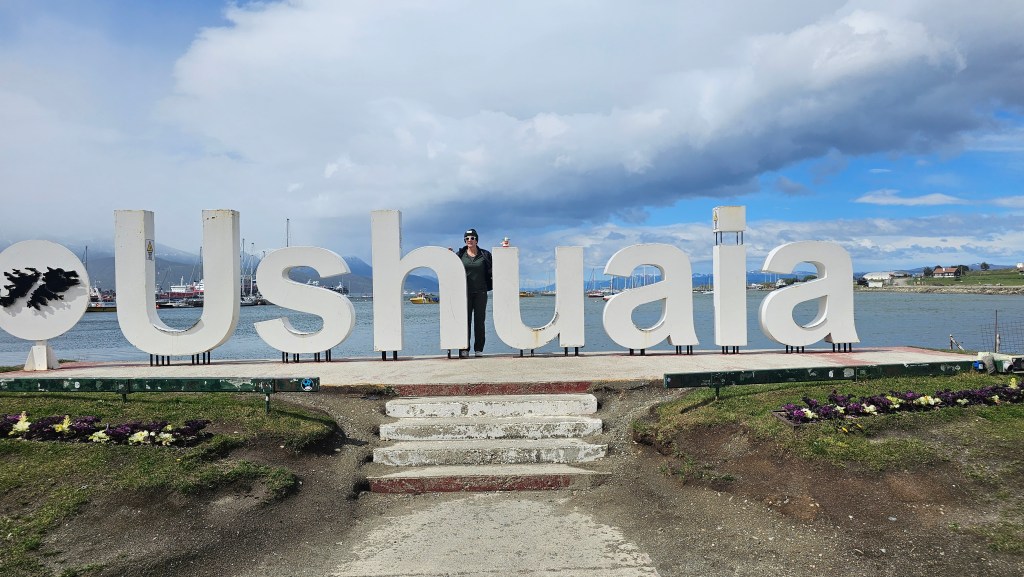
- Selfies at the Ushuaia town sign
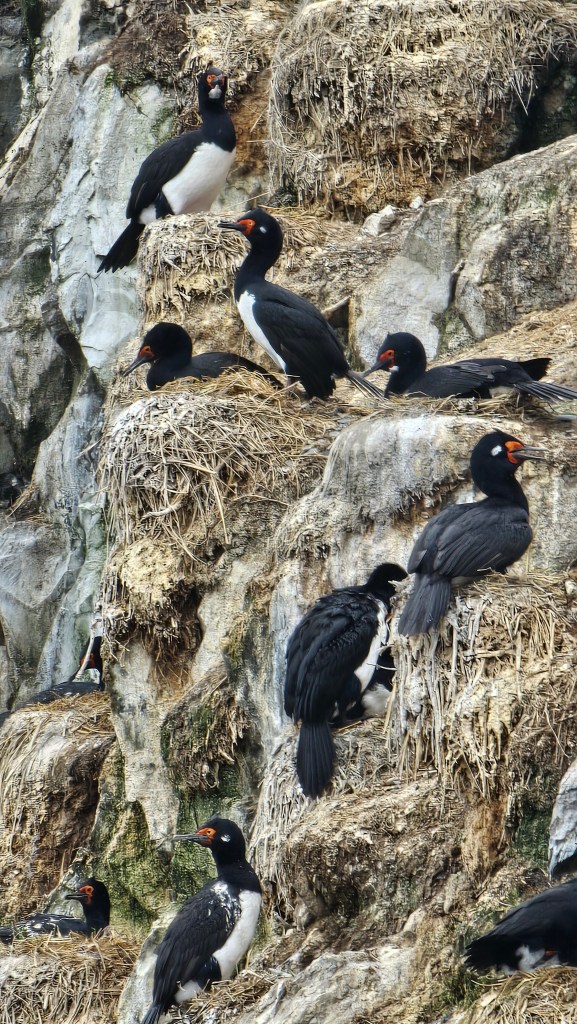
- 2hr lunchtime excursion on a catamaran in Ushuaia harbor (we didn’t really go anyway due to incoming inclement weather – plus the whole trip was basically a way to keep us all occupied while they loaded up the ship with supplies and our luggage). Saw a few birds nesting on an island in the harbor
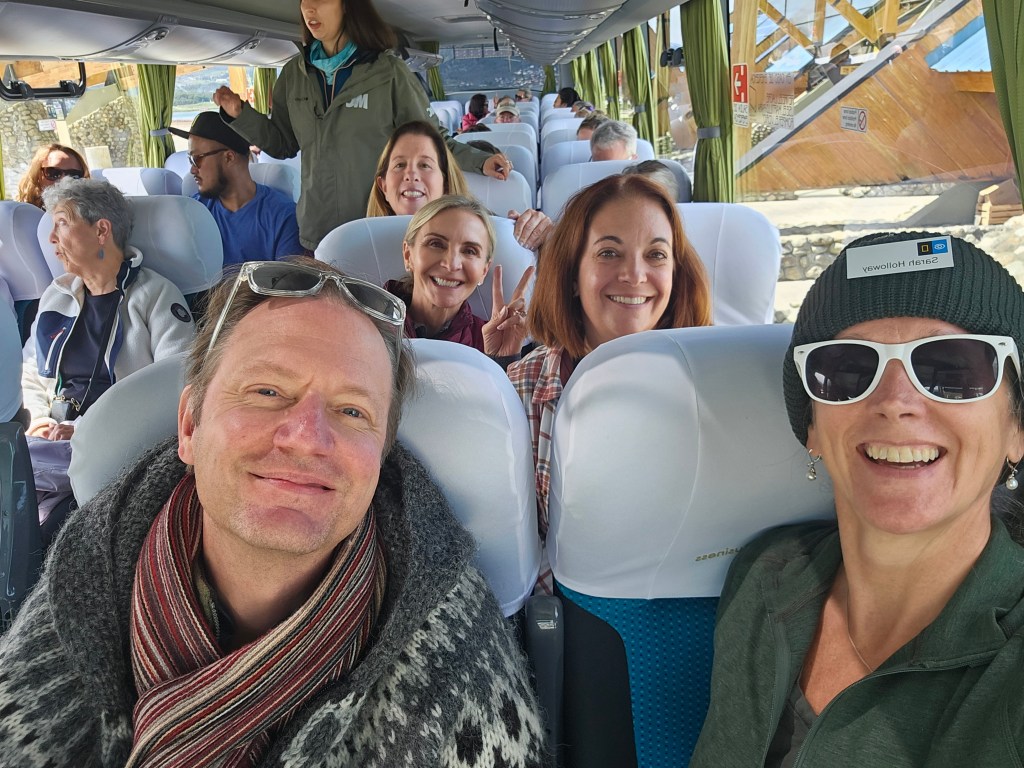
- World’s shortest bus ride from the catamaran to the MV Endurance (apparently if you are on a bus, the customs and security procedures are different vs walking along the dock)
- Embarkation!!!
- Introduction to our cabin – fancy pants suite with a bathtub and a walk-in wardrobe!!!
- Attended a mandatory safety briefing which included an “abandon ship” drill – and we actually got to go inside the bright yellow lifeboats! (I guess we won’t need to scope out a Titanic-style door after all)
- Welcome cocktail reception where we were introduced to the cabin crew and staff, including all the various National Geographic naturalists
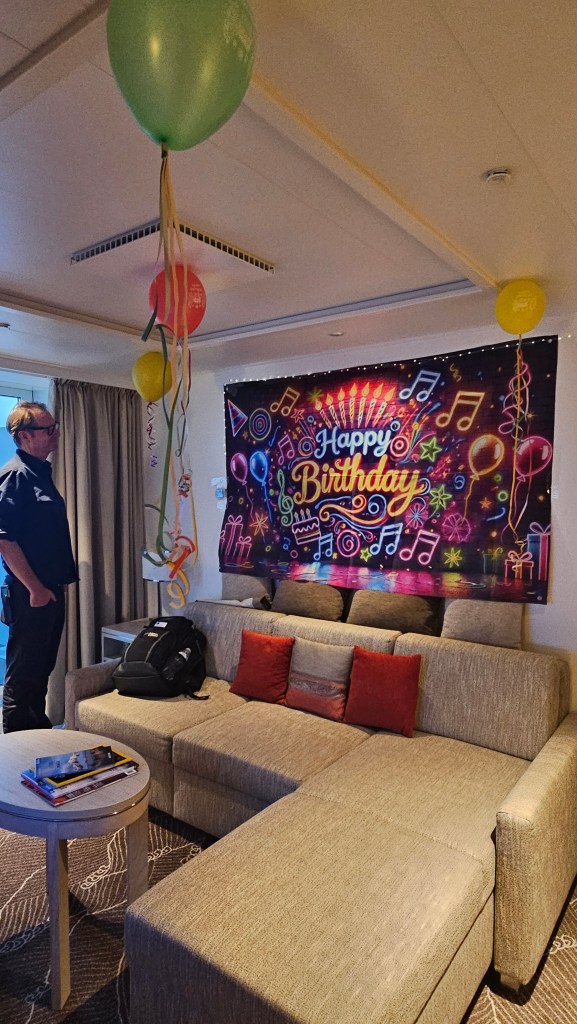
- Celebrated ManpanionTM’s birthday onboard the ship – including a musical serenade from the crew, a cake plus surprise decorations in our cabin after dinner. (I bought him some fancy new binoculars for his bday for penguin spotting purposes!)
- Got lost in the ship
- Figured out our way around the ship & visited the bridge
- Went to the gym and realized my workouts for next week needed to have ANY and ALL exercises that had even the tiniest element of balancing removed! Trying to do split squats or weighted lunges on a moving ship where the deck is in continuous motion is completely impossible! Also trippy – incline walking on the treadmill.
- Attended a mandatory Zodiak procedure and bio-safety briefing where it was explained to us how the ship goes about maintaining the pristine Antarctica wilderness, including how to avoid spreading bird flu. This then included an inspection of all our outer layers (coats, boots, gloves, hats, backpacks etc) to make sure we weren’t inadvertently bringing any contaminants ashore, and then dipping the soles of our boots into an anti-viral solution.
- Got assigned the Humpback Whales zodiac boat (one of 4 boats – the others are named Adelie Penguins, Skuas and Weddell Seals)
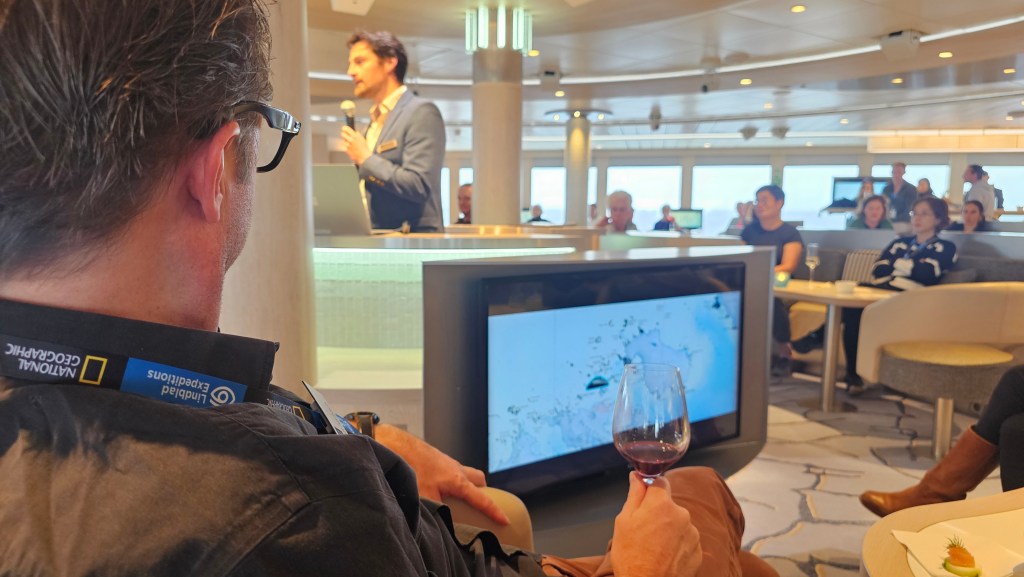
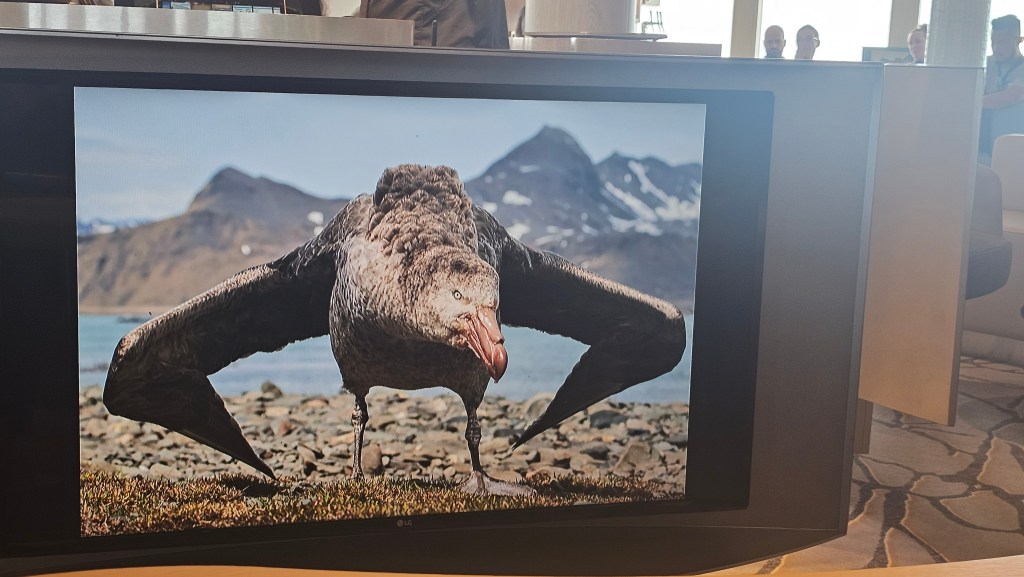
- Attended a lecture on tubenose birds (ie albatross, petrels etc). Couple of bird nerd factoids for you: the petrel bird is named after St Peter. It pitter-patters across the water, so was named after Peter who walked on water (umm.. I thought that was Jesus?) and so it’s a derivation of that. Also very few birds actually have a good sense of smell, but tubenose birds and vultures do and can smell food (ie plankton) from a couple of miles away. When you see an albatross gliding on the wind, wings fully extended, that is actually their resting position as they have tendons on their wings that lock them out, so it takes literally no energy for them to glide and soar on the wind. Also, as they transition from juvenile to adult birds, they can actually spend up to ten YEARS at sea, only returning to land after this time, when fully sexually mature, to find a mate and breed. This is how one species of bird, once known to have become extinct on land on this one island due to hunting, actually came back from extinction during WW2, as the juveniles who had been at sea returned to the land during the 10yr period that human activity was otherwise occupied. Also, the oldest known albatross is 73yrs old (and still nesting, poor thing!) but it is thought that they could live up to 100 yrs old!
- Attended a lecture on how to make your pictures interesting (bottom line: pay attention to what is in front of you and think about what is actually the subject of your picture)
- Went to the Captain’s Welcome cocktail reception followed by dinner
- Had a facial massage
So, as you can see, there is a lot that has been going on! Our days are going to be packed, but I’ll keep you up to date as much as I can! In our cabin, we have a couple of big TV screens and the daily itinerary is posted up, so you know what to expect that day, at what time etc. As it has been impressed upon us several times, however – this is not a vacation, but an expedition so all these things are subject to change with the changing weather. Safety is the number one priority. To give you a taste of what tomorrow is going to bring, here’s the itinerary that is currently posted up on our screen:
Monday 25th Nov: Brown Bluff and visiting the Barrientos Island in the Aitcho Island group
0630 early riser breakfast
0700 Morning stretches in the Sanctuary
0700-0830 Morning update and breakfast
Morning landing at Aitcho or Barrientos Island – looking for first foray amongst the Antarctic penguins (gentoo and chinstrap) and perhaps a few seals
1115 Introduction to smartphone photography
1200-1300 Lunch
1415 Naturalist presentation on the life history of a snowflake
1530 Afternoon tea is served
1630 Naturalist presentation on The Secret Life of Krill
1745 Ice Lounge for cocktails with daily recap and briefing
1830 Dinner is served
After dinner expedition at Brown Bluff to see more Adelie and gentoo penguins.