


So today was a bit of a change of pace with a focus on cultural activities, rather than jungle walks or nature cruises. We are moored today next to Nauta -a relatively large town of about 35,000 people. Today is a changeover day here on the Aqua Nera, with the departure of the 3 nighters, leaving just us 7 night cruise peeps behind. We have gone from 35 people to just 9 – but I’m sure we will pick up some additional folk either today or tomorrow for the next 3 or 4 nights.
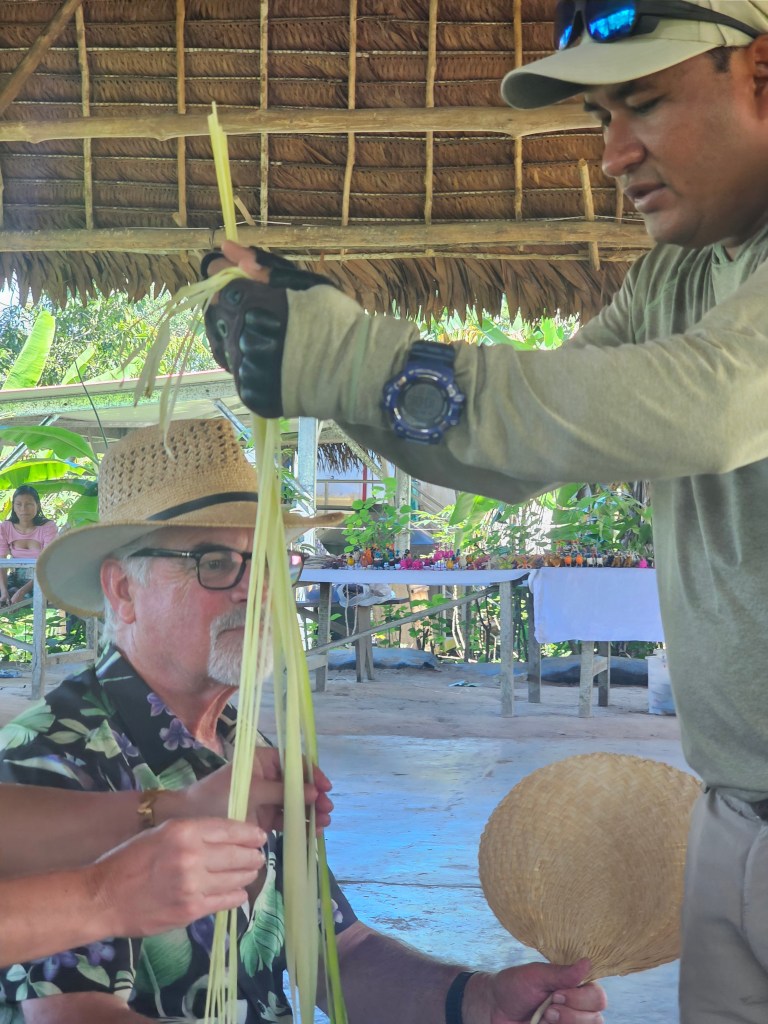
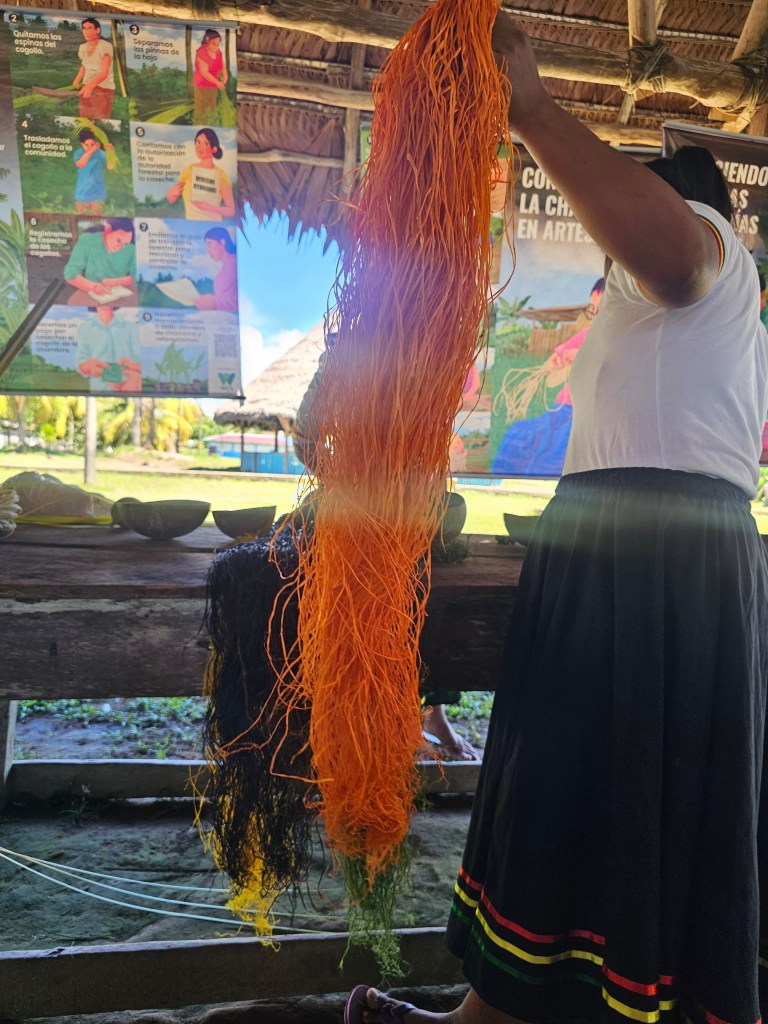
Anyway, today was fairly relaxed (no 5am wake up calls!) with breakfast at 7.30am followed by the first outing of the day at 9.30am, a visit to the village of Amazonas where we would be shown local weaving crafts (and “optional” (ha!) shopping. It was about a 20 min chug on the skiff (only 1 needed to fit us all in) to the town and we had a short walk to the center of the village where a local lady (through translation from Vladimir) explained the process behind turning palm leaves into all sorts of brightly colored woven goods. The village has 3 main sources of revenue/commercial activity – fishing, agriculture and weaving – with the women of the village focusing on the latter. In addition to the process of isolating and drying the palm fibers to be made into twine and thread for weaving, she also showed us the local plants and herbs that were used for dying the strands. I can’t remember them all – but there was turmeric and achiote to produce vibrant orange and reds.
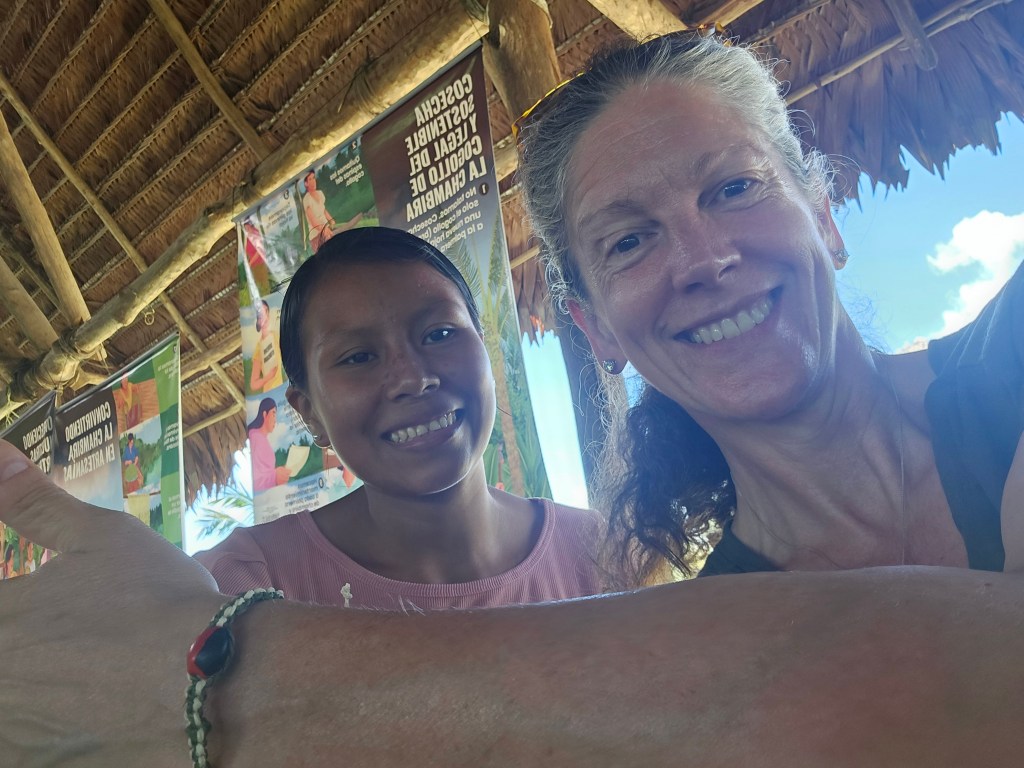
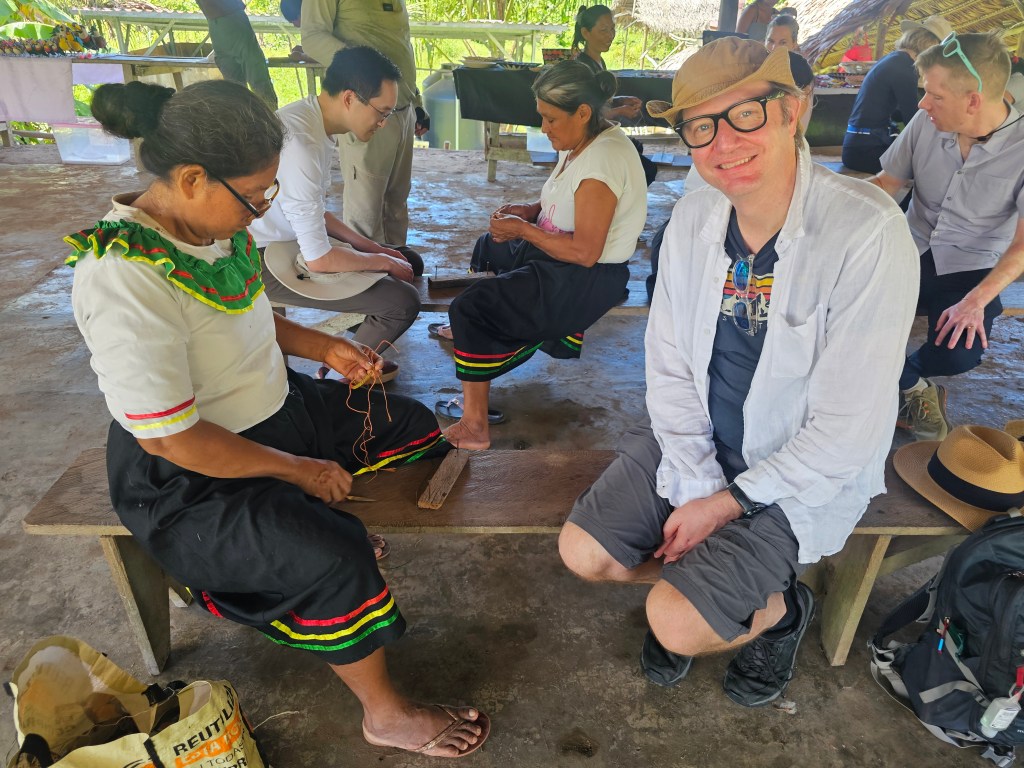
After the explanation, we were each paired with a lady to then take a turn at weaving – nothing too crazy, just a cute bracelet. And, would you believe it, the knot she showed me how to tie was the half hitch knot that I have tied hundreds of times recently in my macrame projects!! So I was ON IT! She made approving sounds as I tied the first knot with NOOOO problem (she was a stickler for making sure they were absolutely straight and tight) so I got my bracelet finished in double quick time! I did feel quite proud of myself! ManpanionTM had a go – but was happy to let his lady finish his bracelet for him.
After the demonstration, it was shopping time – obviously we are paying gringo prices and nothing is what you would call cheap, but I didn’t mind at all. You are helping support the village plus I have an appreciation for how labor intensive these types of projects are, just from my own efforts at weaving, macrame and sewing back home. I picked up a cute bright blue kingfisher as well as a string bag, decorated in 70’s style orange, brown and yellow stripes.

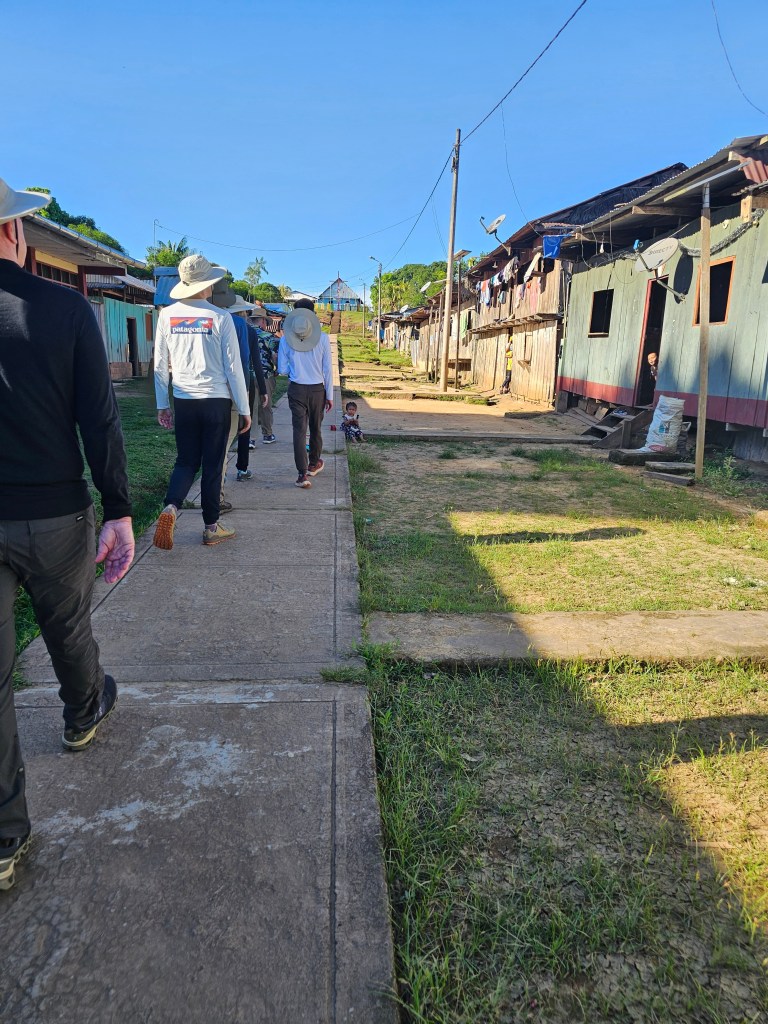
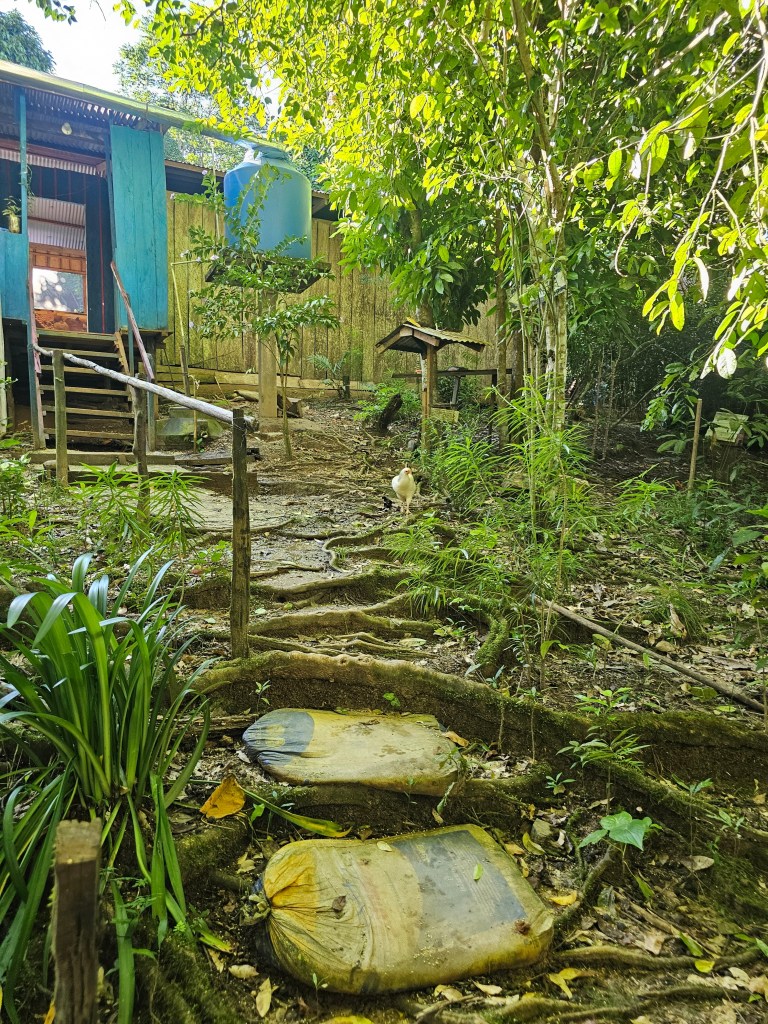
Shopped out, we said our goodbyes and headed back to the skiff where I blogged a bit before lunchtime. After lunch and a quick nap, it was time for our second activity of the day – this time to visit a local bee keeper in the village of San Francisco. Although it was mid-afternoon, it was still very hot, with temperatures in the low 90’s and 100% humidity! We headed back the same way we’d been earlier in the day (passing the village of Amazonas) and went another 15 mins down (or up?) river. Apparently when the water is at its highest, they can park the boat right at the bottom of the bee keeper’s property – however, we had to park up a bit further away and then walk through the village to get there instead.
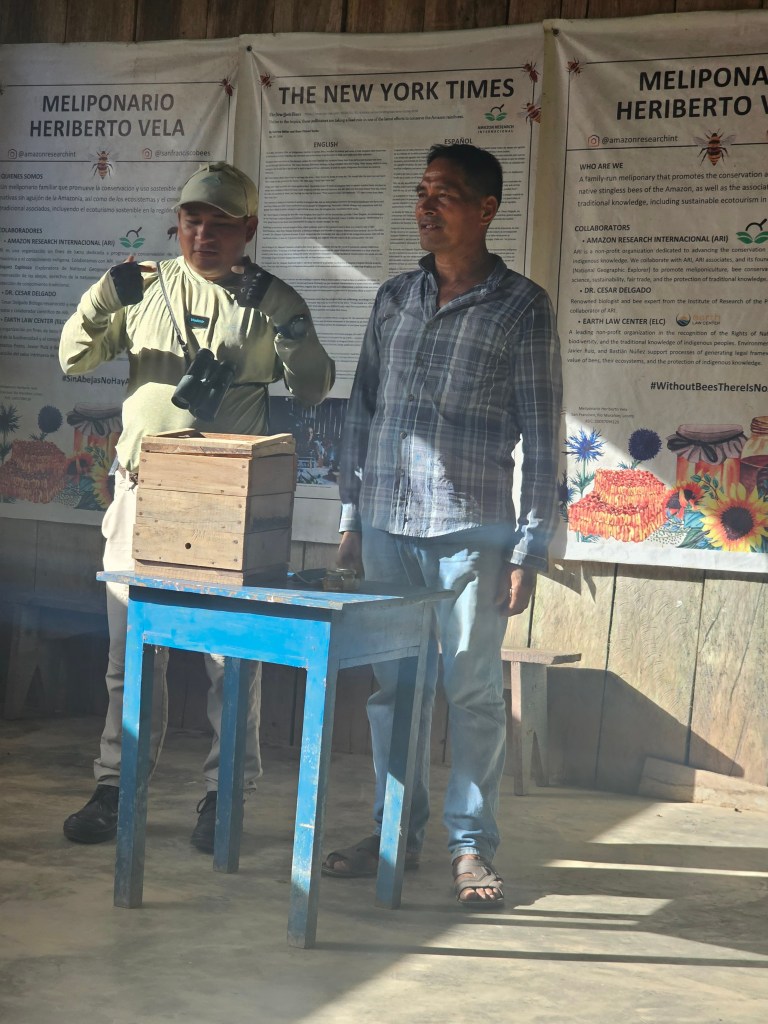
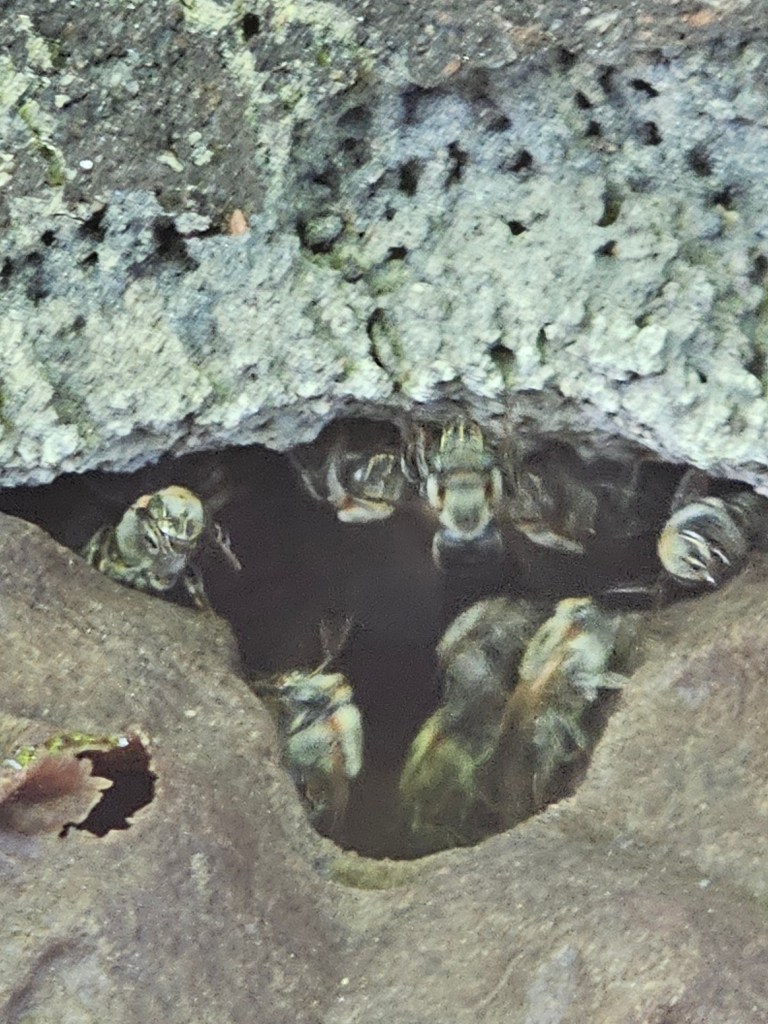
 It was really interesting – Umburto the bee keeper had about 58 little bee boxes where he looked after the native Amazonian bees. He showed us two species of bee – I dont remember the names but one of the species was absolutely tiny – about the size of a grain of rice! The coolest thing – they are all stingless! The most they will do is bite you if you really piss them off – but it makes for a super chill visit to their hives to know they are not gonna come after you and sting you! The bee boxes were only about a foot square, so a lot smaller than the hives we are used to seeing – despite their small size, each box was home to about 1500 bees! Umburto used a small dropper to directly suck the honey out of the “comb” (which looks very different) and gave us some to taste – and it was divine! Straight out of the hive! It was sweet – but not too sweet and it had a slight maple flavor to it – it was delicious! I did buy 3 tiny little pots (again, at enthusiastic Gringo prices) but I am all for supporting the bees so I was happy to pay it.




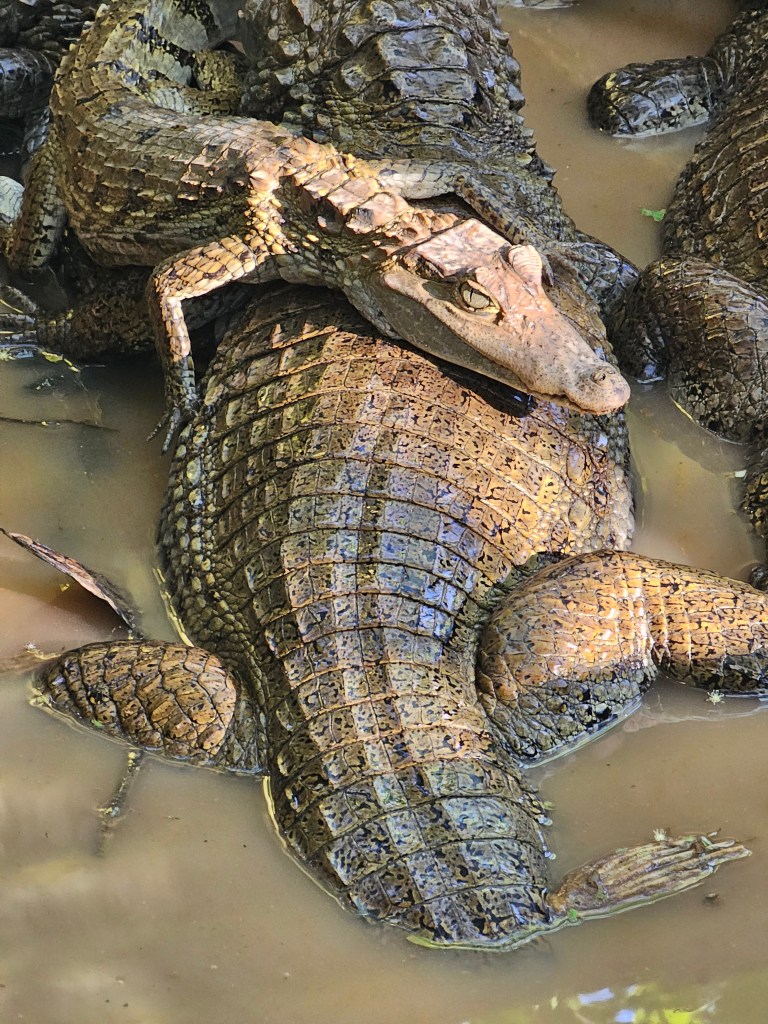
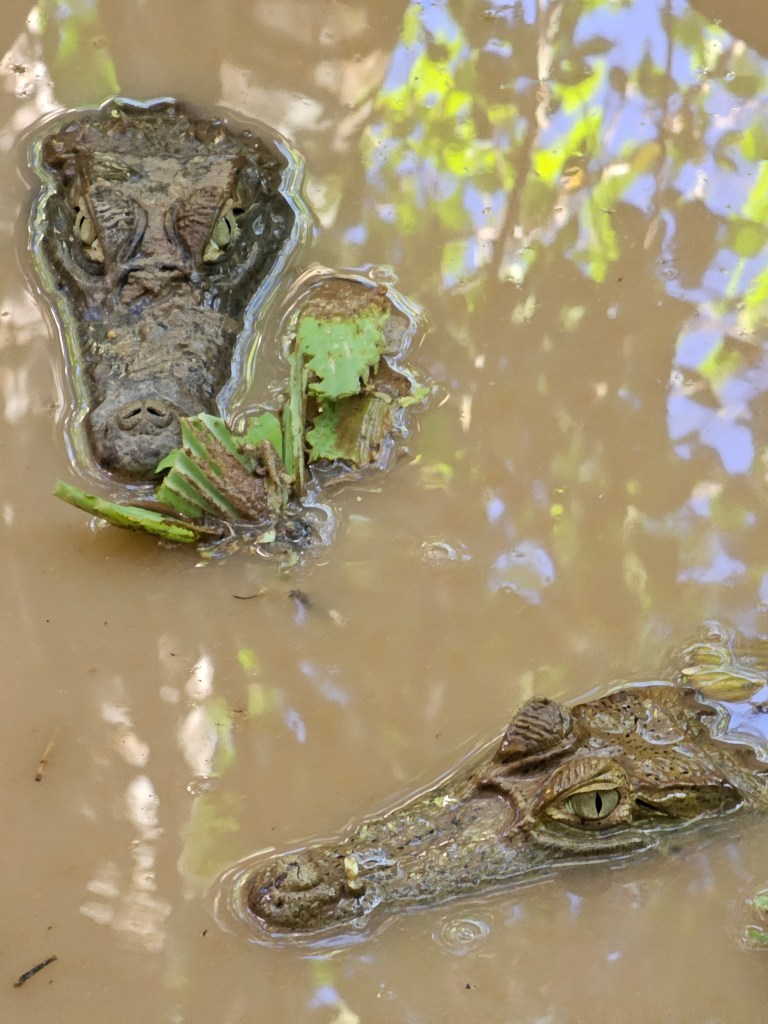
We also saw another pink toed tarantula, lots of chickens and – unexpectedly – an enclosure that had some spectacled caiman and yellow headed turtles in there! These were animals that Umburto had rescued from fishing nets and was raising them (eventually to release when they reached their full size of 2 meters long) to share with the school kids. He is also teaching the school kids how to raise and care for bees too, so it was very heartening to see such conservation efforts. I was pretty happy as I got to check another species off my Amazon wildlife bingo card! After the jungle walk yesterday, all I’m missing is a and a jaguar. I’m not gonna hold my breath for either – but maybe I’ll get lucky and see the monkey! (Fun fact – apparently the bees recognize Umburto – so if someone else were to try and open their hives, they would be very annoyed! Same for the caiman – they recognize him too!)
And that was today. We are now back in the room, chilling out before dinner in an hour – I guess we’ll see then if we have any newbies on board! Tomorrow starts at 6am with birdwatching, so maybe an early night tonight!!


1 Comment
Those are my kinda bees! After having a particularly nasty reaction to a sting, I’m not a fan. I love bees, but slightly terrified of them, more so than tarantulas. And hats off for your macrame skills…stand aside, coming through!
Mosquitos…are there alot? I mean, would I, a moving mossie buffet have to wear hazmat type garb? And 100% humidity would see me gasping. So glad you can support the locals . Love it 😀 😍 ❤️