Today’s destination for my Historic Places Brown Sign Week Tour was the Old Joliet Prison, about a 35min drive west of home. I thought it would have some interesting stories – plus there’s always a little morbid curiosity visiting places like this. I’d booked a guided tour for 11am (vs just walking around on a self-guided tour) and it was a good call, as the lady who did our tour happened to be married to a guy who used to be a prison guard at Joliet Prison when it was still operational. She was very passionate about the prison and right at the end of the tour made the comment “this is actually my retirement” – to which I thought YES! That’s exactly what I’m looking for – something that she loves to do and that sharing it with others brings her a ton of joy.

Anyway, here’s a bit of the history of the place, courtesy of the Old Joliet Prison website:
Opened in 1858, just six years after the incorporation of the City of Joliet, the Illinois State Penitentiary, Joliet, now known simply as the “Old Joliet Prison,” has – for better or worse been – synonymous with the City of Joliet for nearly its entire history. The Joliet Prison, with its iconic castellated gothic architecture was designed by Chicago earliest architect W.W. Boyington, who also designed the Chicago Water Tower. The use of Joliet limestone was a trademark of Boyington’s designs and this locally quarried stone was used to erect structures all around the country. The prison in Joliet replaced the first state penitentiary in Alton, built on a bluff overlooking the Mississippi River in 1831. The privately-managed prison quickly degraded into a state of horrendous conditions. Noted reformer Dorothea Dix personally petitioned the Illinois General Assembly to construct a new penitentiary after inspection the Alton prison in 1847.
Upon its opening in 1858, the Chicago Tribune declared glowingly, “We came away fully impressed with the belief that the important trusts at Joliet are in good hands, that there is growing a State work which will be for long years to come the pride of her citizens.” The image of the Joliet Prison, however, quickly changed. By 1878, the Prison was filled well over capacity with nearly 2,000 inmates. Reports of unsanitary and dangerous conditions emerged and by 1905, calls for the closure of the “old prison” were made. The 1926 construction of Stateville Penitentiary in what is now Crest Hill was intended to close the prison, but it continued to house offenders until 2002, when it was finally closed as a budgetary measure.
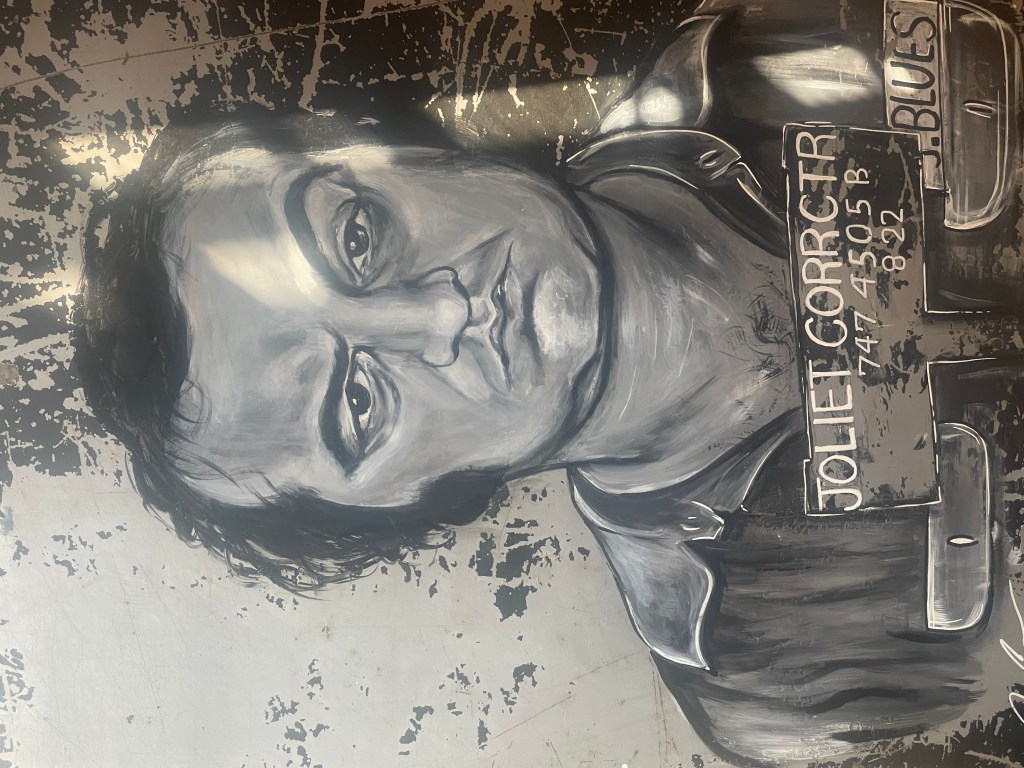
The Prison is probably best known today for its most popular, albeit fictional inmate – “Joliet Jake” Blues from the 1980 film “The Blues Brothers.” Since then, the Prison has made a number of appearances in films in television, including as the character of “Fox River State Penitentiary” in the Fox series “Prison Break”.
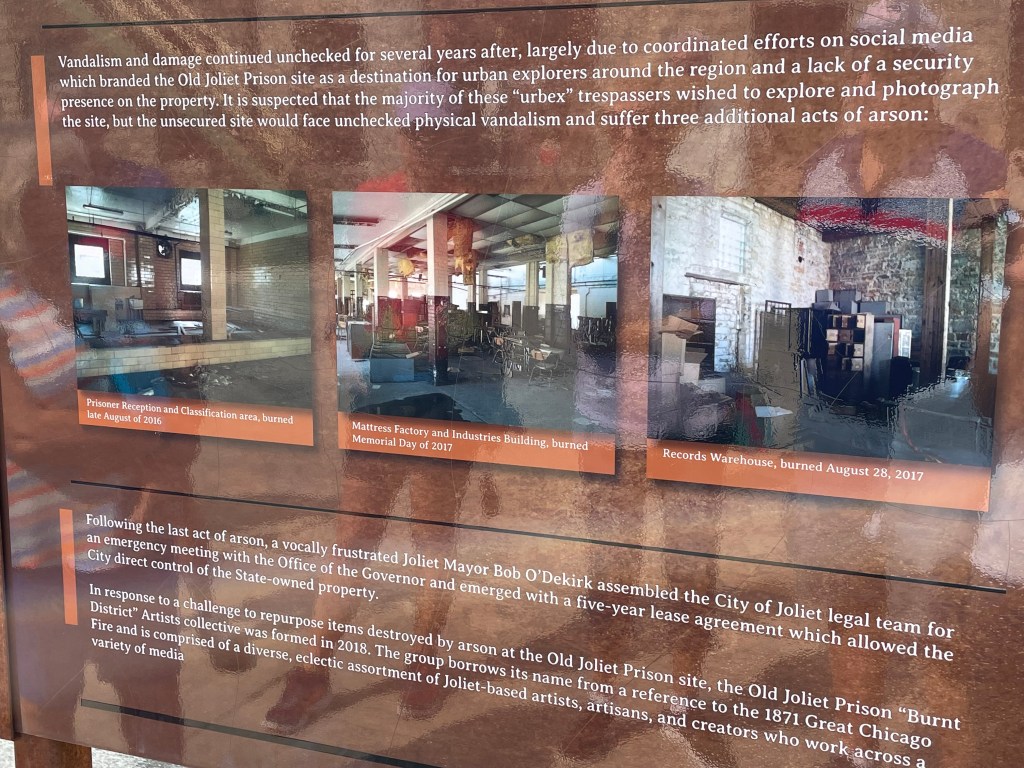
Sadly, despite this interest from Hollywood, the Prison remained closed, and in addition to damage from the elements, was subject to rampant vandalism, including several acts of arson. Attempts were made to find suitable options for reuse, including tourism, by the Collins Street Task Force of concerned public and private leaders, but these efforts were stalled by the Great Recession of 2008. Continued vandalism and destruction of the site led Joliet Mayor Bob O’Dekirk to personally petition the state government to allow the City of Joliet to take control of the property in December of 2017. Since then, the City looked to the Joliet Area Historical Museum to take a leadership role in operating tours at the site. In partnership with the City, the Museum identified a number of community partners to form a public/private partnership entity, The Old Joliet Prison Preservation Coalition. To date, the project has been met with an enthusiastic response from the community of Joliet, culminating in over 6,500 volunteer hours, one million dollars in in-kind labor and donations, and nearly $200,000 in funds raised to benefit the site.
To be fair, they do lean into the Blues Brothers connection Quite A Bit – despite it being a teeny tiny part of the film! They held a Blues Brothers event there in the summer and there is also a ton of merch for purchase in the prison gift shop (which you know I succumbed to) – but if it helps raise money so they can continue their restoration work, then all power to them.
The tour lasted about 2hrs and our guide took us around the main buildings and campus, sharing anecdotes and stories about life in prison and the (in)famous inmates. One of the first things I learnt was about what was called the Bertillon system which was an anthropometric way of documenting prisoners before the advent of fingerprinting. It was invented in 1883 and adopted by the Parisian police in which individuals where identified by measurements of the head and body, shape formations of the ear, eyebrow, mouth, eye etc as well as individual markings such as tattoos and scars, and personality characteristics. Although the system was based in scientific measures, it was known to have its flaws. For example, it may not have been able to accurately apply to children or women, as it was mostly designed for men who had reached full physical maturity and had short hair. It was superseded by fingerprinting in 1903 and fell out of use – all except the mugshot, which is a remnant of the original Bertillon system.
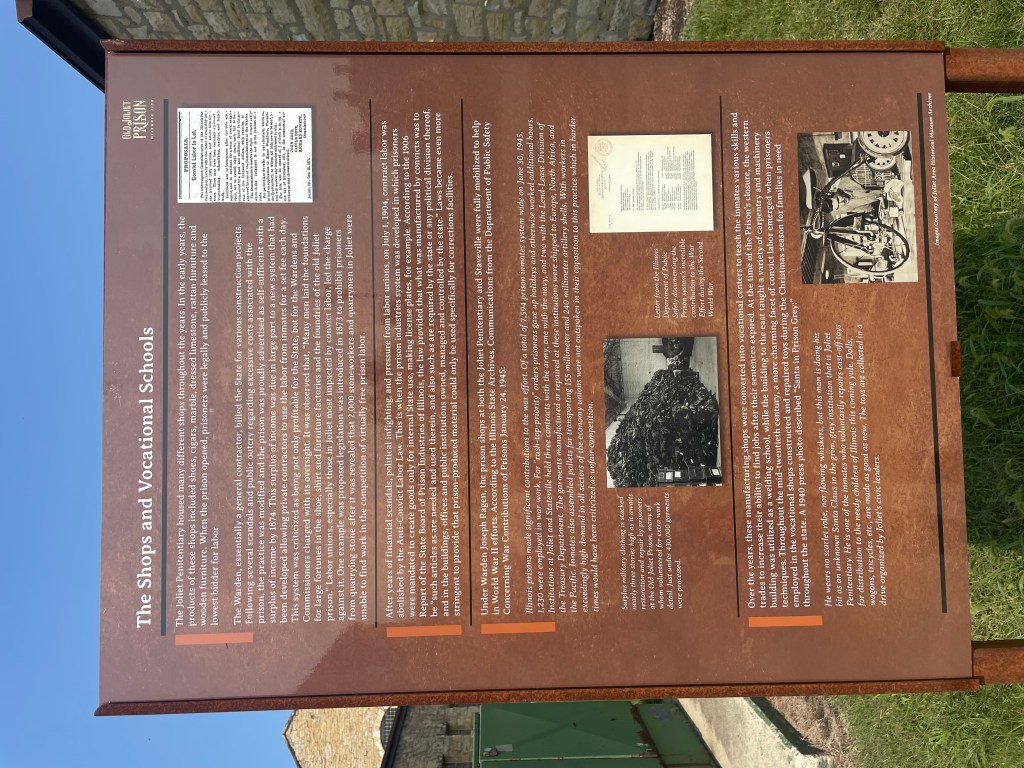
Another interesting factoid – the Pyramids and Southern Light brand cigarettes were actually made by the State specifically for the prison inmates. They could be given out freely by the guards and were actually square in shape – hence the phrase “gimme a square”. There was also loose-leaf tobacco so prisoners could roll their own cigarettes – but it was common for the prisoners to run out of rolling papers. But – with necessity being the mother of invention – apparently the prisoners used to tear the pages out of the little New Testament books they would sometimes be given by visiting pastors & priests – thus origin of the term “holy smokes”.
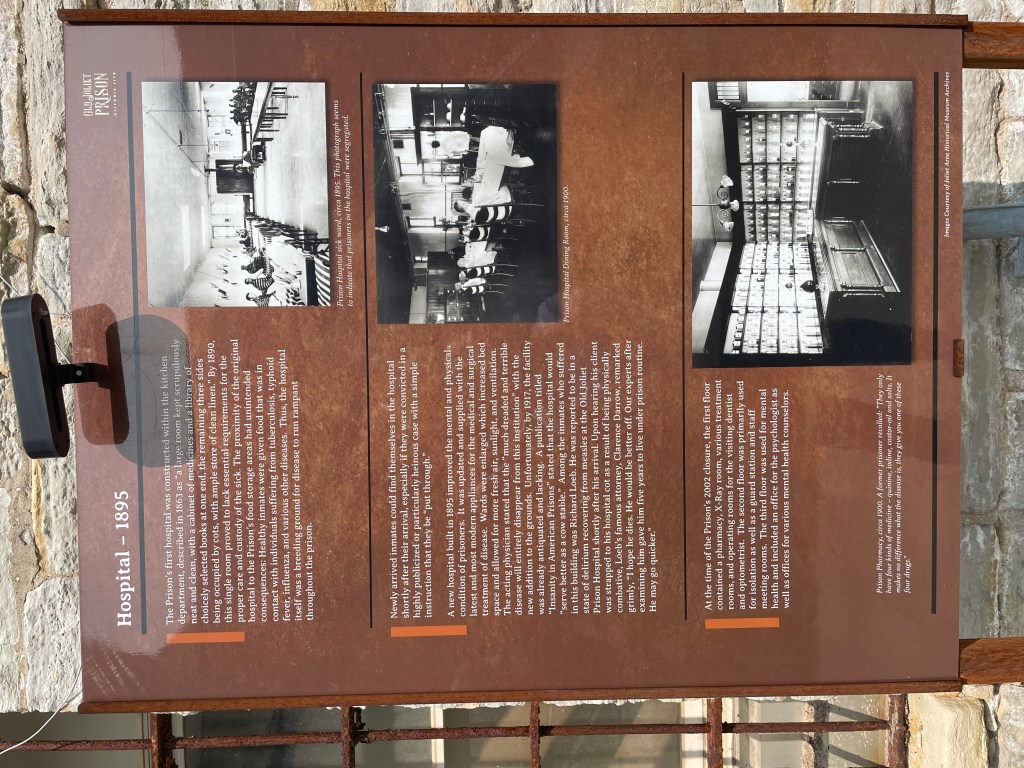
Life was pretty grim for the inmates of Joliet Prison – basically a living hell. According to our guide, about 60% of inmates died of TB and, after having explored the tiny cells, its not hard to imagine how quickly any infectious disease would run rampant in that place. The cells were supposed to house 2 men each – however, the prison became notoriously overcrowded with 3, sometimes 4, men cramped into those cells – measuring a mere 4ft x 7ft x 7ft. The prison didn’t get indoor plumbing til 1956 so until then, prisoners had to use a slop bucket to do their business – so you can just imagine how incredibly bad it must have smelt. Slightly larger cells were built in the later years (which still were overcrowded) but they had preserved one of the original cells outside so you could get a real sense of just how dreadful the conditions would have been. Touring the newer cell blocks, there were 8 galleries to a cell house – with only 2 stories, rather than the 4 stories in the original building.

As you might expect from a place with such a grim history, there are many gruesome stories – all of which lead many people to believe that the prison is haunted. Now, I’m not hugely into that sort of stuff – but it wouldn’t take much imagination to get totally spooked out on one of their nighttime flashlight tours! One of the most notorious (and tragic) episodes in the prison’s history concerned Odette Allen, the opera-singer wife of the progressive Warden Allen who ran the prison in 1915. You can read the whole story here https://mysticalminds.net/2020/10/04/old-joliet-prison/ – but she was murdered and set on fire one night, while her husband was away meeting politicians in Chicago. Though an inmate by the name of Chicken Joe was accused of her murder, the evidence against him was very insubstantial and so her true murderer was likely never caught. As a result, its said that the ghost of Odette Allen still wanders the facility. Witnesses have heard footsteps walking through the halls and bedroom on the second floor of the administrative building where Odette once lived. Upon investigation, they find no source for the sounds. Odette has also been heard singing in the nearby prison cemetery.
If that’s not enough spook for you, you can also get your ghost on just across the street at the former Joliet Women’s Correctional facility, built in the same style, but which has now been turned into a pukka Haunted House for Halloween! https://hauntedprison.com/
Famous inmates included John Wayne Gacy, Richard Loeb and Richard Speck who bounced between Joliet Prison and its sister facility, the maximum security Stateville Correctional Center which was built in 1925 and is located just 2 miles from Joliet (Stateville is still operational today https://en.wikipedia.org/wiki/Stateville_Correctional_Center). John Wayne Gacy (March 17, 1942 – May 10, 1994) was an American serial killer and sex offender who raped, tortured, and murdered at least 33 young men and boys. Gacy regularly performed at children’s hospitals and charitable events as “Pogo the Clown” or “Patches the Clown”, personas he had devised. He became known as the Killer Clown due to his public services as a clown prior to the discovery of his crimes https://en.wikipedia.org/wiki/John_Wayne_Gacy.
Nathan Freudenthal Leopold Jr. and Richard Albert Loeb, usually referred to collectively as Leopold and Loeb, were two wealthy students at the University of Chicago who kidnapped and murdered 14-year-old Bobby Franks in Chicago, Illinois, United States, in May 1924. Following their conviction, Loeb entered Joliet Prison. Later, he and Leopold were transferred to Statesville Prison. On January 28, 1936, while in the prison shower, Loeb was fatally assaulted by another inmate, James Day, with a straight razor.
Richard Speck was an American mass murderer who killed eight student nurses in their South Deering, Chicago, residence via stabbing, strangling, slashing their throats, or a combination of the three on the night of July 13–14, 1966. One victim was also raped prior to her murder. Convicted of all eight murders on April 15, 1967, Speck was sentenced to death. His sentence was reduced to 400 to 1,200 years in 1972. This was later reduced to 100 to 300 years. Speck died of a heart attack while incarcerated at Stateville Correctional Center on the eve of his 50th birthday. Speck’s sister feared that his grave would be desecrated, so he does not have an identified physical resting place. Speck was cremated, and his ashes were scattered in a secret location in the Joliet area – speculated to be within the prison grounds itself. https://en.wikipedia.org/wiki/Richard_Speck
Those are some seriously bad dudes.
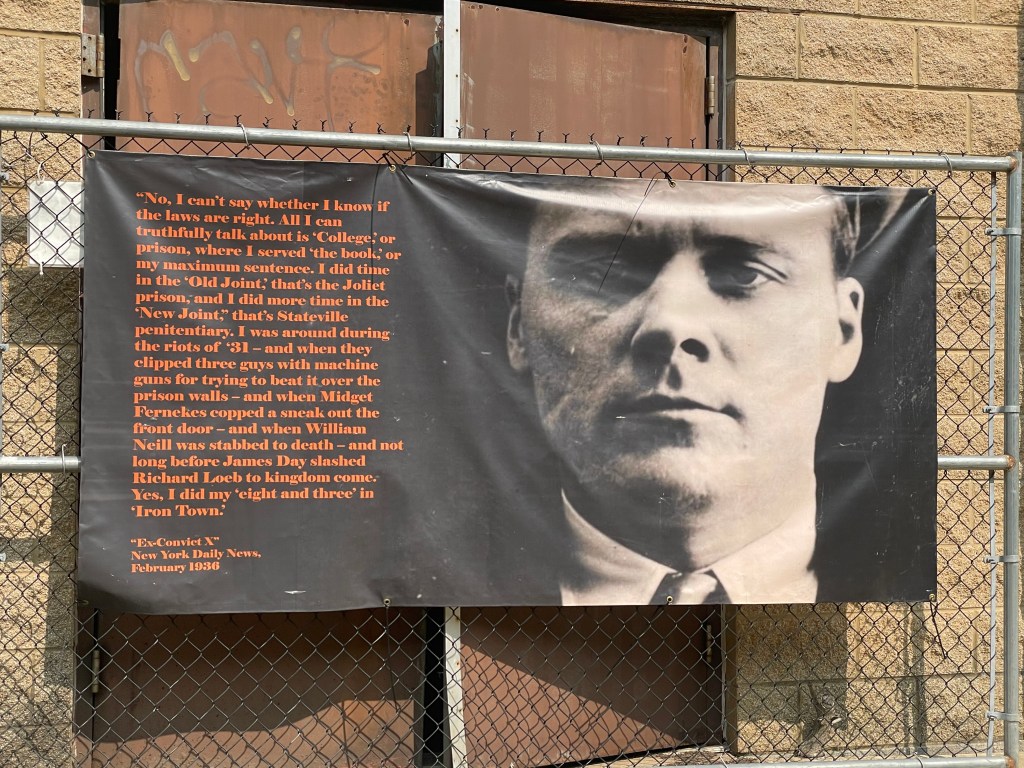
Below are a few more pics from my tour. If you want to get a more dynamic sense of the prison and see it in real-life in films & TV shows, obviously you can watch the opening few moments of the Blues Brothers where Jake Blues walks out of cell 415 West and through the prison gates to freedom. If you look closely, you will see the footage of his “long walk” is actually just a single walk repeated twice – look at the numbers on the cells for the clue! Joliet also featured on Prison Break and our guide showed us the fake hole that was dug to simulate escape through the tunnels below the grounds. Another movie she recommended was White Heat, a gangster movie starring James Cagney, that used shots from outside of the original dining hall (according to her, its the best gangster movie ever made).
So that was it for today’s adventure. It was really inspiring to meet someone who had found their passion and was living her dream retirement. Each experience like this brings me closer to discovering what my future passion will be.
Right. Time to choose the Brown Sign for tomorrow’s Grand Adventure. Stay tuned…..


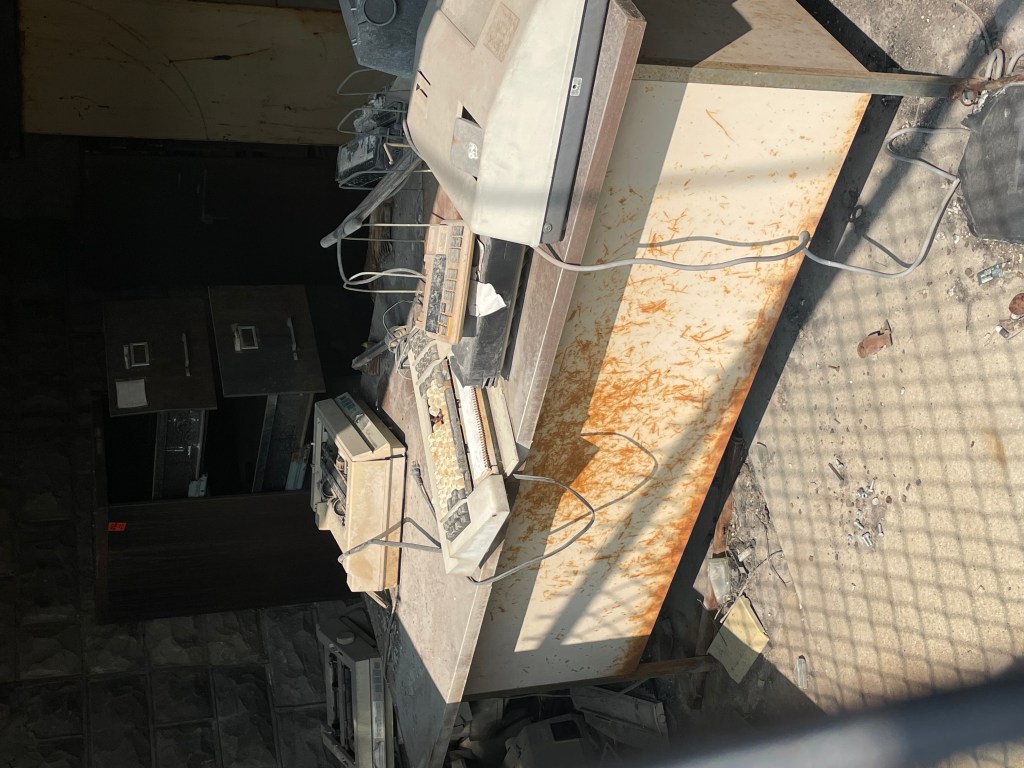

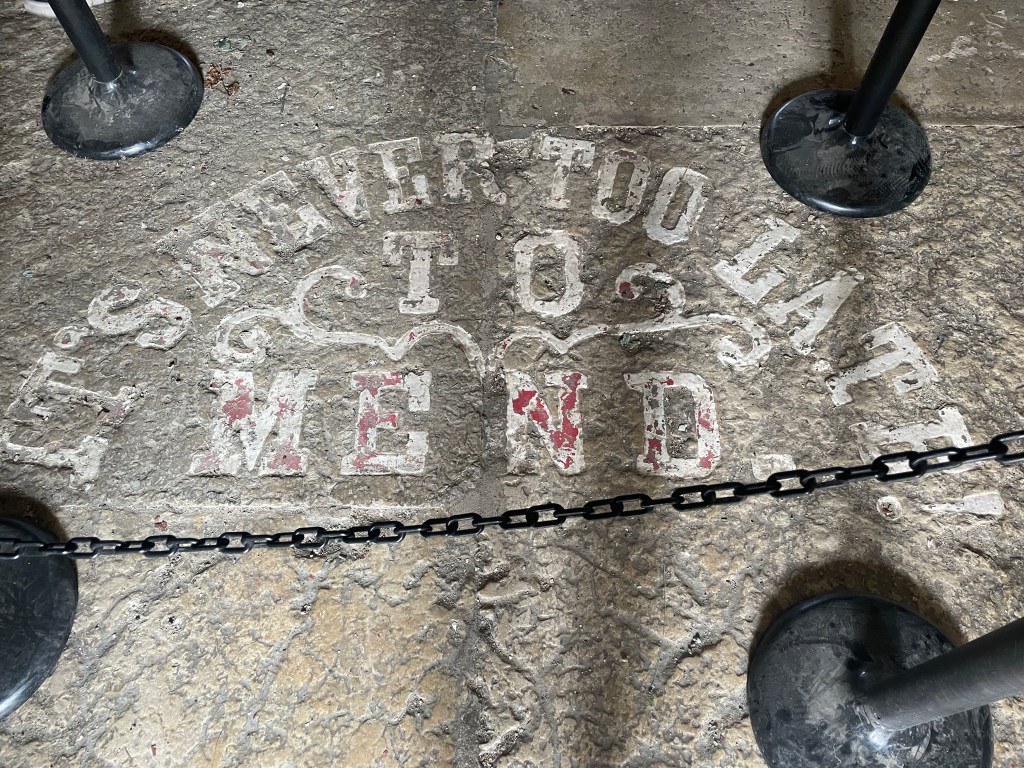
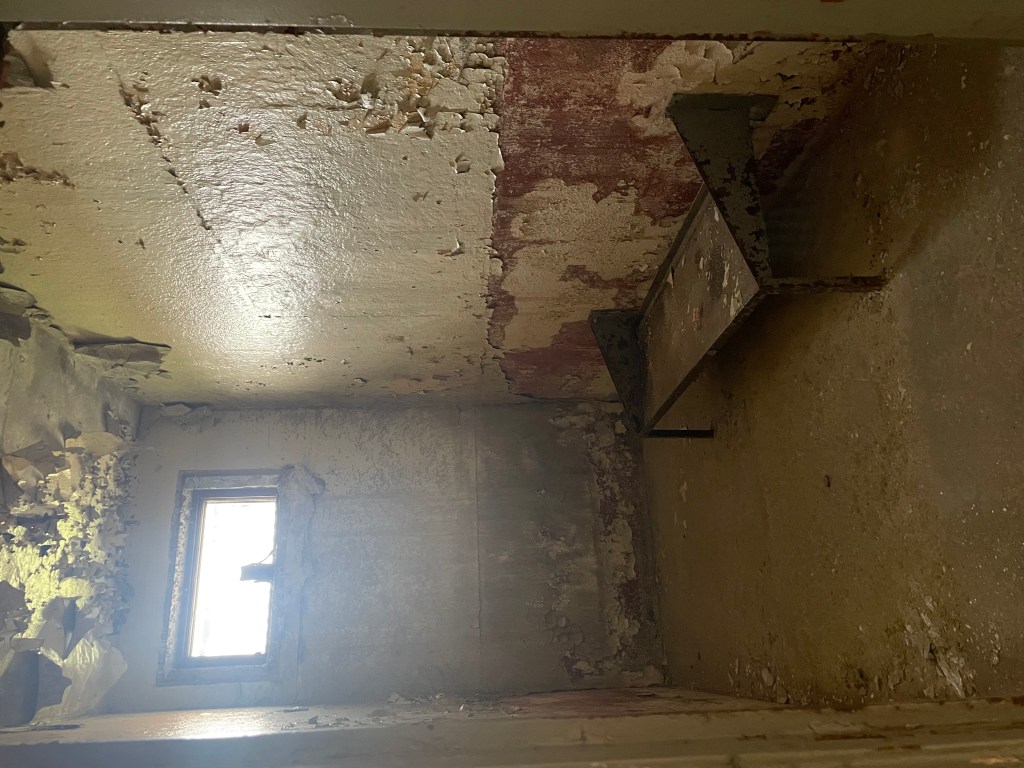


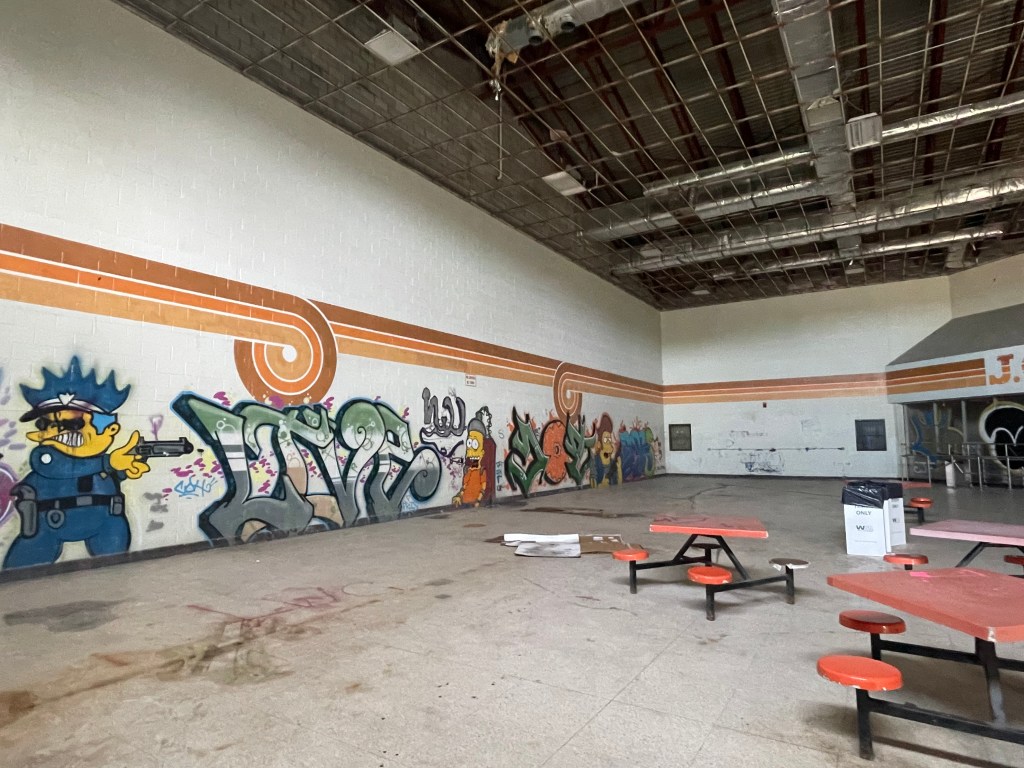



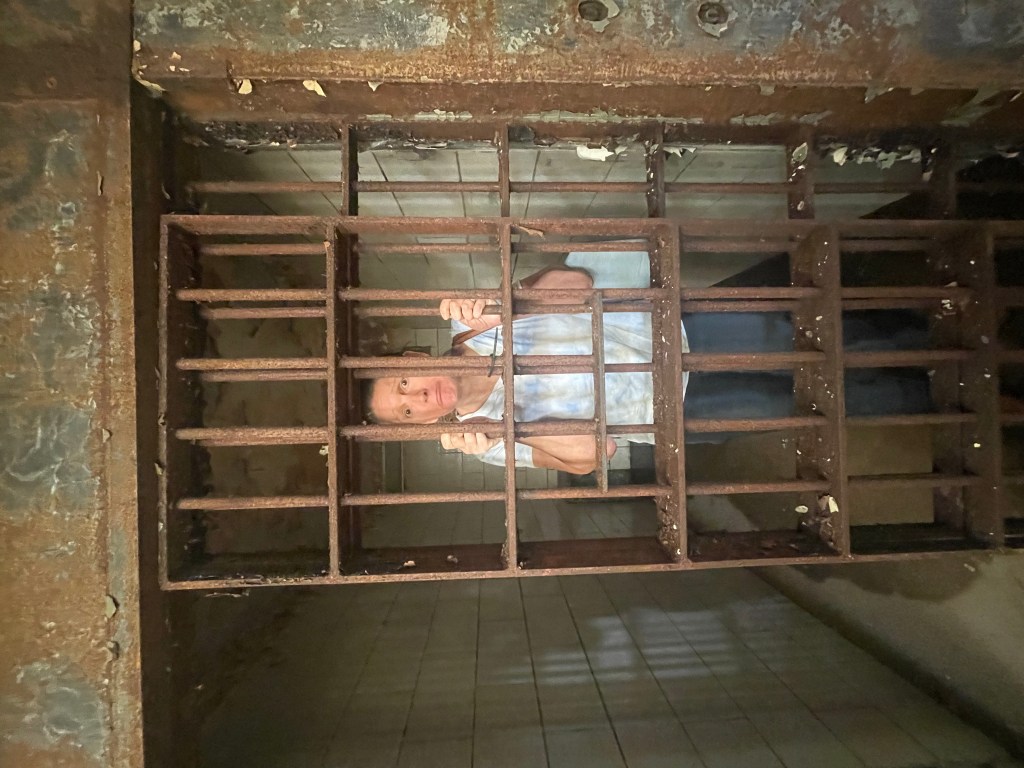

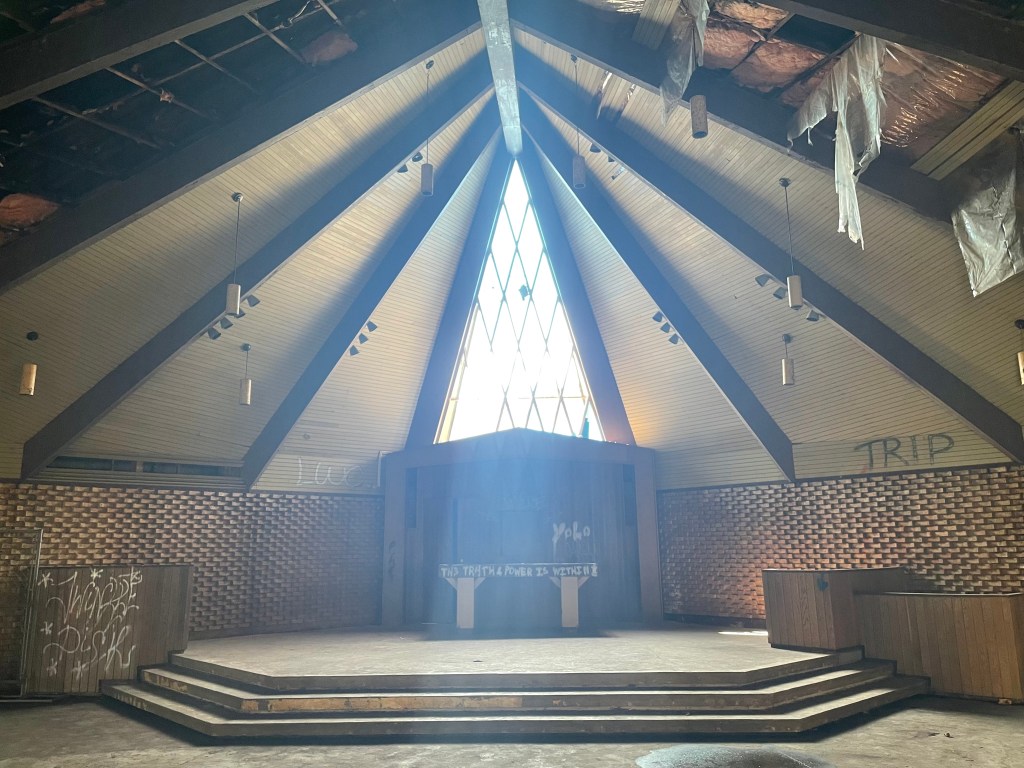
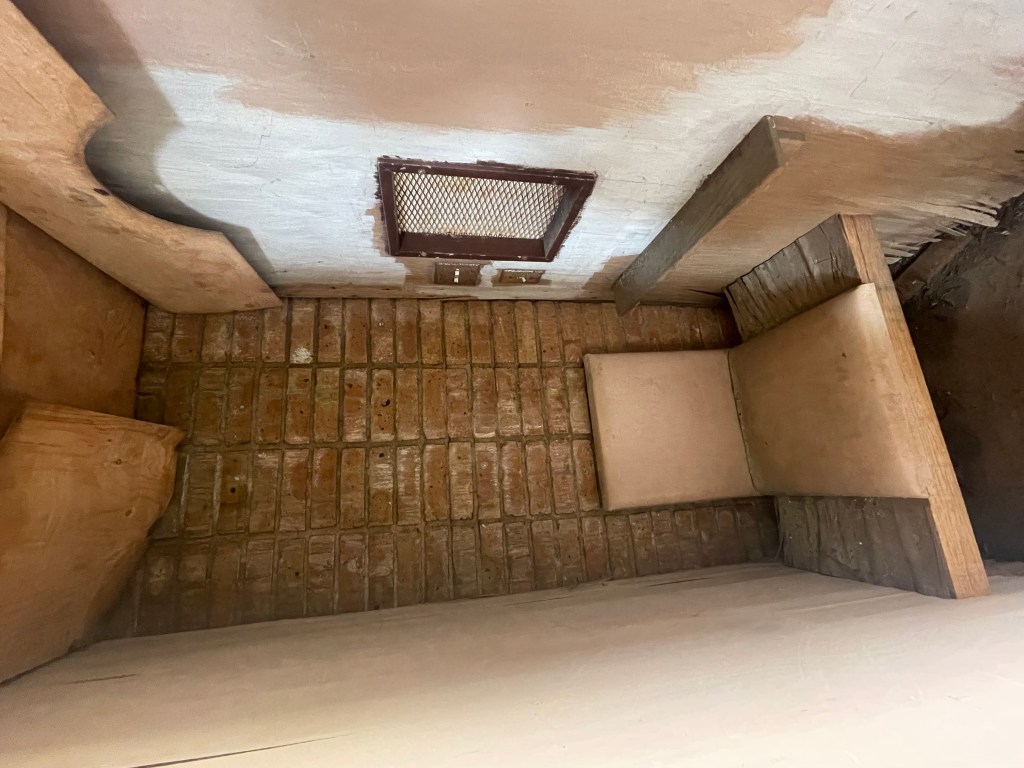


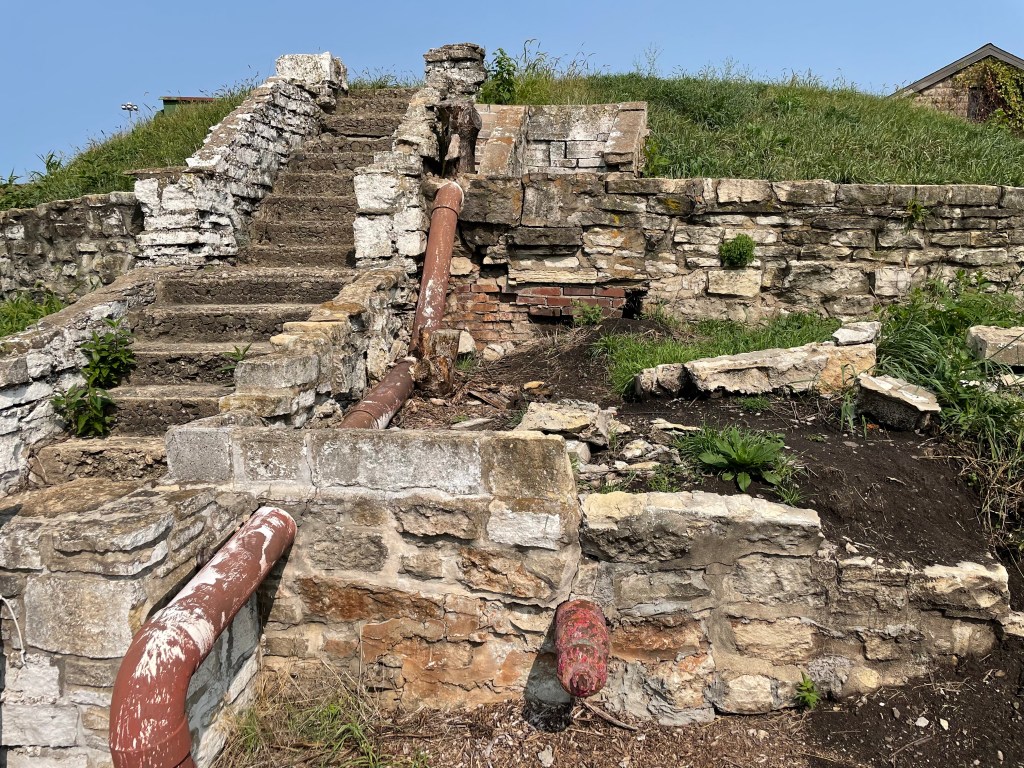
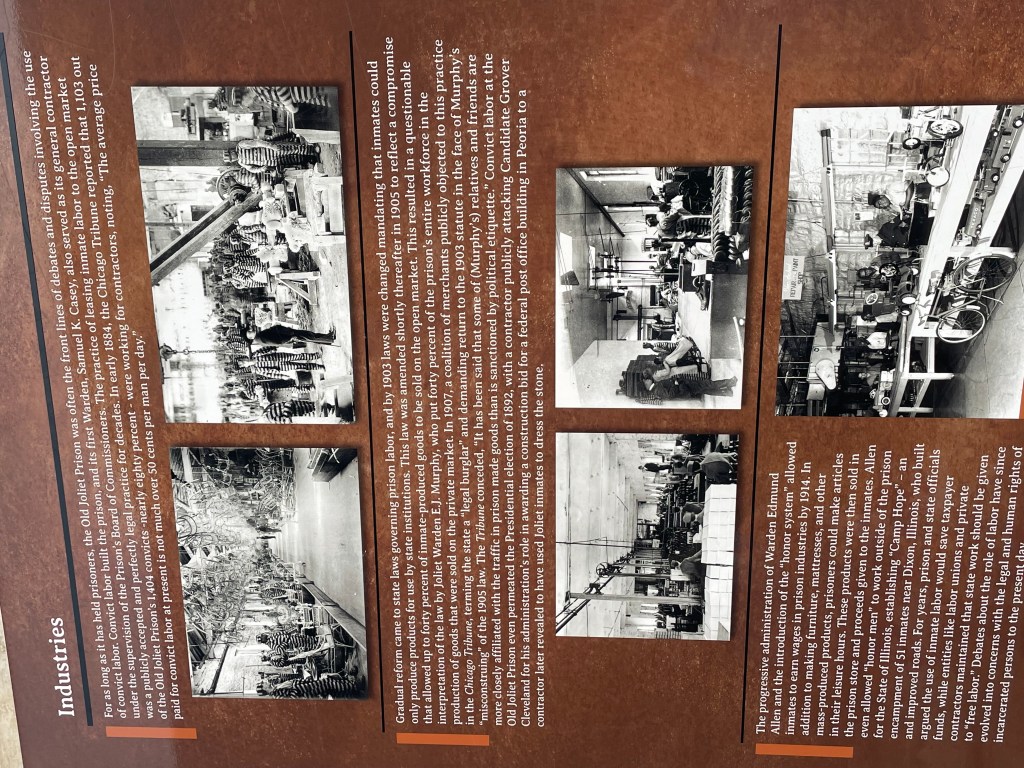
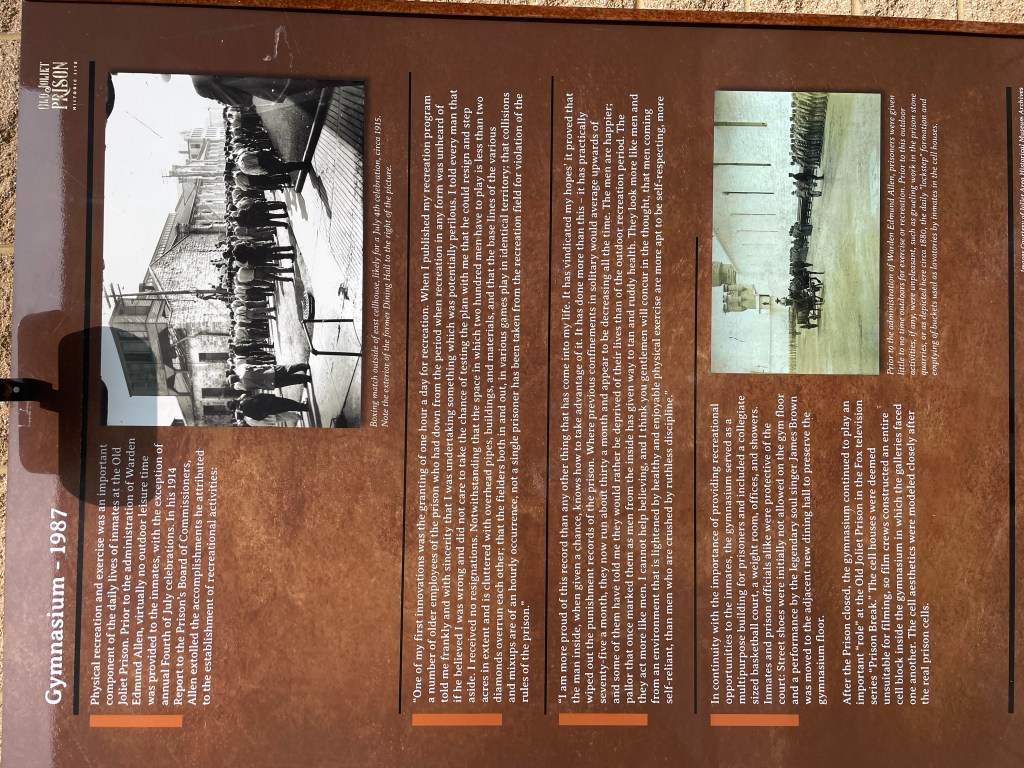
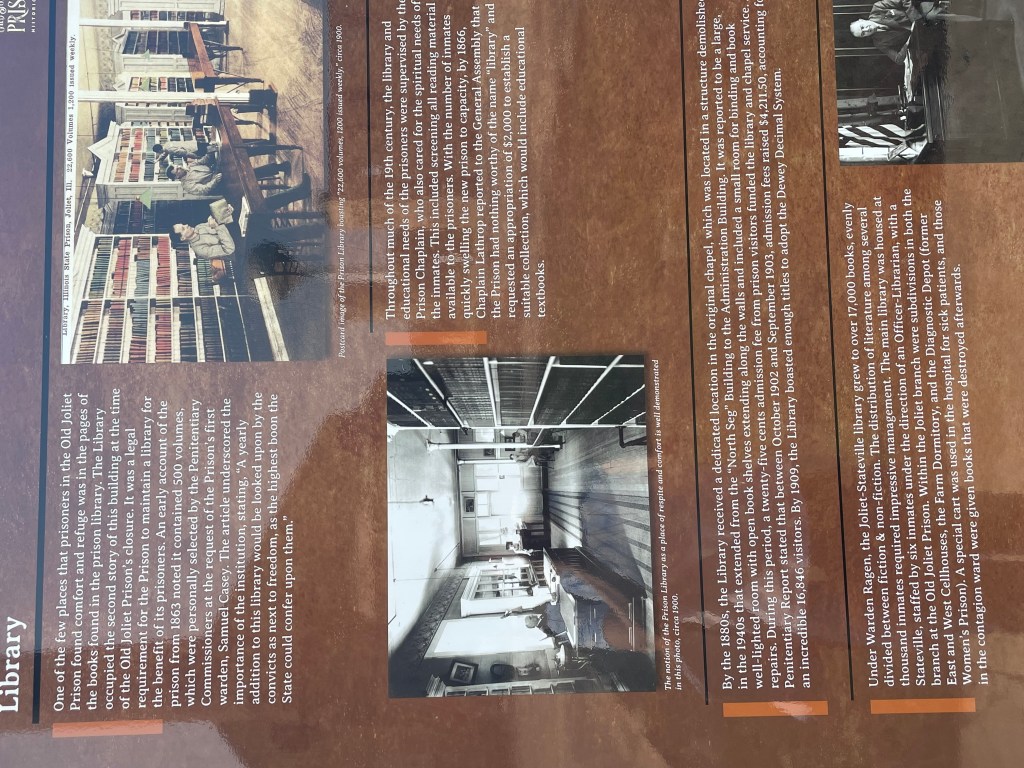
I did also take pics of all the informational signs posted around the site – I’ll put them here below in case you want to read more of the details. One thing I forgot to mention above – there were women at the prison – but they were only allowed outside ONE DAY each year (on July 4th). On this day, they would be taken to the cistern where they were able to do one complete circuit before being taken back inside. There’s a picture of the cistern below. The whole outing probably took no longer than 20 mins, tops. Apparently it was because of fears that seeing women would make the men too “excitable” and thus difficult to control, so the women had to be kept locked up. Can you imagine only being able to be outside in fresh air for a total of 20mins in a whole year?? No wonder Joliet had such a terrible reputation. The pits of hell, indeed.