So, fortunately this week promises to be a lot more fun than last week’s Theremini torture as Rod has generously bestowed a task upon me that will both get me out of the house and expose me to potential volunteer opportunities but also tick off my bucket list some of those Brown Sign places I drive past All The Time but have never visited! You know the score – you could live in a place for years but never go to that great tourist or cultural or artistic attraction that is literally down the street! That happened to me when I studied in Bristol – I would walk past the Museum every single day on the way to the Biological Sciences building but, until I graduated and was about to leave the city 3yrs later, I never set foot into it.
Firstly, what is a Brown Sign and what does a place need to do to get that designation? Well… as you might expect, the formal definition, as per the Illinois Department of Transportation (charmingly called iDOT for short!) is that “Brown traffic signs indicate nearby recreational and cultural interest sites. A sign showing a nearby state park is an example of a traffic sign with a brown background”. The brown background with white lettering is apparently an internationally recognized format for providing information to tourists (I can’t say I’ve ever noticed when I’ve been abroad!) and usually also includes a symbol on the indicator as well, and this is meant to represent the type of destination present in the area. I also discovered, as I trawled the iDOT website, that there is actually another special sign program called the Tourist Oriented Directional Signing Program (TODS) along various highways. This program involves installing blue-background signs at intersections in rural areas to advise tourists of businesses or attractions not visible from a state maintained highway – which I think is pretty cool and surprisingly thoughtful. Now, not to get too off topic (this is Brown Sign week after all) but there are very clear guidelines for businesses as to whether they would be eligible to get iDOT to put up a blue sign, directing people their way. And yes – I’m gonna share them with you below!
Business Eligibility Requirements
Businesses and/or attractions must be oriented toward tourism with the major portion of their income or visitors derived during their normal operating season from motorists not residing within 25 air miles.
Eligible businesses/attractions include, but are not necessarily limited to those offering gas, food, and lodging:
- Campgrounds
- Orchards/tree farms
- Produce stands
- Wineries
- Marinas
- Fishing/bait facilities
- Stage theaters
- Amusement parks
- Riding stables
- Antique and craft stores
- Museums
- Golf Courses
- Facilities offering aircraft, boat, or train rides
- Historic villages
Ineligible businesses/attractions include, but are not limited to:
- Shopping malls
- Furniture stores
- Drug stores
- Movie theaters
- Community business districts
- Appliance stores
- Automobile/truck dealerships or garages
- Houses of worship
- Real-estate offices
- Livestock sales facilities
- Sand and gravel facilities
- Grocery stores
OK so its pretty clear cut for those blue touristy signs – but who decides when a Brown Sign is warranted? I guess the recreational designation would probably be fairly straightforward (are you a state park or a wood?) but who decides whether something is of “cultural interest”? I dug into Brown Sign lore a little deeper and came across this very helpful little website, which went into the different types of brown sign in more detail: https://worksafetci.com/2019/12/what-are-brown-road-signs-used-to-indicate/ but STILL no clarification on the eligibility criteria for what constitutes “cultural interest”. I did noodle with the idea of emailing someone at iDOT to make enquiries – but they helpfully do not include any email address in their Contact Us page – only a phone number, so nope. So I guess its just going to have to remain a mystery – if any of you happen to know the answer, please feel free to enlighten me.
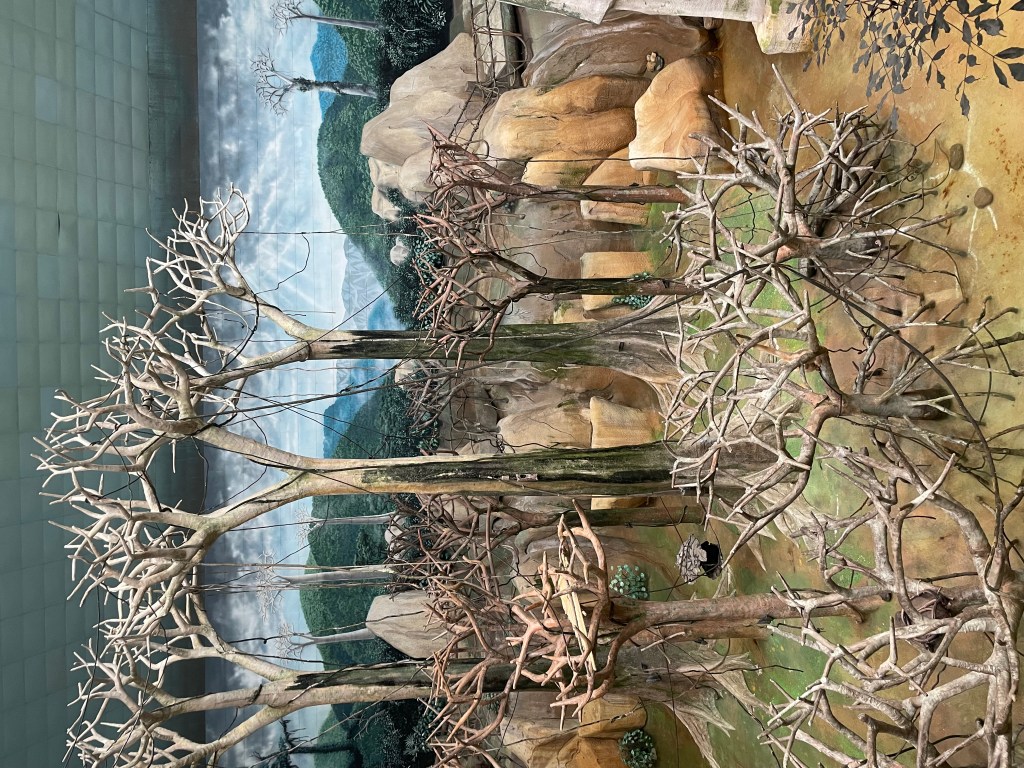
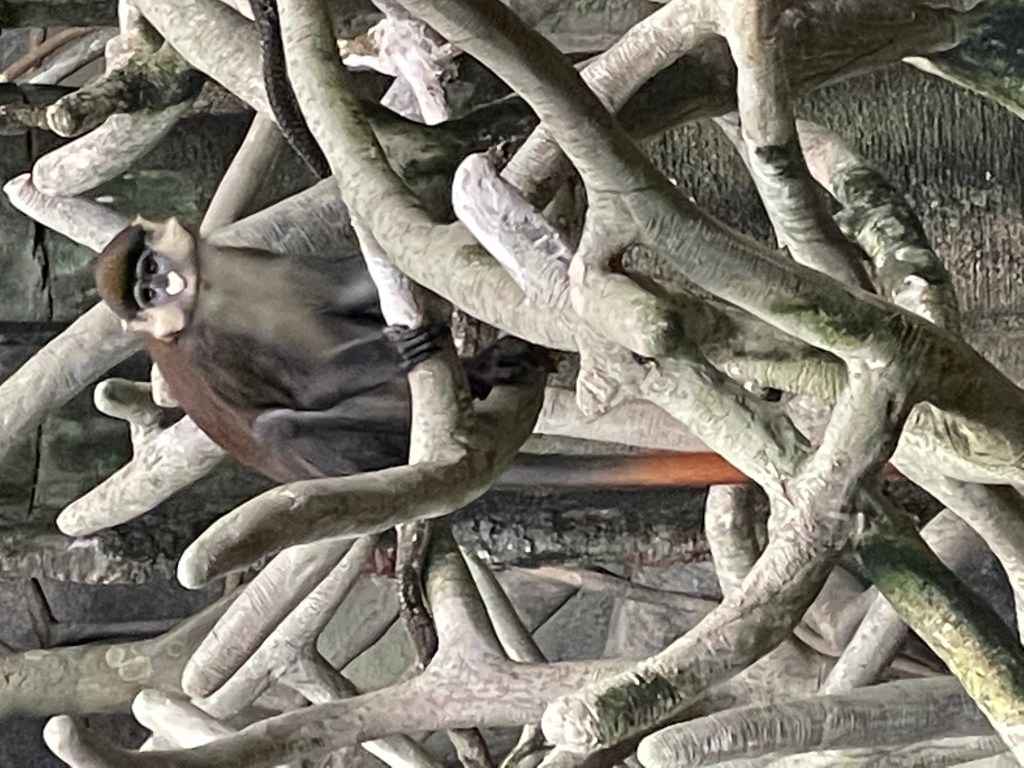
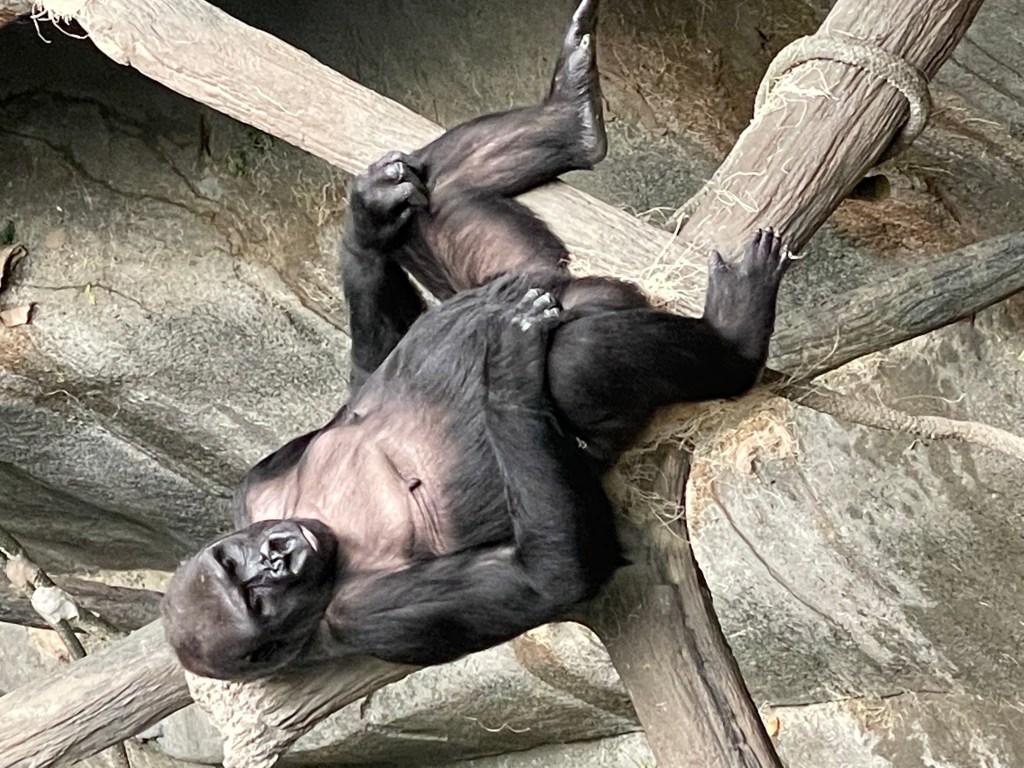
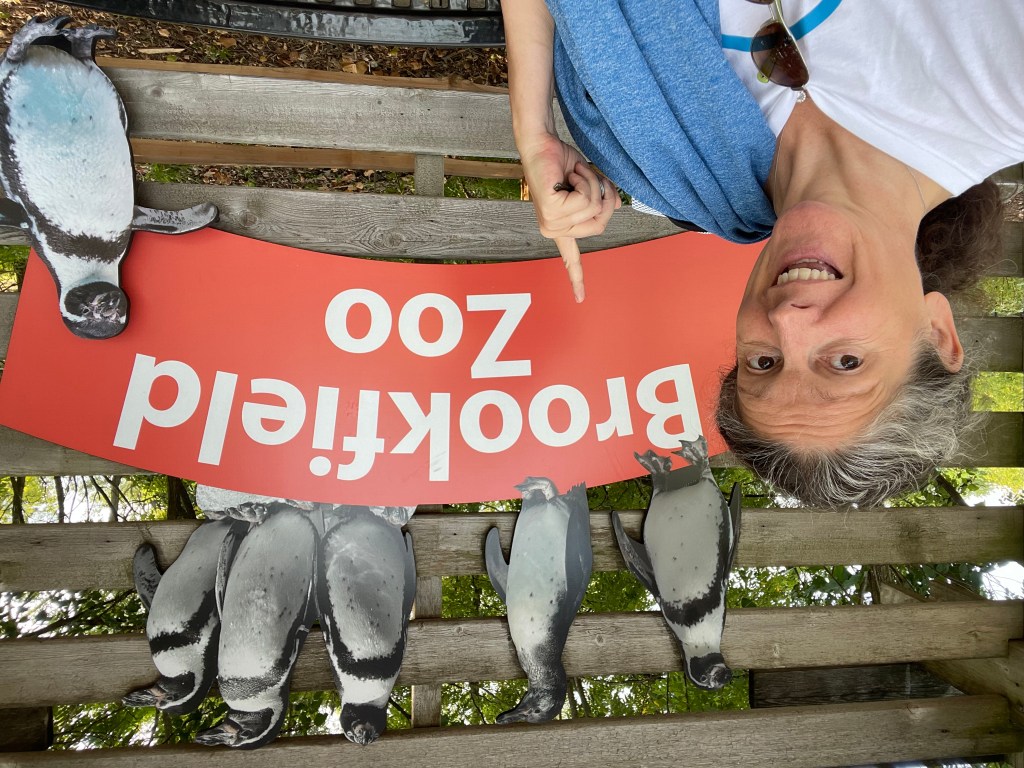
Anyway, enough rambling and on to the task at hand. My first choice of Brown Sign was very much one I have driven past almost every day for a number of years – I decided to take a trip to Brookfield Zoo!! Brookfield Zoo, also known as the Chicago Zoological Park, is a zoo located just a couple miles from me in Brookfield and its enormous! It houses around 450 species of animals in an area of 216 acres https://www.czs.org/BrookfieldZoo I have decidedly mixed emotions when it comes to zoos. My prevailing emotion when I walk round any zoo (even the awesome ones like Singapore Zoo) is sadness – particularly with the larger animals and big cats. It just doesn’t feel right to see them in small enclosures – and especially when you observe some of them just walking back and forth, back and forth. One of the polar bears at Brookfield was doing exactly that, repeatedly making a figure eight that had worn a muddy grove into the ground. Similarly, the rhino (HUGE!) was pacing around in a regular pattern so it was really difficult to view it and not feel dismayed. The only animals that looked happy were the wolves – but basically they are big smiley dogs anyway, so they were running around looking chipper like most dogs do! All the littler animals – totally fine – the red asian tree squirrel was having a blast and the gibbons had a great enclosure where they could jump through (fake) treetops and roam around in packs. And as for the insects and snakes and giant ass spiders – well, you can keep all those in a tiny box as far as I’m concerned. Shudder.

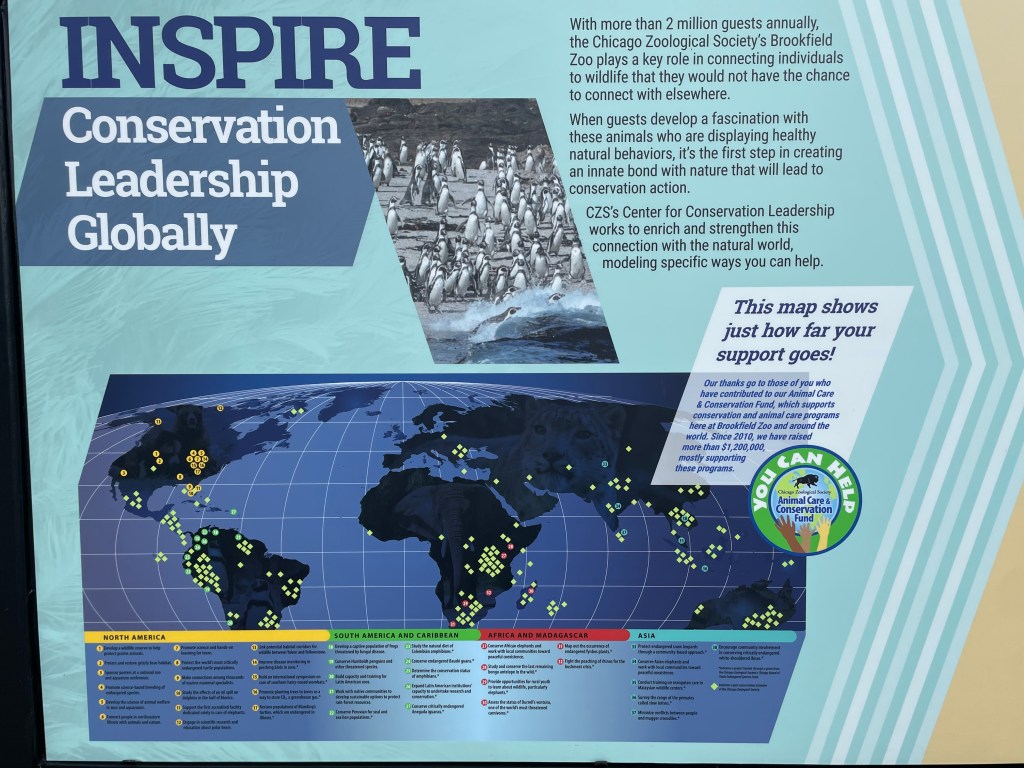
However, despite my natural disinclination towards zoos, I know that Brookfield Zoo is one of the leading conservation zoos in the country, so I decided to educate myself more about what they do outside of the zoo’s walls, rather than just focus on what I perceived to be some of the sadness within it.
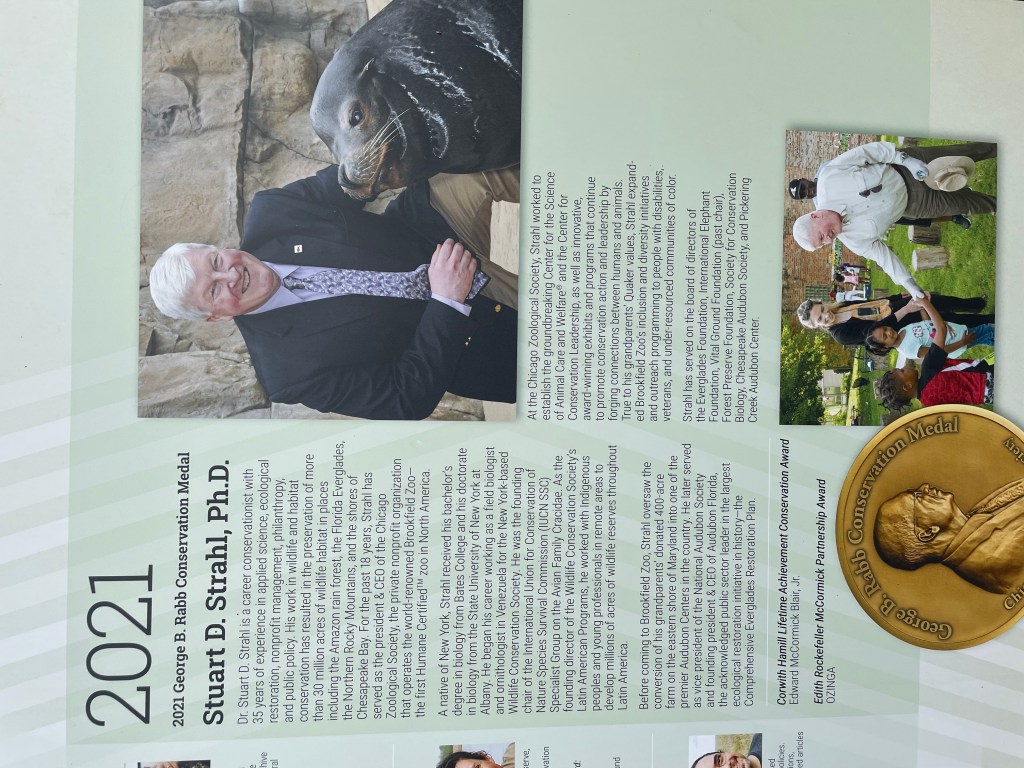
Well, crikey. The amount of conservation work that the zoo is involved in is just incredible. I’ve included a couple pictures of the informational signs dotted around the campus that describe the impact they have had – and continue to have around the world. They also recognize a single individual each year for their efforts – and reading through what this year’s winner has done is truly humbling. . And that, I guess, is the whole point. Like with the food pantry/depository, the collective efforts of the individual – or individual institutions – can really make a significant difference in the world.
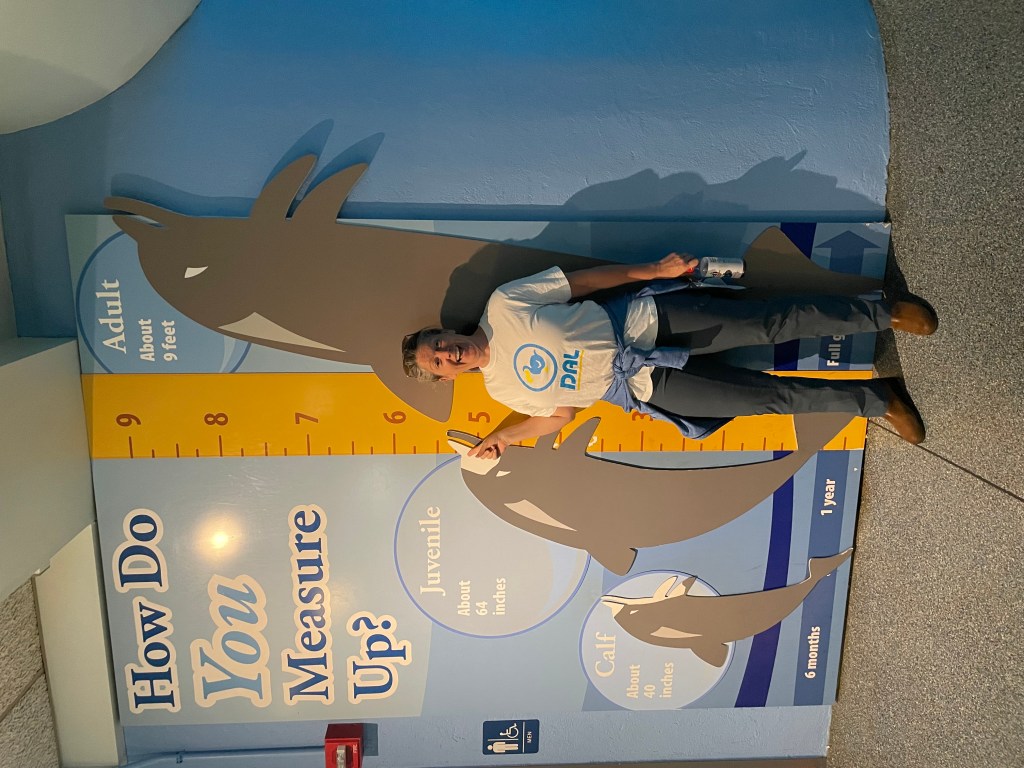
So here’s what I learned from today’s outing. Firstly – don’t try and take a photo of the Brown Sign as you are driving past it. A) its dangerous and B) you WILL then miss your turn. Secondly, keep an open mind and educate yourself before rushing to judgement. While I still don’t really like zoos, I do appreciate they are there for a reason (some of these animals would not survive in the wild) and that they are playing a vital role in getting people interested in animals and conservation – which then leads to getting funding to support these efforts worldwide. Certainly it was NOT a cheap day out – $15 to park, then another $20 entrance fee, so hopefully that helps some dolphin somewhere. I don’t think today’s excursion led me to any revelatory insights for my retirement plans – due to the pandemic, the zoo has suspended its volunteer program until the fall of 2022, so I wasn’t able to explore any of those opportunities further. But reading through the volunteer page, it makes it clear that none of the volunteers basically get anywhere near any of the animals (probably a good thing!) so that put paid to my ideas of sitting around playing with the pandas. But I can now say I’ve been to Brookfield Zoo so that Brown Sign is checked off the list so mission accomplished. Tomorrow, I’m off to jail!