


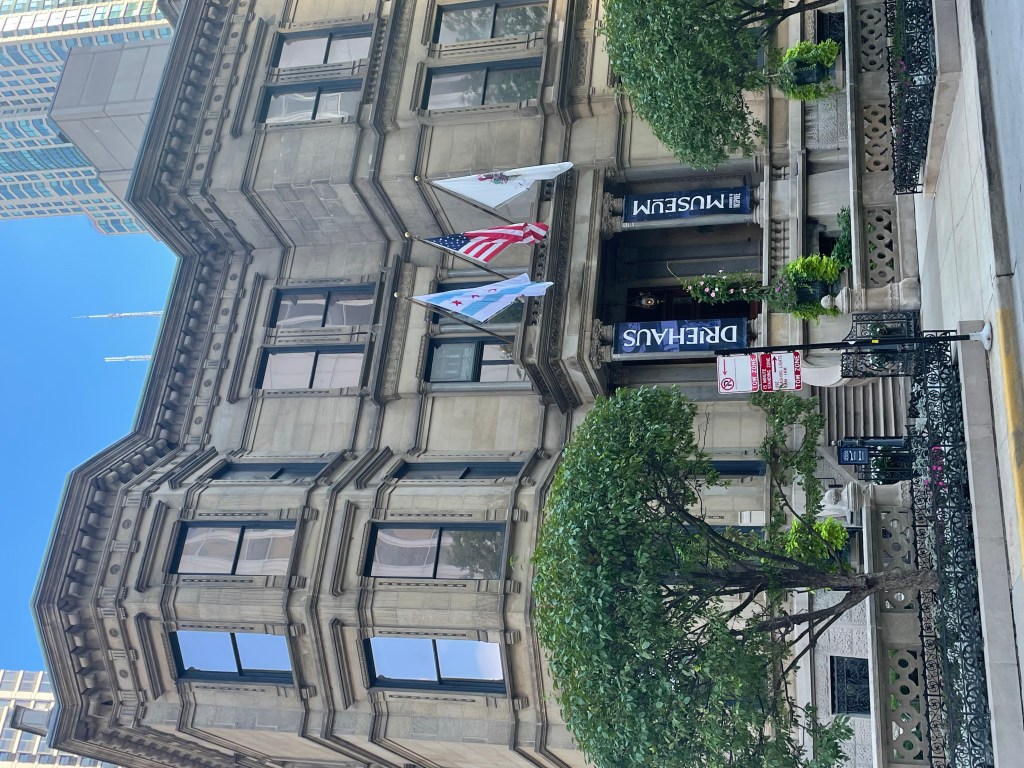
Second to last stop on this week’s Brown Sign Tour and, this time, a place within walking distance of our city place – the beautiful Richard Driehaus Museum https://driehausmuseum.org/ As with all my other visits, I’ve walked past this place several times (usually when we’re off out in the evening in search of a restaurant) but this was going to be first time I’d stopped by, so I was excited. It opened at 10am and was only a short walk away, so I was there fairly soon after it opened up. My first impressions on walking through the front door was “WOW” – this place was seriously fancy. I checked in with the lady at the reception desk to buy my ticket and she let me know that there would be a guided tour starting at 10.30am, if I was interested in that (for only an extra $5). I most certainly was, so happily paid the extra fee and then decided to head back outside to find coffee. The receptionist recommended this little Italian deli just a block or so away – which I actually managed to find, so got myself a small cup of black coffee as well as a little Italian cookie for breakfast. A very civilized way to start the day.

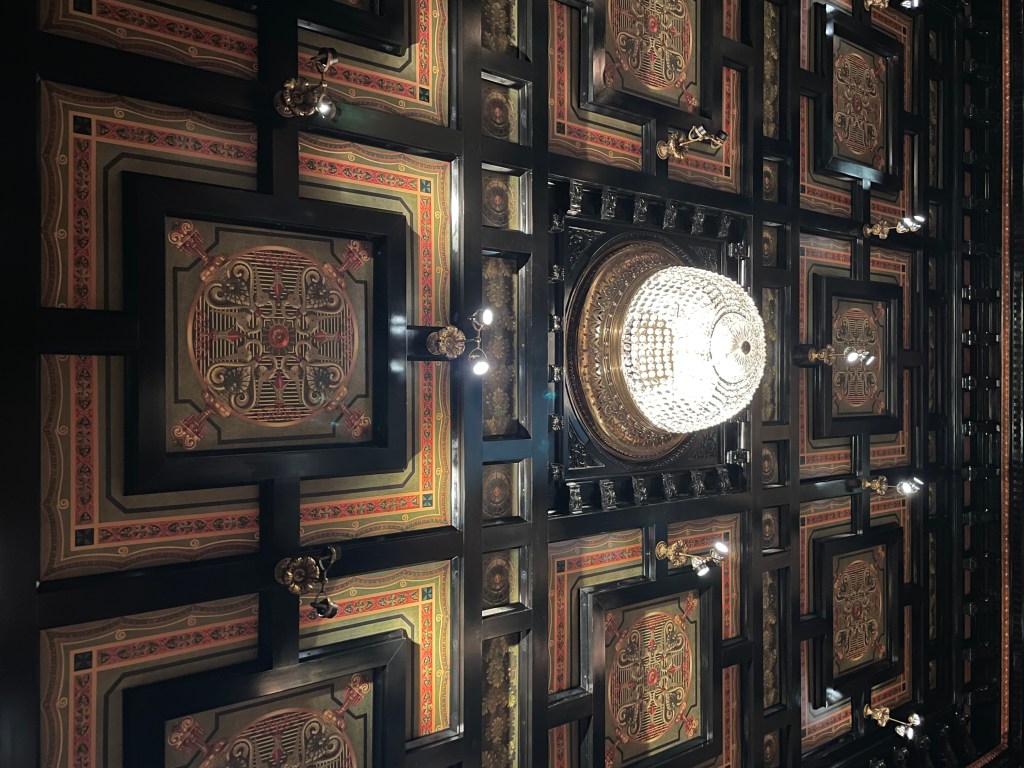
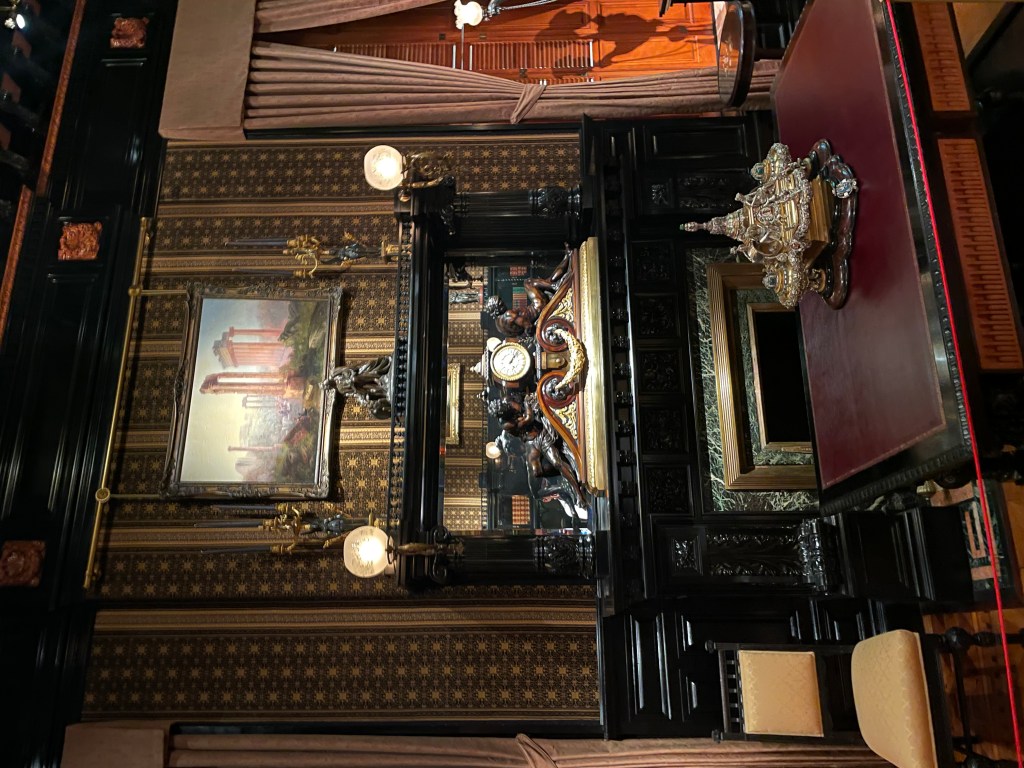
Soon enough, it was time to head back and there were about 10 of us on the tour, so it was a nice small group. Our tour guide (whose name I’ve forgotten – sorry!) was a lovely lady who – as you’d expect – was extremely knowledgeable, personable and enthusiastic about the building and the historical period. Now – FULL DISCLAIMER – I did the best I could but I’m afraid my photos won’t do this incredible piece of historical architecture any justice at all. If you live in Chicago, you have to come here and see it for yourself. It’s absolutely worth a visit – and don’t skimp on the tour. Our lady pointed out all sorts of fascinating details that you will DEFINITELY overlook if you are just wandering through by yourself.

But first – what was the Gilded Age and how did it give rise to such impressive houses such as this? Here’s what Wikipedia has to say about the Gilded Age:
In United States history, the Gilded Age was an era extending roughly from 1870 to 1900. It was a time of rapid economic growth, especially in the Northern and Western United States. As American wages grew much higher than those in Europe, especially for skilled workers, and industrialization demanded an ever-increasing unskilled labor force, the period saw an influx of millions of European immigrants.
The rapid expansion of industrialization led to real wage growth of 60% between 1860 and 1890, and spread across the ever-increasing labor force. The average annual wage per industrial worker (including men, women, and children) rose from $380 in 1880, to $564 in 1890, a gain of 48%.[1] Conversely, the Gilded Age was also an era of abject poverty and inequality, as millions of immigrants—many from impoverished regions—poured into the United States, and the high concentration of wealth became more visible and contentious.[2]
Railroads were the major growth industry, with the factory system, mining, and finance increasing in importance. Immigration from Europe, and the Eastern United States, led to the rapid growth of the West, based on farming, ranching, and mining. Labor unions became increasingly important in the rapidly growing industrial cities. Two major nationwide depressions—the Panic of 1873 and the Panic of 1893—interrupted growth and caused social and political upheavals.
The South remained economically devastated after the American Civil War; the region’s economy became increasingly tied to commodities, cotton, and tobacco production, which suffered from low prices. With the end of the Reconstruction era in 1877, African-American people in the South were stripped of political power and voting rights and were left economically disadvantaged.
The political landscape was notable in that despite some corruption, election turnout was very high and national elections saw two evenly matched parties. The dominant issues were cultural (especially regarding prohibition, education, and ethnic or racial groups) and economic (tariffs and money supply). With the rapid growth of cities, political machines increasingly took control of urban politics. In business, powerful nationwide trusts formed in some industries. Unions crusaded for the eight-hour working day, and the abolition of child labor; middle class reformers demanded civil service reform, prohibition of liquor and beer, and women’s suffrage.
Local governments across the North and West built public schools chiefly at the elementary level; public high schools started to emerge. The numerous religious denominations were growing in membership and wealth, with Catholicism becoming the largest. They all expanded their missionary activity to the world arena. Catholics, Lutherans, and Episcopalians set up religious schools, and the larger of those set up numerous colleges, hospitals, and charities. Many of the problems faced by society, especially the poor, gave rise to attempted reforms in the subsequent Progressive Era.[3]
The “Gilded Age” term came into use in the 1920s and 1930s and was derived from writer Mark Twain and Charles Dudley Warner‘s 1873 novel The Gilded Age: A Tale of Today, which satirized an era of serious social problems masked by a thin gold gilding. Like a piece of gilded jewelry, it looked beautiful on the outside. But beneath the thin veneer of gold lay cold black iron. The early half of the Gilded Age roughly coincided with the mid-Victorian era in Britain and the Belle Époque in France. Its beginning, in the years after the American Civil War, overlaps the Reconstruction Era (which ended in 1877).[4] It was followed in the 1890s by the Progressive Era.
Reading through the second paragraph of that definition above – particularly regarding the concentration of wealth, inequality and rapid advancement of industrialization & technology – led me to wonder “are we in a second Gilded Age” right now? All those issues sound equally as relevant today as they were 100 years ago. I obviously wasn’t the first to have that thought as – when I googled that very question – numerous essays, lectures and opinion pieces popped up to espouse on the subject. One particularly interesting article by History.com https://www.history.com/news/second-gilded-age-income-inequality described the original Gilded Age as “an era marked, not unlike ours, by a powerful duality. It was both the best of times and the worst of times. It was an age of both enthusiasm and anxiety”. This article concludes by wondering whether the United States is also poised for a Second Progressive Era. The original Progressive Era (1900-1920), was a period following the Gilded Age that was marked by a vast array of reforms that alleviated poverty, increased workplace safety, improved public health and education, restrained big business, adopted an income tax, granted women the right to vote and made the political process more democratic. I would like to hope to – but I have to say, I’m not particularly optimistic.
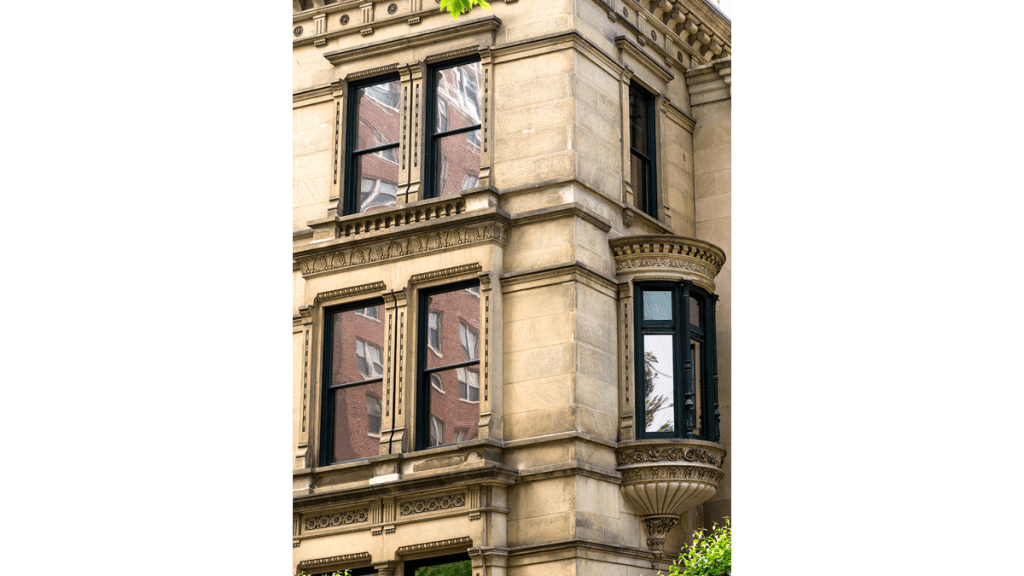
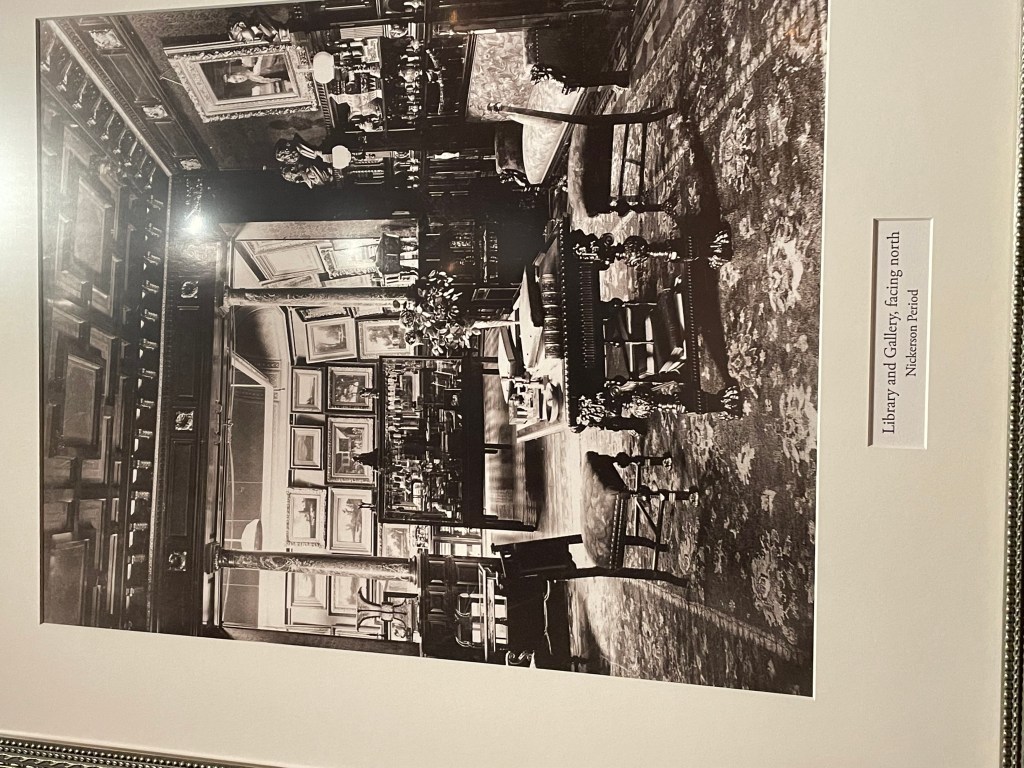
But enough of those somewhat depressing musings – back to the tour!! Our tour guide gave us the full history of the house – more of which you can read here if you are so inclined: https://driehausmuseum.org/about/history It was originally commissioned in 1879 by Mr. S. M. Nickerson, President of the First National Bank of Chicago and it took 4yrs to build.
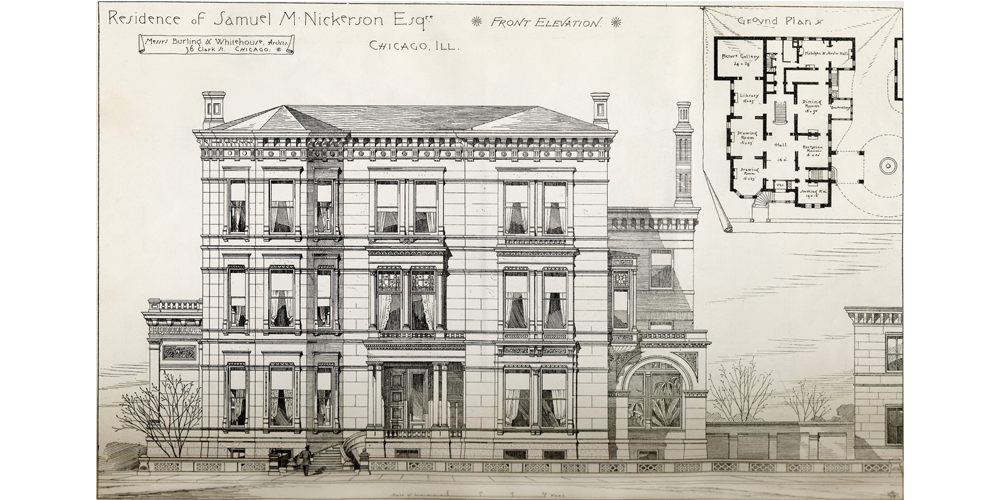
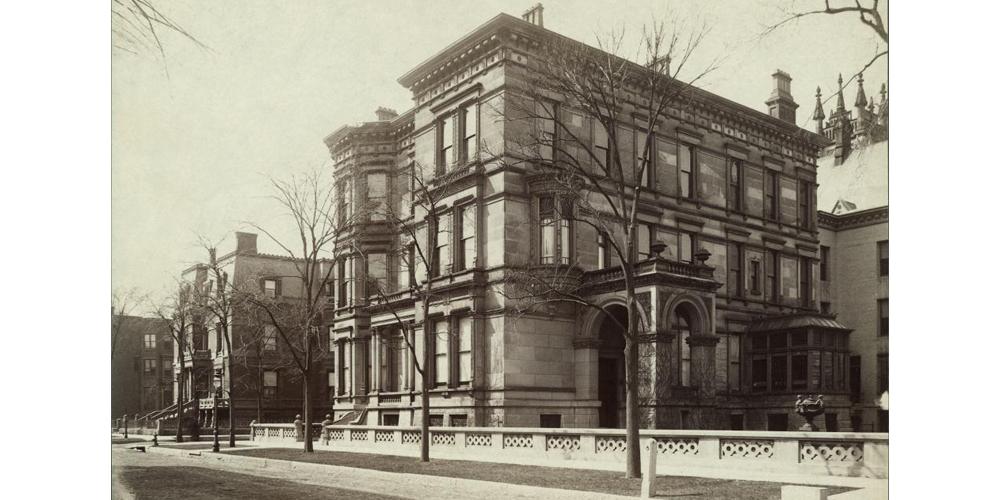
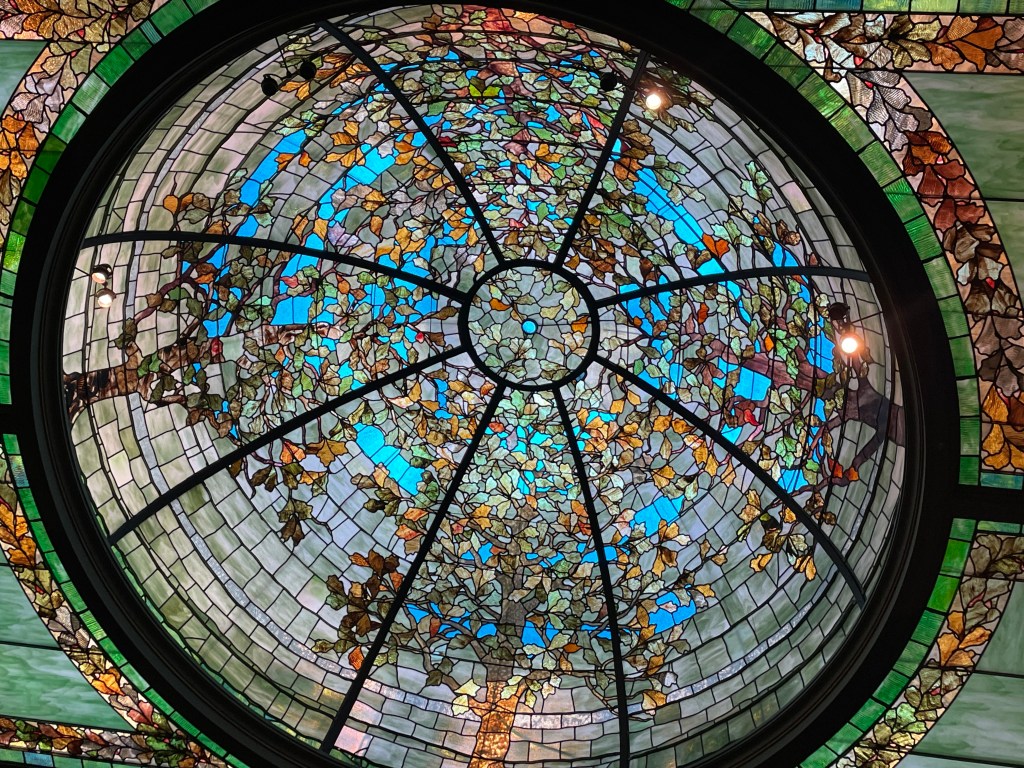
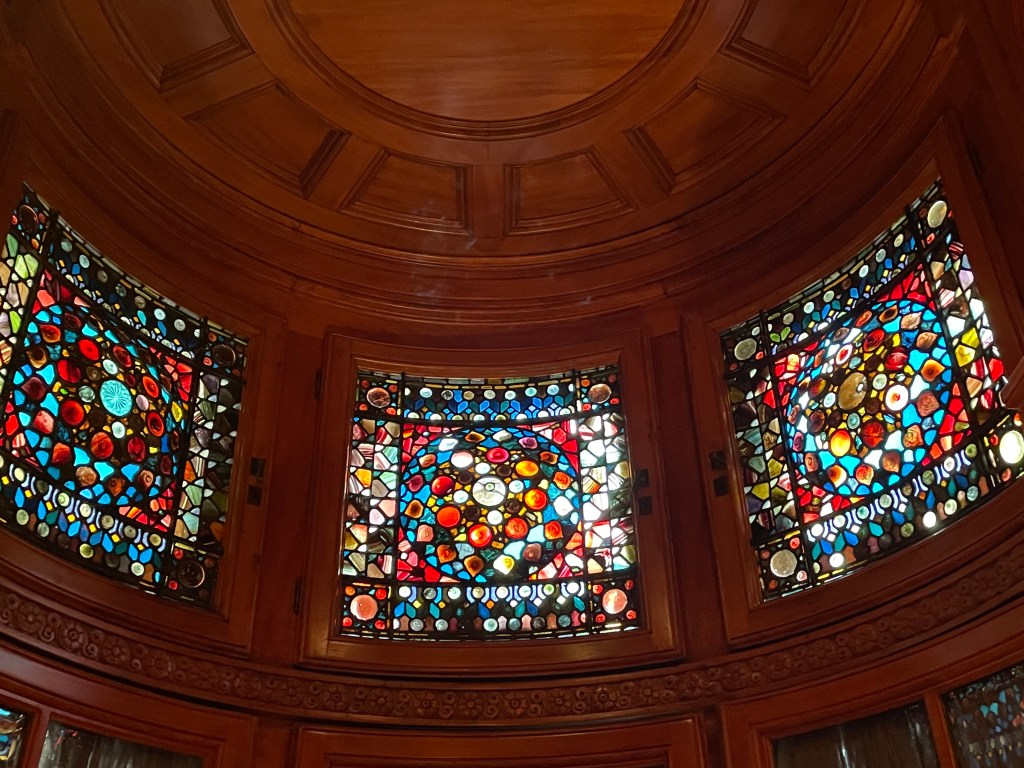
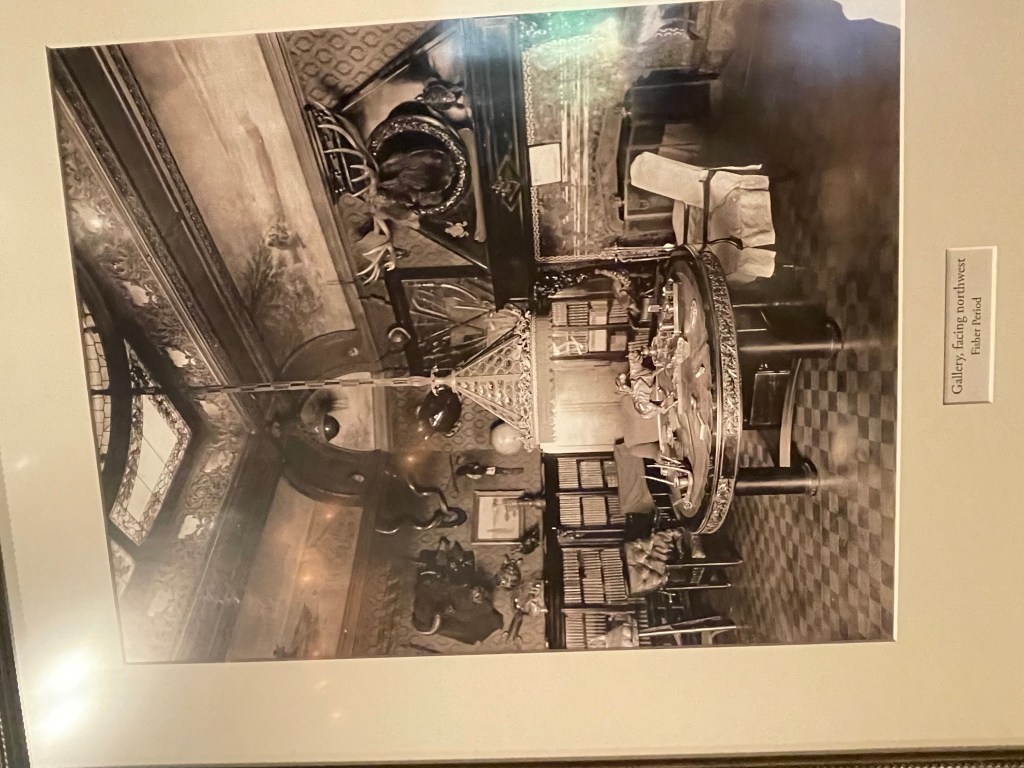
In 1900, the Nickersons moved back East to retire and the Fisher family moved in (he was a real estate mogul and President of the Union Paper Bag company). One of the key renovations he made was to replace and update the stained glass dome in the Gallery – a simply stunning edition.
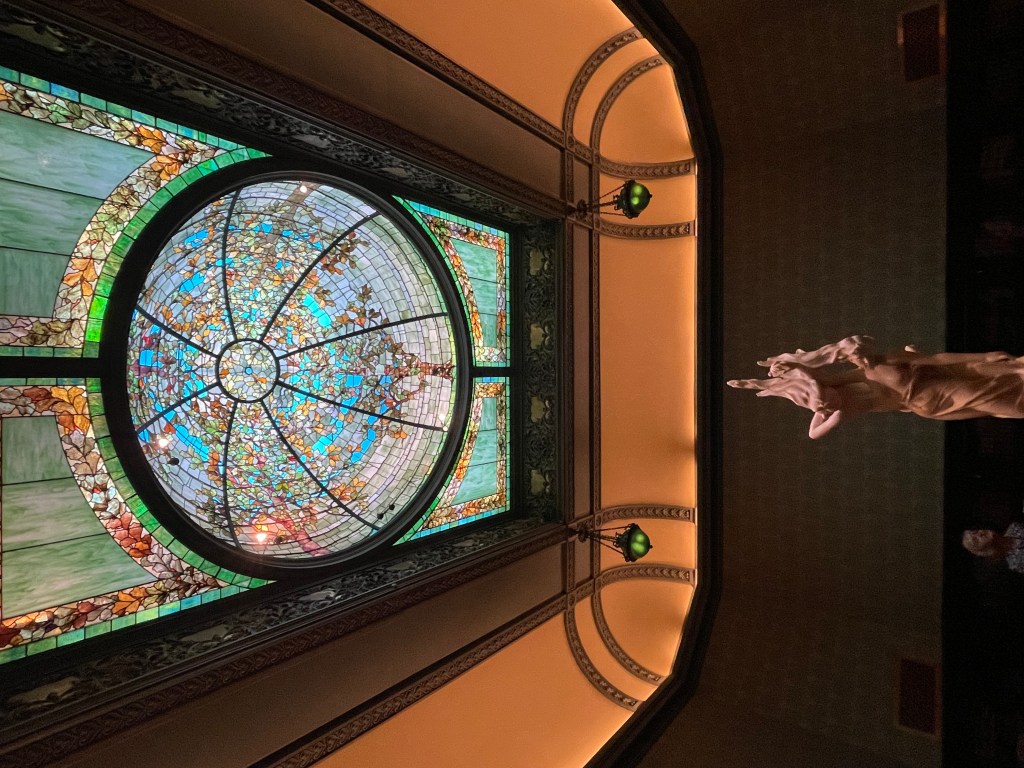
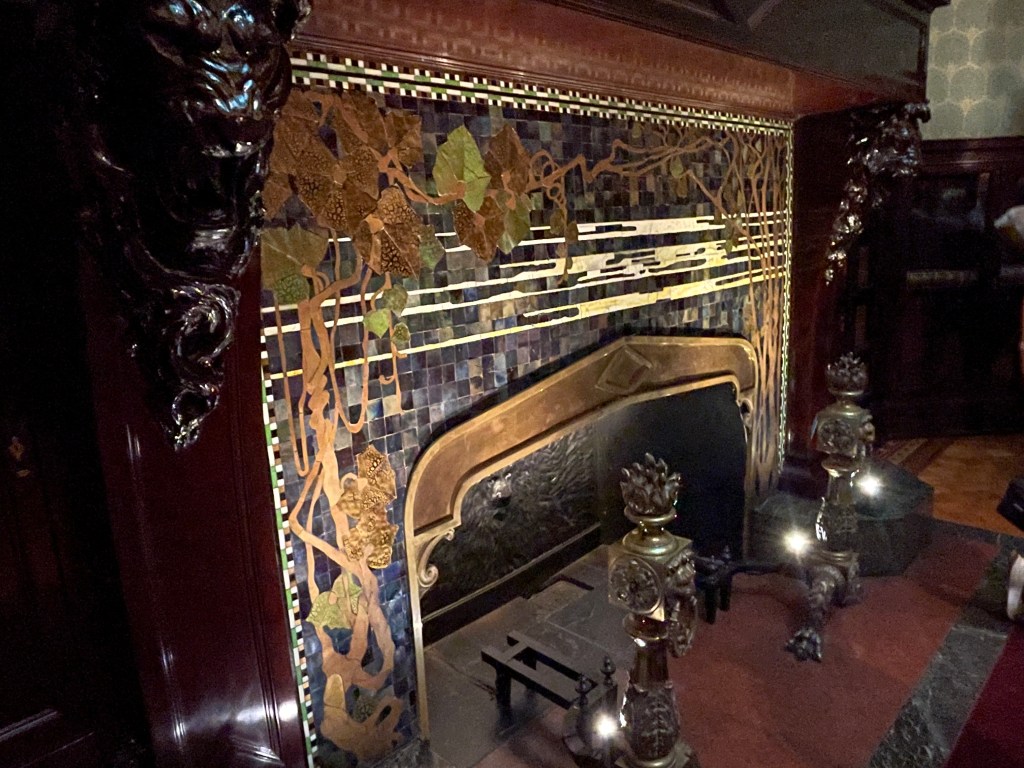
Its incredible to think now, but over the years, the Gilded Age buildings started to either fall into disrepair or find themselves in increasingly undesirable neighborhoods. The Nickerson mansion used to be in a very exclusive part of Chicago, surrounded by other similar grand houses, but as the Industrial revolution progressed, more and more commercial properties started to move into the area, changing its nature – and desirability to the ultra-wealthy. Once the Fishers passed away, the house passed to his daughter who then put it on the market. Which is where it languished for 4 yrs – with no buyers – for the reasons mentioned above. The rich no longer wanted to live in that part of town. Fortunately, what eventually happened – and saved the Nickerson mansion from the wrecker’s ball – was that a group of about 100 prominent Chicago citizens clubbed together to buy the building – and then to donate it to the newly-formed American College of Surgeons, for them to use as their national headquarters. They occupied the building (as office space) from 1920 to 1963, after which it was randomly rented out here and there to various organizations and individuals.
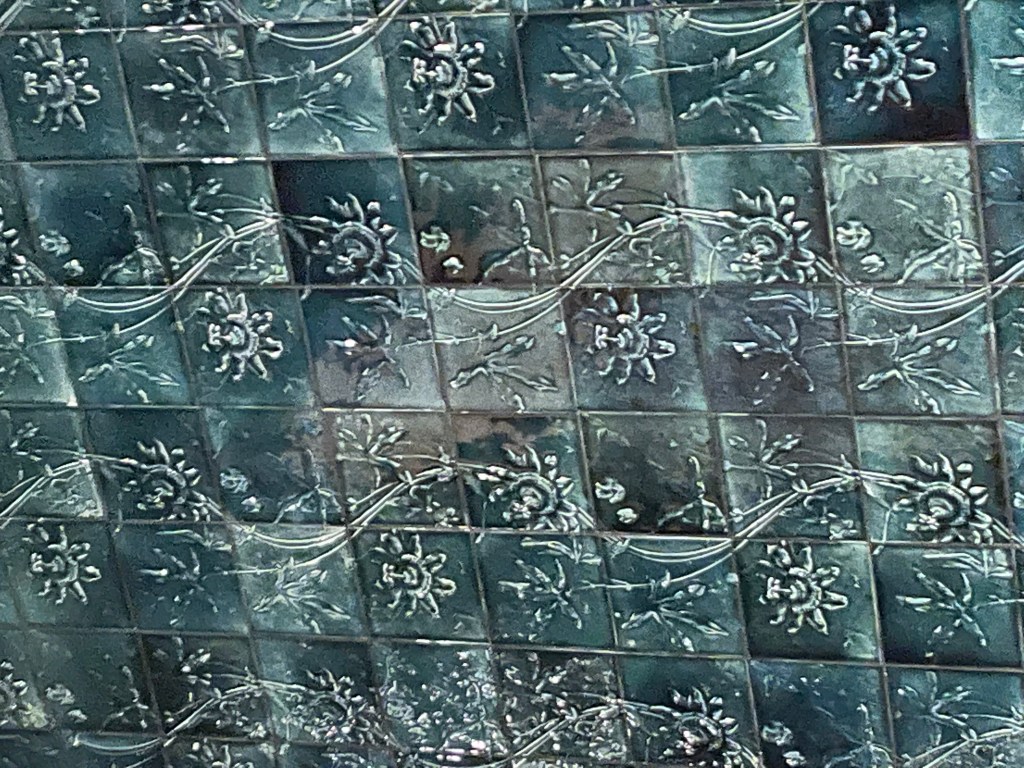
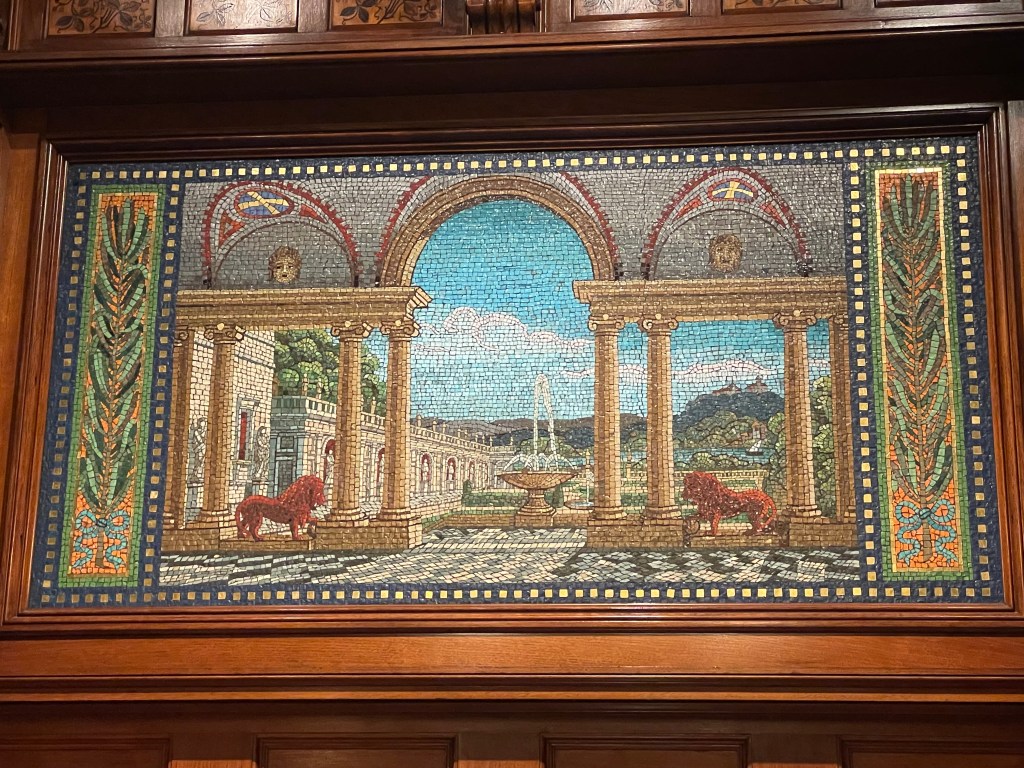
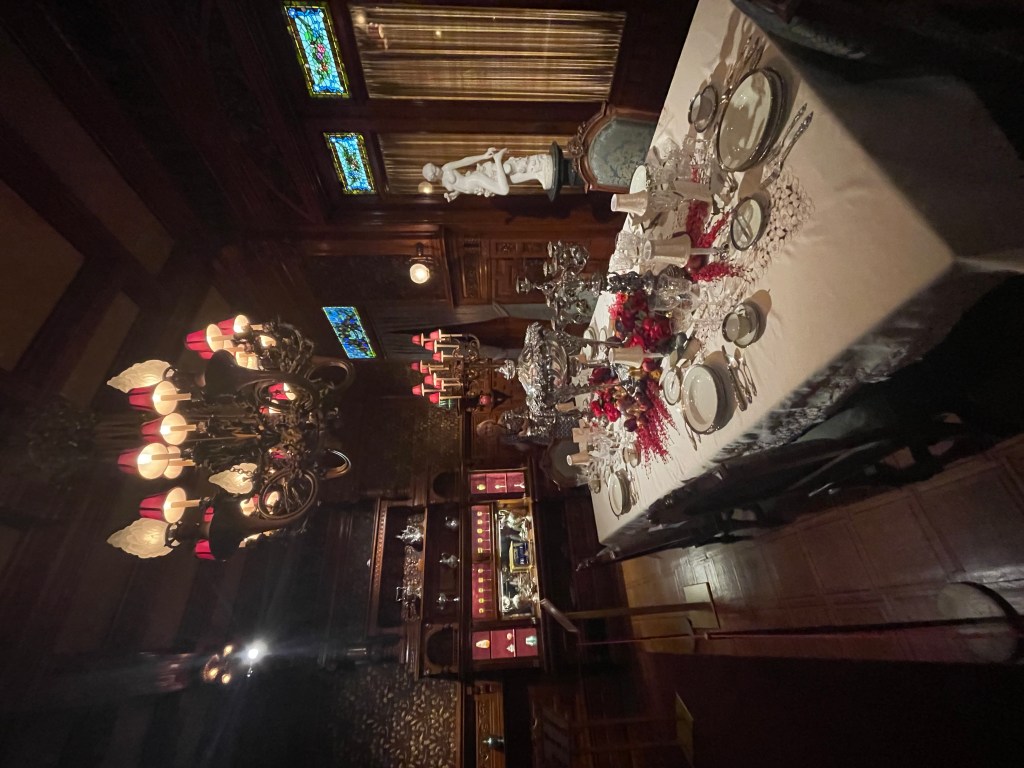
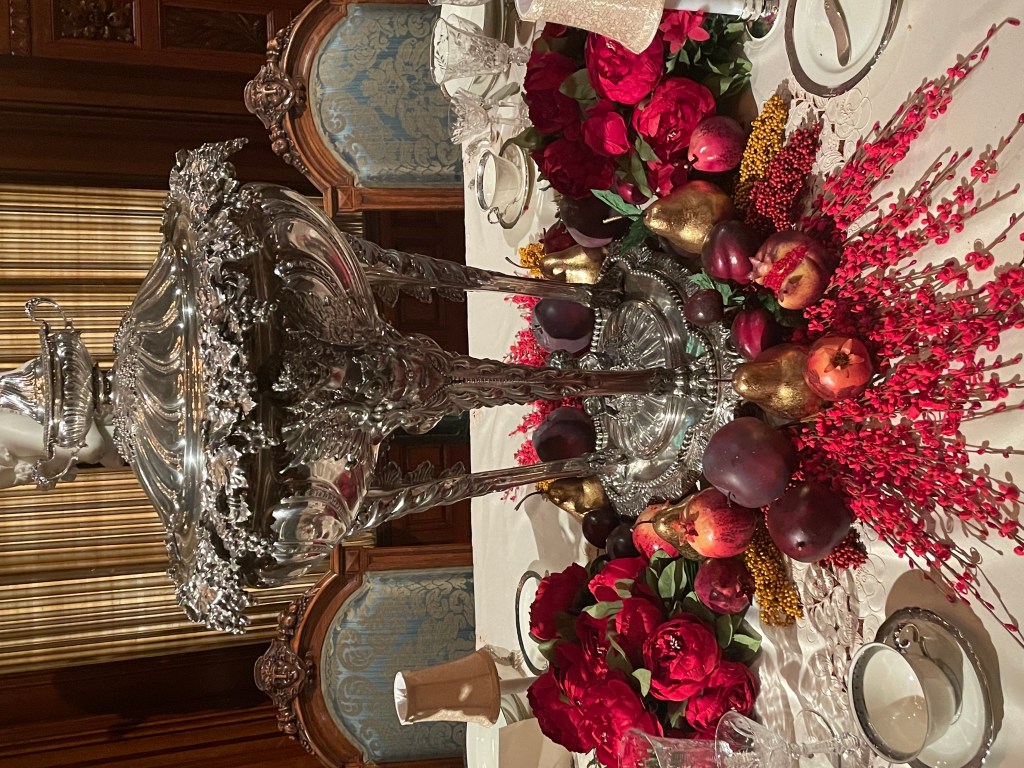
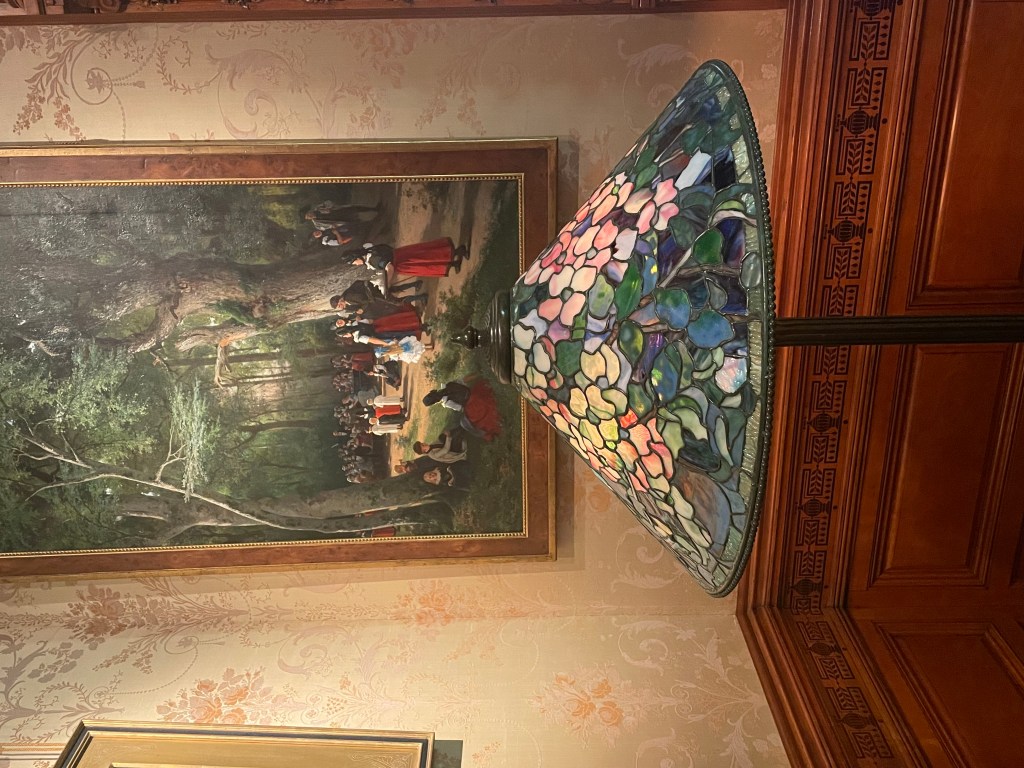
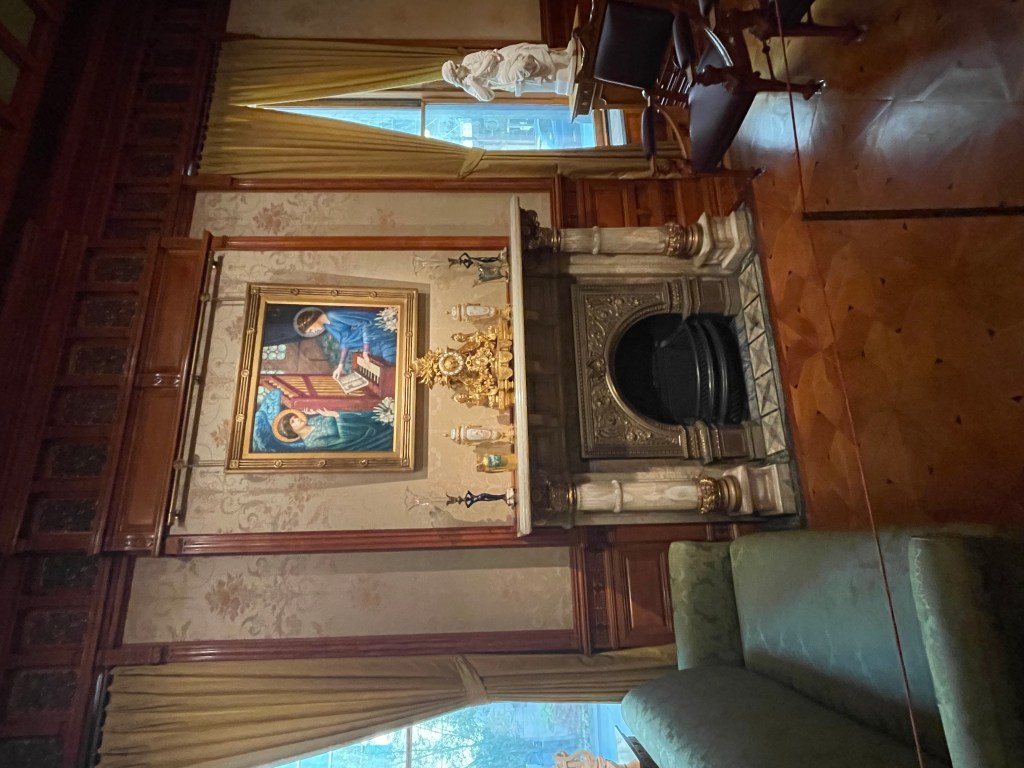
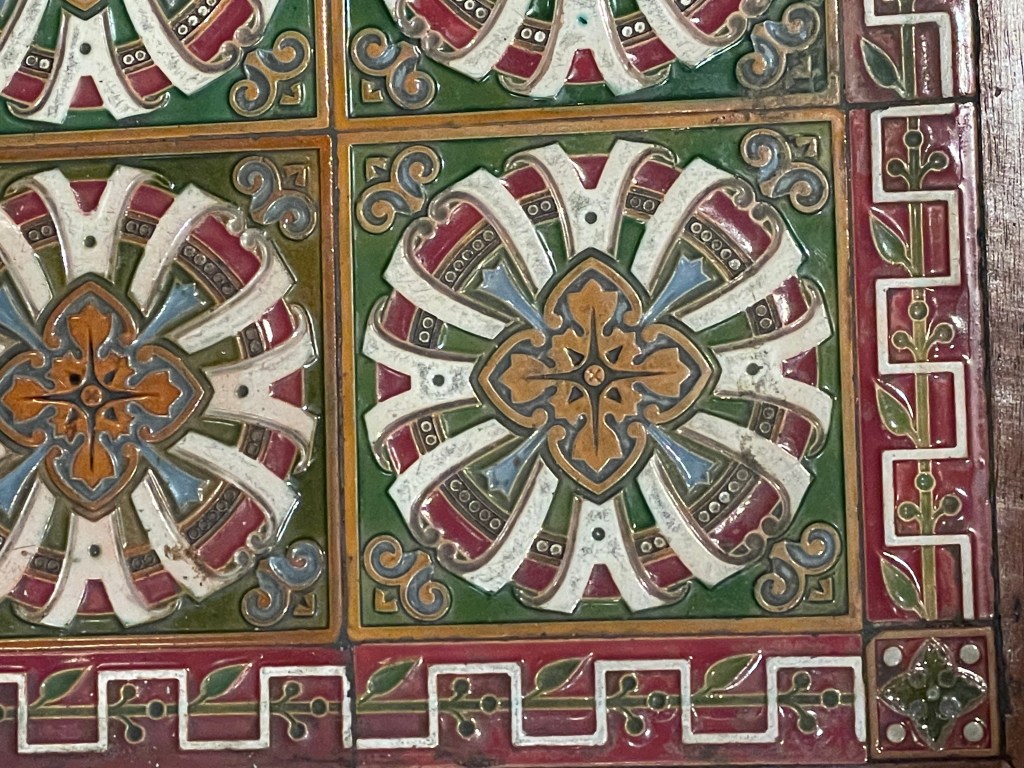
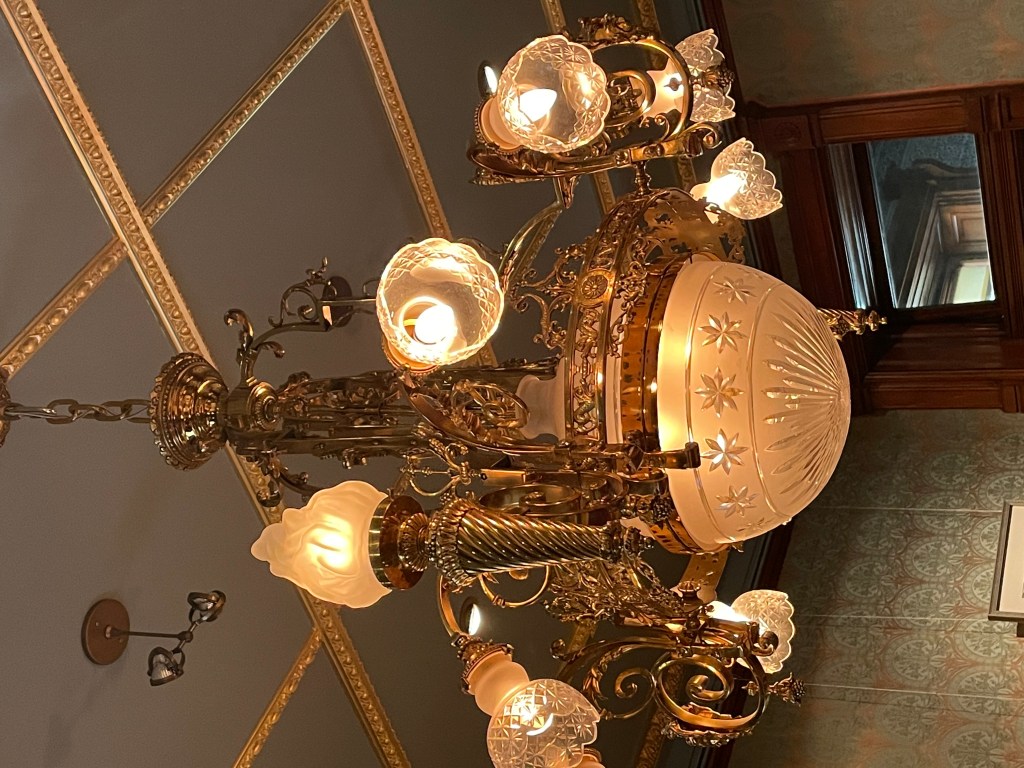
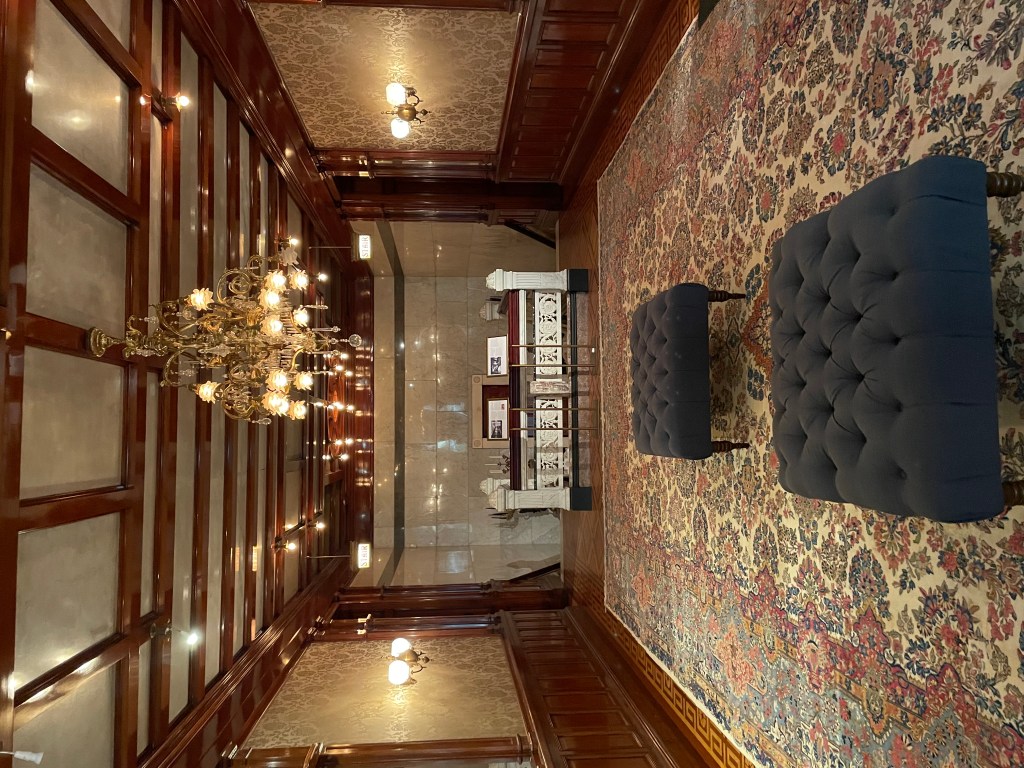
Finally, in 2003, Chicago philanthropist and businessman Richard Driehaus acquired the property with the sole intention of preserving it as a museum (he never intended to live in it). The restoration took 5 years and it opened to the public in 2008. The first floor houses the main rooms for entertaining, reception and dining – and a veritable treasure trove of period furnishings and antiques. If you are a fan of Tiffany glass, then you will be in absolute heaven. There are gorgeous pieces simply everywhere. The wall coverings, wooden parquet floors and accent tiles are also exquisite – it was built in a time of the Aesthetic movement, where designers and artists aimed to escape the ugliness and materialism of the Industrial Age, by focusing instead on producing art that was beautiful rather than having a deeper meaning – ‘Art for Art’s sake’. Thus in the main reception room, you have designs and inspirations from all over the world basically all jammed together – if it was considered beautiful, it was included. A similar Aesthetic movement had also taken root in England too – our beloved Victoria and Albert Museum has a great overview of this design philosophy: https://www.vam.ac.uk/articles/an-introduction-to-the-aesthetic-movement
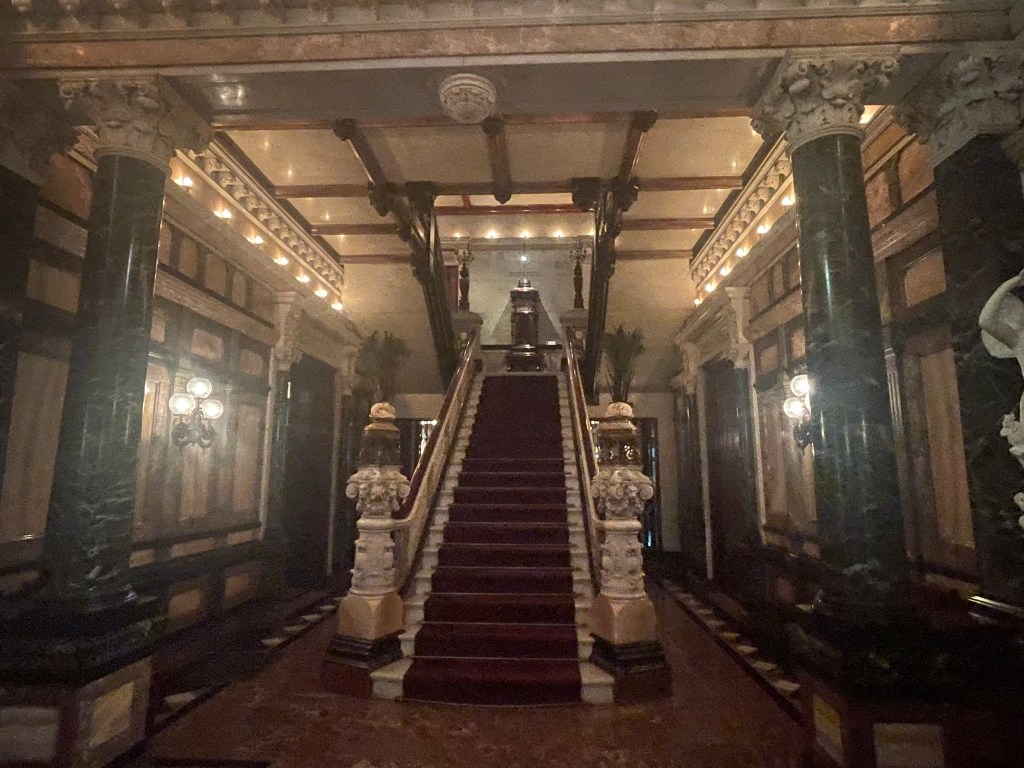
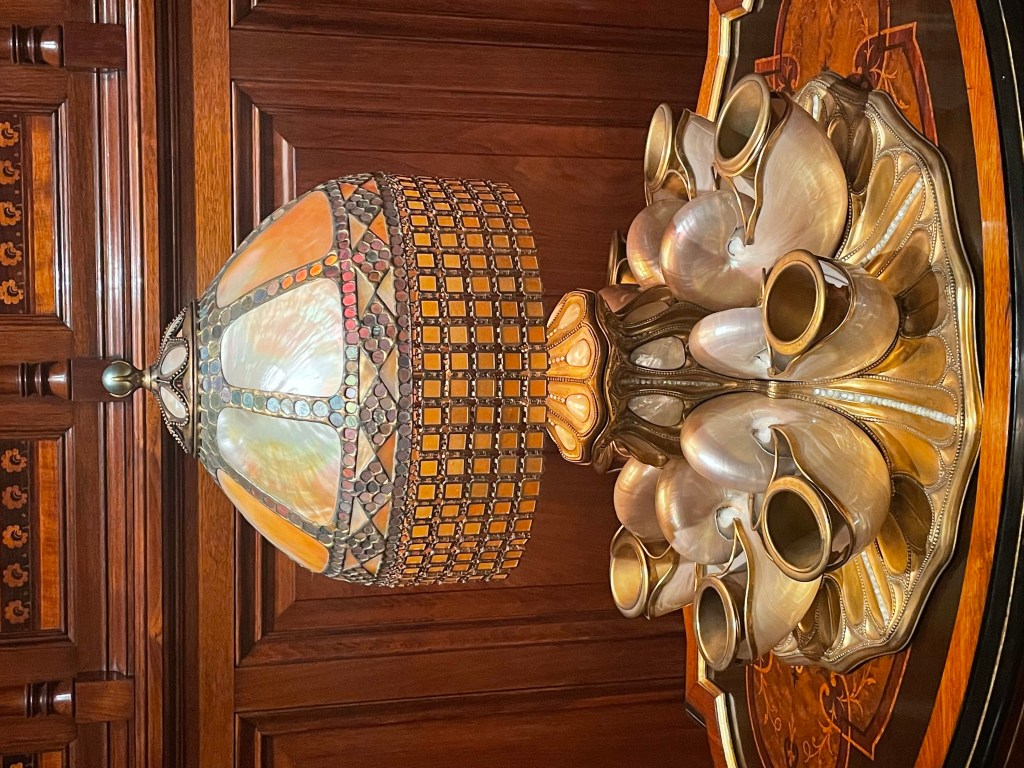
All in all, it was a wonderful tour – it lasted just under an hour – and finished up next to the gift shop! And yes, I did buy a couple of little knick-knacks – you wouldn’t expect anything less, I’m sure. I did ask about volunteer opportunities (who wouldn’t want to be surrounded by such beauty all day, dreaming of what it would have been like to live there) – but the lady at the desk didn’t know if the current program was back again, post-COVID, so she gave me the name of someone to email to find out more. Could I see myself volunteering there – maybe. It was certainly enriching to the soul and to the spirit to be surrounded by such exquisite craftmanship and commitment to restoration and preservation efforts. But I have no idea what the volunteering would entail (or if its even possible). And also – isn’t the point of volunteering also to help others? While I might “fill my cup” as it were, would it ultimately be a little hollow or too self-serving if it didn’t have a broader tangible impact somewhere? Maybe as I consider how to parse out my time, I could find activities – or a blend of activities – that allow me to meet both sets of needs. That sounds fair to me.
As I said, the photos don’t really do it justice – but I hope you enjoy them nonetheless. If you are interested in learning more about some of the stand-out pieces in the collection, then the link below takes you through some of the collection’s highlights.
https://driehausmuseum.org/exhibitions/collection-highlights










No Comments
Such a treat, thanks for sharing!