Made it to the gym again (so virtuous, right?) and ready to be picked up after breakfast at around 8am. The food at the hotel is great although we skipped dinner last night as lunch was so late and we were all completely knackered after our epic day! (I did have a slightly larger breakfast this morning, in case the late lunch becomes a trend…). Our hotel is perfectly situated as we have a wonderful view of the pyramids from the Marriott Mena hotel. Founded in 1886 by some rich aristocratic Brits, its early history is a veritable who’s who of the rich and influential in its early years, having hosted royalty, politicians and literati of the time (Sir Arthur Conan Doyle stayed there). It’s about an hour’s drive from the airport – and about an hour’s drive from everything, depending on traffic. My room doesn’t have a view of the pyramids, unfortunately, but it does have a nice view of the swimming pool and gardens (which its just a wee bit too cold to enjoy at the moment – highs in the low 70’s but its mid-40’s first thing in the morning). There were lots of old photos of the hotel from its early days adorning the walls in the corridors and it was quite interesting to see how its evolved and expanded over the years. If you are interested, you can read more about the hotel and see some of those pics here: https://www.historichotelsthenandnow.com/menahousegiza.html
So today’s itinerary started with a visit to the National Museum of Egyptian Culture, a new attraction that was only completed last year and opened with great fanfare! (you can actually watch the opening ceremony on their website Obviously, its impossible to list all of the artefacts we saw at the museum, but one of the main attraction is its Mummies Hall, designed to display the mummies of the ancient Kings and Queens of Egypt in a way that is reminiscent of strolling down the Valley of the Kings. There are 20 Royal Mummies in total – 18 Kings and 2 Queens, from the 17th to the 20th Dynasty (so from around 1,000BC). https://nmec.gov.eg/mummies-hall/. and the opening ceremony featured “The Pharoah’s Golden Parade” with bejazzled golden armoured trucks carrying each of the Royal Sarcophagi with the name of the King or Queen emblazoned on the front. They are definitely the star of the show!


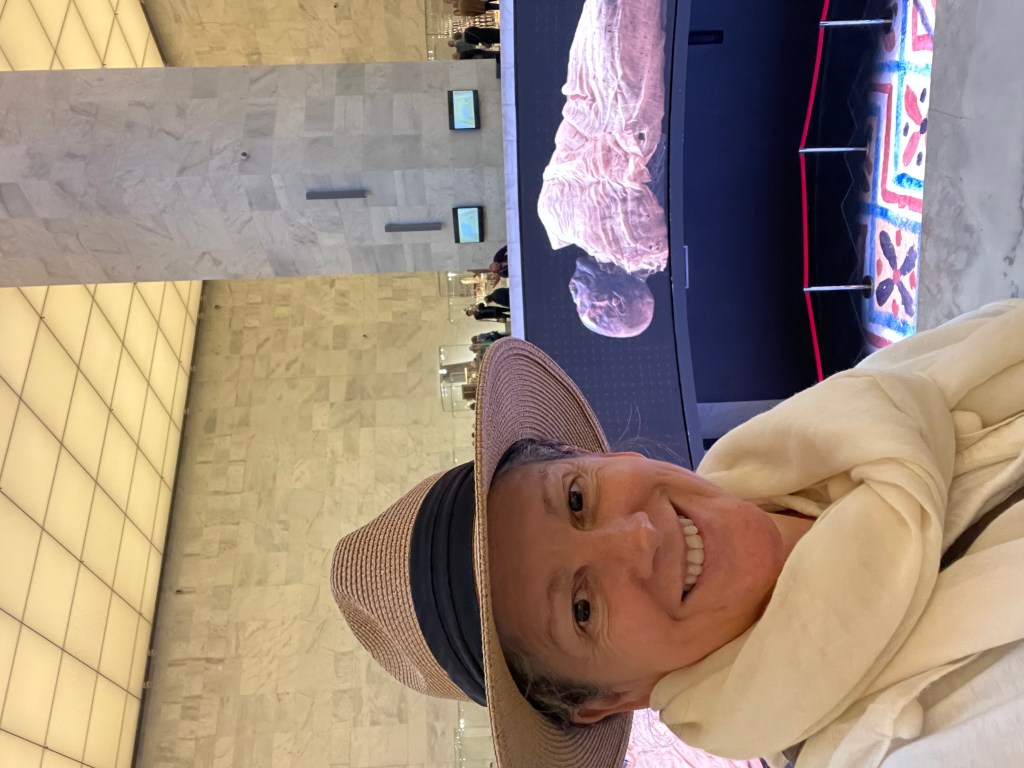


As I’m sure you already know, they mummified their bodies for the sake of their souls and believed that they would be restored to their bodies after death, for eternal life. The best prepared and preserved mummies are from the Eighteenth through the Twentieth Dynasties of the New Kingdom (ca. 1570–1075 BCE) and include those of Tutankhamen and other well-known pharaohs. Unfortunately photography was absolutely, no-fucking about forbidden in the Mummies Hall and if the security guards caught you taking pictures they would stand over you and make you delete it from your phone. That didn’t stop some idiots from trying to sneak a photo – why are some people so dumb and disrespectful? The process of mummification was highly ritualized. totally fascinating and described below (per the Smithsonian website) and here https://en.wikipedia.org/wiki/Mummy. I’m digging the fact they mummified so many of their animals too – especially cats (hopefully after they had already died?!) – even a powerful Egyptian pharaoh needs his kitty to keep him company in the afterlife!
The mummification process took seventy days. Special priests worked as embalmers, treating and wrapping the body. Beyond knowing the correct rituals and prayers to be performed at various stages, the priests also needed a detailed knowledge of human anatomy. The first step in the process was the removal of all internal parts that might decay rapidly. The brain was removed by carefully inserting special hooked instruments up through the nostrils in order to pull out bits of brain tissue. It was a delicate operation, one which could easily disfigure the face. The embalmers then removed the organs of the abdomen and chest through a cut usually made on the left side of the abdomen. They left only the heart in place, believing it to be the center of a person’s being and intelligence. The other organs were preserved separately, with the stomach, liver, lungs, and intestines placed in special boxes or jars today called canopic jars. These were buried with the mummy. In later mummies, the organs were treated, wrapped, and replaced within the body. Even so, unused canopic jars continued to be part of the burial ritual.
The embalmers next removed all moisture from the body. This they did by covering the body with natron, a type of salt which has great drying properties, and by placing additional natron packets inside the body. When the body had dried out completely, embalmers removed the internal packets and lightly washed the natron off the body. The result was a very dried-out but recognizable human form. To make the mummy seem even more life-like, sunken areas of the body were filled out with linen and other materials and false eyes were added.
Next the wrapping began. Each mummy needed hundreds of yards of linen. The priests carefully wound the long strips of linen around the body, sometimes even wrapping each finger and toe separately before wrapping the entire hand or foot. In order to protect the dead from mishap, amulets were placed among the wrappings and prayers and magical words written on some of the linen strips. Often the priests placed a mask of the person’s face between the layers of head bandages. At several stages the form was coated with warm resin and the wrapping resumed once again. At last, the priests wrapped the final cloth or shroud in place and secured it with linen strips. The mummy was complete. The priests preparing the mummy were not the only ones busy during this time. Although the tomb preparation usually had begun long before the person’s actual death, now there was a deadline, and craftsmen, workers, and artists worked quickly. There was much to be placed in the tomb that a person would need in the Afterlife. Furniture and statuettes were readied; wall paintings of religious or daily scenes were prepared; and lists of food or prayers finished. Through a magical process, these models, pictures, and lists would become the real thing when needed in the Afterlife. Everything was now ready for the funeral.
As part of the funeral, priests performed special religious rites at the tomb’s entrance. The most important part of the ceremony was called the “Opening of the Mouth.” A priest touched various parts of the mummy with a special instrument to “open” those parts of the body to the senses enjoyed in life and needed in the Afterlife. By touching the instrument to the mouth, the dead person could now speak and eat. He was now ready for his journey to the Afterlife. The mummy was placed in his coffin, or coffins, in the burial chamber and the entrance sealed up.
But why preserve the body? The Egyptians believed that the mummified body was the home for this soul or spirit. If the body was destroyed, the spirit might be lost. The idea of “spirit” was complex involving really three spirits: the ka, ba, and akh. The ka, a “double” of the person, would remain in the tomb and needed the offerings and objects there. The ba, or “soul”, was free to fly out of the tomb and return to it. And it was the akh, perhaps translated as “spirit”, which had to travel through the Underworld to the Final Judgment and entrance to the Afterlife. To the Egyptian, all three were essential.
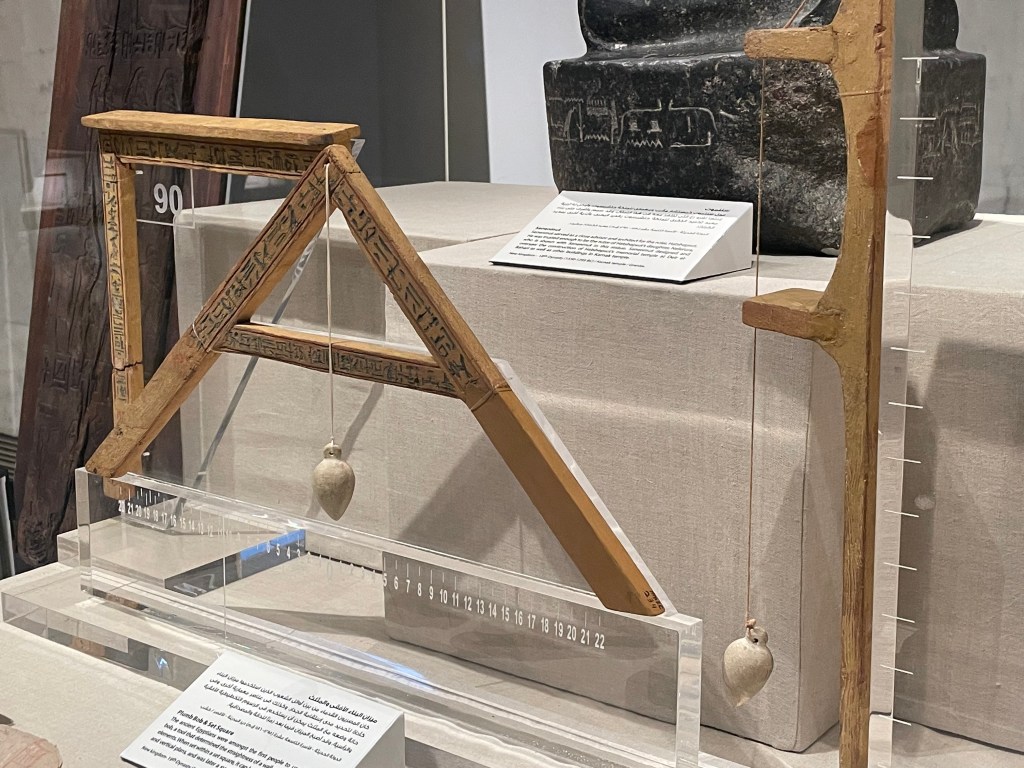
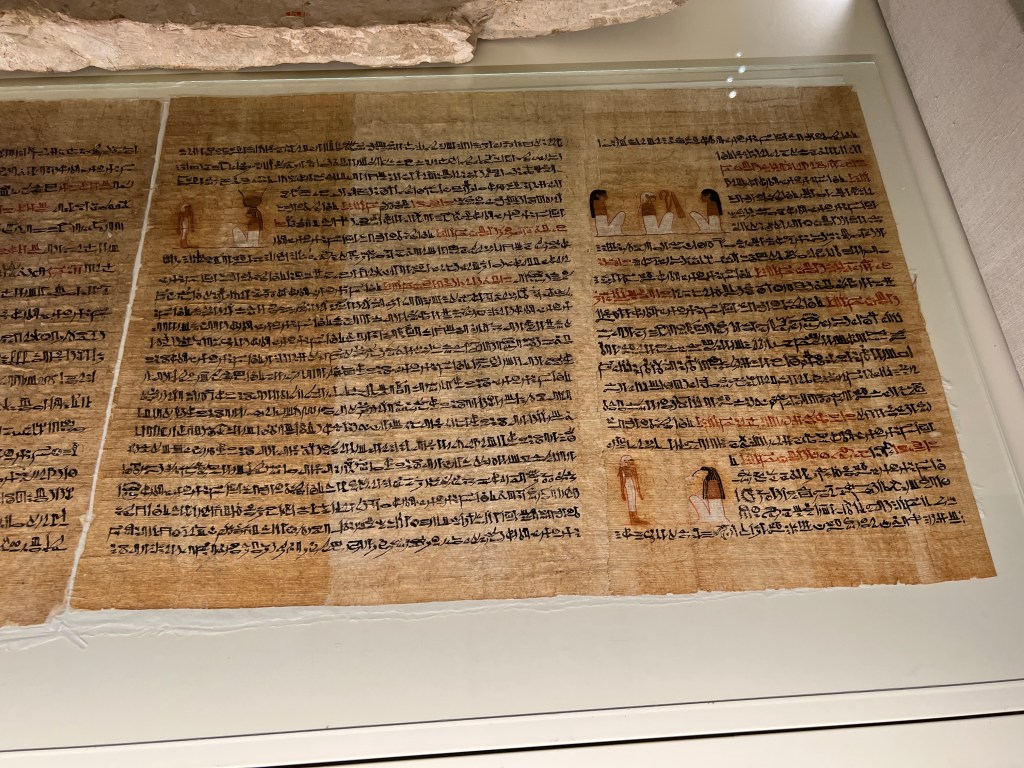
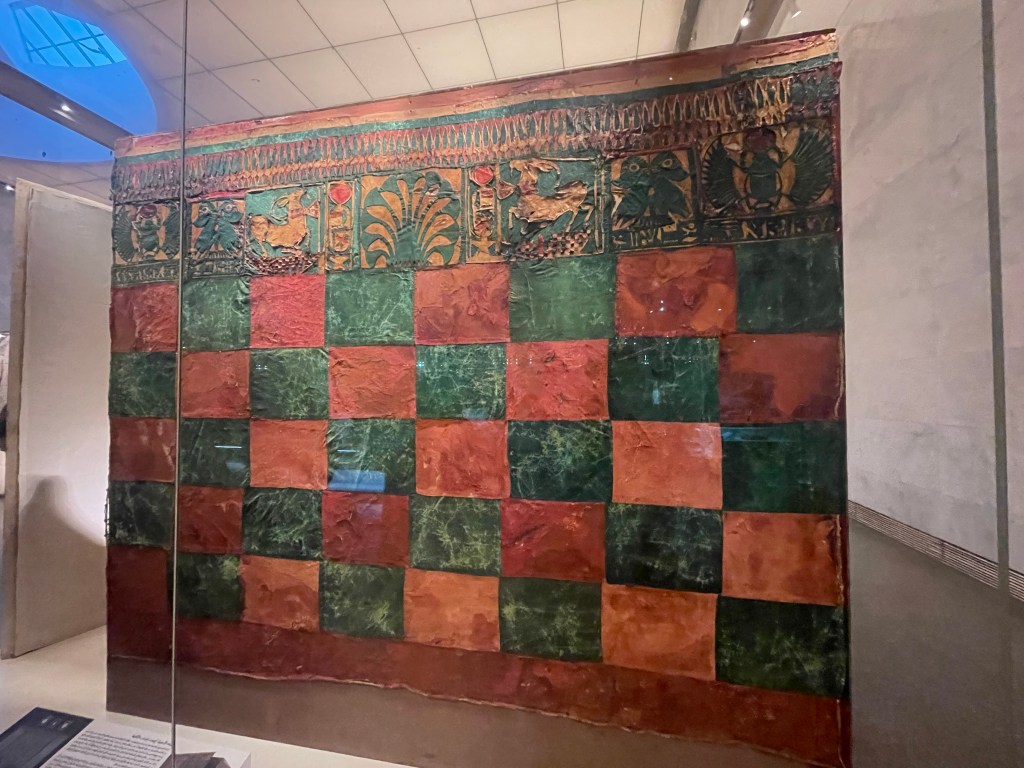
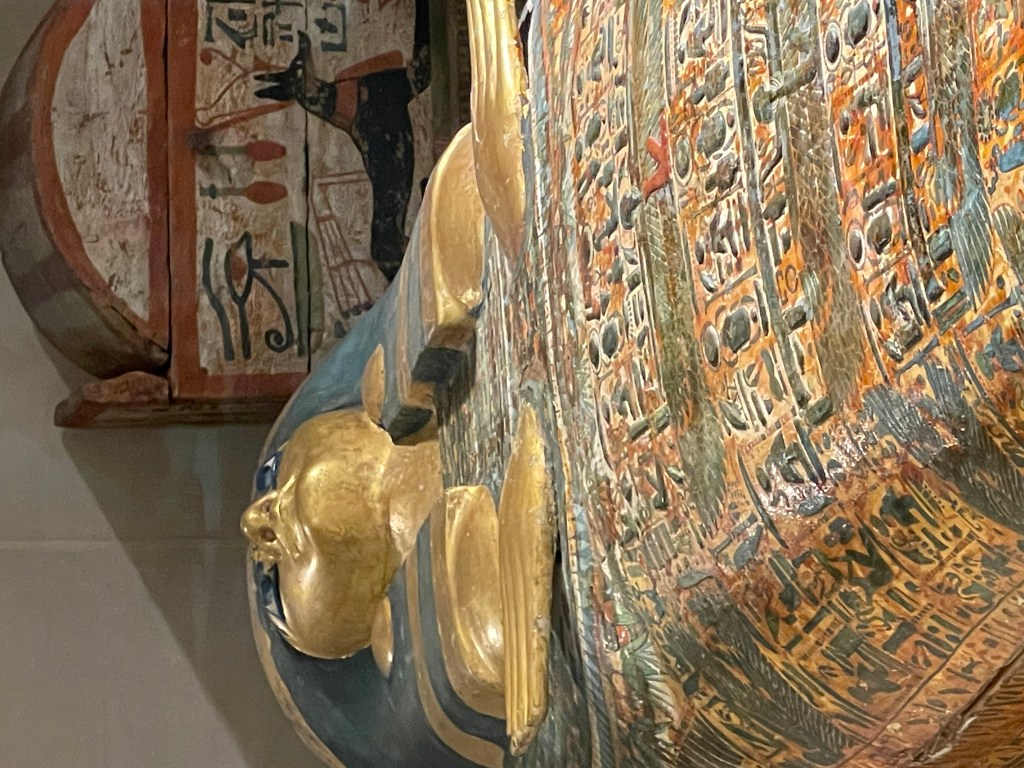
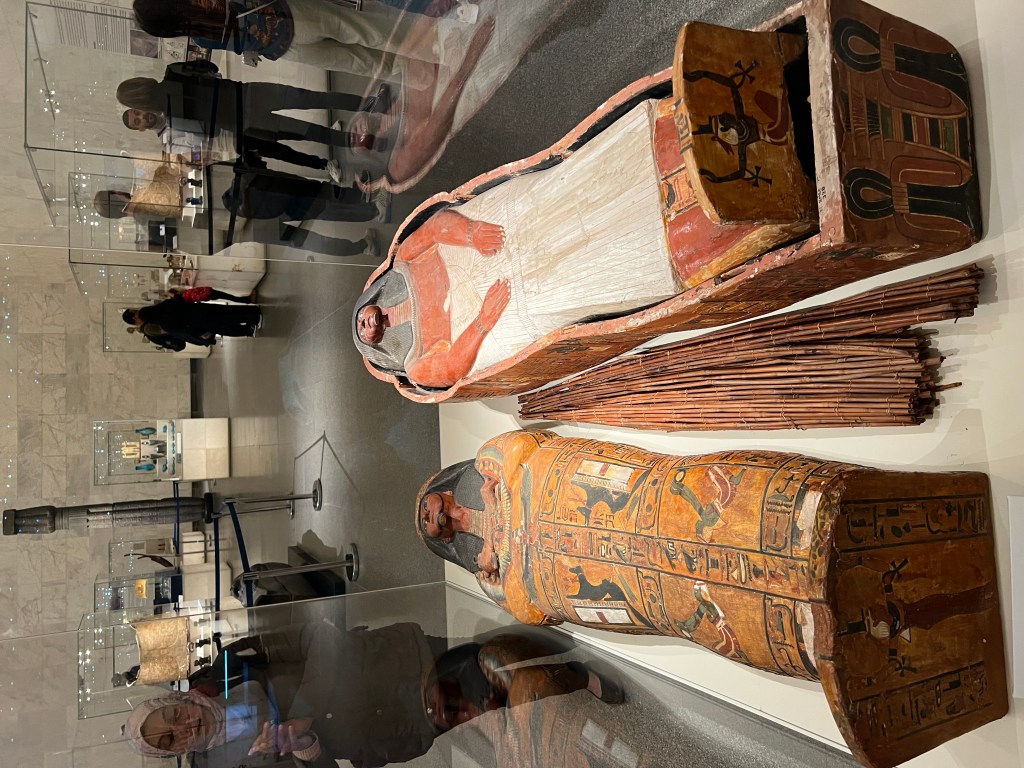
In addition to all the mummies, there was a ton of incredibly cool and OLD stuff on display in the Main Exhibition Hasll, much of it from as early as 3000 BC. https://nmec.gov.eg/ I was just blown away by how intricate and skilled the artefacts were – I just kept asking myself “HOW did they do that???” There were beautiful statues, furniture, jewelry, decorative boxes, clothing and footwear, musical instruments and tools. They even used to make tents (or “baldachin”) from leather, mats and thick linen cloth as a place of temporary residence – such as for when wealthy Egyptians would go hunting, or even for women in labor. The one on display in the museum was made between 1046 – 1037 BC for the funerary purification of Istemkheb II who was the daughter of the army general and High priest of Amun Masaherta and the granddaughter of King Pinadjem I of the 21st Dynastyfrom. It was made entirely from applique colored leather and decorated with carefully cut-out leather ornaments and texts fixed on a different colored piece of leather. It is noteworthy as it is the only remaining tent from ancient Egypt. You had to keep reminding yourself that – not only were these items stunning to look at – they were between 3,000 and 5,000 years old!! Just incredible. There was even a prosthetic toe, for goodness sake!!! Apparently, the ancient Egyptians invented a TON of stuff. Here are few of my favorite things:





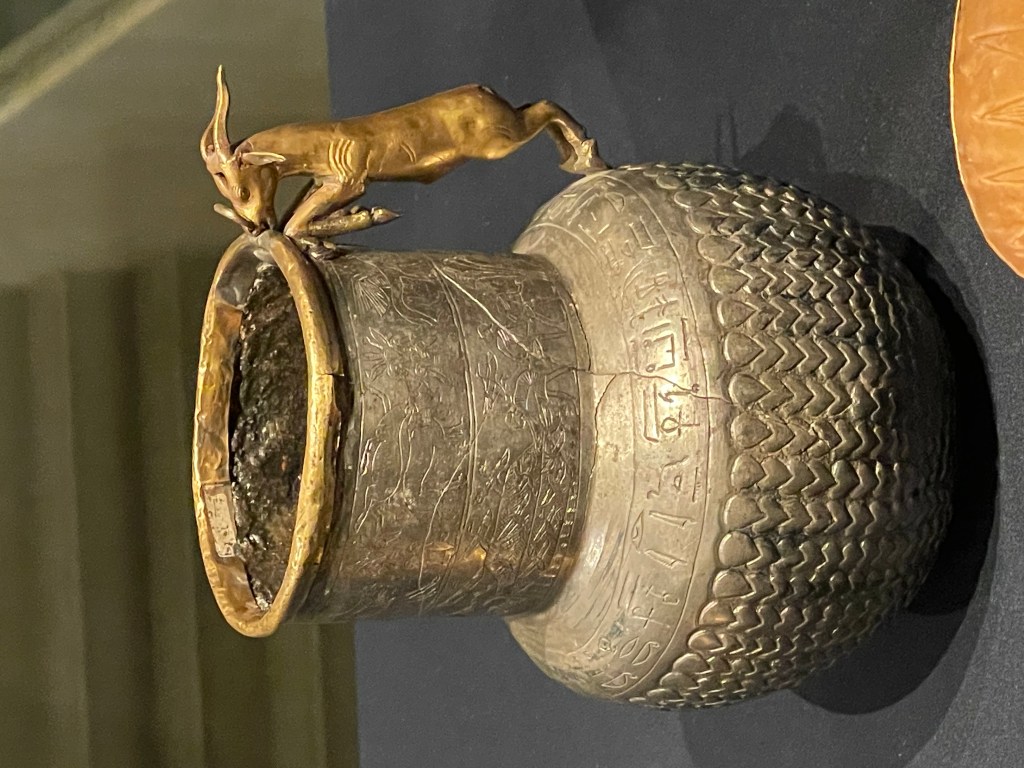


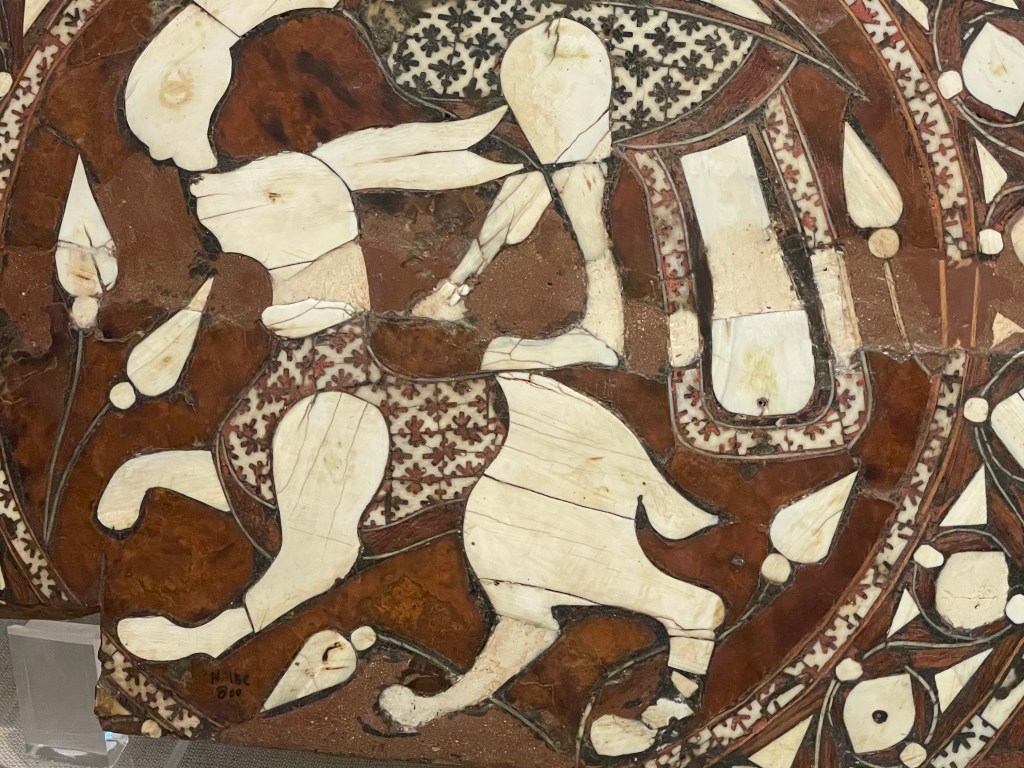
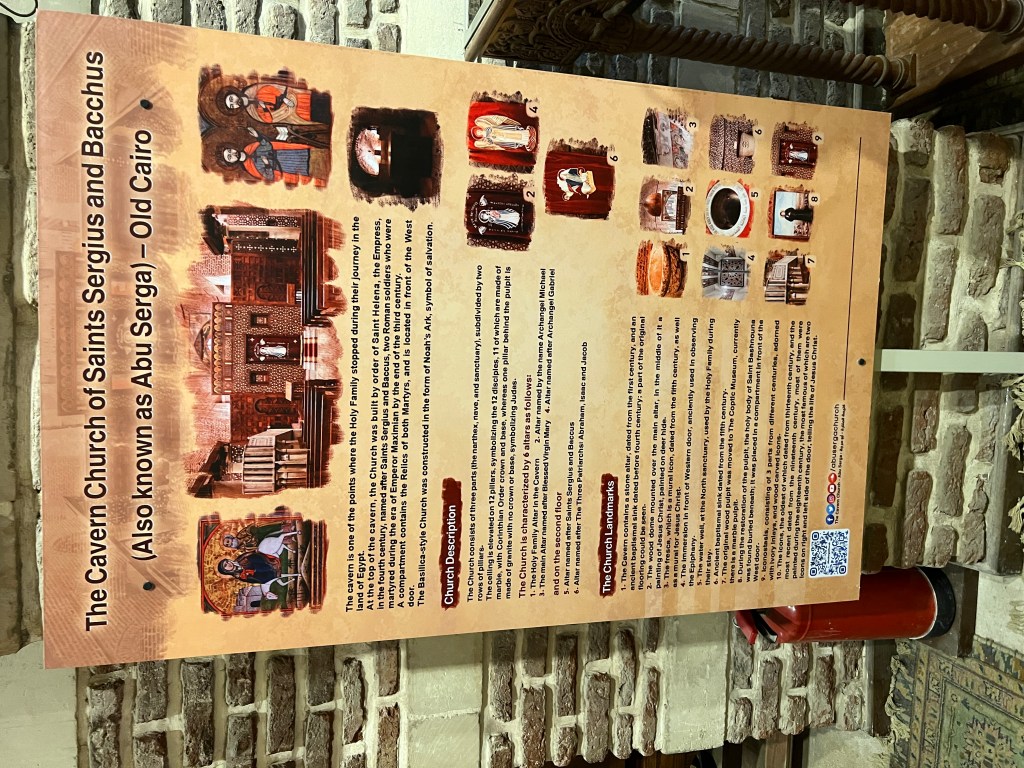
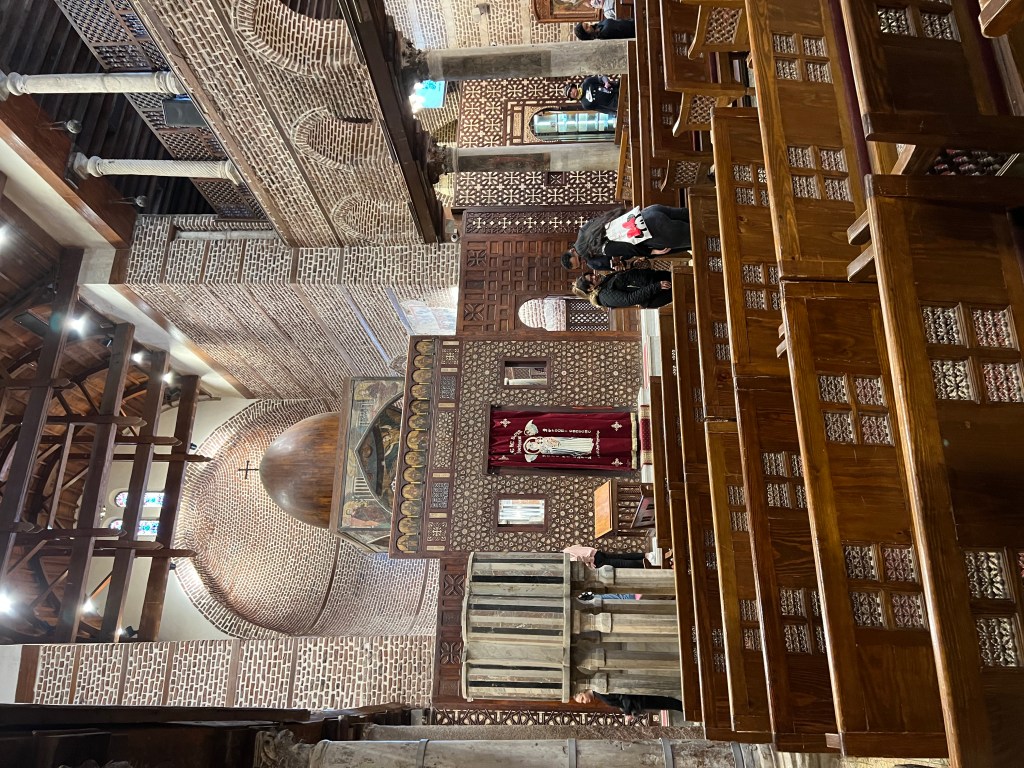
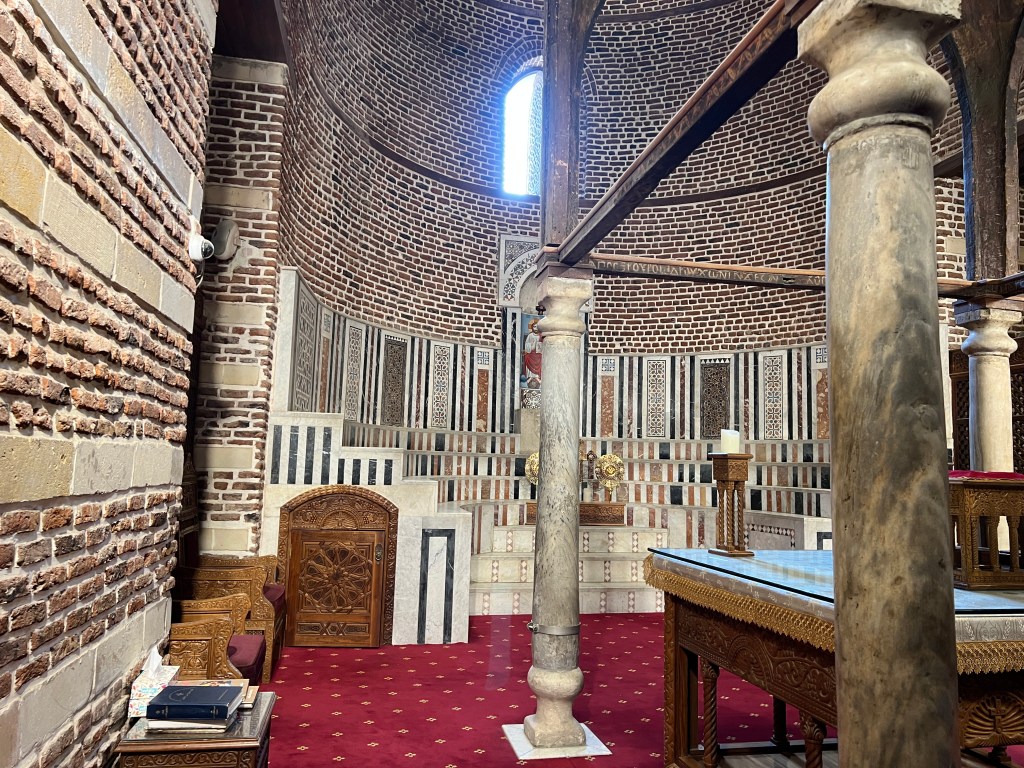
After the museum, we then took a tour of 4 churches, the earliest of which was St Virgin Mary’s Coptic Orthodox Church. It was founded in the 3rd Century by St. Mark, one of the seventy Apostles, and one of the four Evangelists. He is regarded by the Coptic hierarchy as the first of their unbroken 118 patriarchs, and also the first of a stream of Egyptian martyrs. They played an essential role in the whole Christian world, especially during the first five centuries. After AD 639, Egypt was ruled by its Islamic conquerors from Arabia, and the treatment of the Coptic Christians ranged from tolerance to open persecution. In the 12th century, the church relocated its seat from Alexandria to Cairo. The same century also saw the Copts become a religious minority. During the 14th and 15th centuries, Nubian Christianity was supplanted by Islam. In the 19th and 20th centuries, the larger body of ethnic Egyptian Christians began to call themselves Coptic Orthodox, in order to distinguish themselves the Catholic Copts and from the Eastern Orthodox, who are mostly Greek. The church is also known as The Hanging Church for its location above a gatehouse of Babylon Fortress, the Roman fortress in Coptic Cairo (Old Cairo and its nave is suspended over a passage. We also visited the Church of St George, the Church of St Sergus and the Church of Saint Barbara.

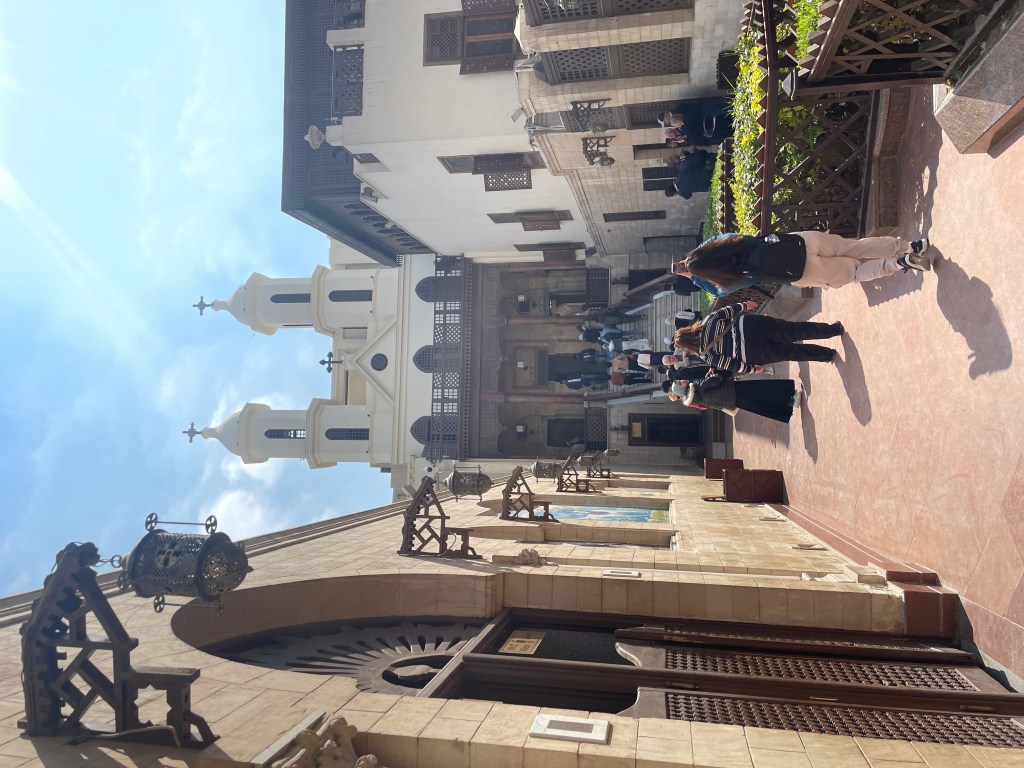
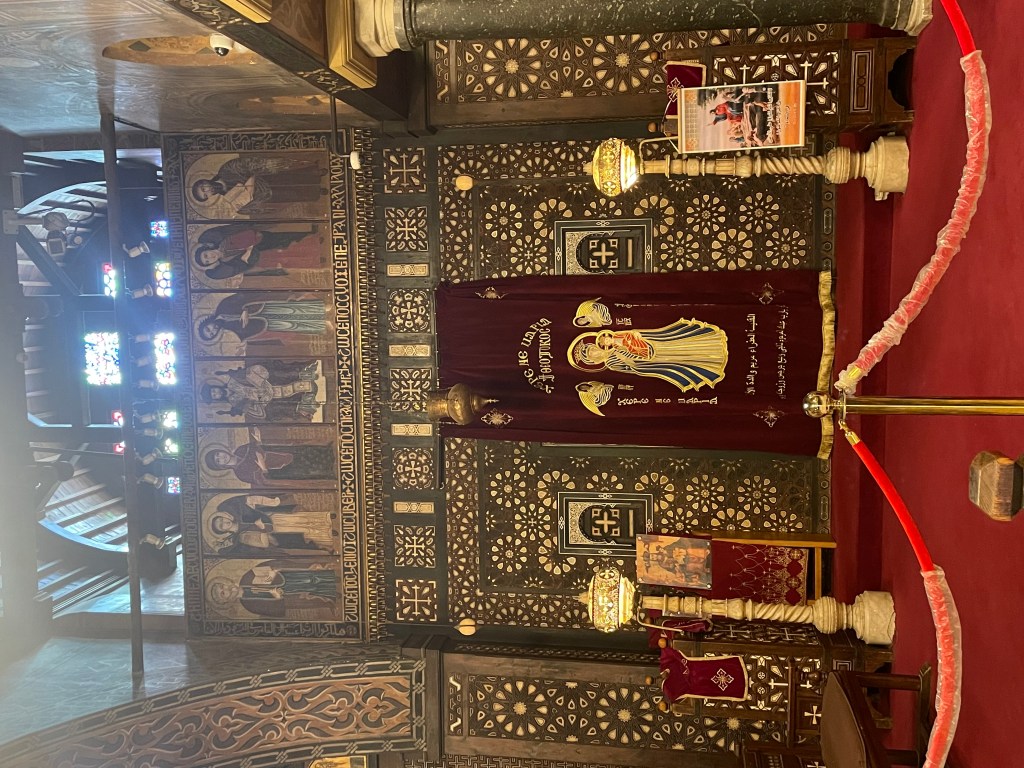
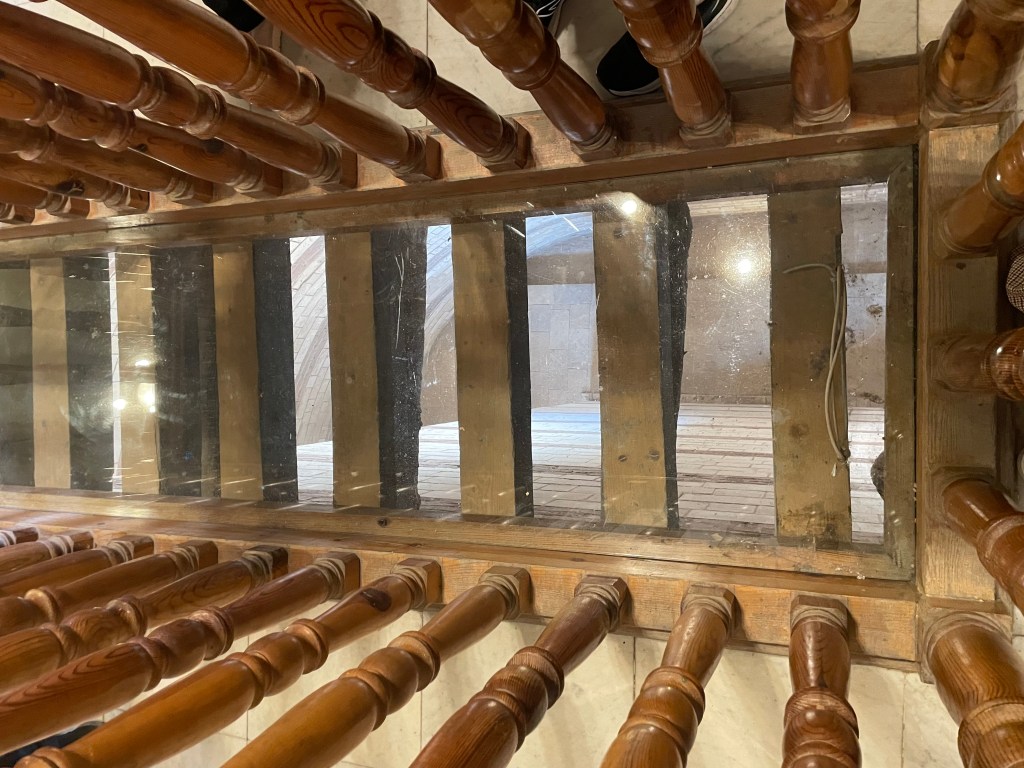

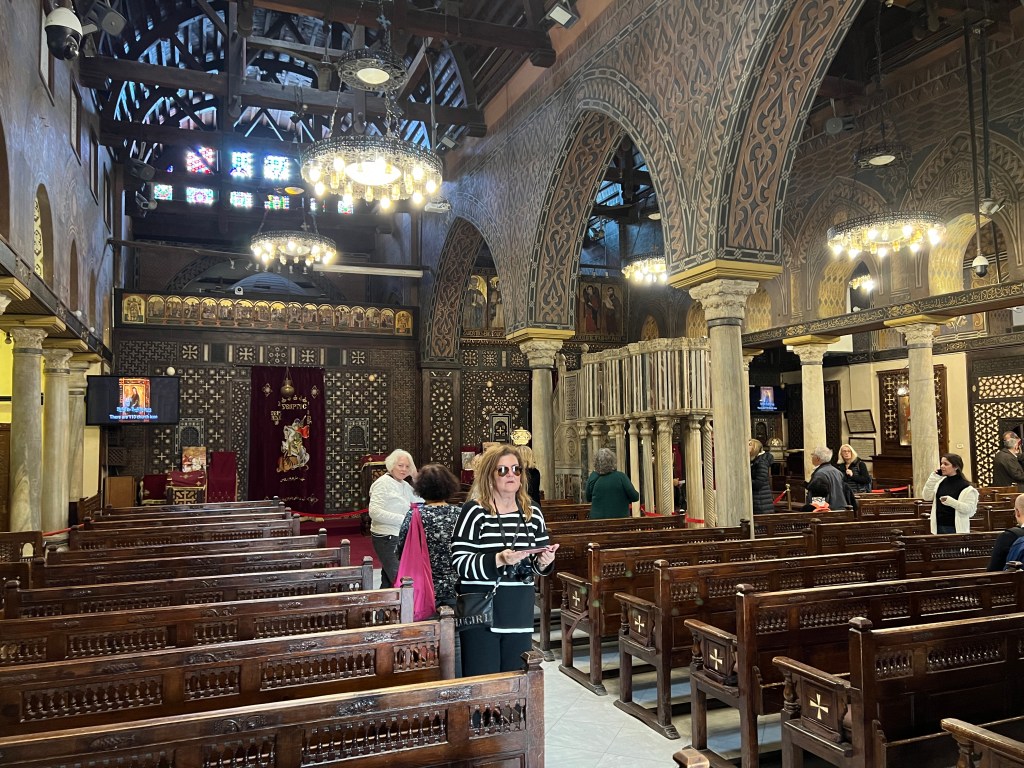


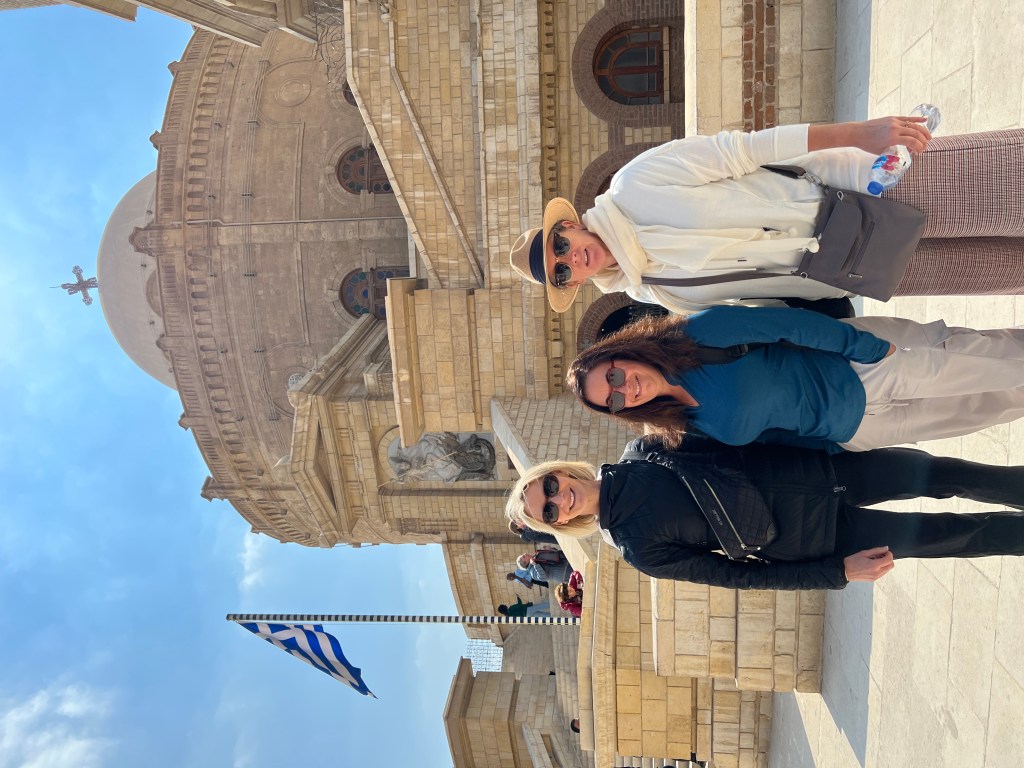
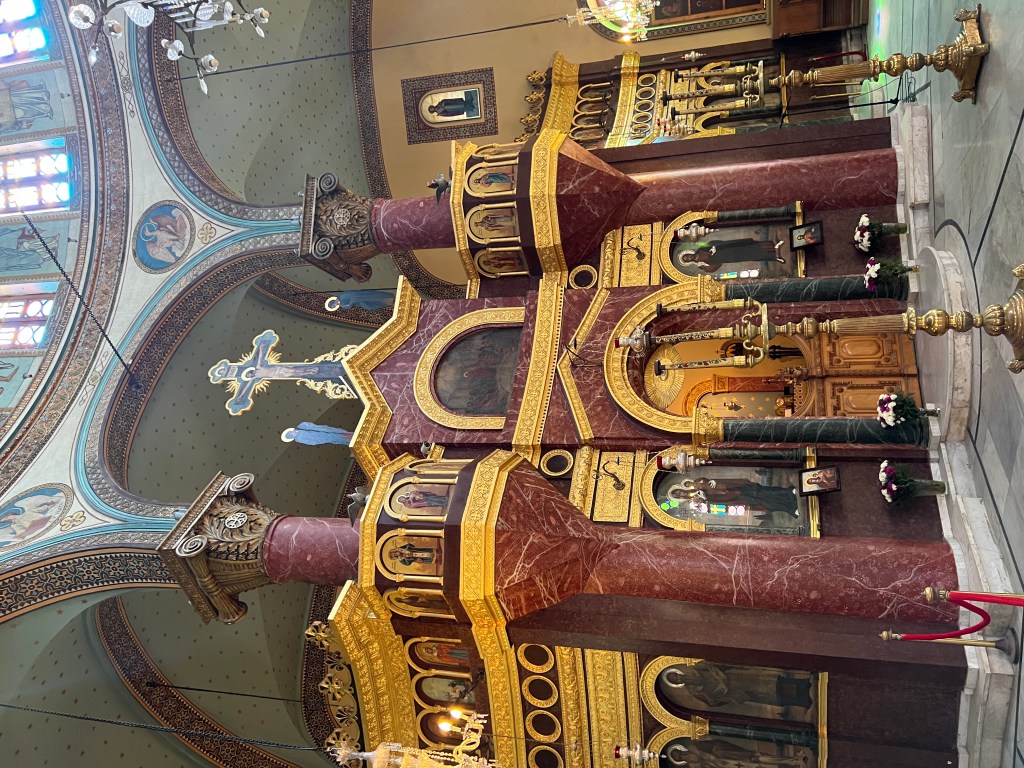

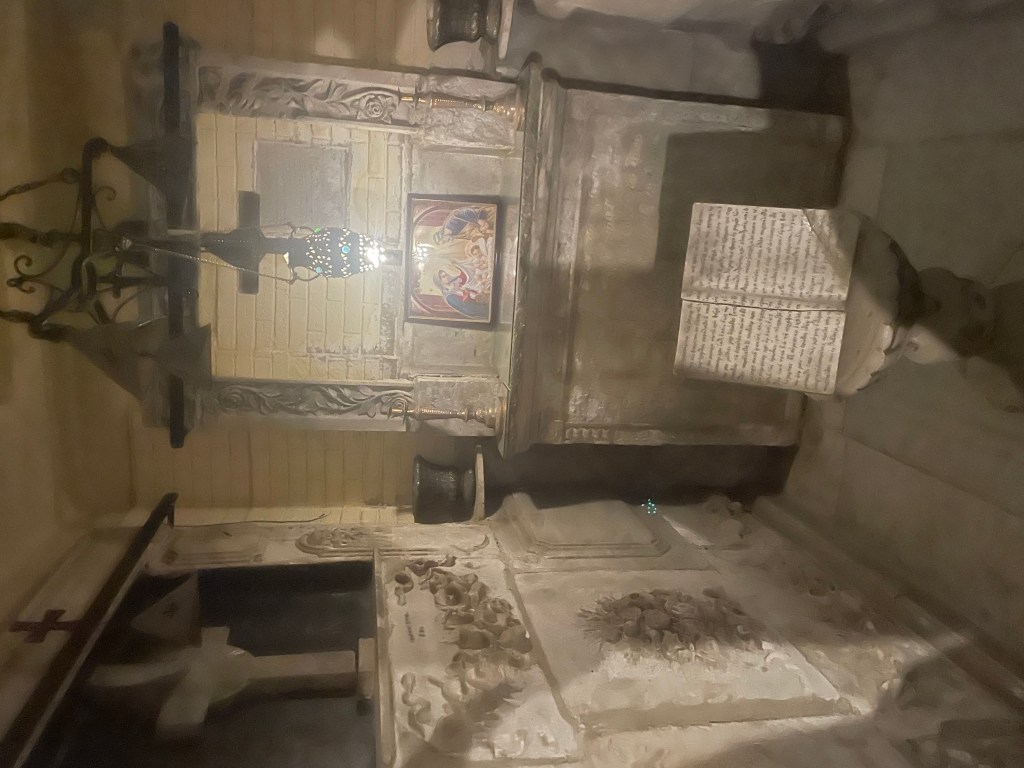
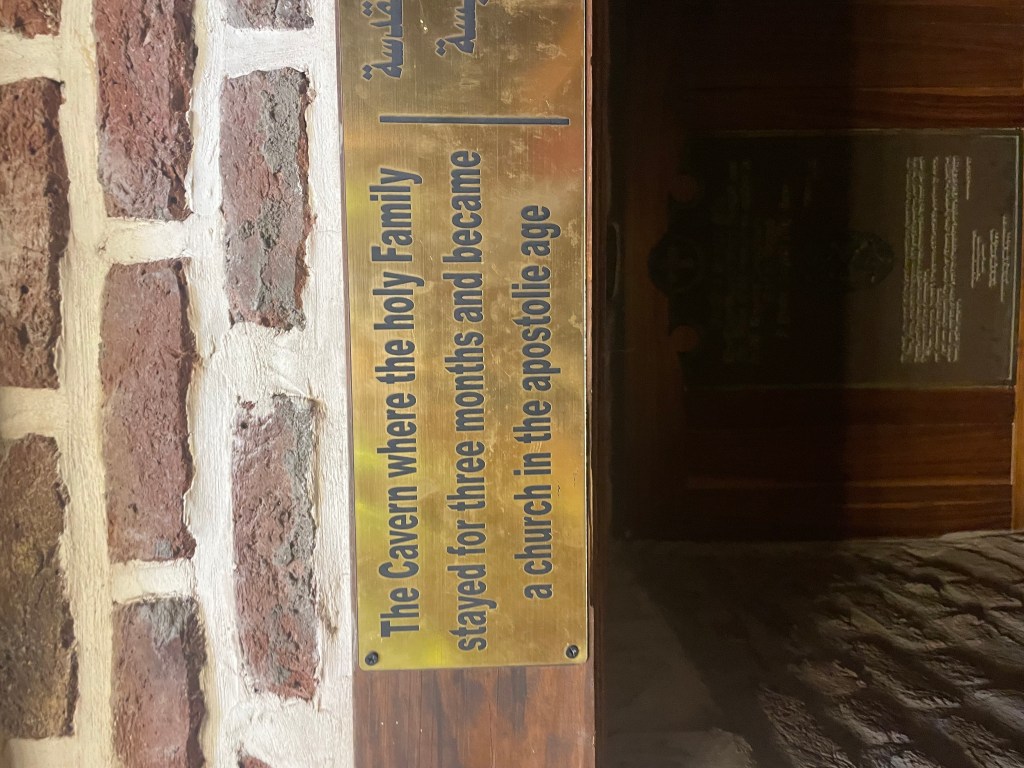
There were a ton of old relics (random bits and bobs of saints housed in red velvet cylinders) in the churches as well as special places where the holy family were said to have stayed during their escape from Herod and 3 years spent wandering around Egypt. One place had the original flooring where the Holy Family were said to have slept under glass; another church housed a well that the family were said to have drunk from. After the third church, they all started to blend into one in my mind and my interest started to wane a little so I stopped paying quite so much attention (plus I was still a bit jetlagged!). All of the churches were in the same part of town so we simply strolled from one to the next but, en route, we managed to have a quick peek inside a Greek cemetery which was open. After we’d churched out, it was time for a bit more shopping and we were taken to a store which sold Egyptian cotton. The sheets felt like silk and were gorgeous – but at $400 for a sheet set, were just a bit too spendy for our poor wallets (which were still recovering from the carpet and perfume blow-out from yesterday!). After that, it was time to finally have lunch (again, a late one – 3pm!) and today’s lunch spot was a boat (called The Memphis) moored up on the Nile. It wasn’t particularly fancy but the food was decent enough (again, a selection of mezzes, followed by grilled chicken) – especially as we were all ravenous! After lunch, it was time to battle the traffic once again and head back to the hotel. As we’d eaten so late, we didn’t need dinner but quickly popped into the M Club lounge, which served freebie drinks and light snacks for guests. Sidenote: we discovered the next day we didn’t actually have access (Platinum members, dahling, NOT Gold members) so that was the end of our short-lived High Rollers career at the Marriott- oops! Good night, everybody!