So a quick aside. Given our tendency to have lunch super late, we’ve now learned to have larger breakfasts (“breakfast like a king, dinner like a pauper” etc etc). As a result my breakfasts have been getting progressively weirder. The food at the Marriott has been excellent and they have obviously figured out a way to feed the (predominantly American) tourists without giving everyone a case of the Hot Trots. So I’ve been going All In with the salads (I know, Loopy, I know) as they have been just delicious. So today for breakfast, I found myself eating a big bowl of lentil soup followed by salad and tahini and hummus and baba ganoush! Not your typical breakfast food – and I hope I don’t regret my choices later on!! (fortunately I have my own room at the hotel, so can parp in peace)
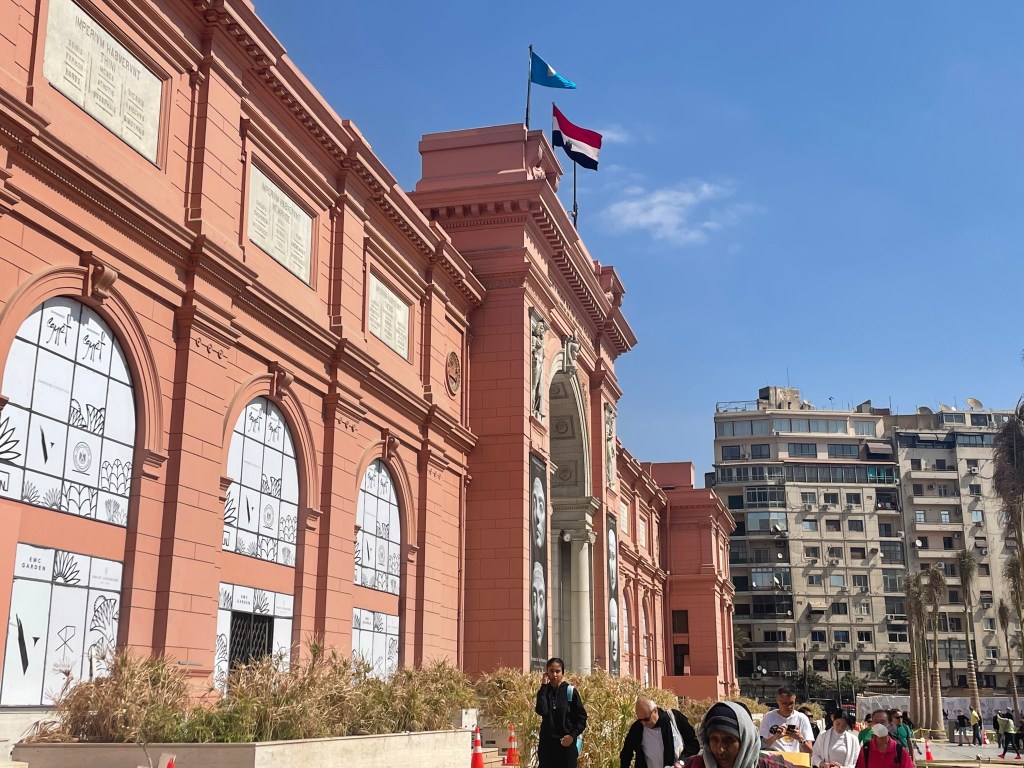
Anyhoo…. its our third full day in Cairo today and we started with another museum – this time the much older Egyptian museum, which was founded in 1902. The Egyptian Museum is the oldest archaeological museum in the Middle East, and houses the largest collection of Pharaonic antiquities in the world – according to Gina, at least 120,000 individual pieces. The museum displays an extensive collection spanning from the Predynastic Period to the Greco-Roman Era. The architect of the building was selected through an international competition in 1895, which was the first of its kind, and was won by the French architect, Marcel Dourgnon. The museum was inaugurated in 1902 by Khedive Abbas Helmy II, and has become a historic landmark in downtown Cairo, and is home to some of the world’s most magnificent ancient masterpieces. https://egymonuments.gov.eg/en/museums/egyptian-museum
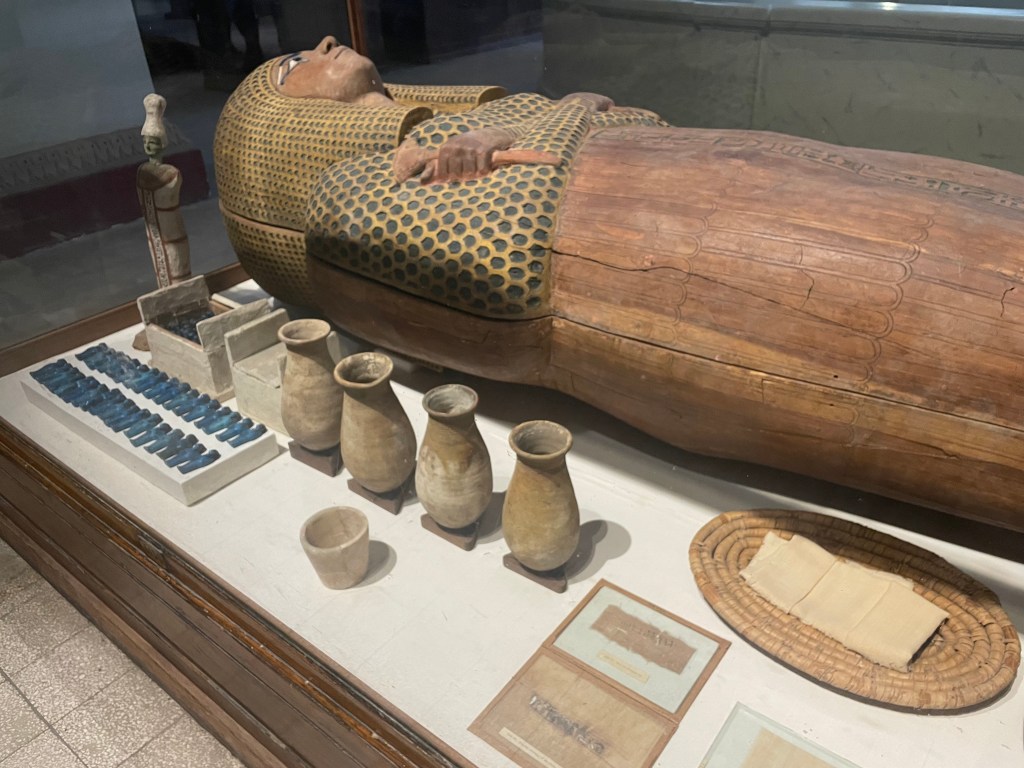
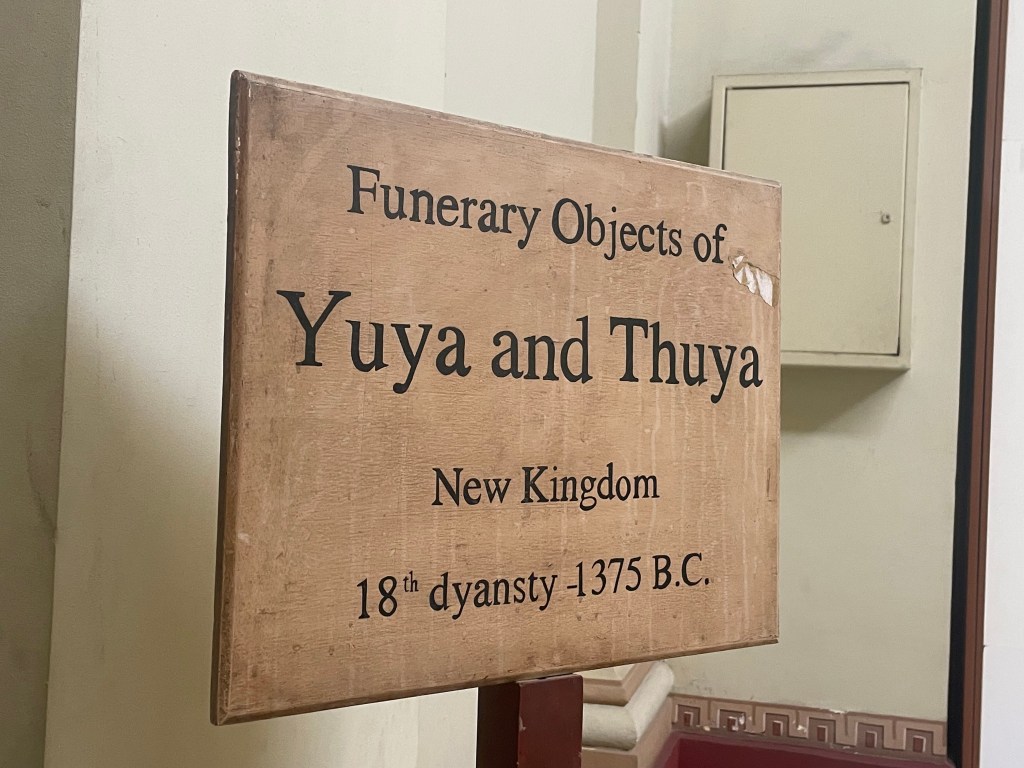
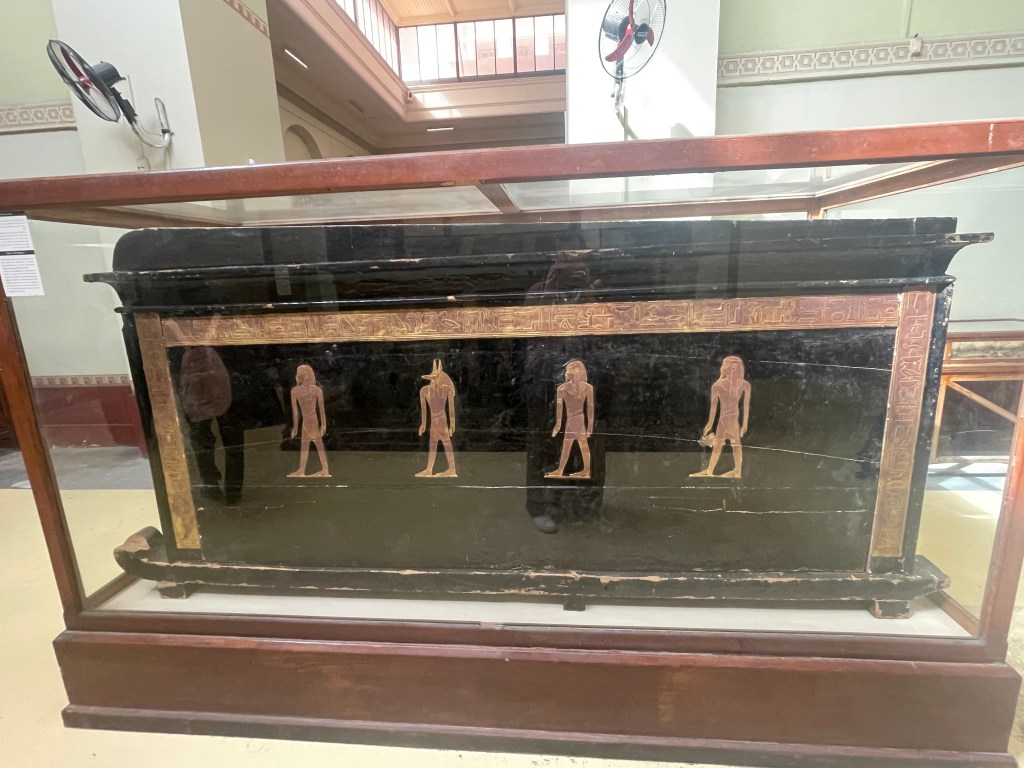
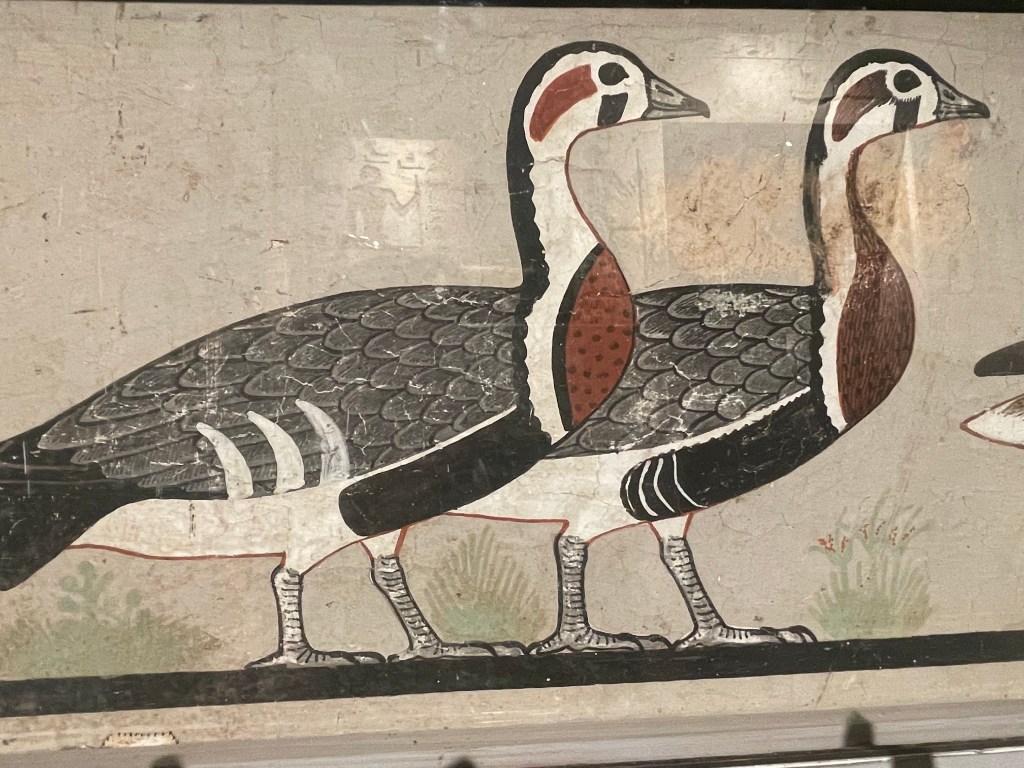
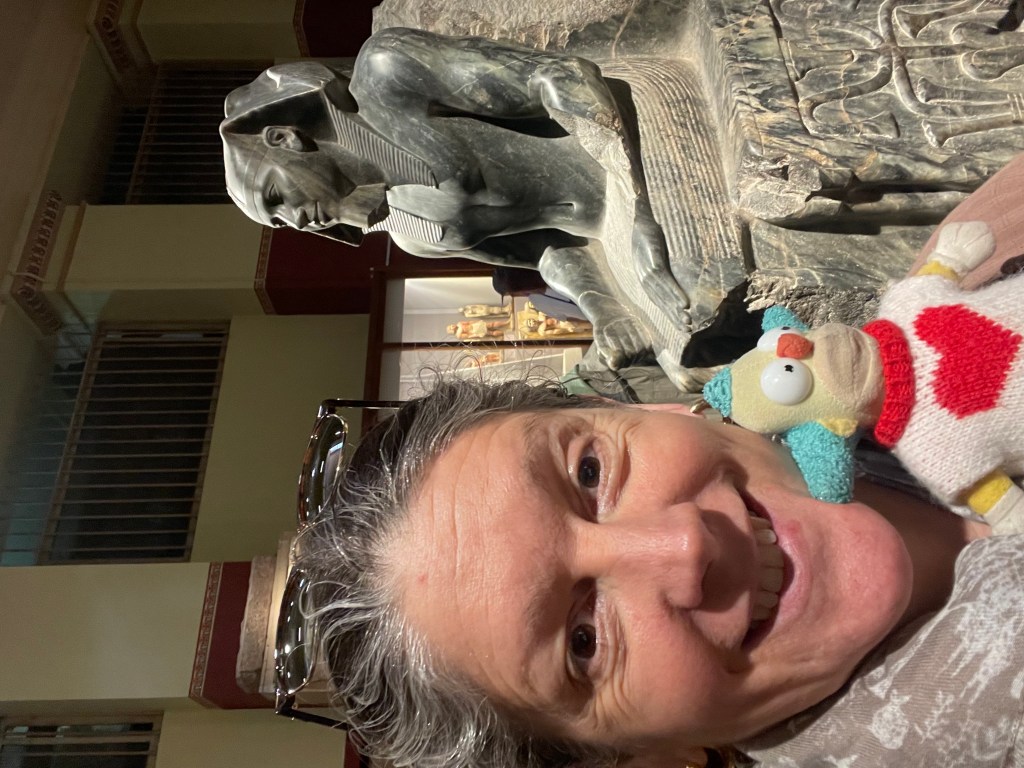
Among the museum’s collection are the complete burials of Yuya and Thuya, Psusennes I and the treasures of Tanis, and the Narmer Palette commemorating the unification of Upper and Lower Egypt under one king, which is also among the museum’s invaluable artifacts. The museum also houses the splendid statues of the great kings Khufu, Khafre, and Menkaure, the builders of the pyramids at Giza which we’d visited on Day 1. An extensive collection of papyri, sarcophagi and jewelry, among other objects, completes this uniquely expansive museum. This is where having a private guide REALLY comes in handy as Gina expertly shepherded us around the museum, stopping at the key artefacts and exhibits and explaining why they were particularly important. Trying to do this on your own would be totally impossible -you would miss so much. She also helped us navigate the crowds as the museum started to fill up – it was good we got there fairly early – by lunchtime, it was absolutely packed!!




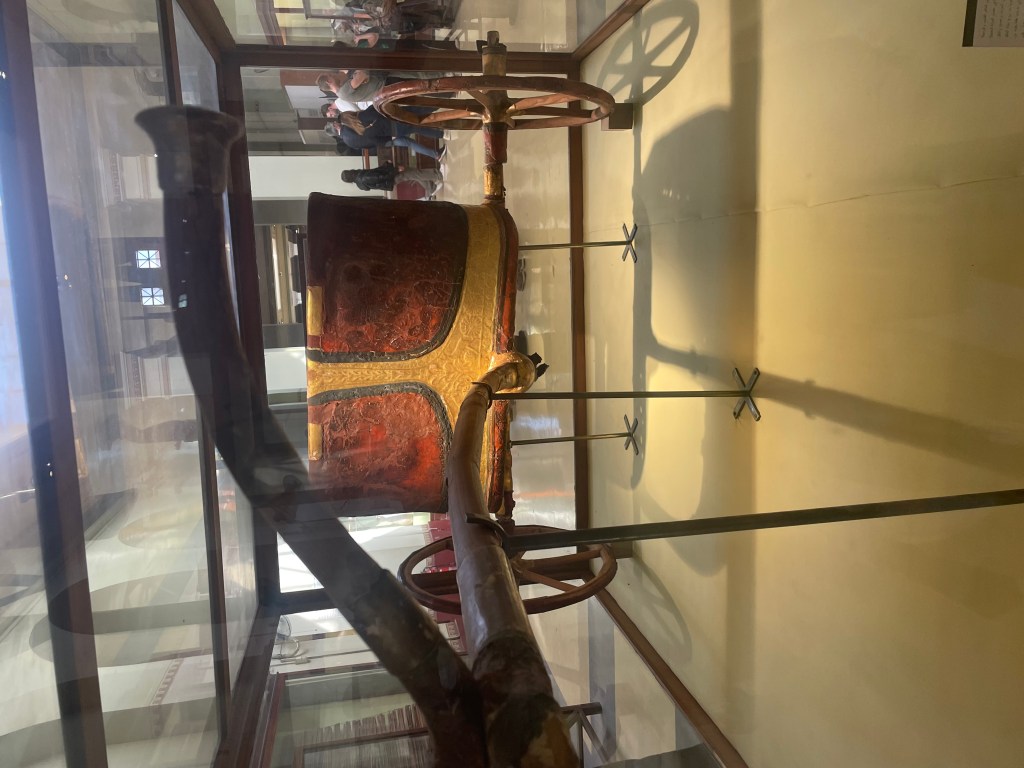
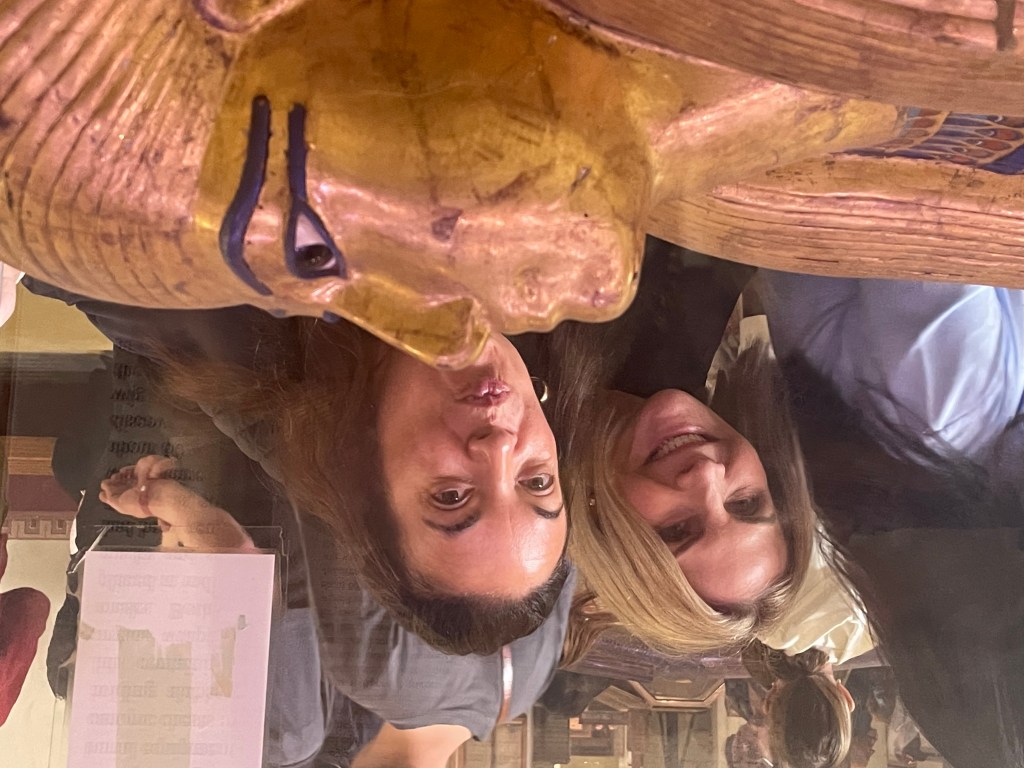
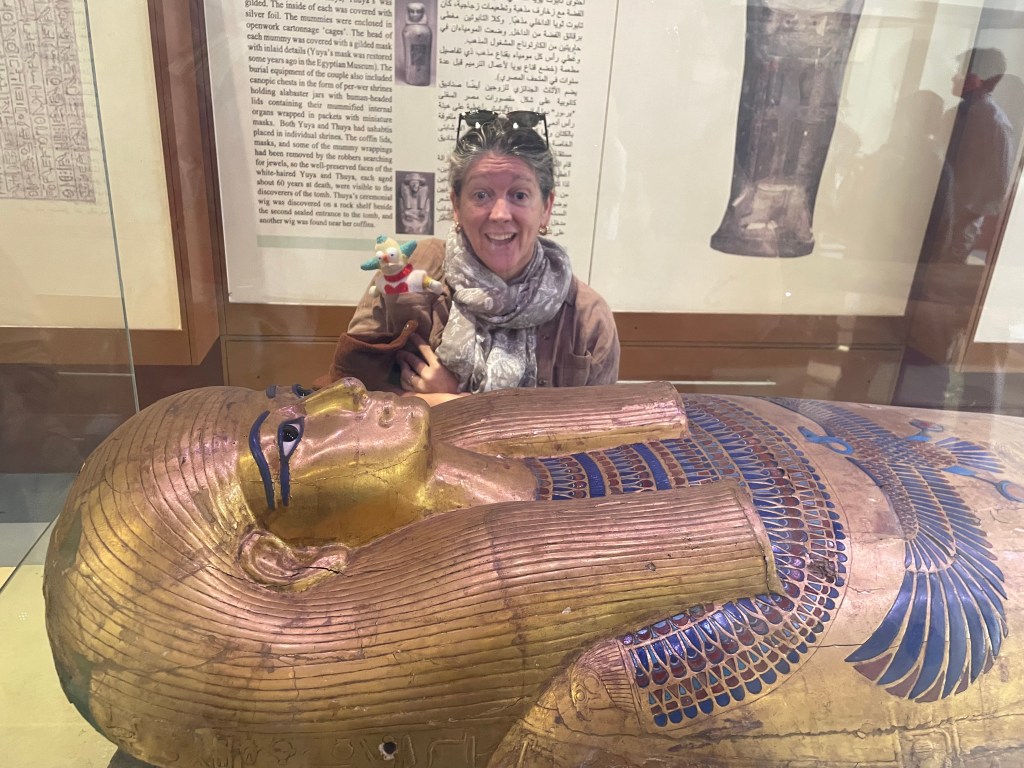
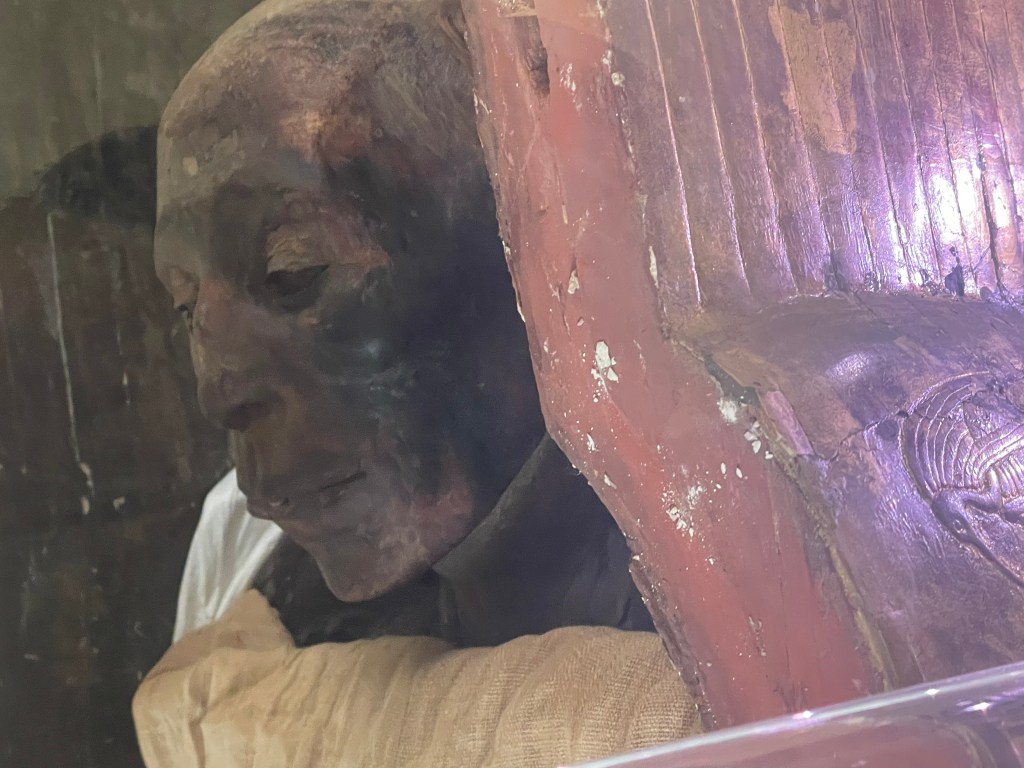
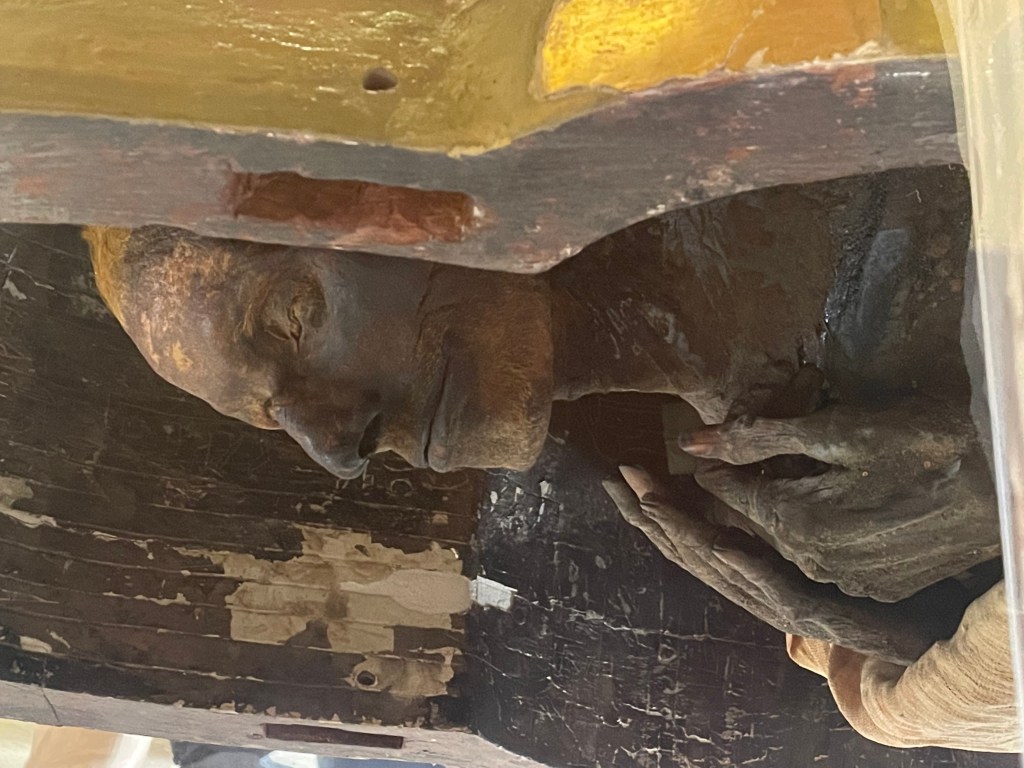








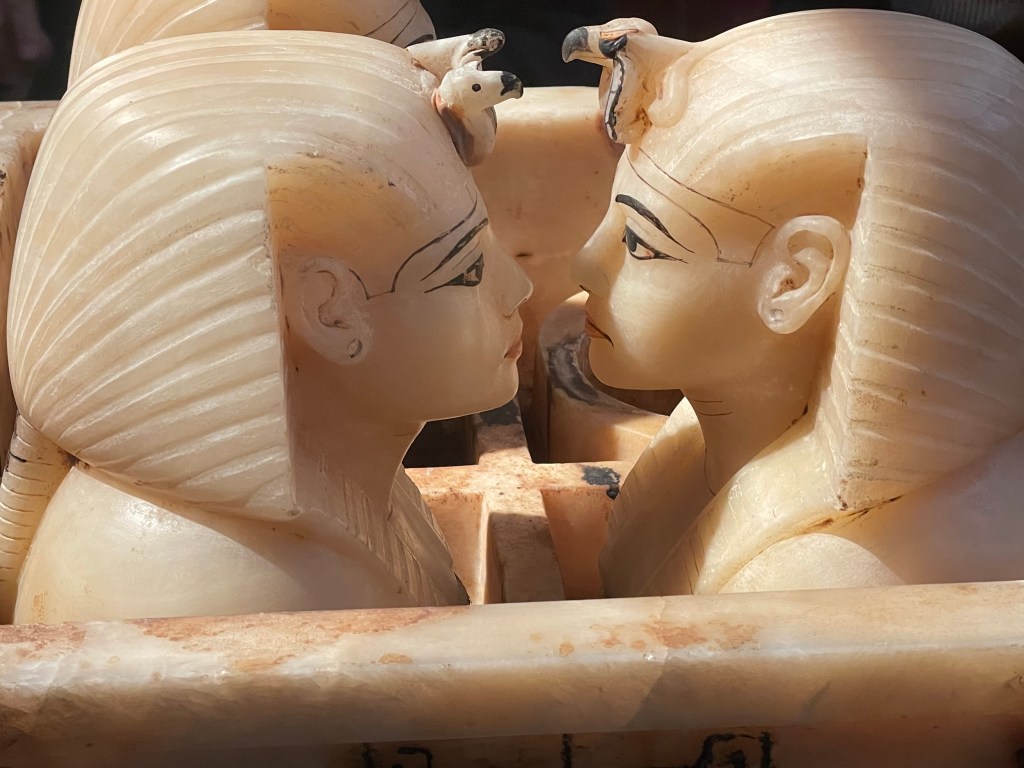
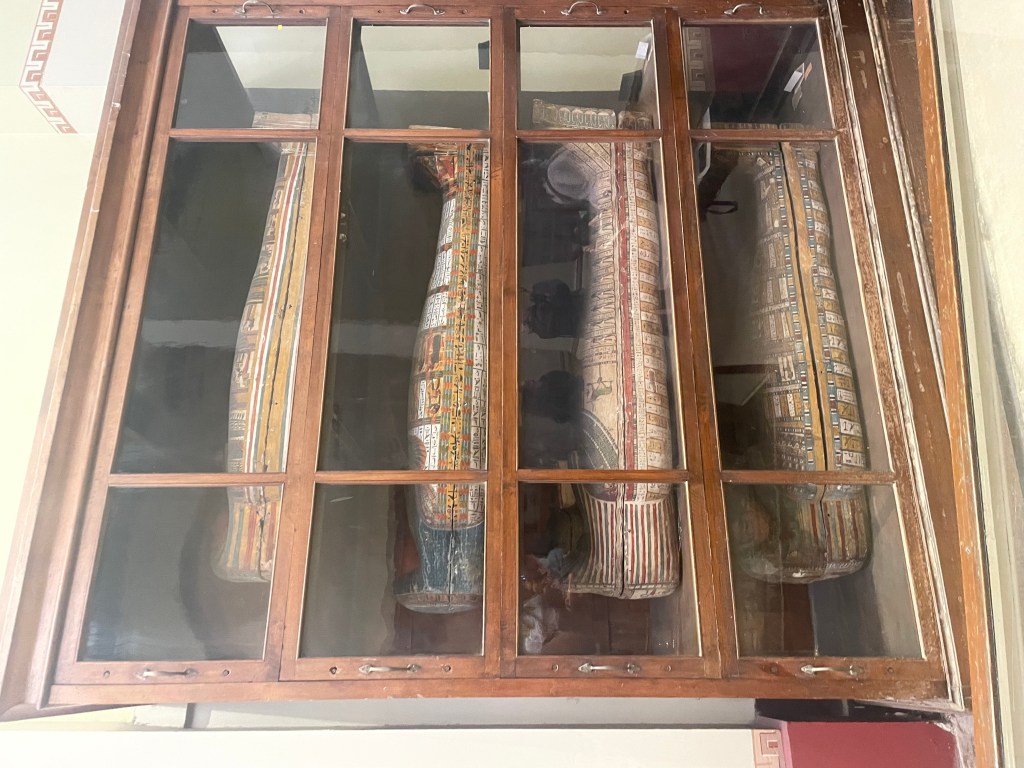



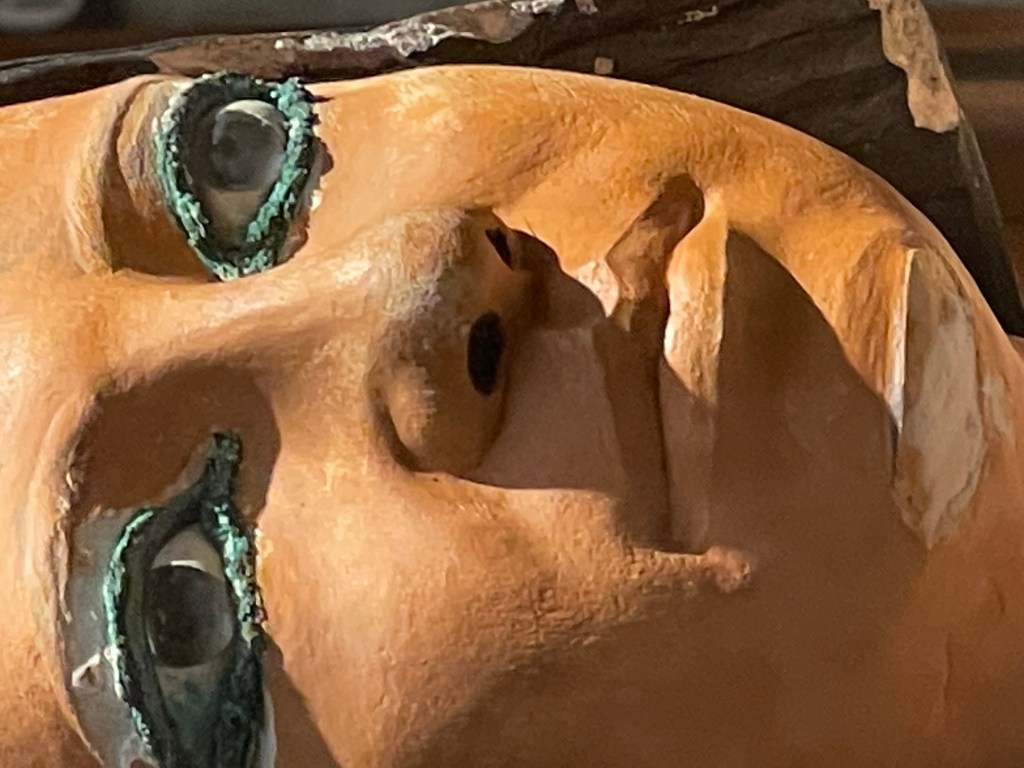
Unlike yesterday, we were able to take pictures of the mummies on display this time – not sure how I quite feel about looking at them – there’s a grisly fascination with them, for sure. The ones we saw at the NMEC yesterday were all arrayed in order of their Pharaonic dynasty, so it was like you were taking a walk through time – and for some of them, the linen looked so fresh (despite being thousands of years old) that we had to ask Gina if they were still in their original burial wrappings. She replied yes, its all original – and you could see how trying to remove the wrappings would destroy the mummy underneath, so better to leave it all undisturbed. It was a burial practice, though, to hide numerous golden amulets and trinkets inside the wrappings to help the deceased’s transition to the afterlife – for example, the Ankh (which you see everywhere in Egypt) was a hieroglyph that represented life. When placed on a mummy it was believed to give the gift of eternal life to the dead. Gina explained to us what the Ankh symbol represented – according to her, it represented the path of the sun from east to west with the loop representing the Nile River. Looking into it a bit more, there are a number of other possible explanations too – but her description was good enough for us, so we’ll go with that.

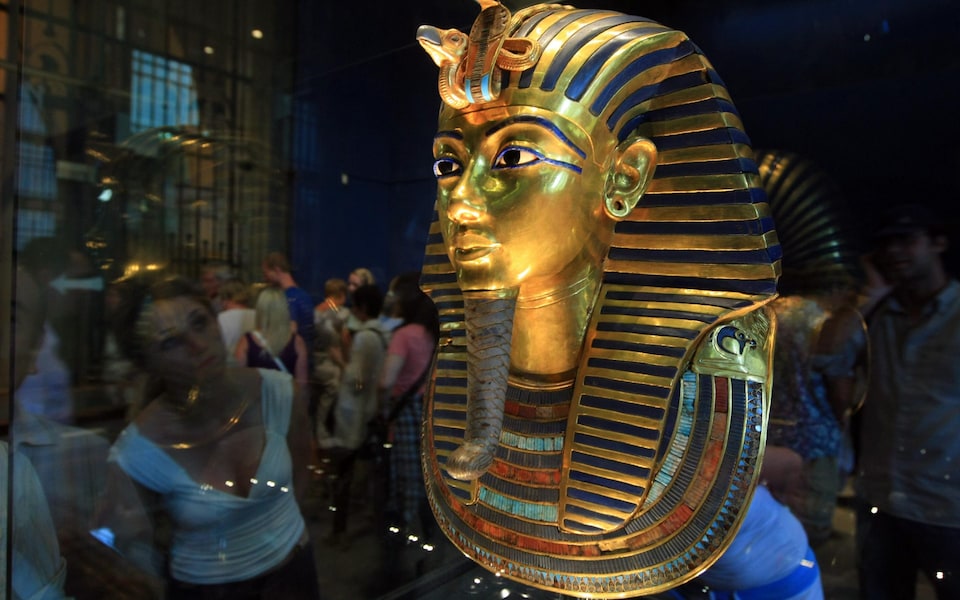
Despite the museum housing over 120,000 artefacts, there is one particular exhibit that absolutely EVERYONE comes to see, that most famous treasure of all – King Tutankmun’s death mask. Alas, again we were not allowed to take any pictures in the exhibition hall that housed the most important artefacts that were recovered from his tomb. But it was amazing to see up close the solid gold mask that you’ve seen so many pictures of. It was beautiful (no I didn’t take the photo below – I grabbed this from the web). Side note: King Tut’s mummy was badly damaged when it was unwrapped and the death mask removed (the actual mummy itself is still in the original tomb in the Valley of the Kings which we will visit in a few days!) – but within the wrappings, 143 different amulets, bracelets, necklaces and other priceless artifacts were discovered among its ancient bandages.
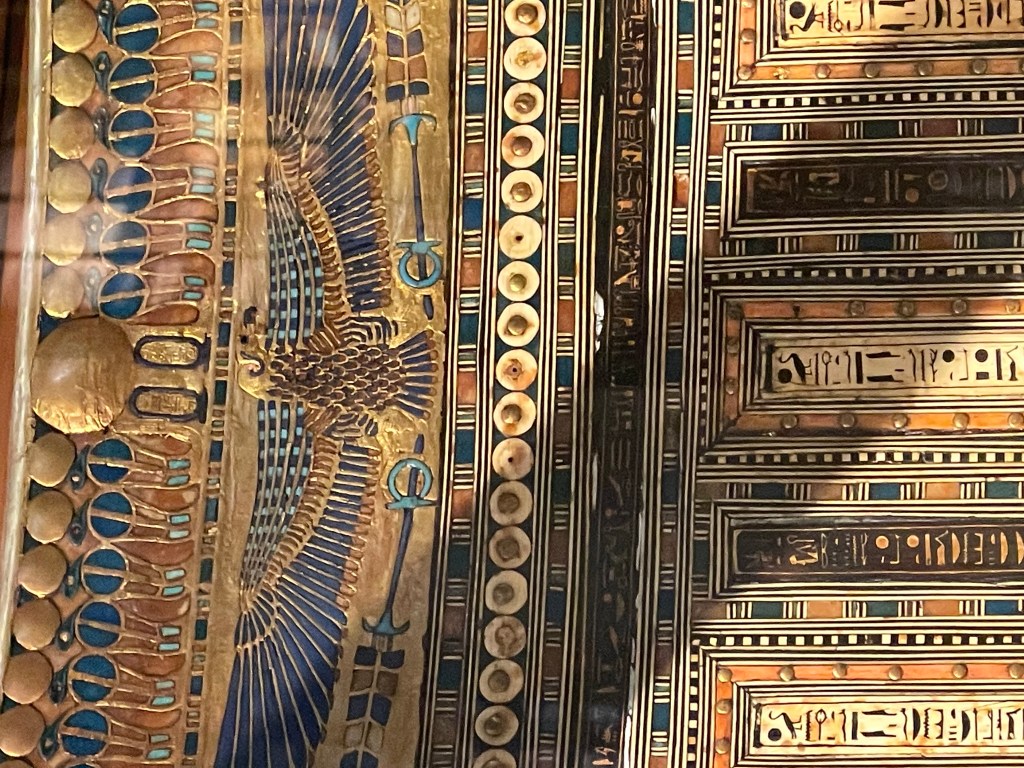
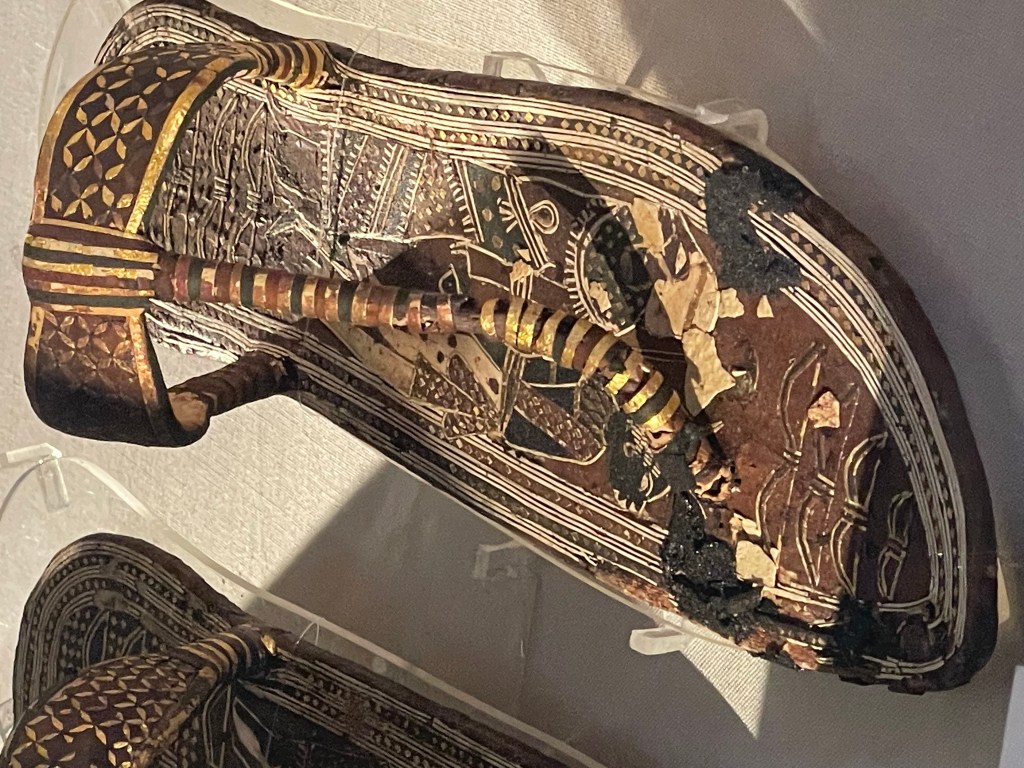
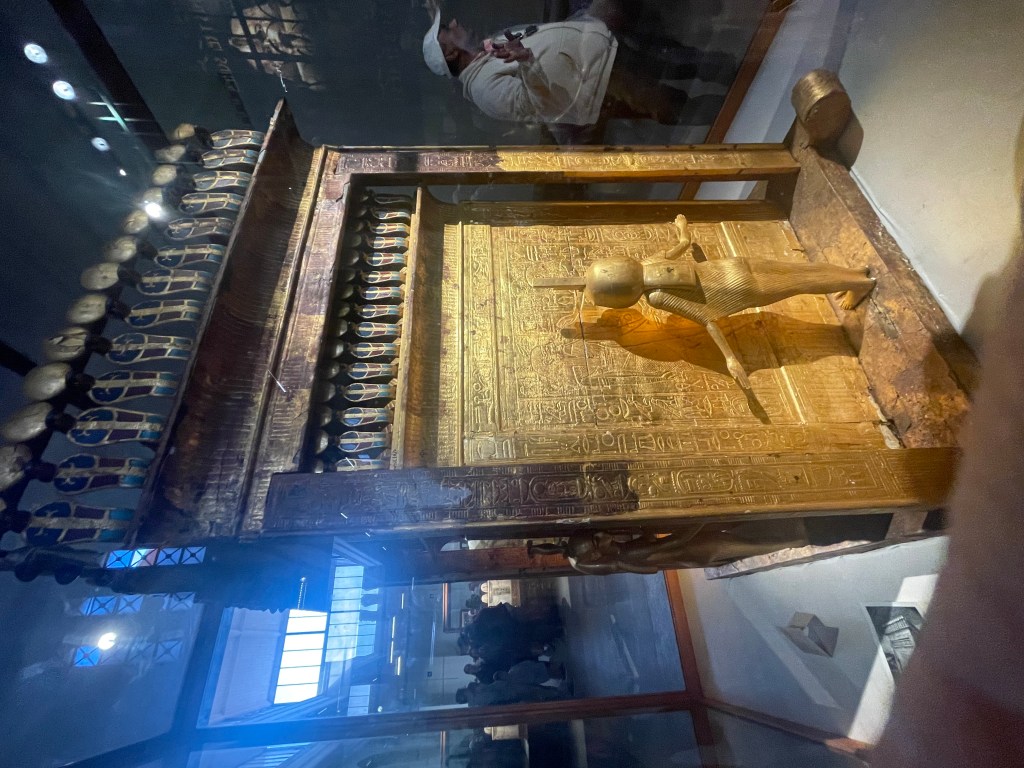
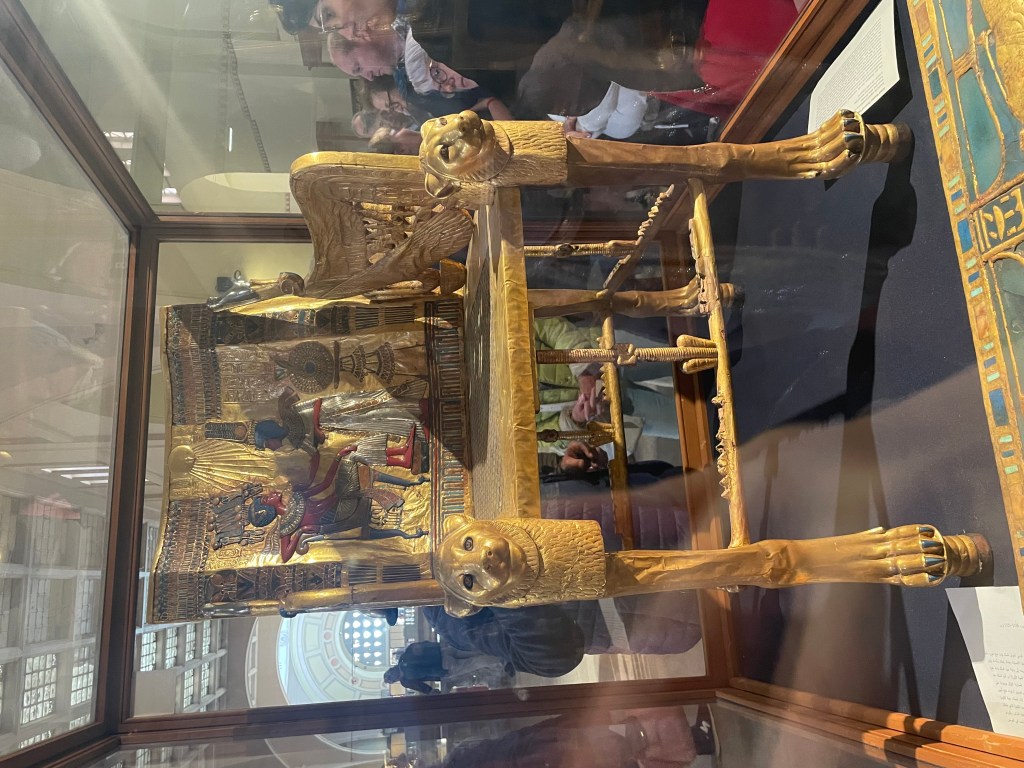
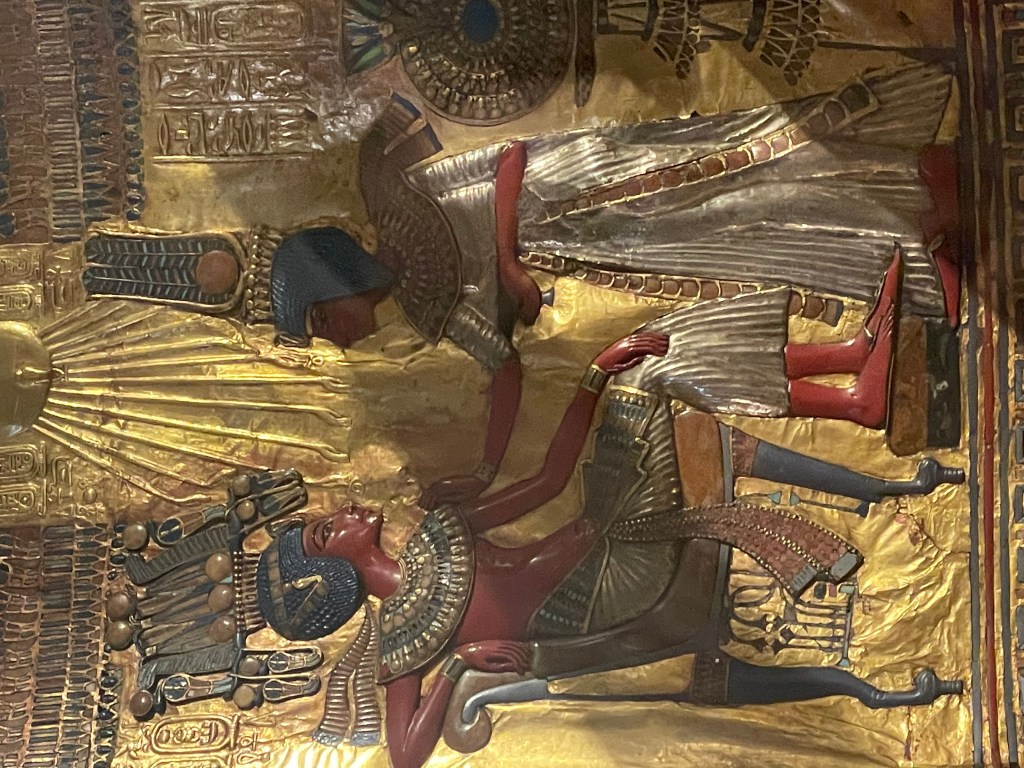
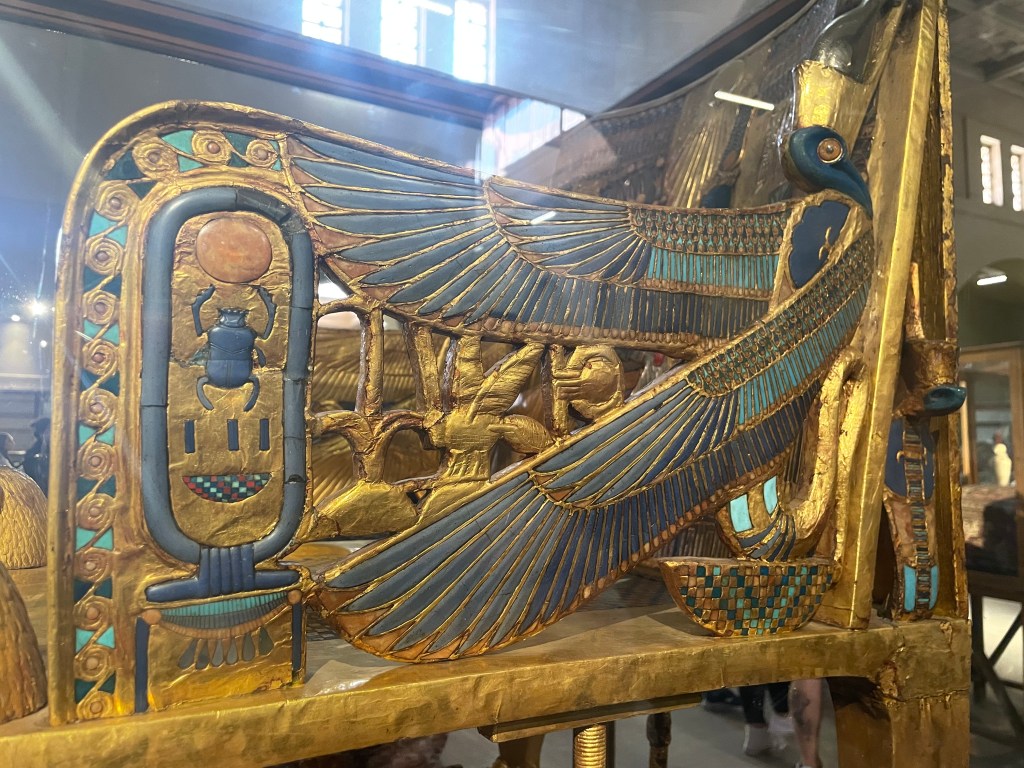
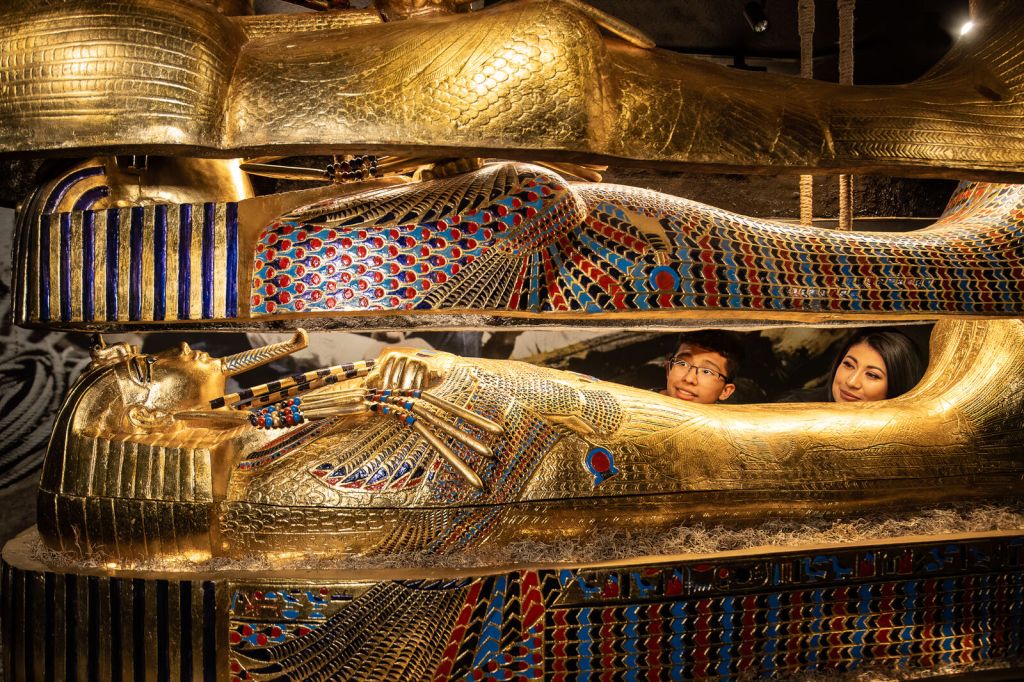
The ancient Egyptians certainly loved their gold as King Tut was buried in not one, but three golden sarcophagi, each more ornate than the last that were layered inside each other like Russian nesting dolls. The last one that actually held his mummified body was truly spectacular – here are a couple of pictures from the interwebs so you can see what I mean. Some of the other 5,000 of the treasures discovered in his tomb on display were equally amazing, including his throne where you stepped over the bound bodies of your enemies! There is a bit of a mystery surrounding the death of Tutankhamun at only 18 – some theorize he was killed, others point to evidence of ill-health throughout his short life (as evidenced by the walking sticks that were found in his tomb). He wasn’t a great warrior unlike some of the other Kings (looking at you, Ramesses II) but he is obviously the most well-known as his tomb is the only one that was found intact in the Valley of the Kings, thus revealing the full array of stuff jammed inside. Its mind-boggling to think that ALL the tombs would once have contained such amazing treasures. Here is a link which details some of the more surprising artefacts to have been found inside King Tut’s tomb: https://www.history.com/news/king-tut-tomb-artifacts The sandals (which you saw before) were made of wood and overlaid with a marquetry veneer of bark, green leather, and gold foil on a stucco base. The outer soles are covered with white stucco. The straps over the insteps are of bark ornamented with a diaper pattern in gold foil. On the inner sole are figures of Negro and Asiatic captives bound with stems of lotus and papyrus. Above and below are groups of four bows which together with the captives, represent the nine traditional enemies of Egypt whom the king symbolically trod underfoot when wearing the sandals.
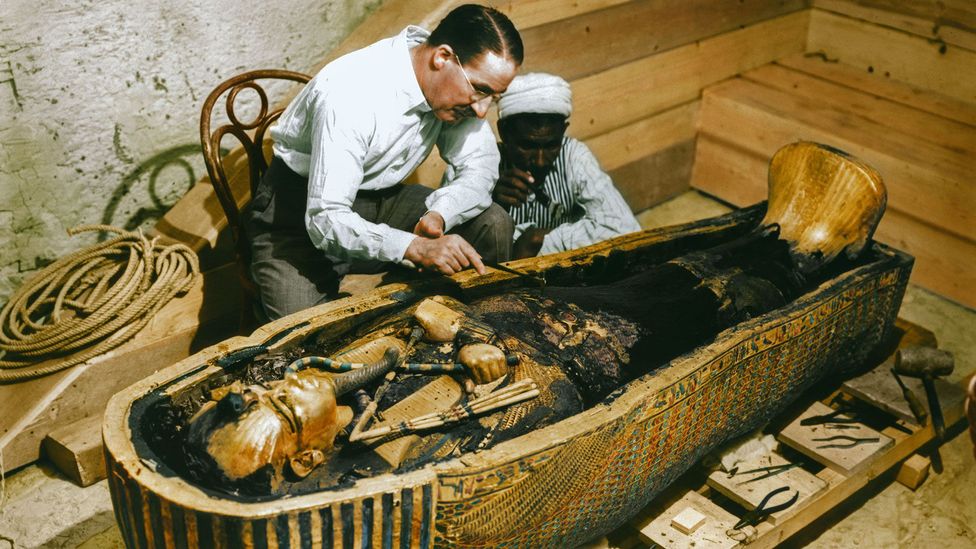
And…. just in case you were wondering… No. The curse of King Tut’s tomb is NOT real. Which – given we were to visit it later in our trip – comes as a relief. Here’s what the History Channel has to say about the long-held myth:
In early 1923, British archaeologist Howard Carter and his financier friend George Herbert, Lord Carnarvon, ceremoniously opened the long-obscured burial chamber of the boy pharaoh Tutankhamen in Egypt’s Valley of the Kings. Two months later, Carnarvon was dead, killed by blood poisoning from an infected mosquito bite on his cheek.
Newspapers speculated that he was the victim of the “mummy’s curse” or “curse of the Pharaohs,” which supposedly promised death to anyone who disturbed the rest of the kings and queens buried in the valley. The rumors only increased after the sudden, early deaths of several others connected to the excavation of Tut’s tomb. But is the curse real?
Not according to the British Medical Journal, which did a study in 2002 on the survival rates of 44 Westerners whom Carter had identified as being in Egypt when the tomb was examined. (The curse was said not to affect native Egyptians.) The study compared the mean age of death for the 25 of those people who were present at an opening or examination of the tomb with the others who weren’t. It found no significant association between potential exposure to the mummy’s curse and survival, as well as no sign at all that those who were exposed were more likely to die within 10 years.
Some theorists seeking a scientific explanation say that Carnarvon’s death may have been linked to toxins within Tut’s tomb. While some ancient mummies have been shown to carry potentially dangerous species of mold, and the tomb walls could have been covered in bacteria known to attack the respiratory system, experts dismiss this hypothesis. They argue that Carnarvon was chronically ill before he ever set foot near Tut’s tomb. Besides, he didn’t die until months after his first exposure, and the toxins would have done him in much earlier.
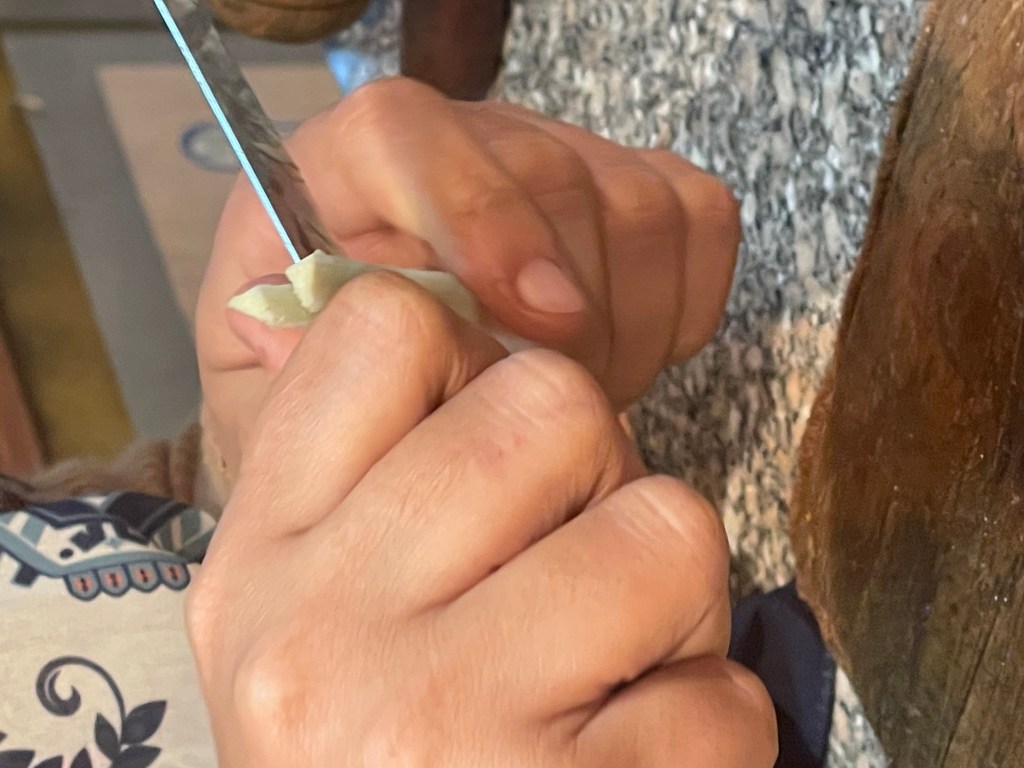
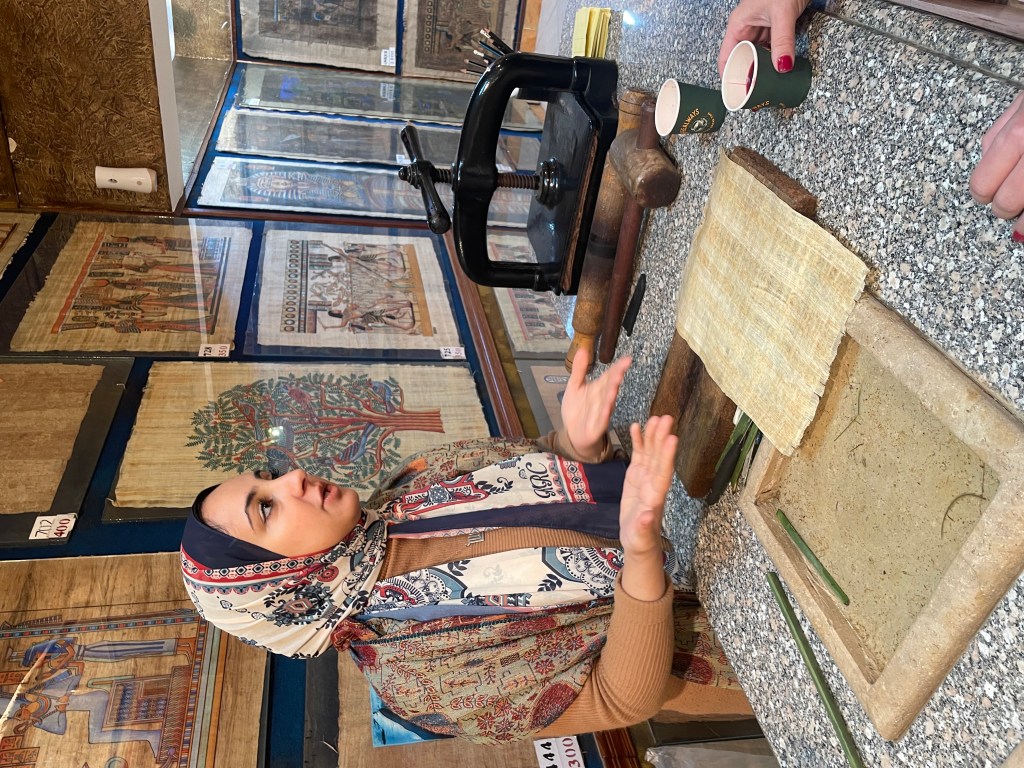
So that’s that then. After having our minds collectively blown again at the museum, it was time for some more retail therapy and to head off to the papyrus factory. Apparently naturally grown papyrus is now quite rare but there is obviously still enough to make souvenirs for tourists! We were shown downstairs into a gallery where a lady gave us a demo of how papyrus is made – and how to tell real from fake papyrus. And you KNOW I ended up buying a vintage 90yr old papyrus painting of a famous scene called “The Judgement” from the Book of the Dead of Hunefer. I know its totally touristy, but I just liked it – and its a great Cliffs Notes of a lot of the Egyptology that we’ve learned so far. Here’s a really cool little video that walks you through the scene, from left to right – introducing you to a lot of the key ancient Egyptian gods: https://www.dailyartmagazine.com/judgement-scene-hunefer/





After the papyrus factory, we then explored the Islamic cultural part of the city as we headed to the Salah Al Din citadel and mosque. Salah El Din (known as Saladin to European historians) overthrew the Fatimid dynasty in 1171 AD, establishing the new Sunni Ayyubid Caliphate. Given the threat of invasion by European crusader armies, Saladin decided to improve the fortifications of the city and in 1176 AD he began construction of a wall that would encircle both Al-Qahira (today Islamic) and Fustat (Old Cairo). The Citadel became the centerpiece of these great fortifications, protecting the city from the heights of the rocky hills that overlooked it. Completed in 1183 AD, Saladin’s Citadel served as the seat of government in Egypt for 700 years until Khedive Ismail moved into Abdeen Palace in newly constructed Downtown Cairo in the 1870s.


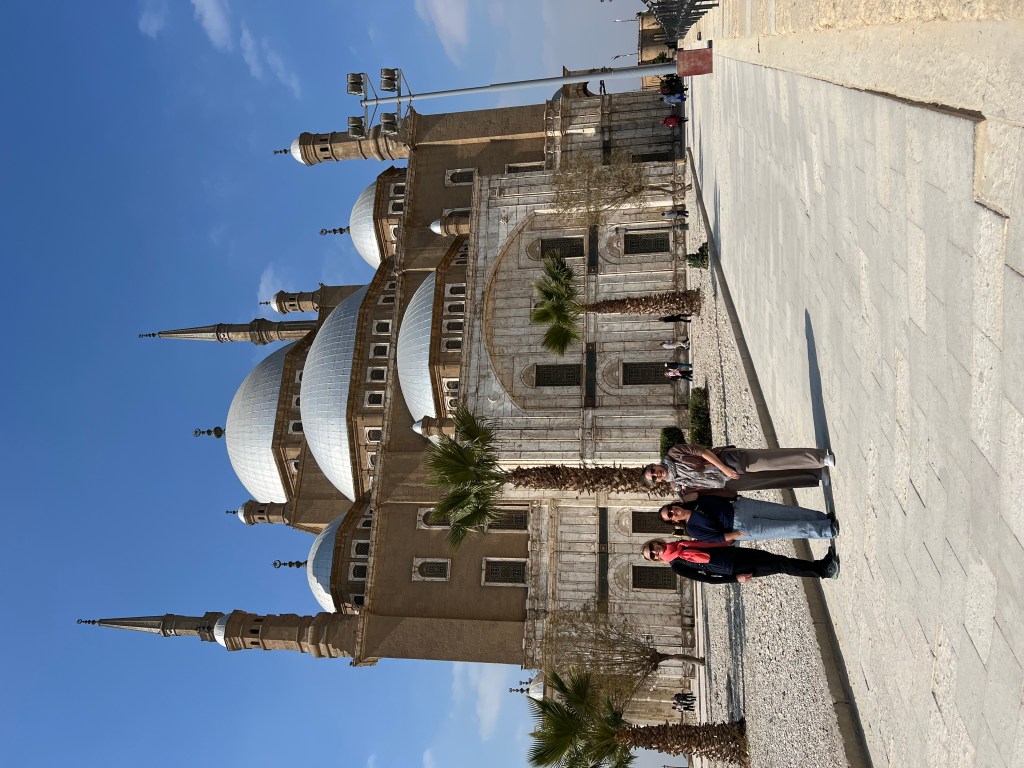
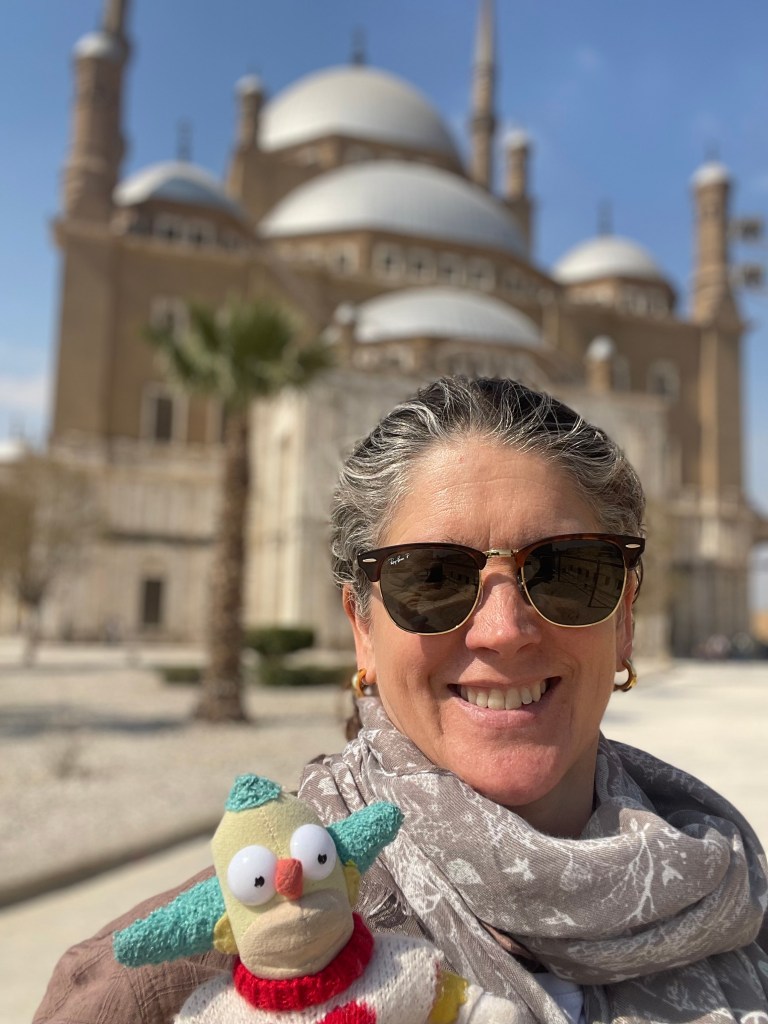
The Citadel looks very different today than it did in its original capacity as a fortress the Crusader armies. It has been expanded and remodeled by many different rulers. In the 14th century, Sultan Al-Nasir Muhammed built a mosque there that still bears his name and the Southern Enclosure of the fort next to Saladin’s original walls.
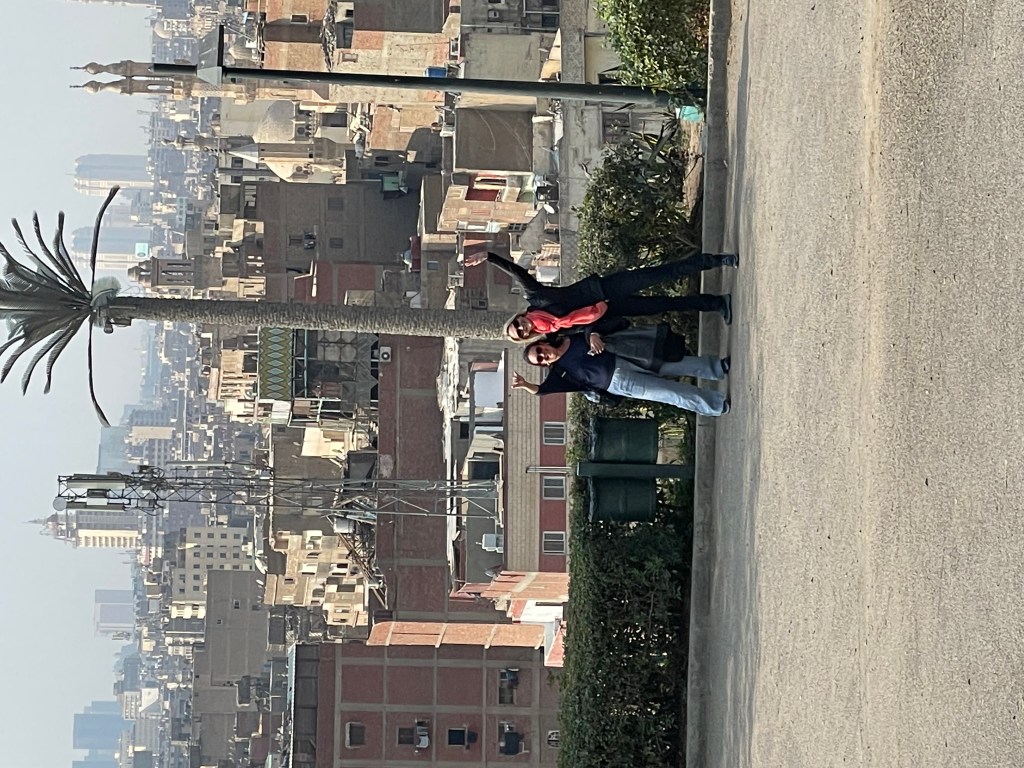
However, when Muhammed Ali (yes, I know) came to power, he was determined to erase the influence of the Mamluks, who had controlled Egypt for six centuries before him, and demolished their palaces within the fortress. He also built one of Cairo’s most recognizable landmarks. His Alabaster Mosque, built in memory of a deceased son, towers over the rest of the complex. Its silhouette is the most dominant feature of Cairo’s eastern skyline. It was incredibly impressive, walking in and looking up at the beautifully decorated and intricate domed ceilings. The photos really don’t do it justice. Visiting the mosque as foreigners, we didn’t have to cover our hair – but we did have to buy some disposable shoe covers for our feet (rather than having to take our shoes off). It was only 5 Egyptian pounds, so no biggie! (currently, 1 USD is worth 30 EGP – unfortunately the country’s finances have taken a beating over the last few months and the EGP has devalued by almost half – bad news for them, but good for tourist spending power). In addition to these two mosques, the Citadel also contained the National Military Museum which we didn’t visit (full of uniforms and weapons from Egypt’s history), a Police Museum (also skipped), and several more museums dedicated to the palace of Muhammed Ali. The main attraction was obviously the alabaster mosque – although the view that the Citadel offers over Cairo may run a close second. Looking out of the city, one can appreciate how the city earned its nickname, ‘The City of a Thousand Minarets and on a clear day you can even make out the outline of the Giza Pyramids in the distance.
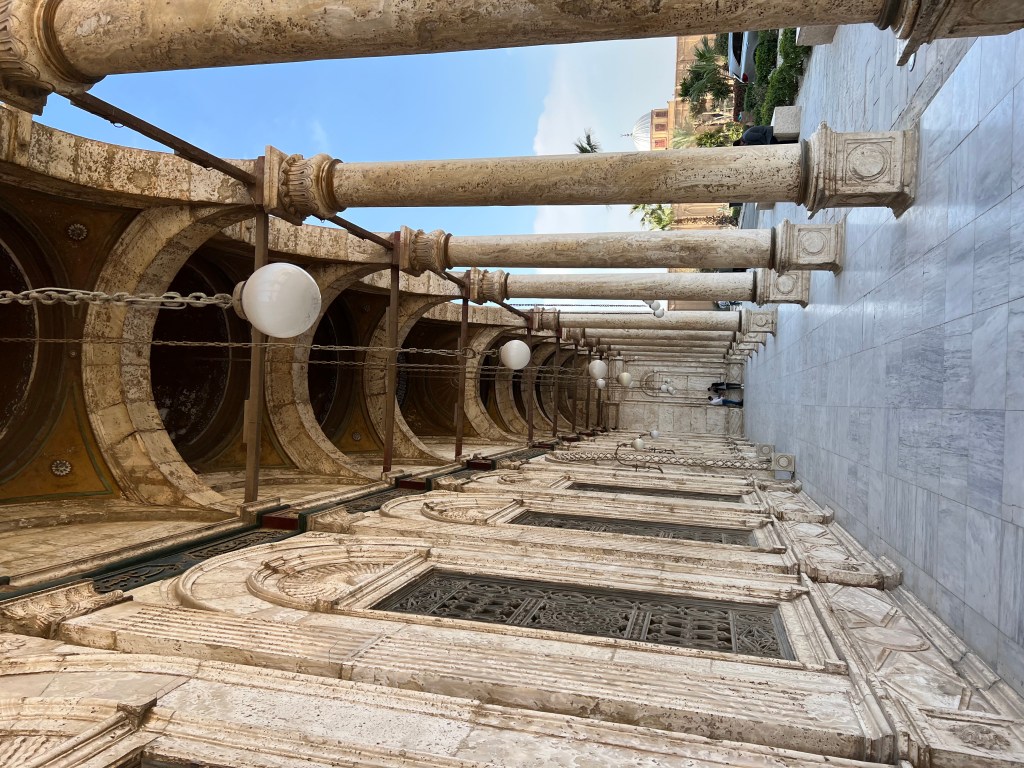
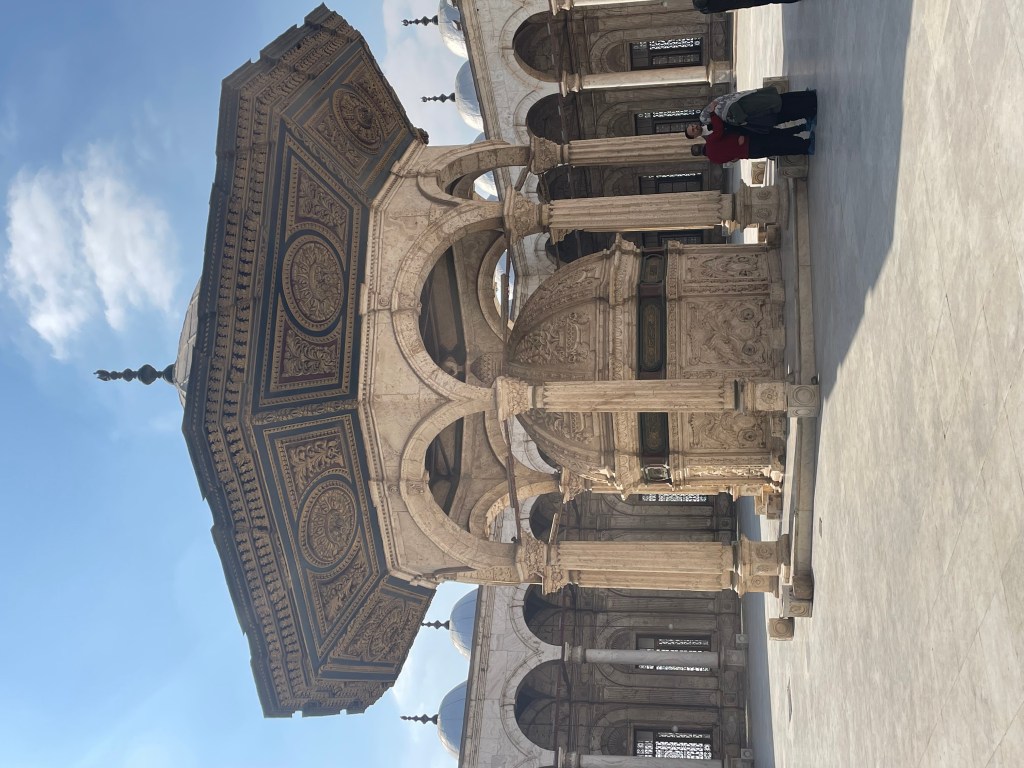


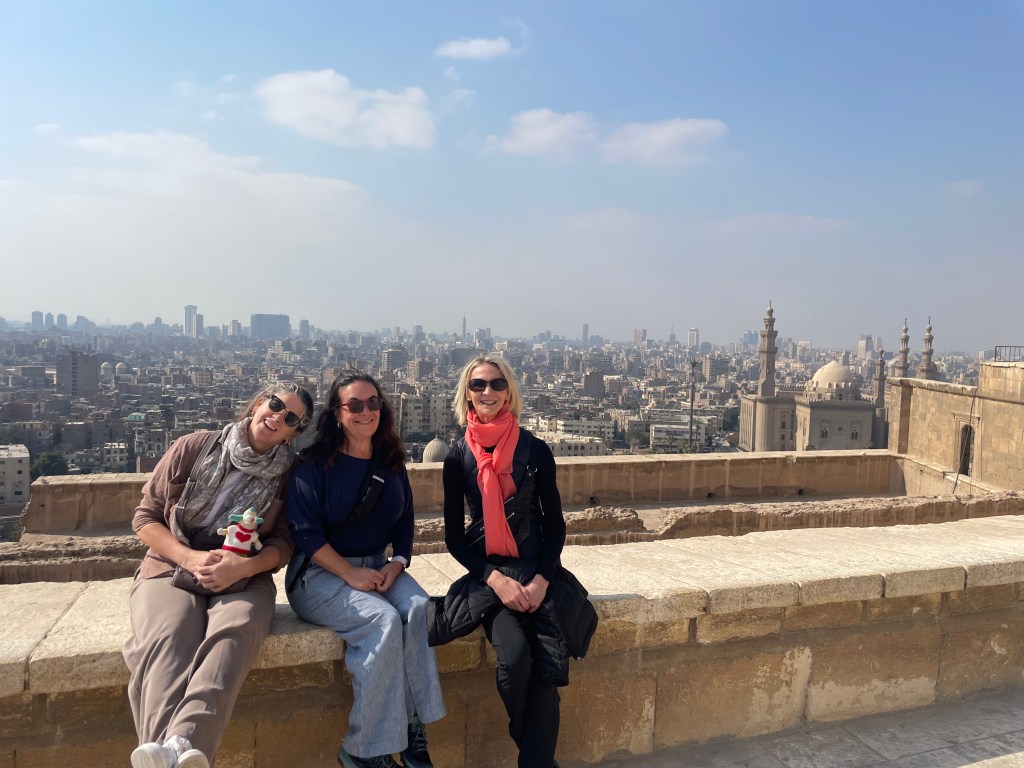


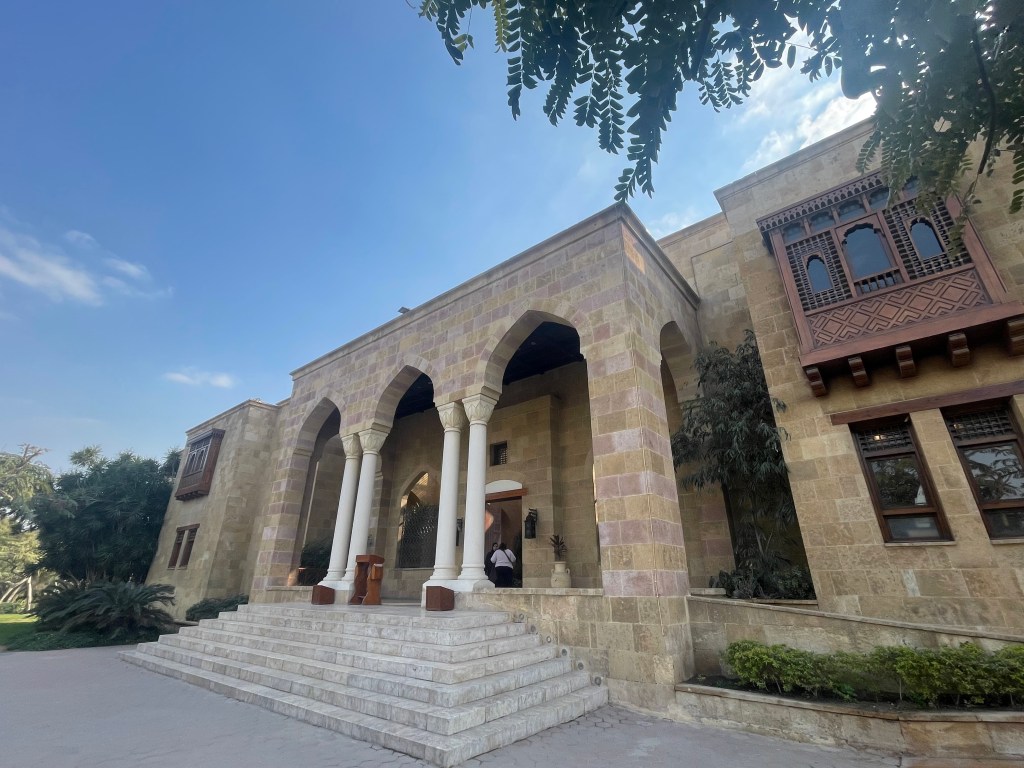
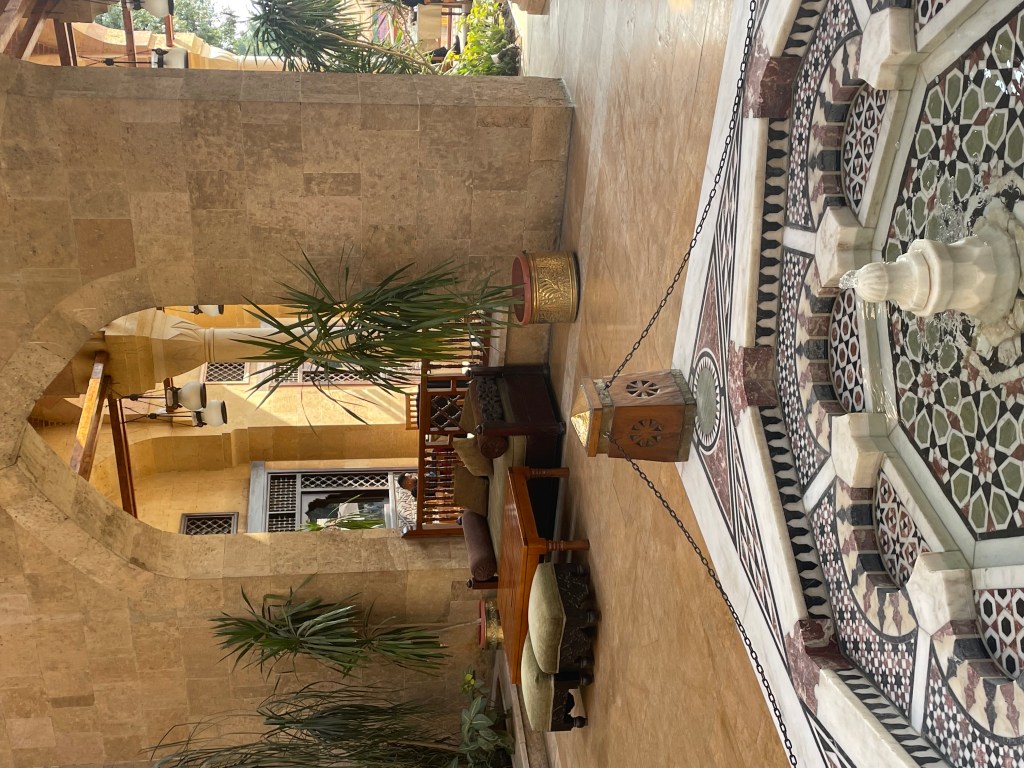
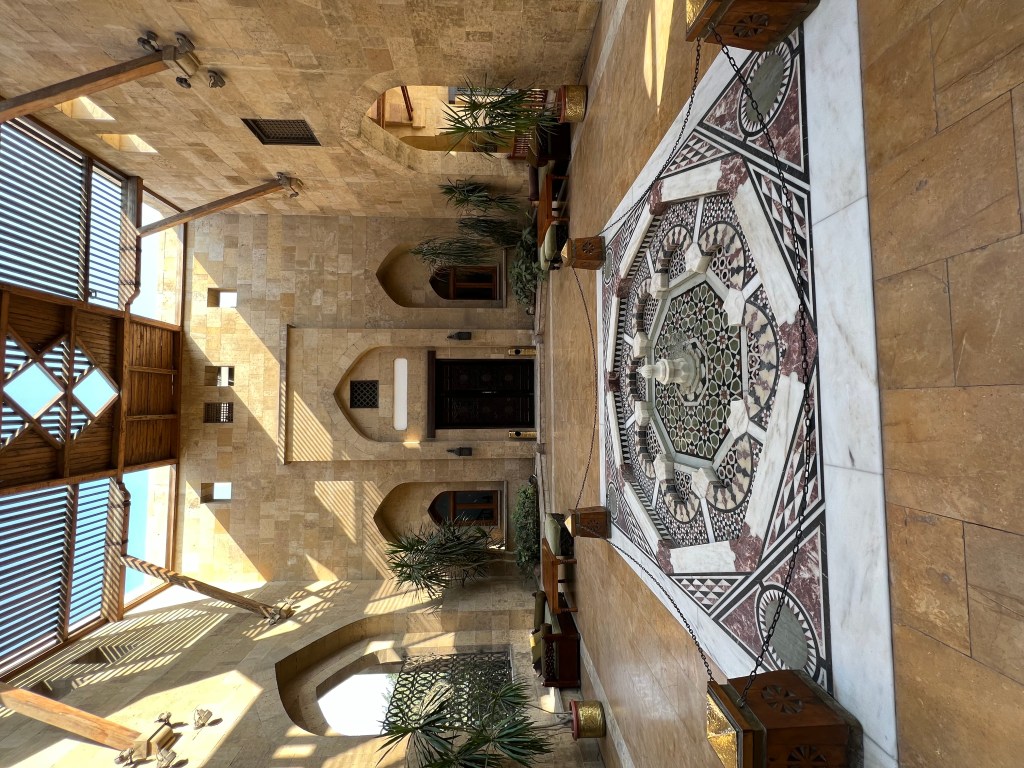
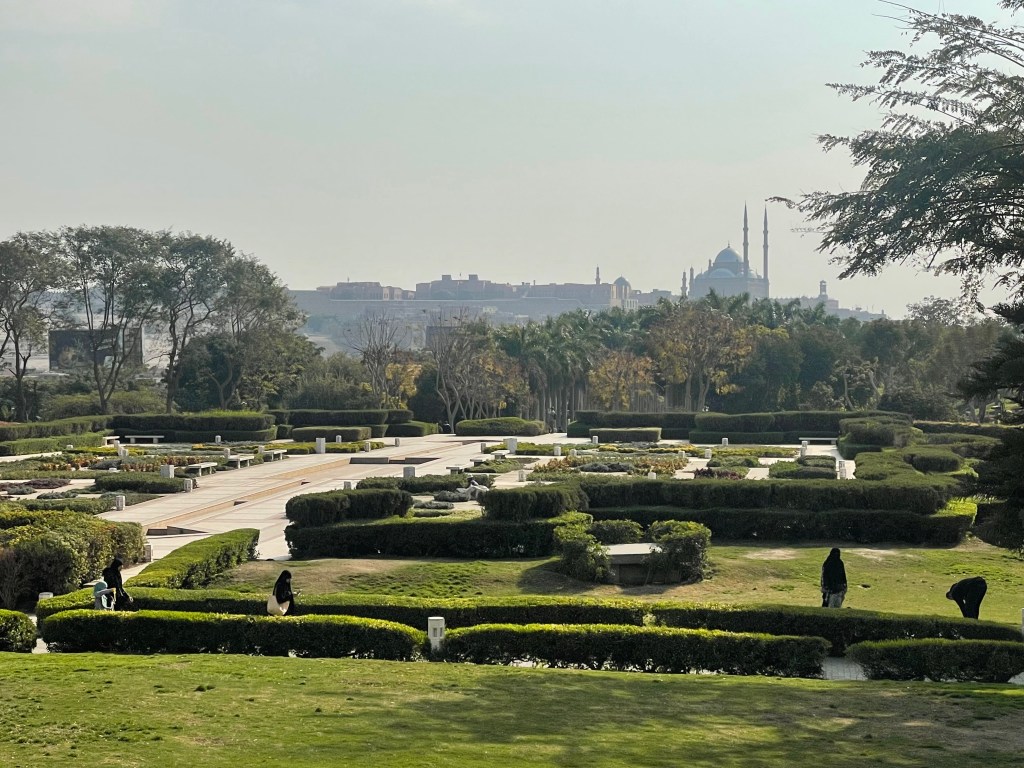
After that, we had a late lunch again at the beautiful gardens of .Al-Azhar. The park is a newer addition to the city, covering 30 hectares and developed at a cost in excess of USD $30 million, its funding a grant to Cairo from Aga Khan IV, a descendant of the Fatimid Caliphs of Cairo. https://en.wikipedia.org/wiki/Al-Azhar_Park From the park you could see the Citadel that we’d just visited and it was a wonderful haven of peace, quiet and green amid the noise, grime and dirt of modern day Cairo (the park replaced dust and rubble that had occupied the site for over two centuries!). The setting alone would have been sufficient, but as a bonus, lunch itself was also really good – this time, it was a yummy moussaka – the veggie version of which had french fries layered in it with the veggies!). There were also a couple of little artisan stores there too – so impromptu shopping opportunity! (I bought a cool cushion cover with the Sphinx on it)



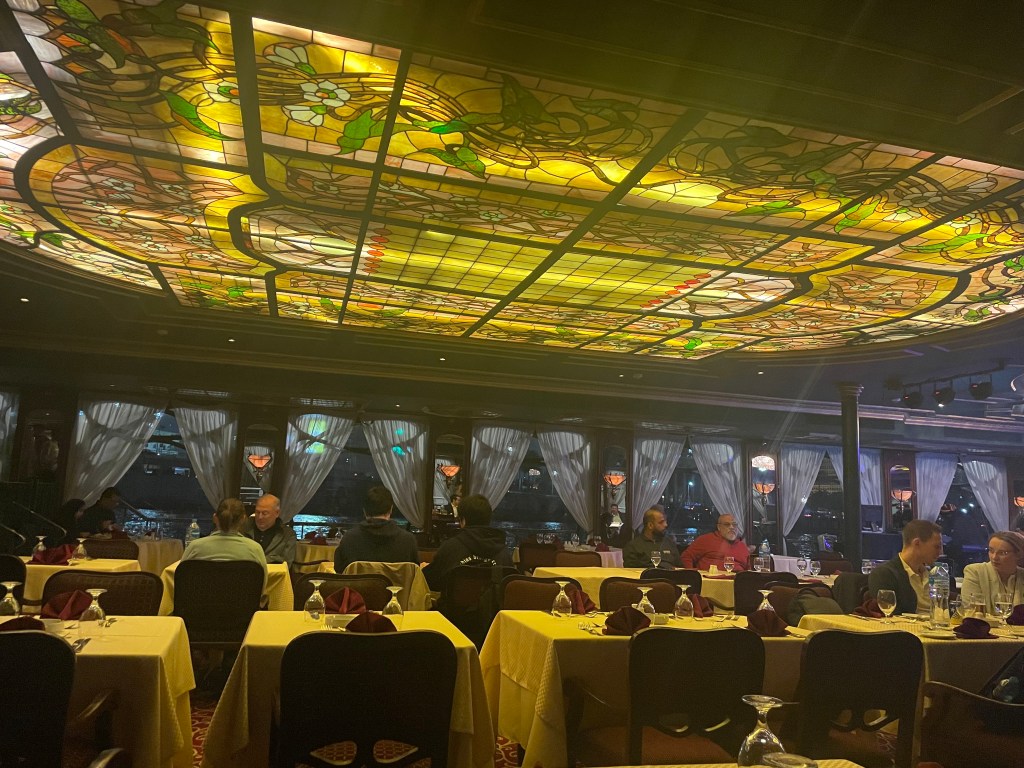
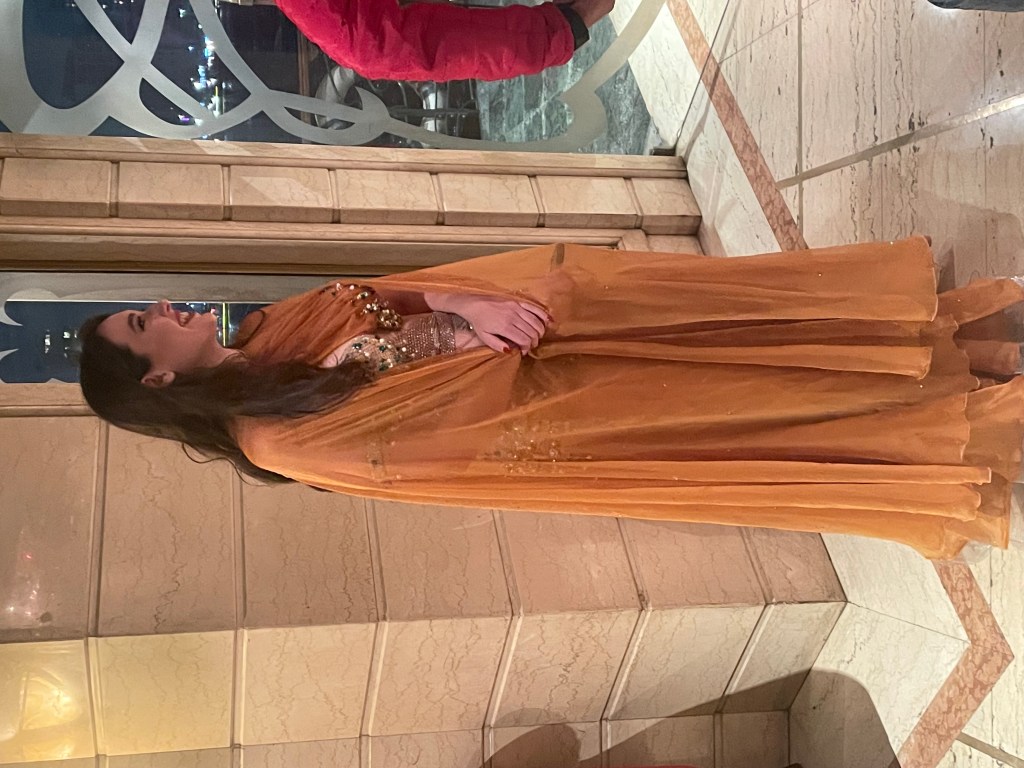
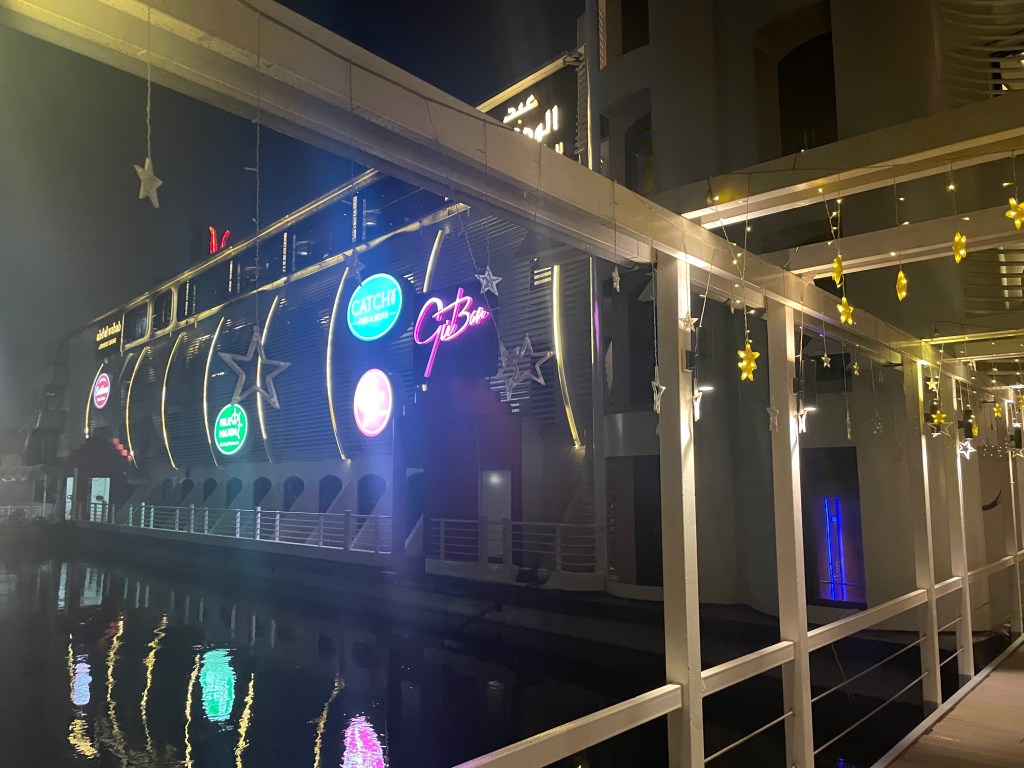
After lunch, we headed back to the hotel where we had just over an hour to relax and freshen up before it was time to head out for our dinner cruise! I’m not usually one for evening entertainment shows on vacation – but this one was included by the travel agent who had planned out the whole trip for us, so we thought “why not?” Our driver picked us up form the hotel and took us back into the city, dropping us off at a boat called the Maxim (we had a guide with us as well – he made sure everything was all set, then made himself scarce and sat at the bar all night). To get to our boat, we had to walk through another larger (and fancier) one – this is pretty common, we discovered in that boats kinda stack up next to each other when they dock, so that the passengers have to tromp through other boats to get to theirs.
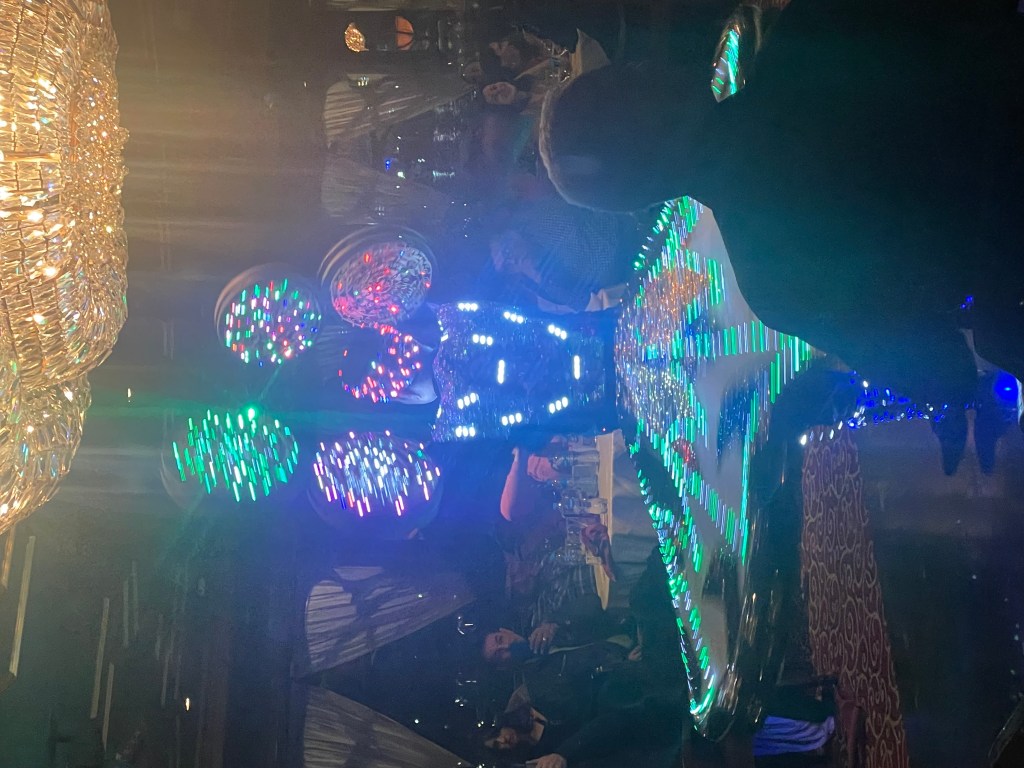
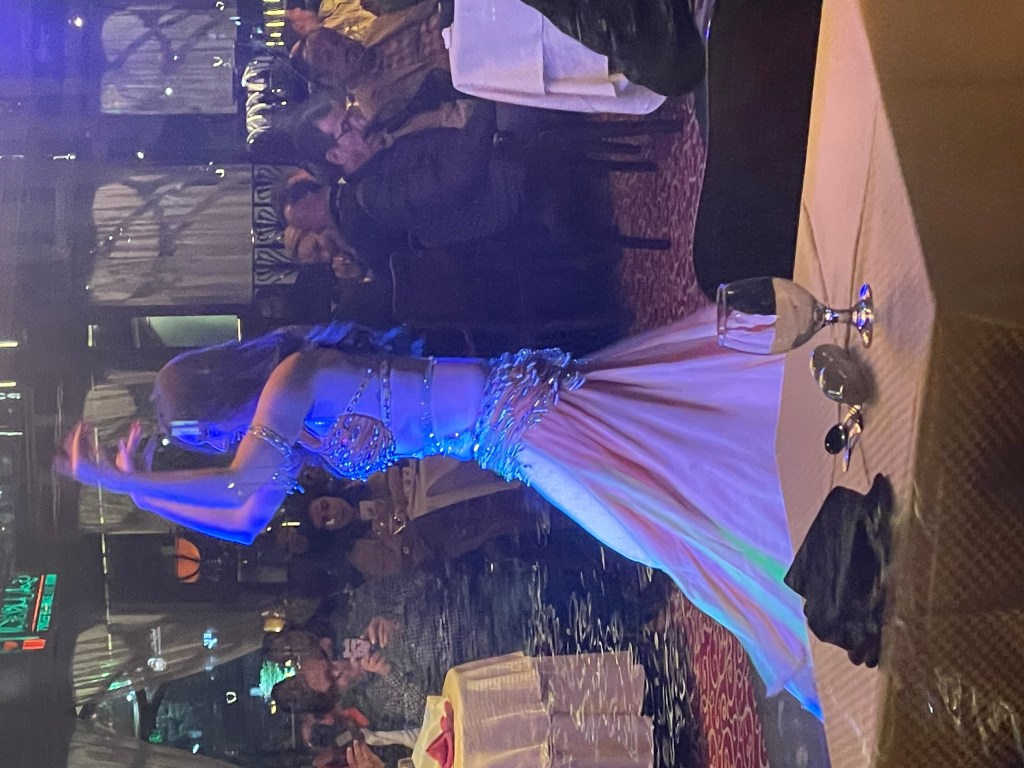
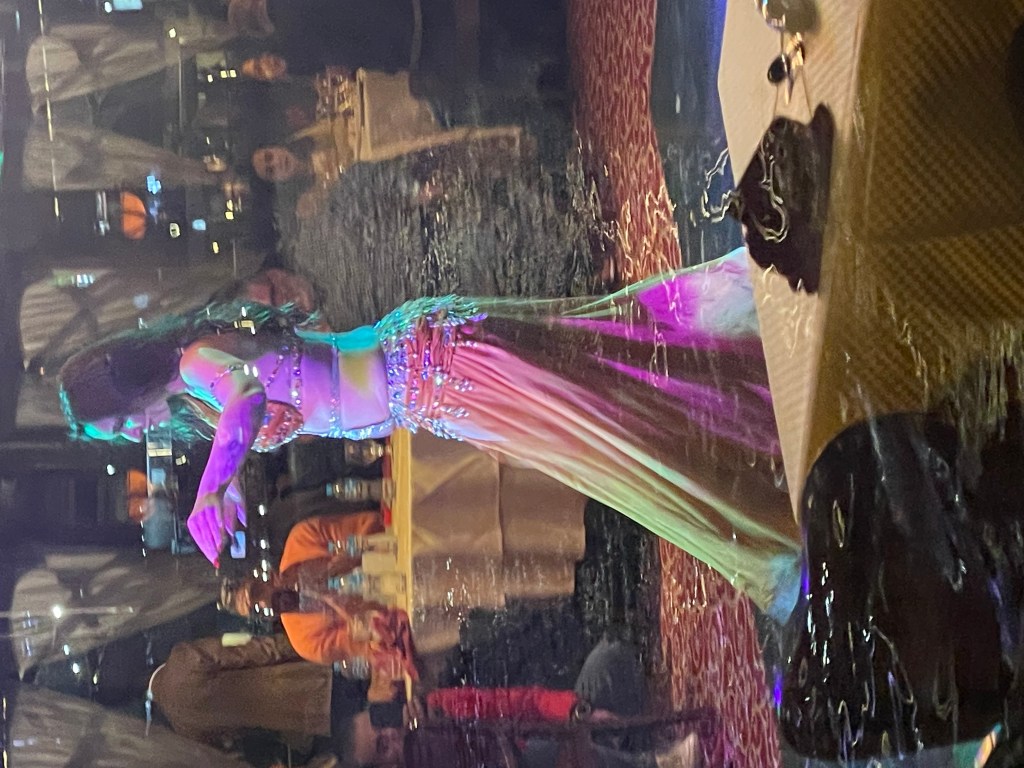
We had low expectations but it was actually a lot of fun – the food was surprisingly tasty (even though none of us were that hungry given how late we had eaten lunch) -including some excellent baba ganoush, followed by tasty sea bass. There was an entertainment show afterwards with a couple of singers who were fairly decent – but their drummer was quite seriously the worst I’ve ever heard! He was dreadful!! The evening was spiced up a little further by some type of medical emergency on board (older guy had some kind of cardiac incident – perhaps angina or dizzy spell?) – and this was before the belly dancer had come out to perform (I’m sure she was relieved it hadn’t happened during her set!). Another curious thing was that literally everyone seemed to have a birthday (except us) and so every single table was delivered some type of cake, while the entertainment played a pre-recorded tape of Happy Birthday for them. At the time, we thought the singers were being a bit lame and dialing it in by using a pre-recorded tape – but after the 20th (yes, really!) go round of Happy Birthday, we totally understood. Going on a river cruise is obviously THE thing to do on your birthday in Cairo!! After the singers, we were treated to a traditional dance from a chap dressed up like a Christmas tree that just spun round and round. As his act progressed, his spinning got wilder and faster – and he started lighting up! It was all very confusing. Just… why? After the Christmas Tree Dervish, there was a belly dancer who was very good – one for the chaps, for sure. And she wasn’t a skinny minny – but man, did she have amazing ab control. By this time, the boat had gotten quite smoky (lots of birthdays = lots of celebratory cigars) but we were able to wander around the deck outside and watch the show looking inwards into the boat, so that was fine. All in all, the whole shebang lasted for a couple hours after which we docked and headed back to the hotel. We finally got back to the hotel at 10.30pm and headed straight to bed – it had been a long – but fun – day!