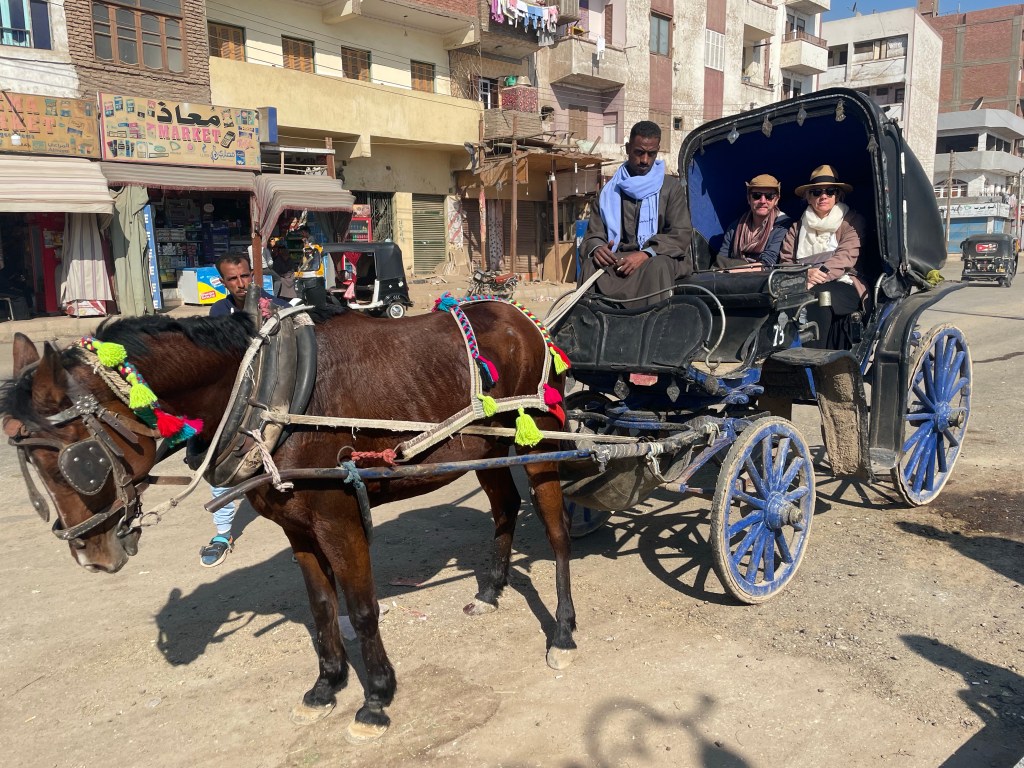
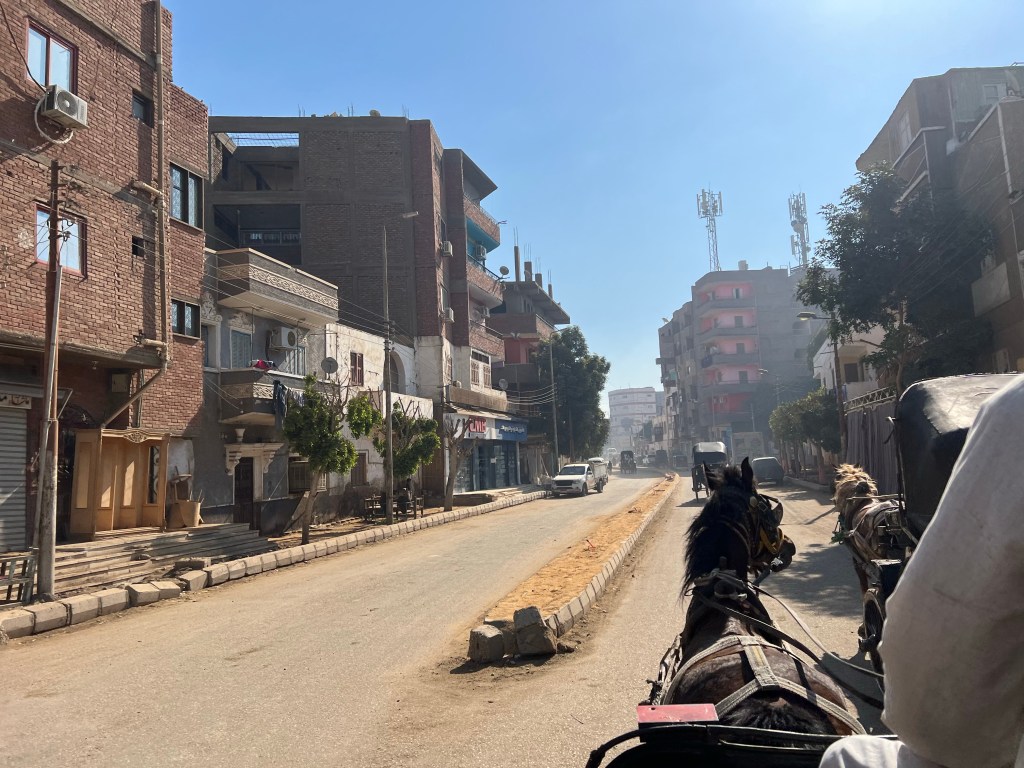
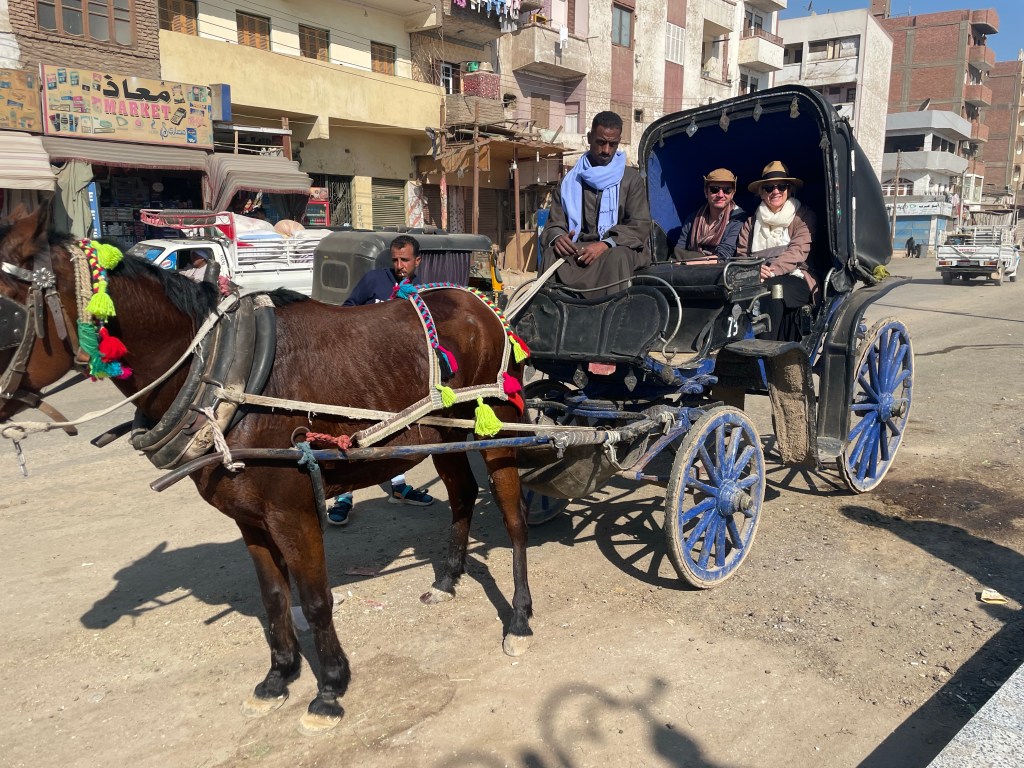
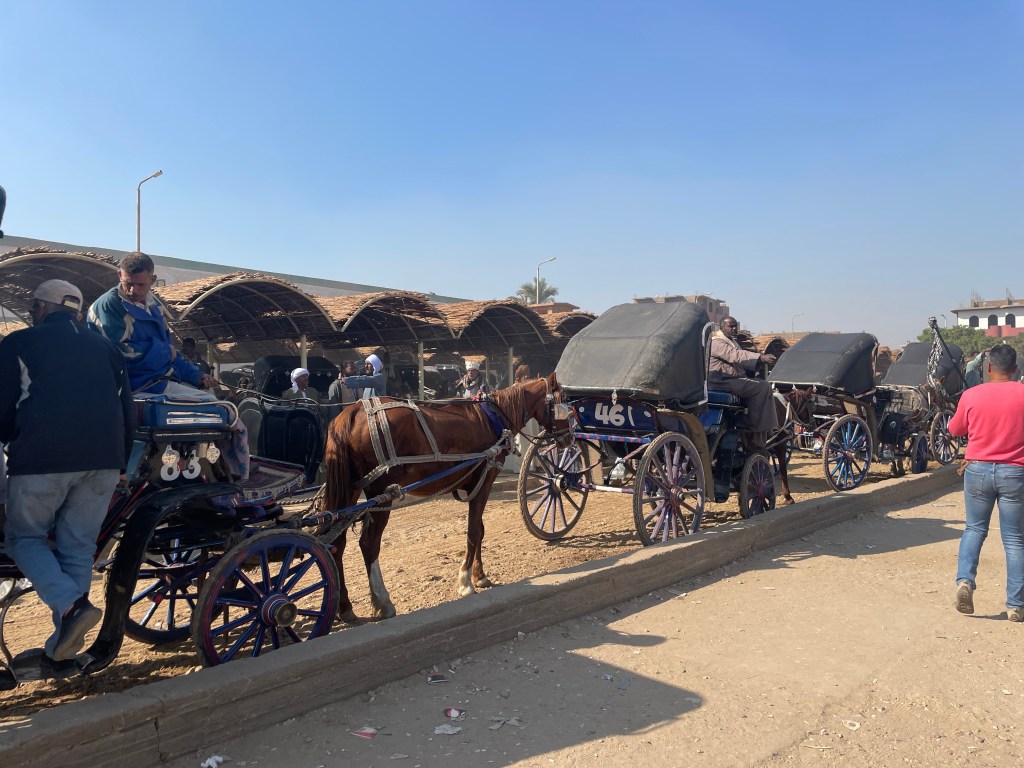
Day 7: Today was a bit of a slower day today – after breakfast, our first stop of the day was to visit Edfu temple – this time, our transportation was via horse-drawn carriage! Peter had arranged for two carriages to be waiting as we disembarked from the ship and Matt and I got in one, and Lisa and Lee Ann hopped in the other! The horse was a bit smelly tbh (Peter had given us facemasks to use to help muffle the smell) but ours was fast and made short work of the 15min ride to the Temple entrance. Giving tourists rides seemed to be quite the cottage industry as there were dozens of horse carriages at the temple, all neatly lined up under rows of shelters. I’m sure you can imagine the cacophony – the passionate and energetic Egyptian style was on full display!

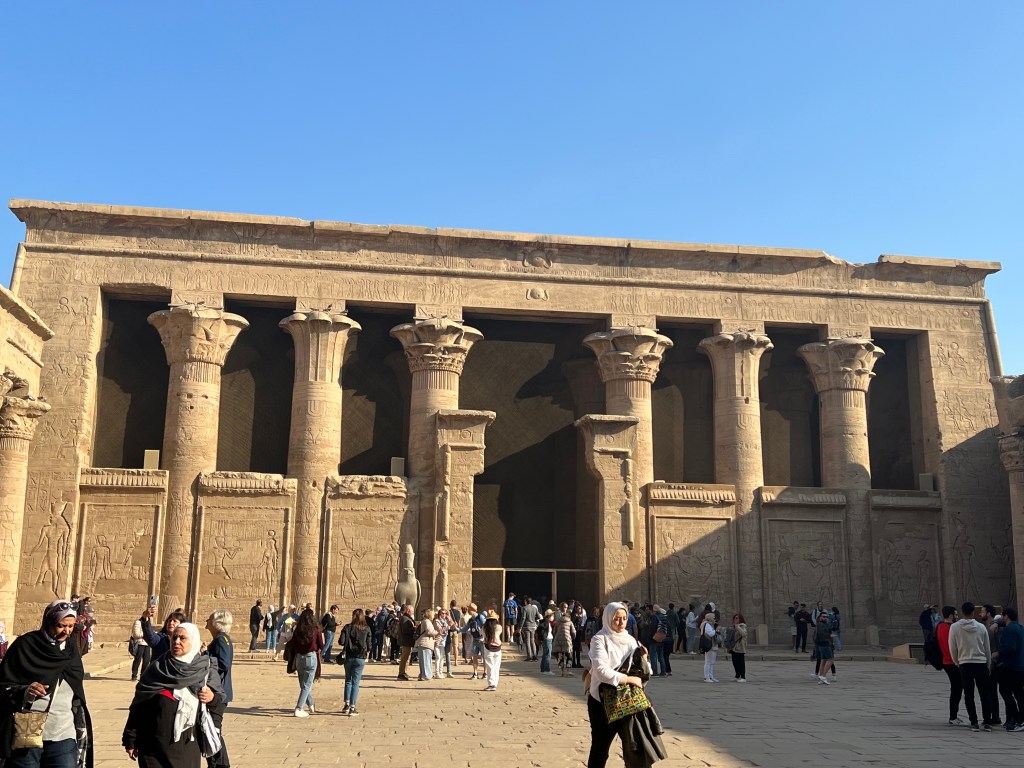
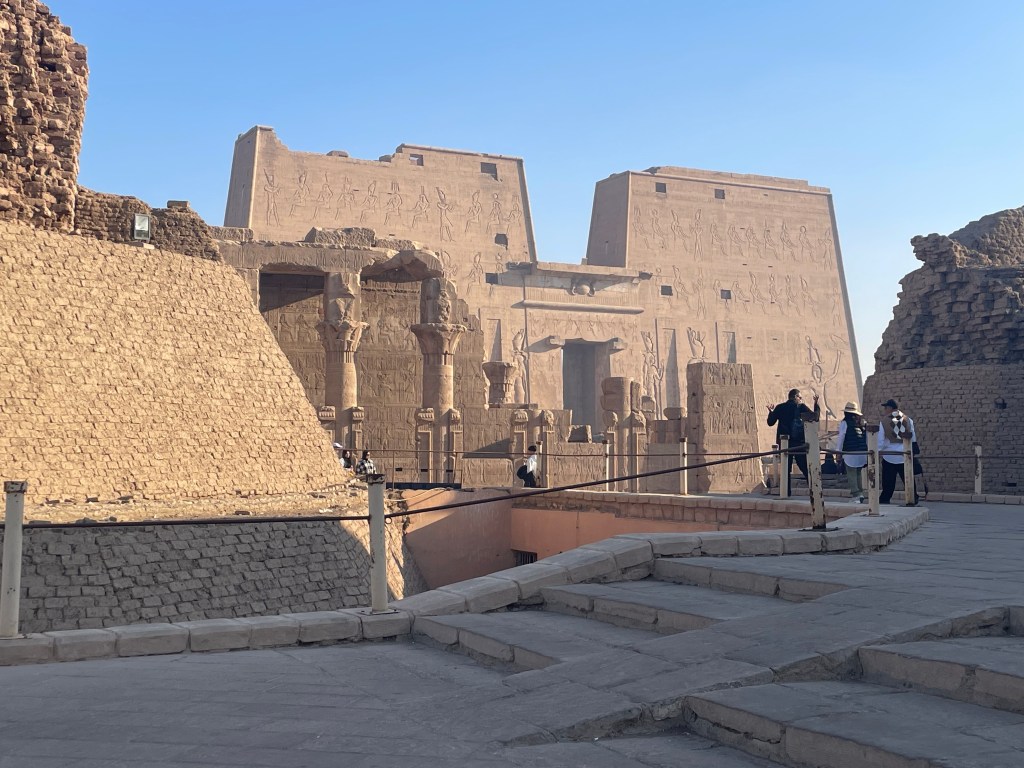
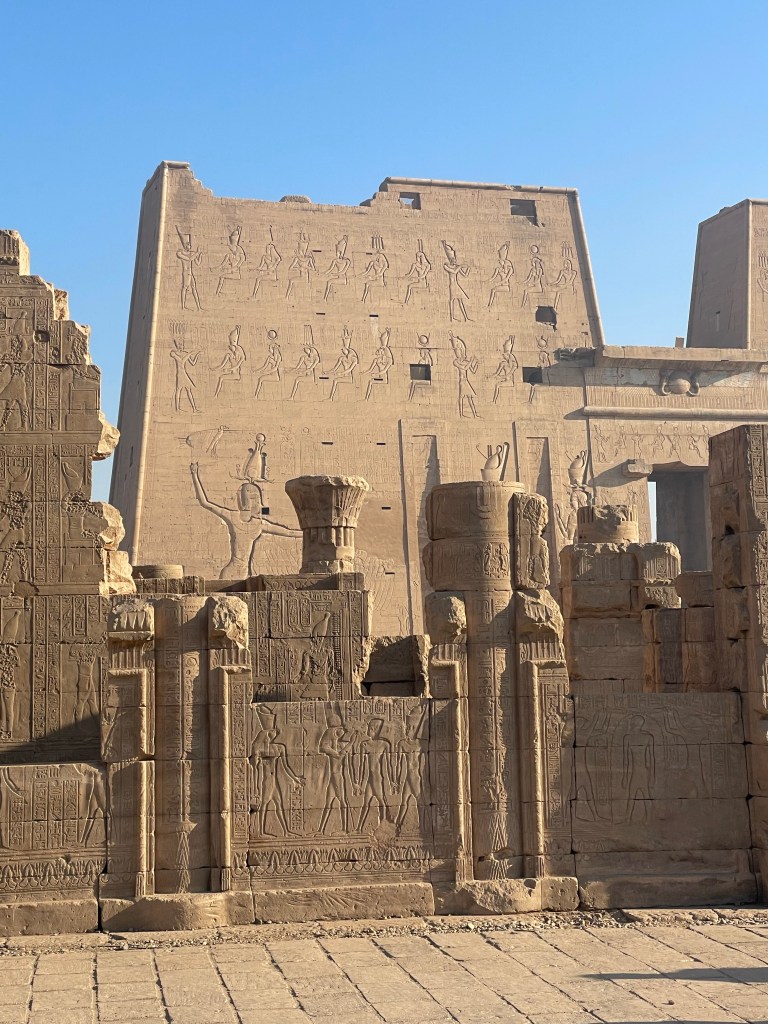
The Temple of Edfu is of particular note because it is nearly intact and is the largest temple dedicated to Horus (also known as Apollo in Greek mythology) and Hathor Dendera. It was built in the Ptolemaic Kingdom between 237 and 57 BC. Its also famous because of the screeds and screeds of hieroglyphics and inscriptions on the walls – they provided important information on language, myth and religion during this particular period in Egypt, even including details on the temple’s construction.

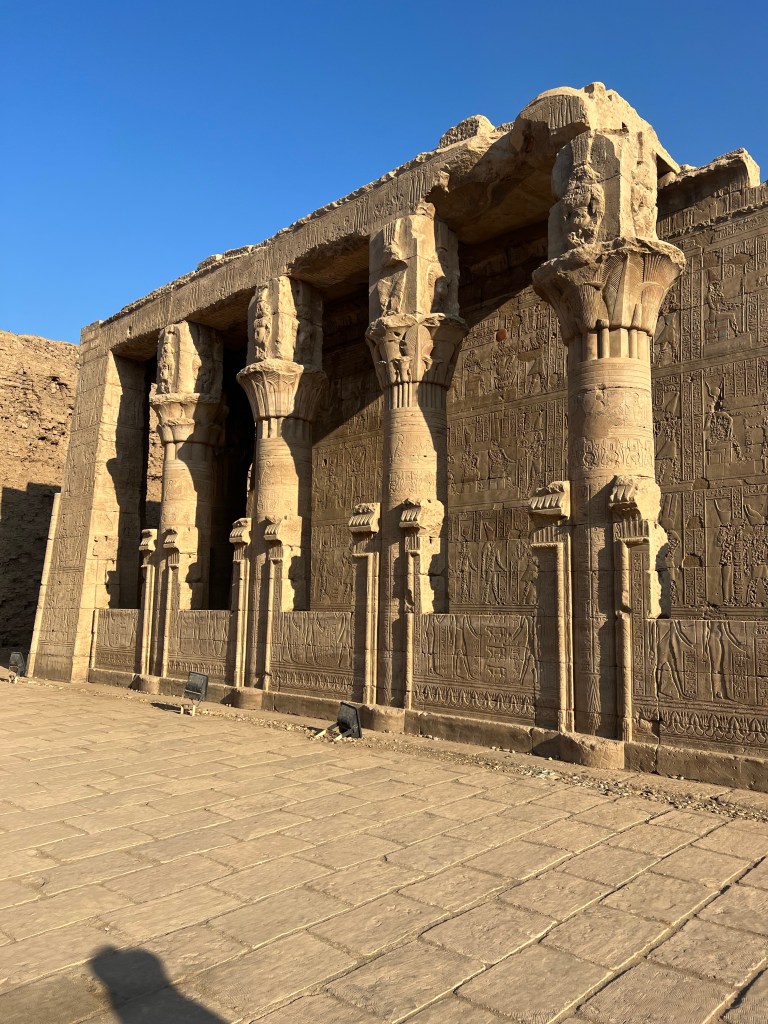
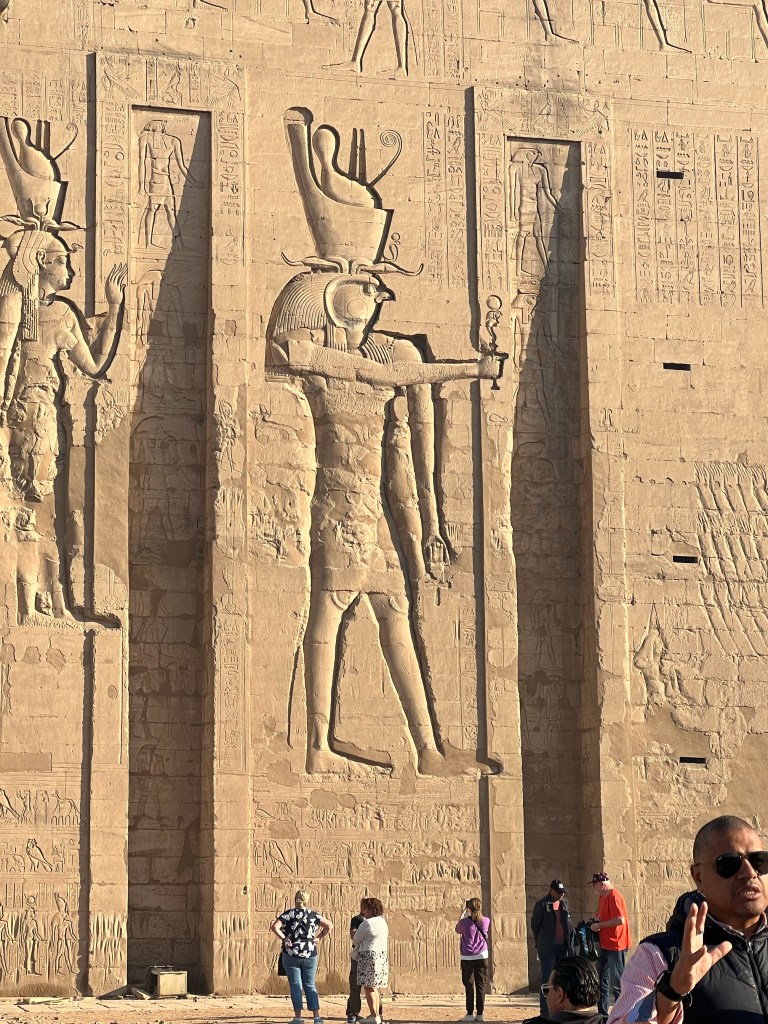
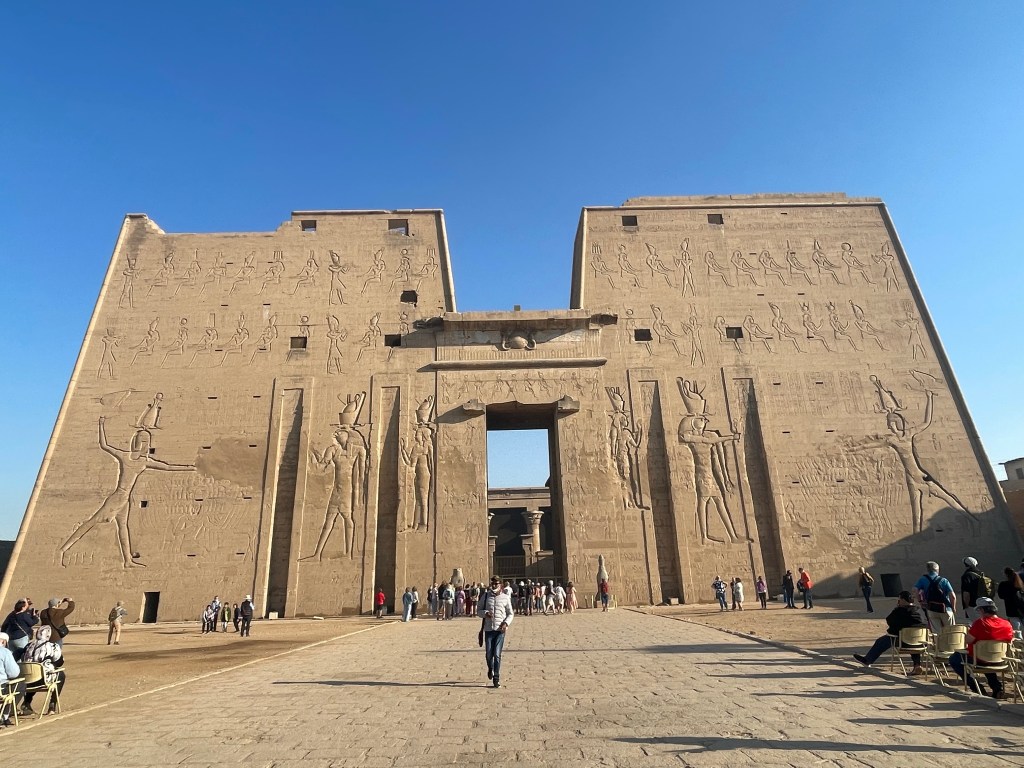
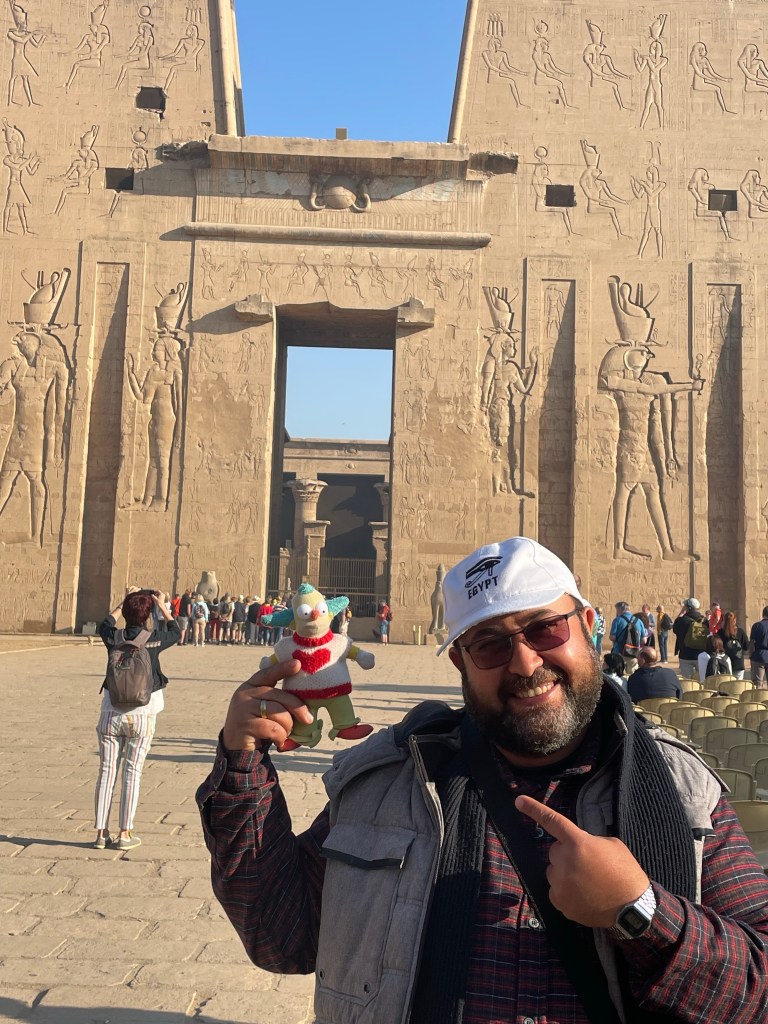
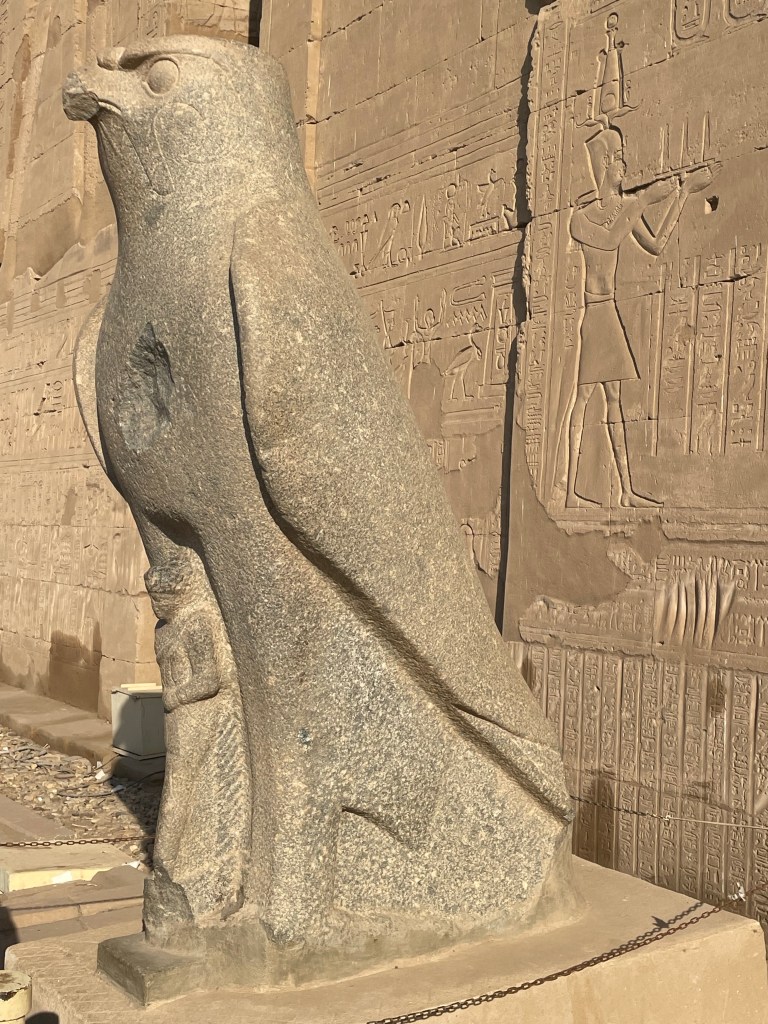

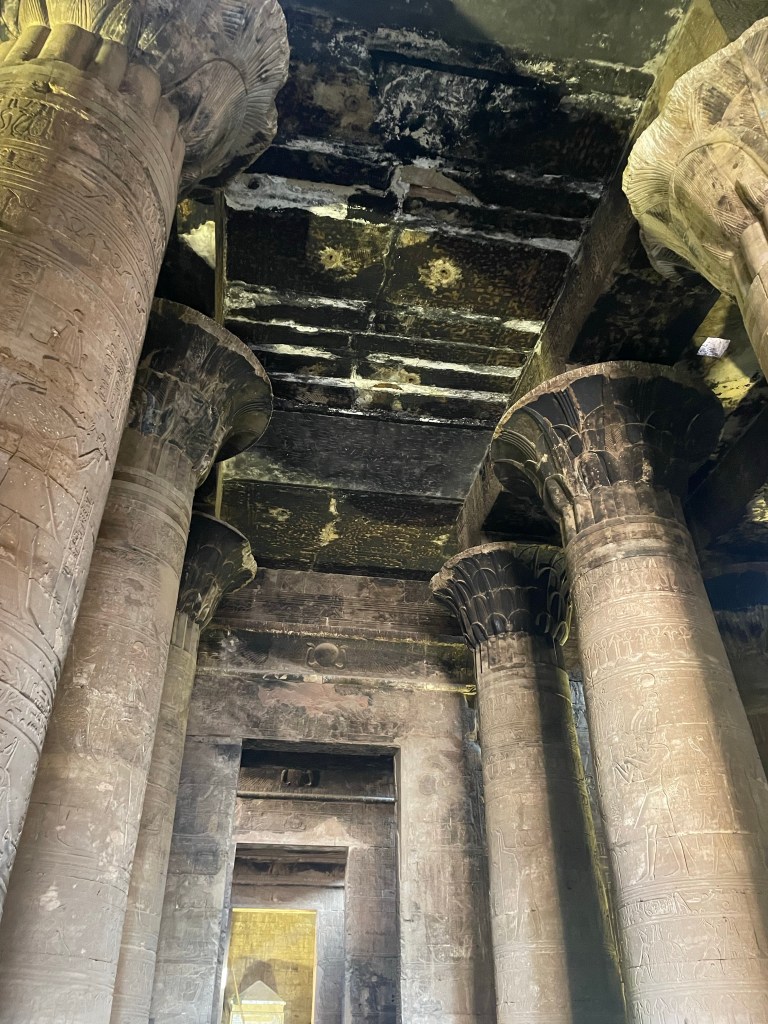
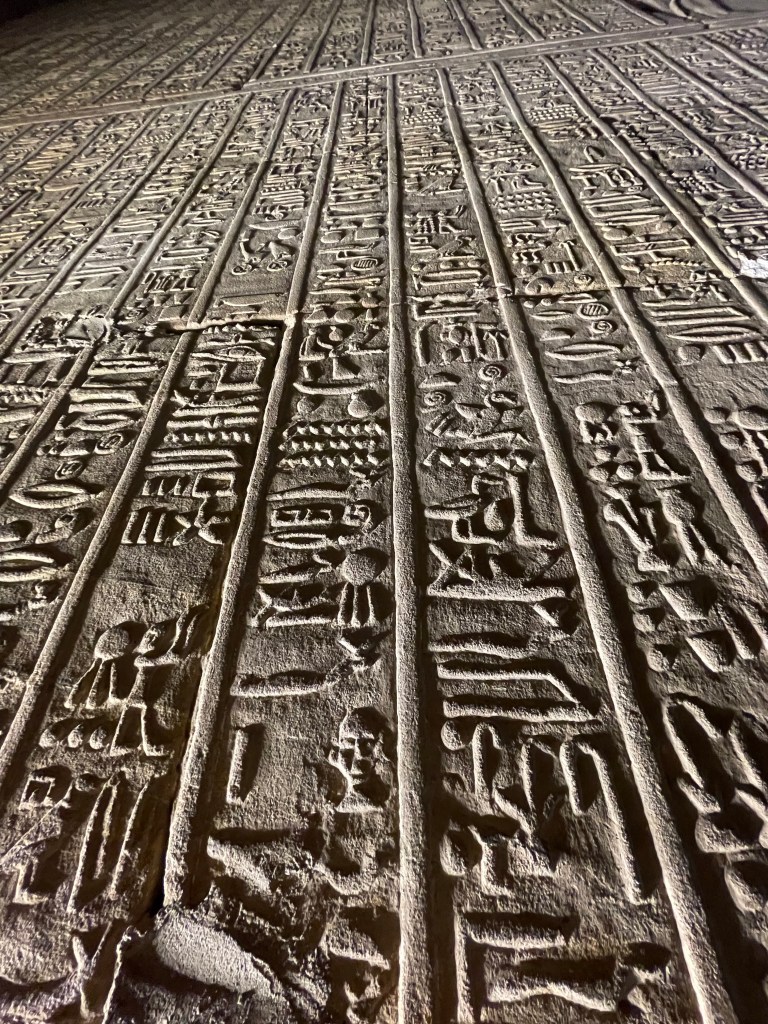
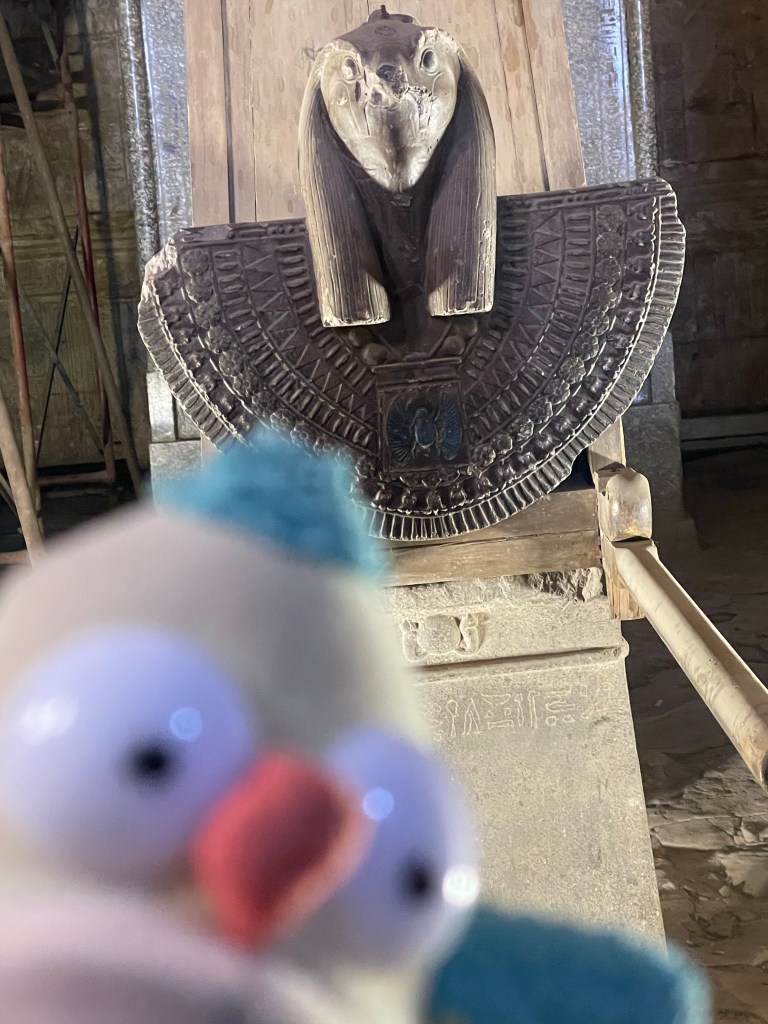
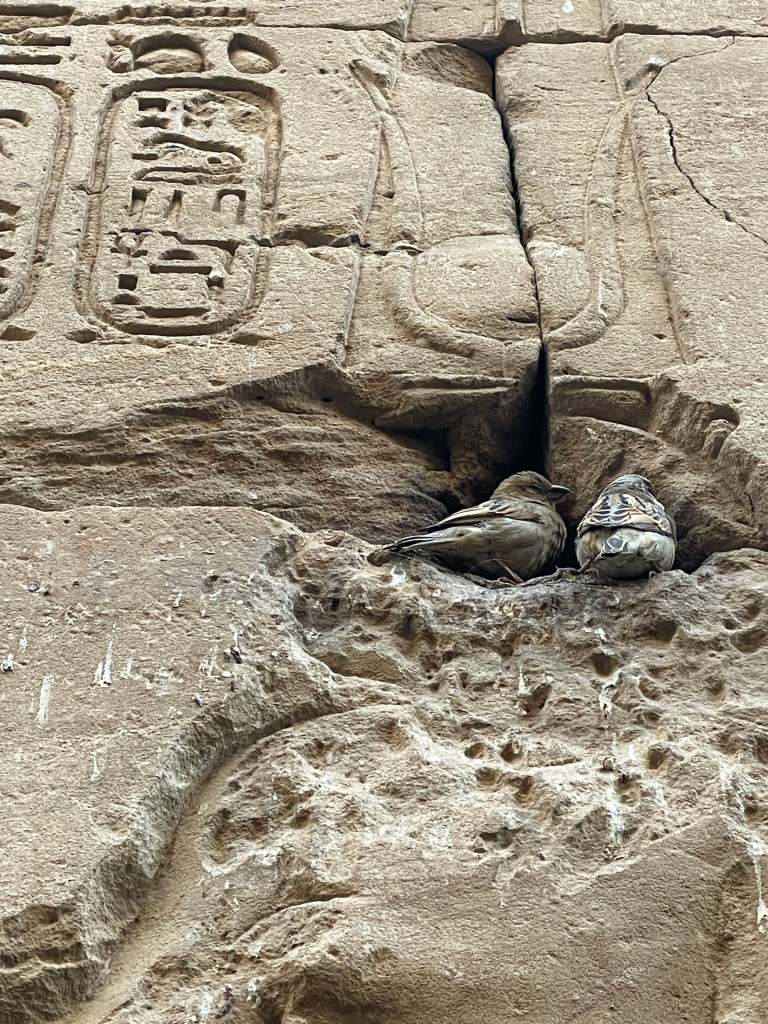
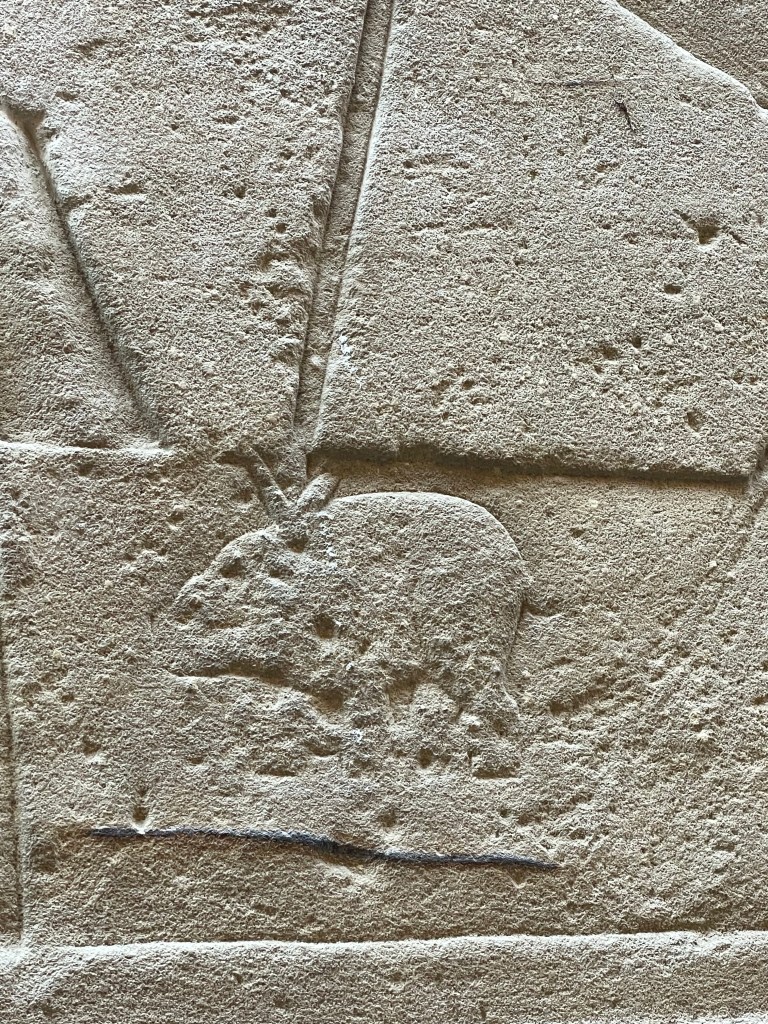
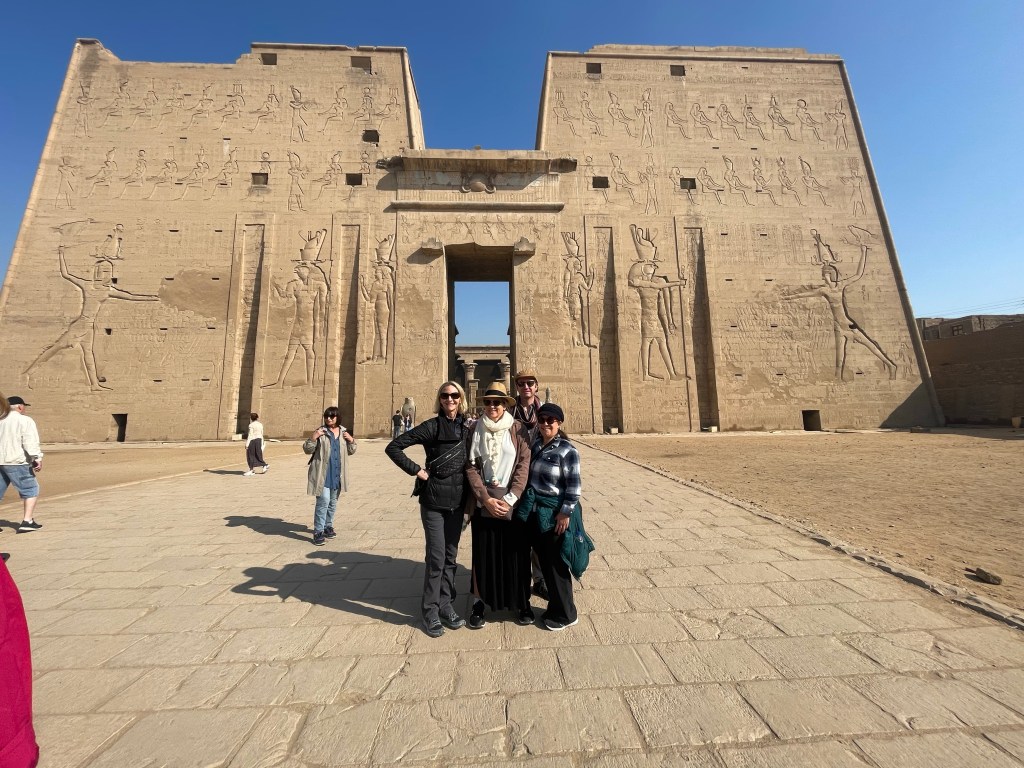
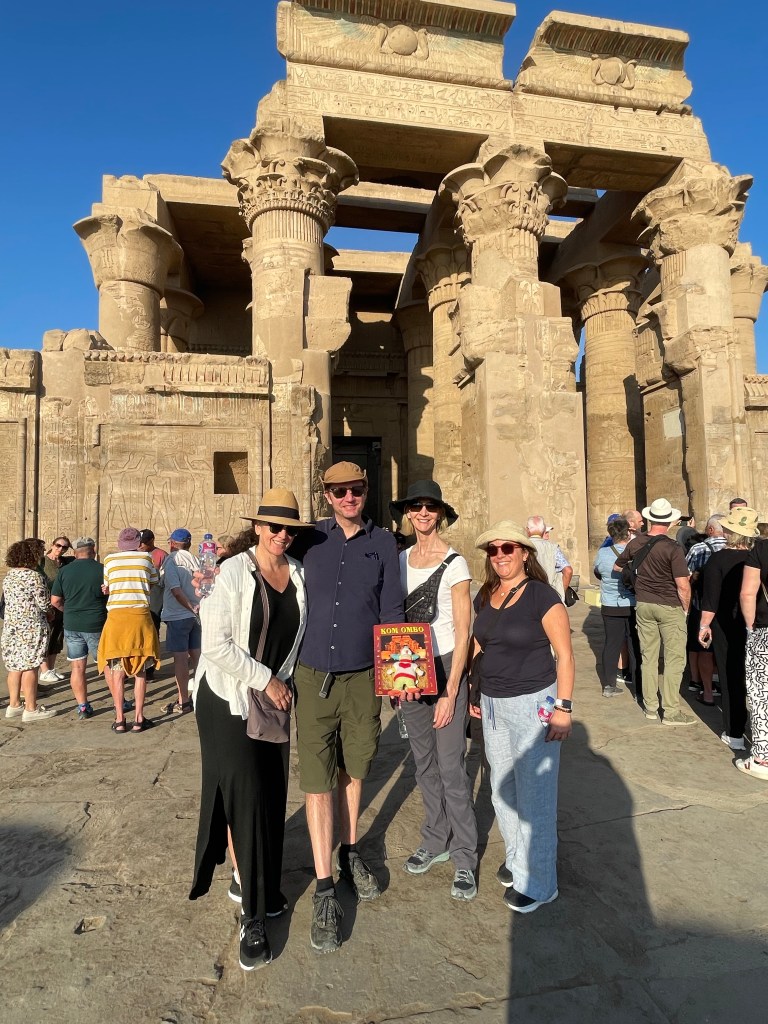
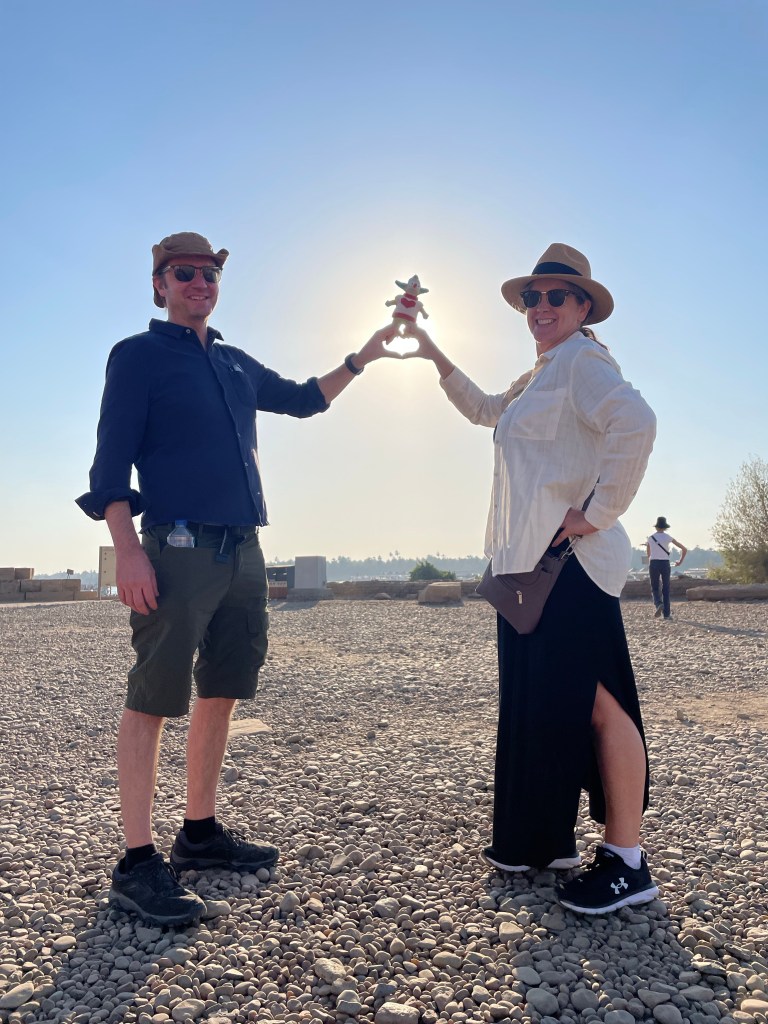
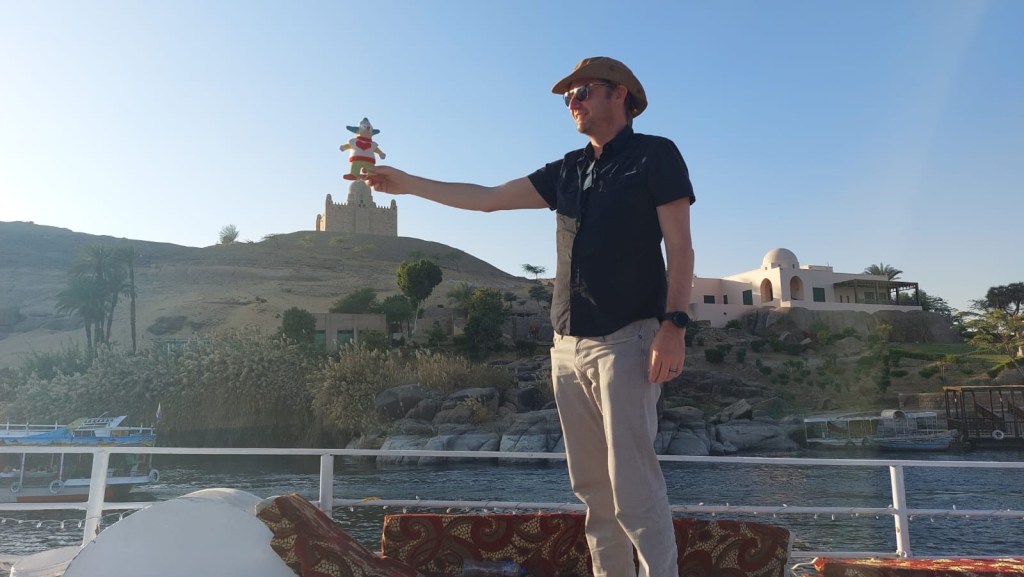
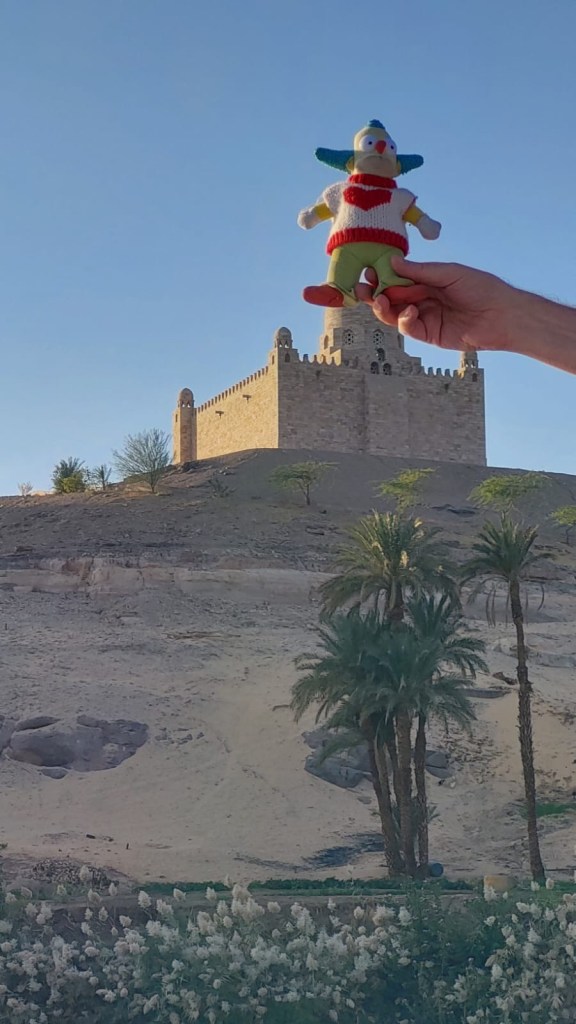
It was a fairly short visit, only about an hour – and Peter was paying significantly more attention to the time today, as we’d been about an hour late getting back to the boat yesterday, so the ship weren’t particularly happy about that! (fortunately they decided to wait for us instead of stranding us!). After our visit ended, it was time to find our horse guy, hop back into the carriage and head back to the boat. Peter seems to have developed quite the affection for Krusty – whenever he offers to take a picture of us, he always asks “where’s Krusty?” to make sure he’s prominent in the shot! I mean – he is an adorable clown, so I totally get it.

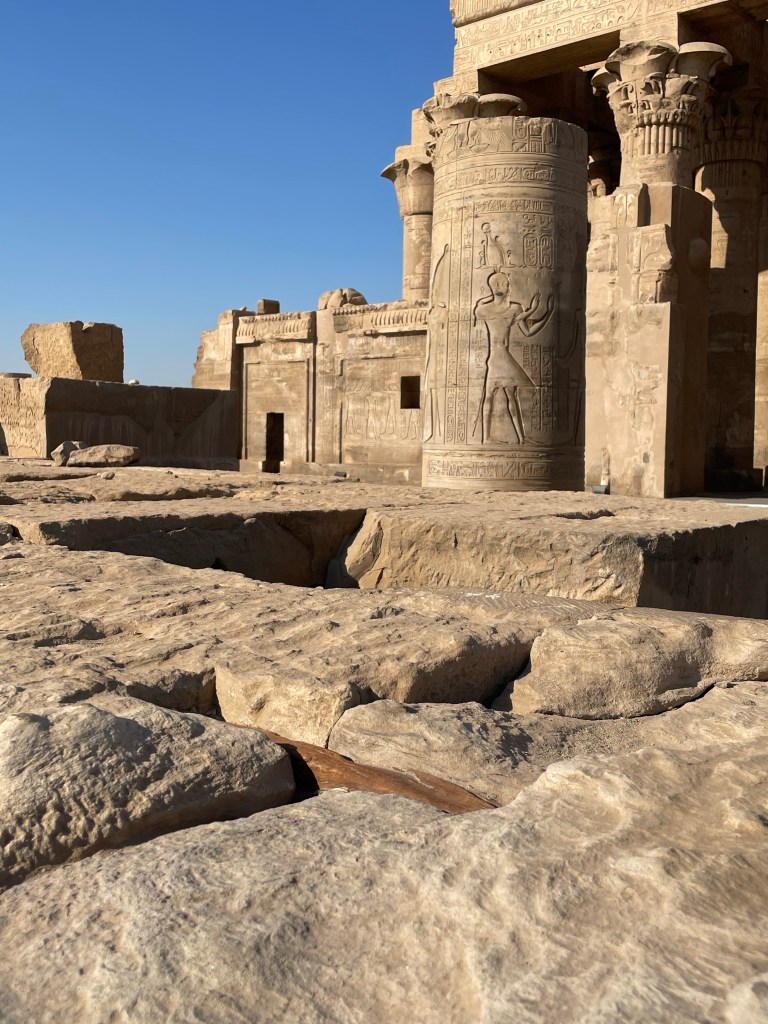
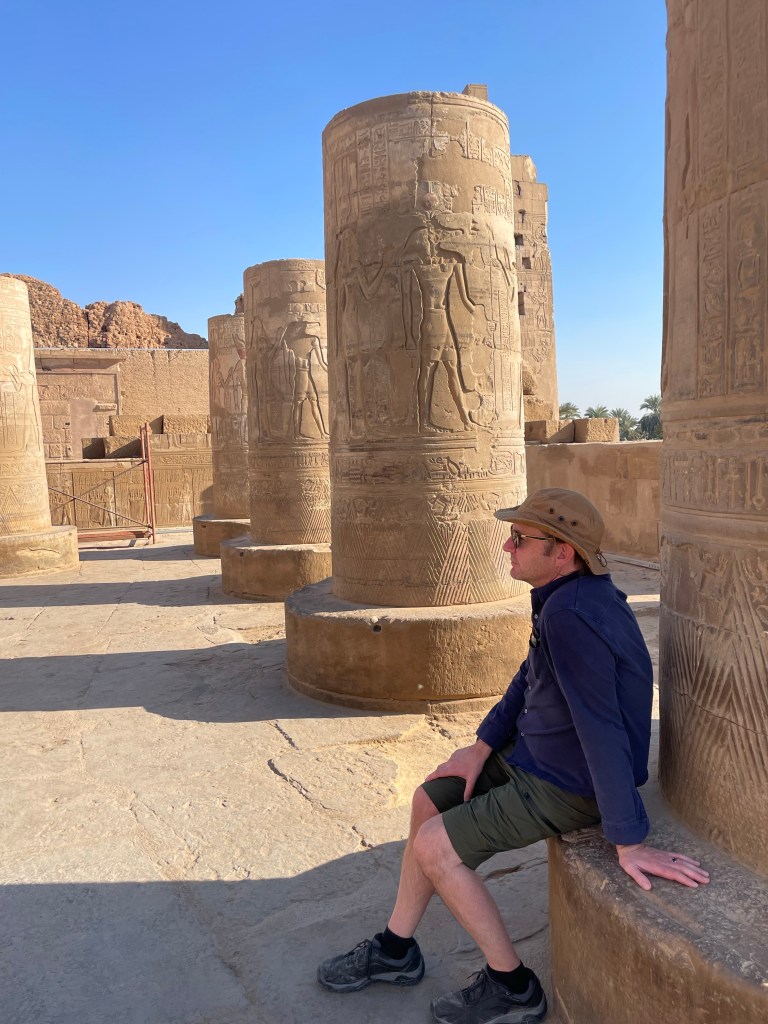
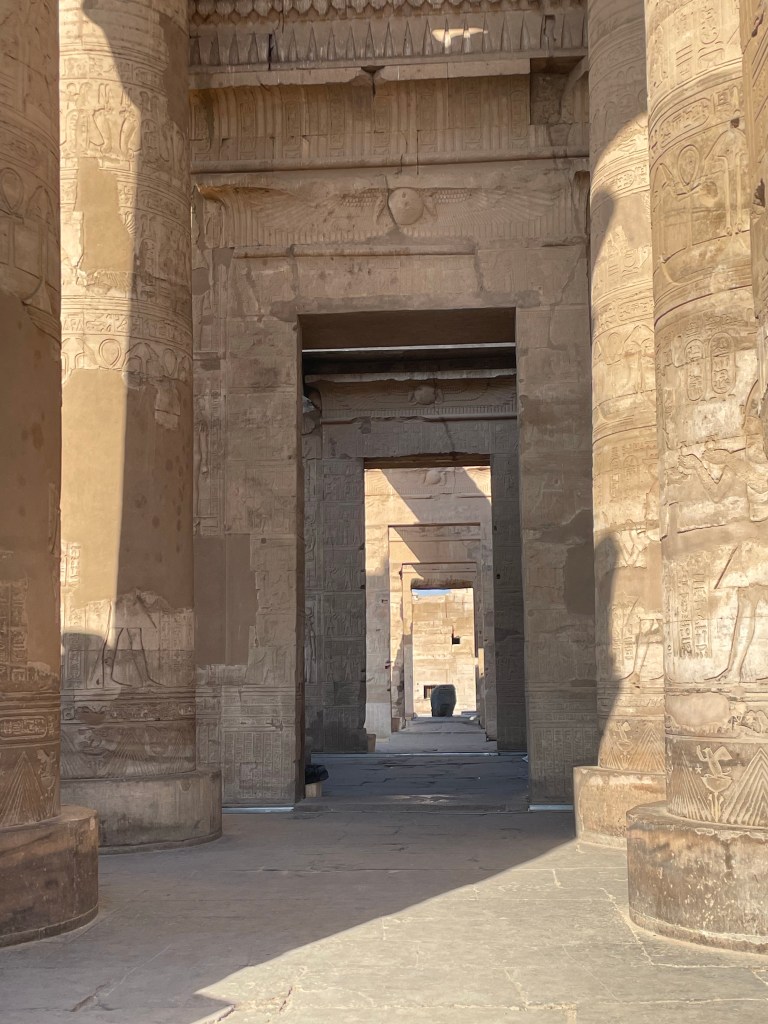

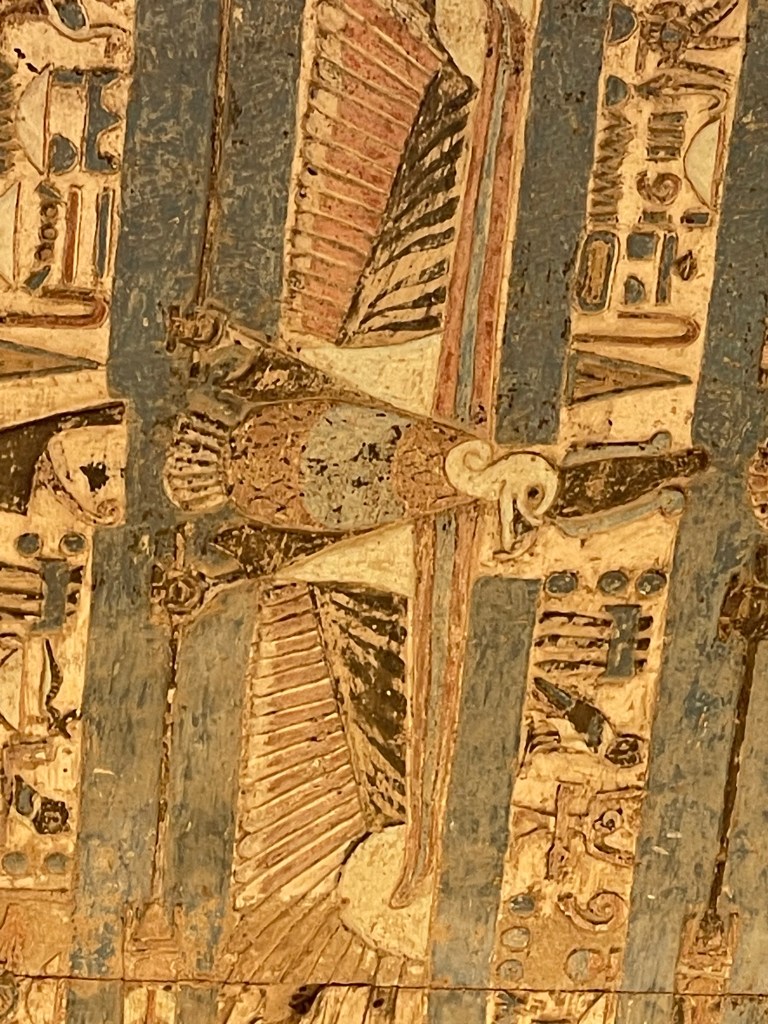
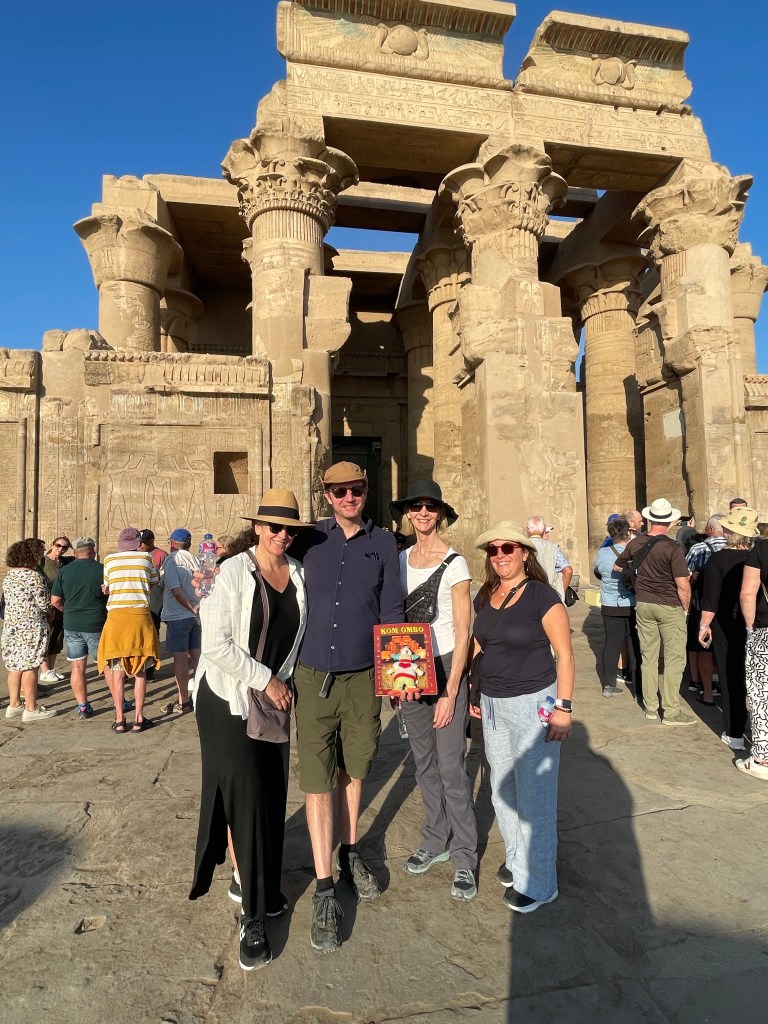
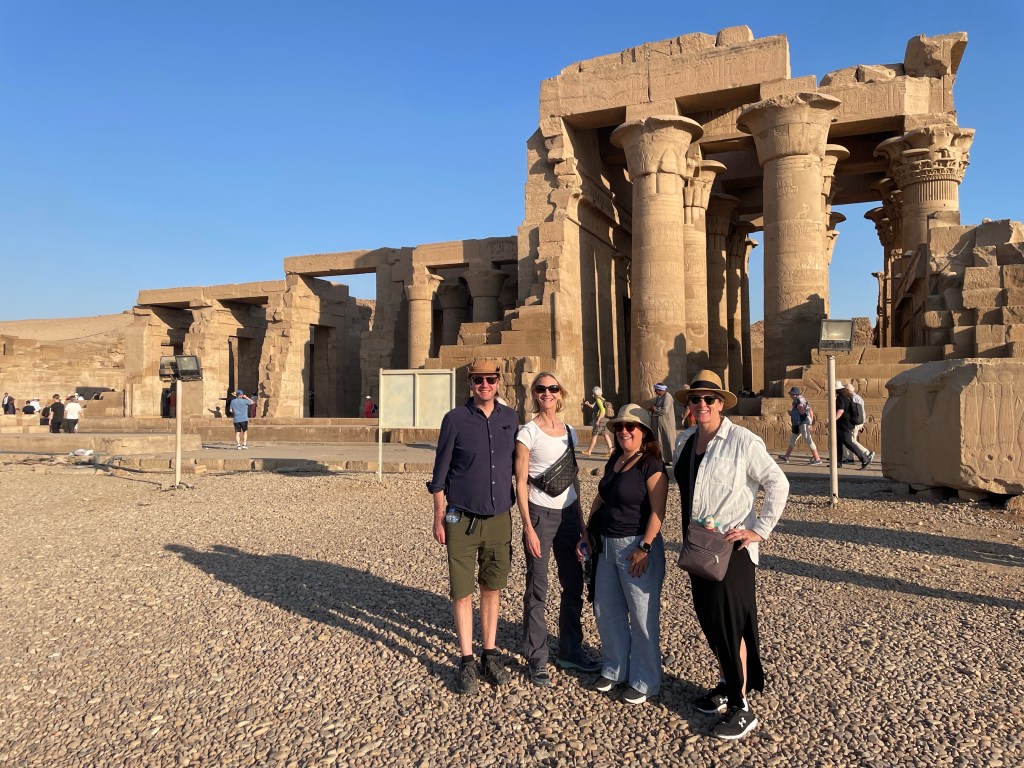
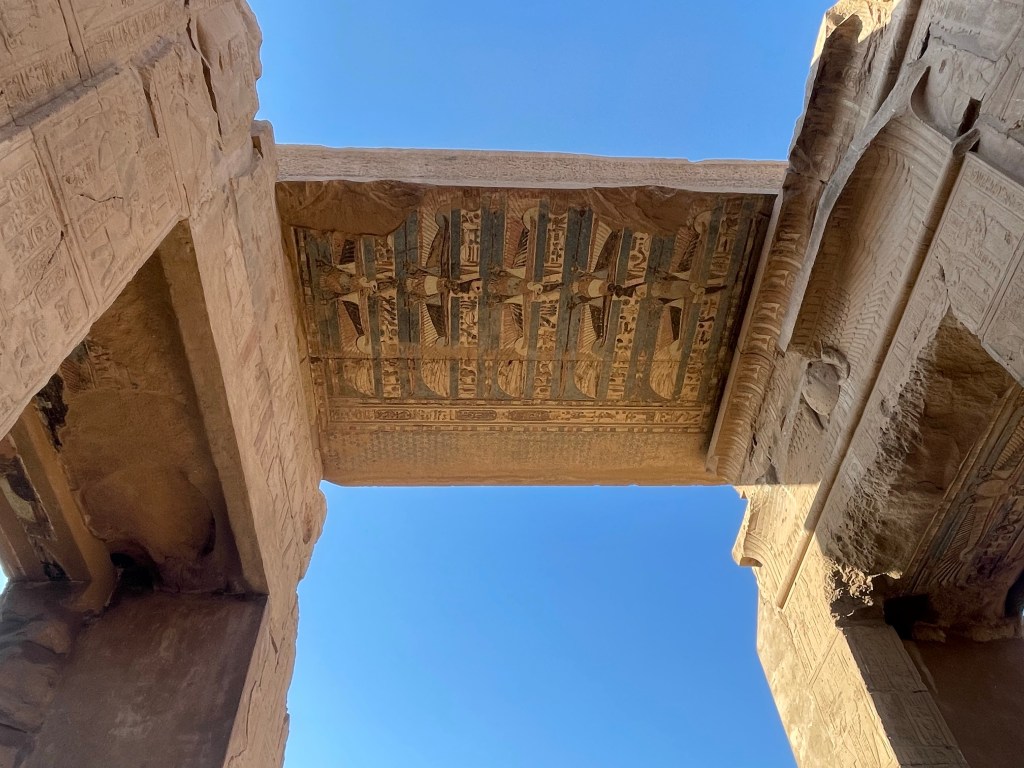
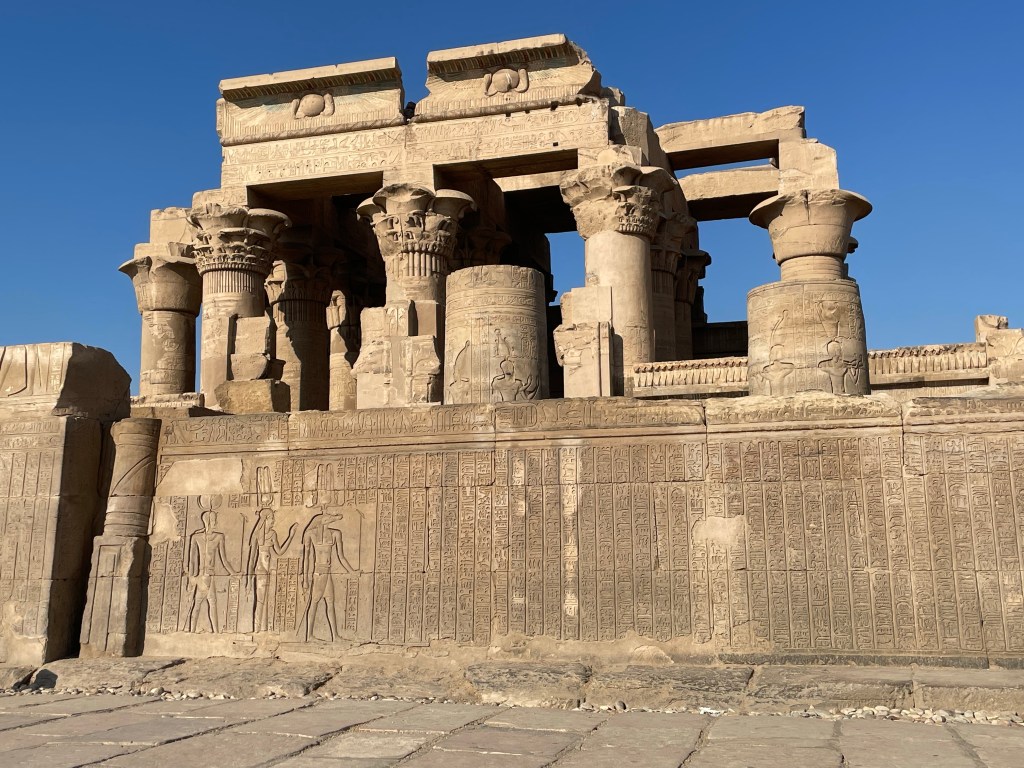
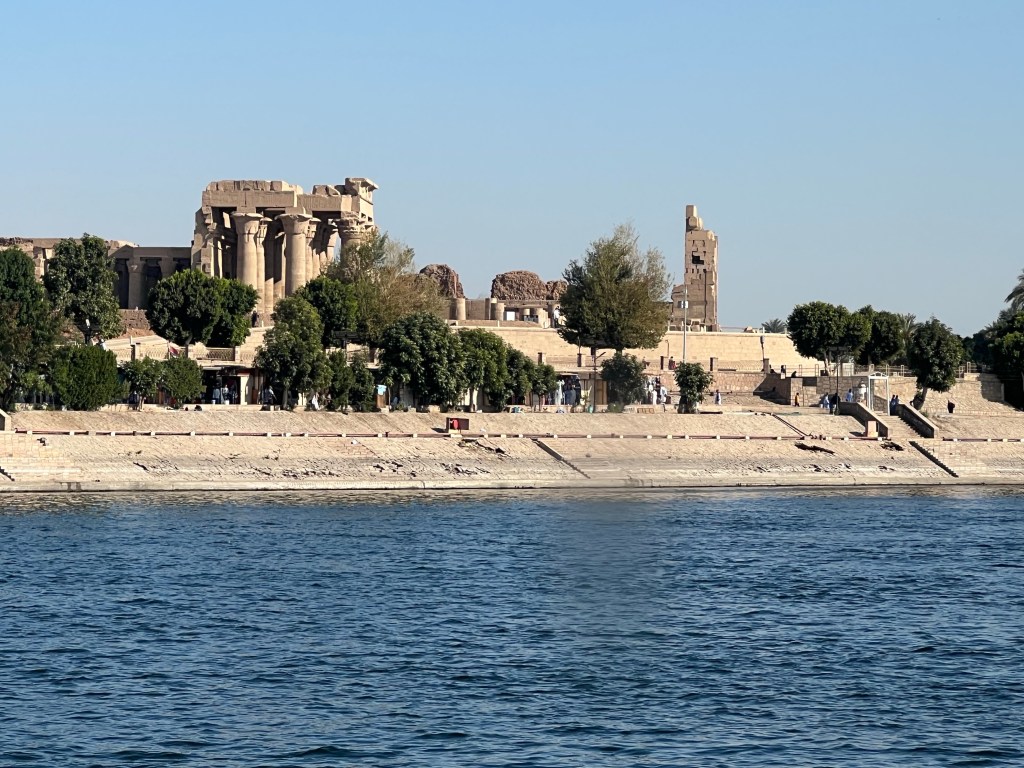
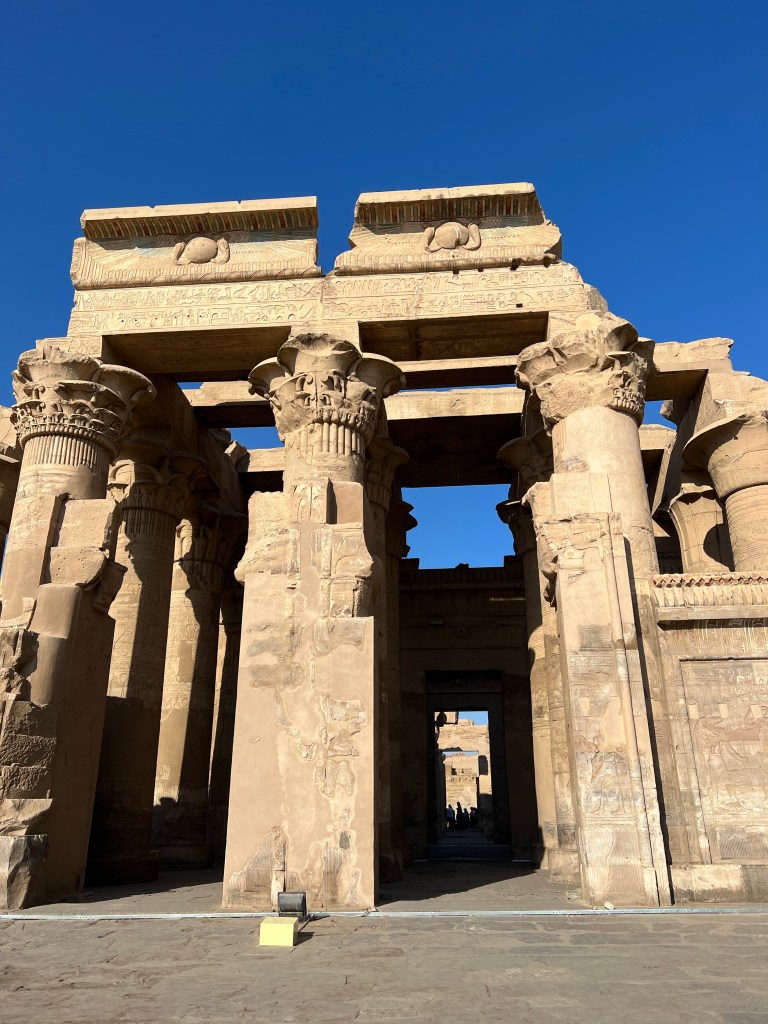
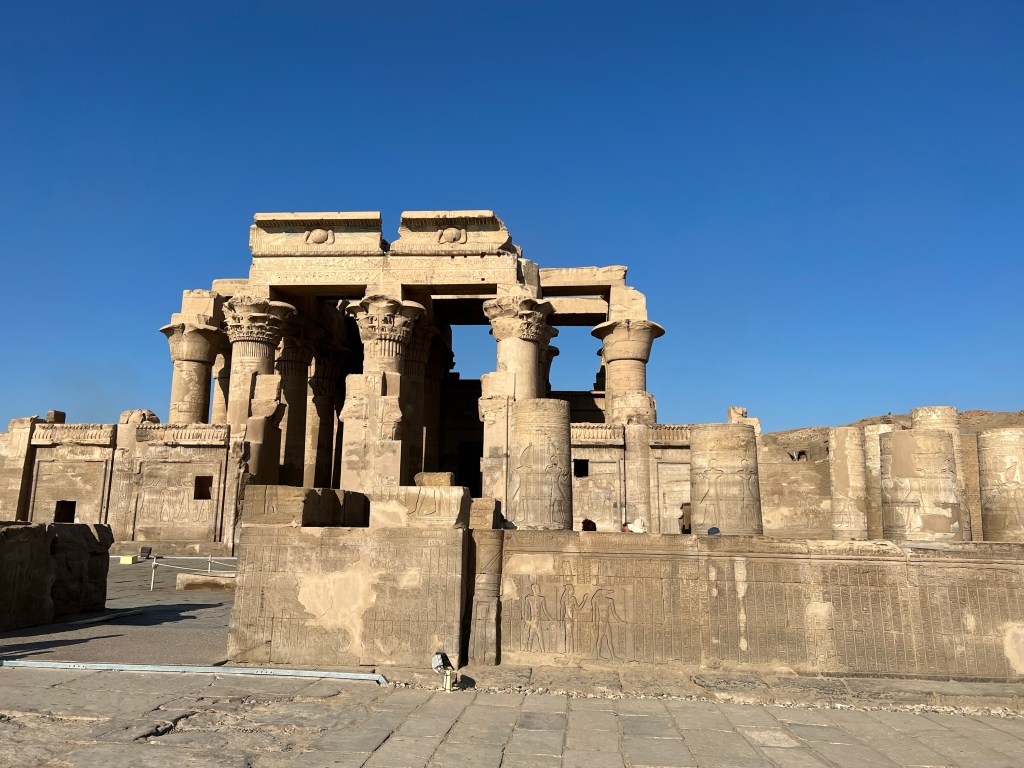
Back on the boat and time for us to cruise towards Aswan. Lunch today was a very delicious BBQ on the roof deck – as well as a fire safety drill (after we’d been on the boat already for more than a day!). In the afternoon, we docked and disembarked for a short visit to Kom Ombo temple – famous for being a double temple. Its ‘double’ design meant that there were courts, halls, sanctuaries and rooms duplicated for two sets of gods. The southern half of the temple was dedicated to the crocodile god Sobek, god of fertility and creator of the world with Hathor and Khonsu. Meanwhile, the northern part of the temple was dedicated to the falcon god Haroeris (“Horus the Elder”), and the temple is atypical because everything is perfectly symmetrical along the main axis. It was constructed during the Ptolemaic dynasty (187-47BC) and some additions to it were later made during the Roman period.
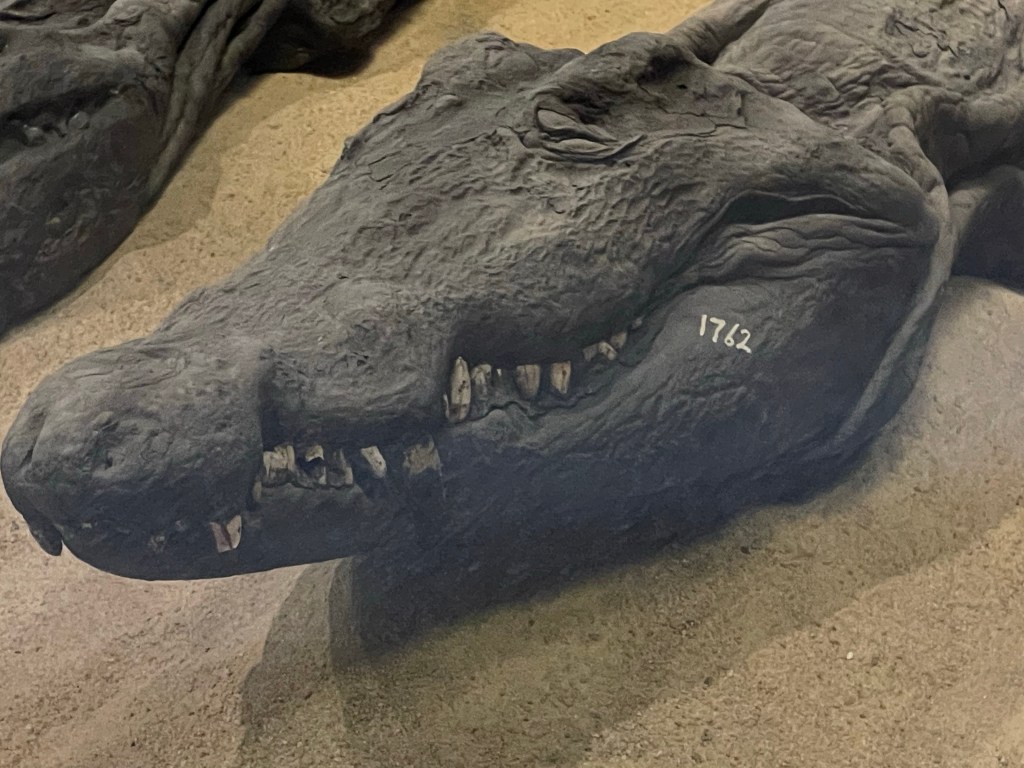
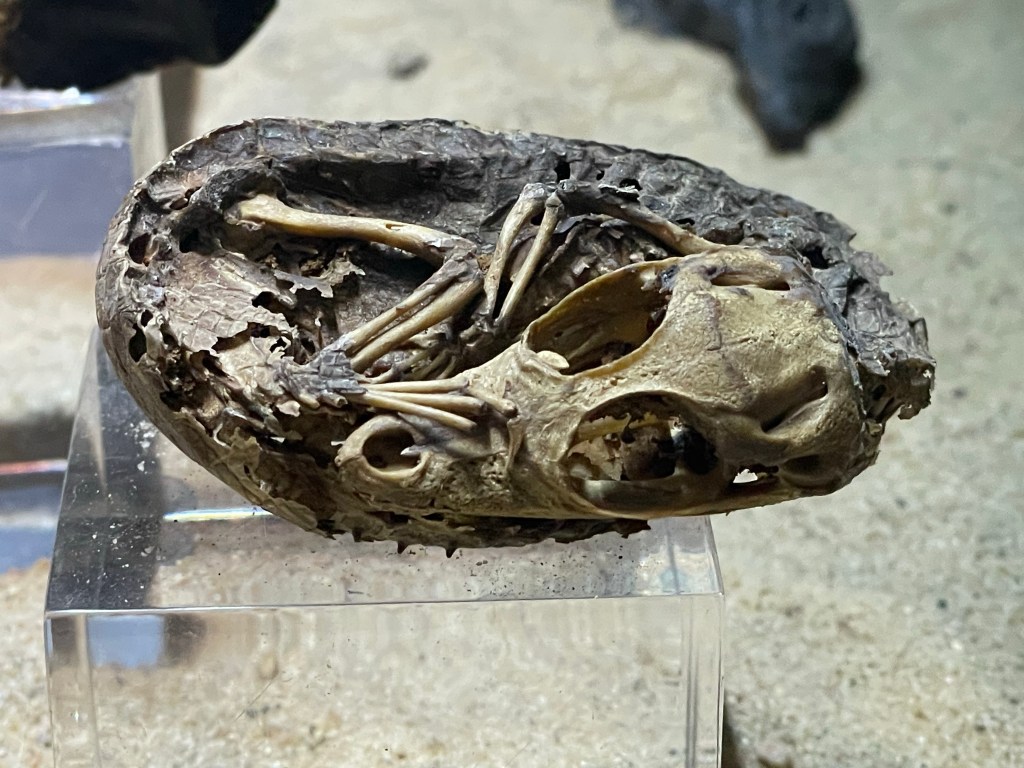
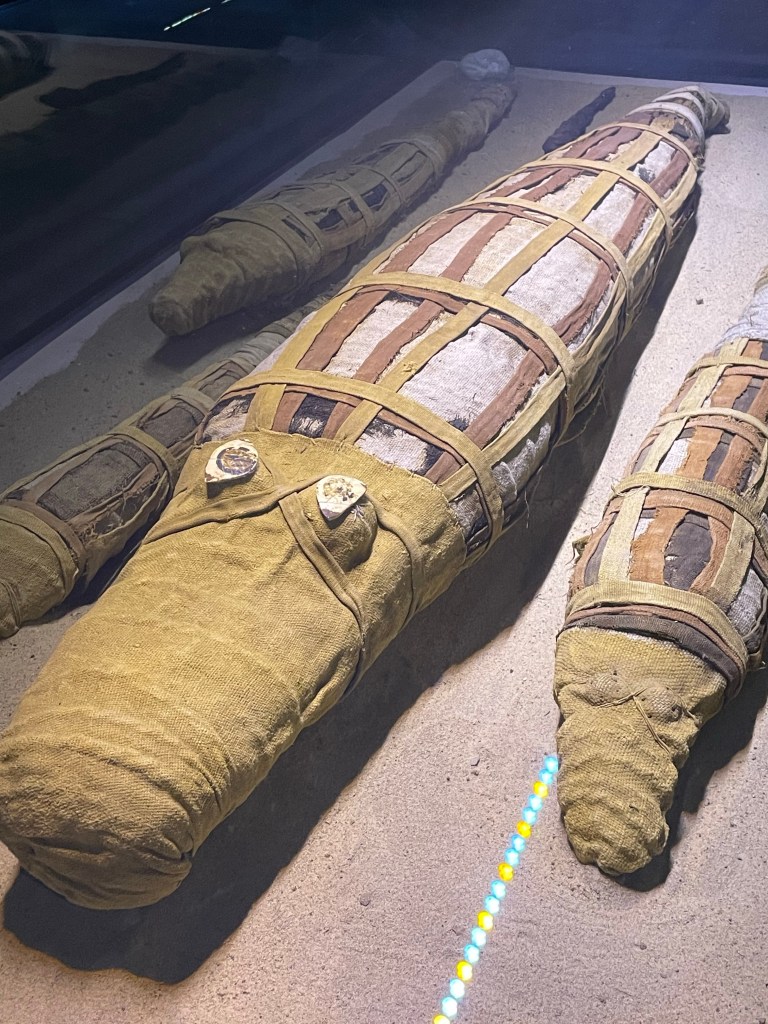
After Kom Ombo temple, we also paid a visit to the Crocodile Museum where – yep, you guessed it – there were mummified crocodiles on display! Makes sense given we’d just visited the temple of Sobek, the crocodile god. Numerous crocodile mummies had been discovered in the vicinity – including little baby crocodiles and crocodile eggs! Following a crocodile’s death, it was treated like a god, mummified and buried like a pharaoh, replete with funerary items – even including gold and ivory teeth and eyes that were inserted into the dead crocodiles following mummification.
We spent about a half hour or so marveling at the crocodiles, before heading back to the boat and setting sail towards Aswan – the final destination on our Nile river adventure. Tonight’s entertainment on the ship was “Galabaya night” where all the passengers were encouraged to come to dinner dressed in traditional garb. Matt and I bought ours from the shop on board (support the local economy!) and they actually look pretty nice! It was then time for tea in the lounge (terribly civilized, dahling), followed by a showing of Death on the Nile (the one with David Suchet as Poirot) which was fun to watch (parts of it were filmed in Luxor as well as Abu Simbel).
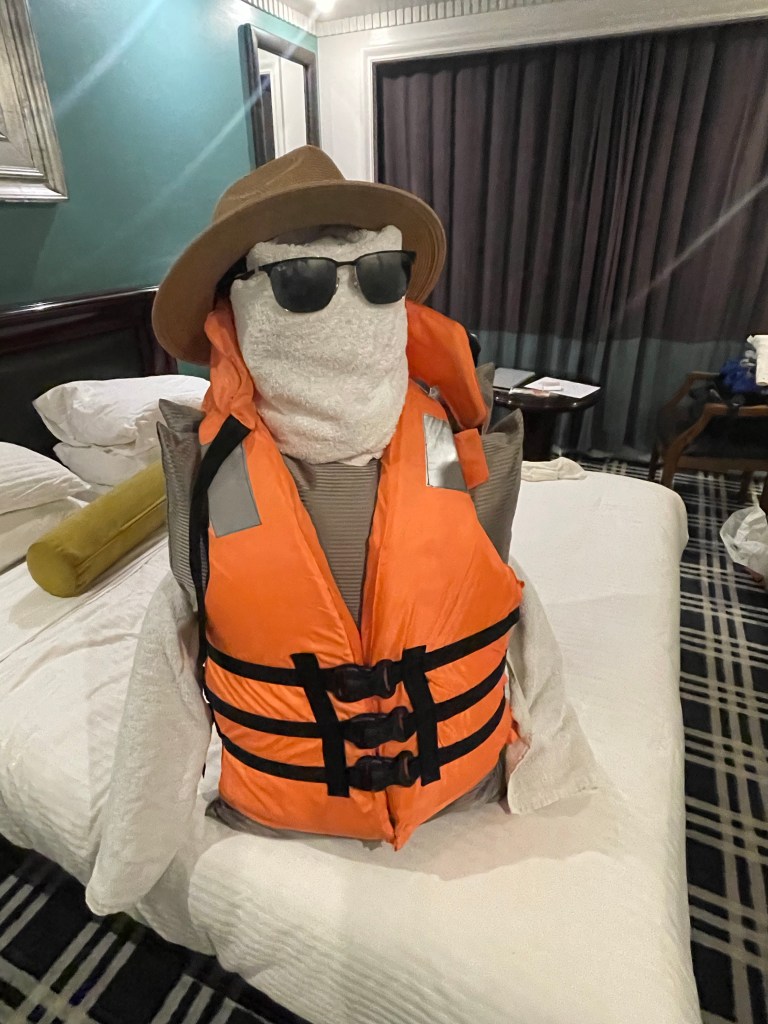
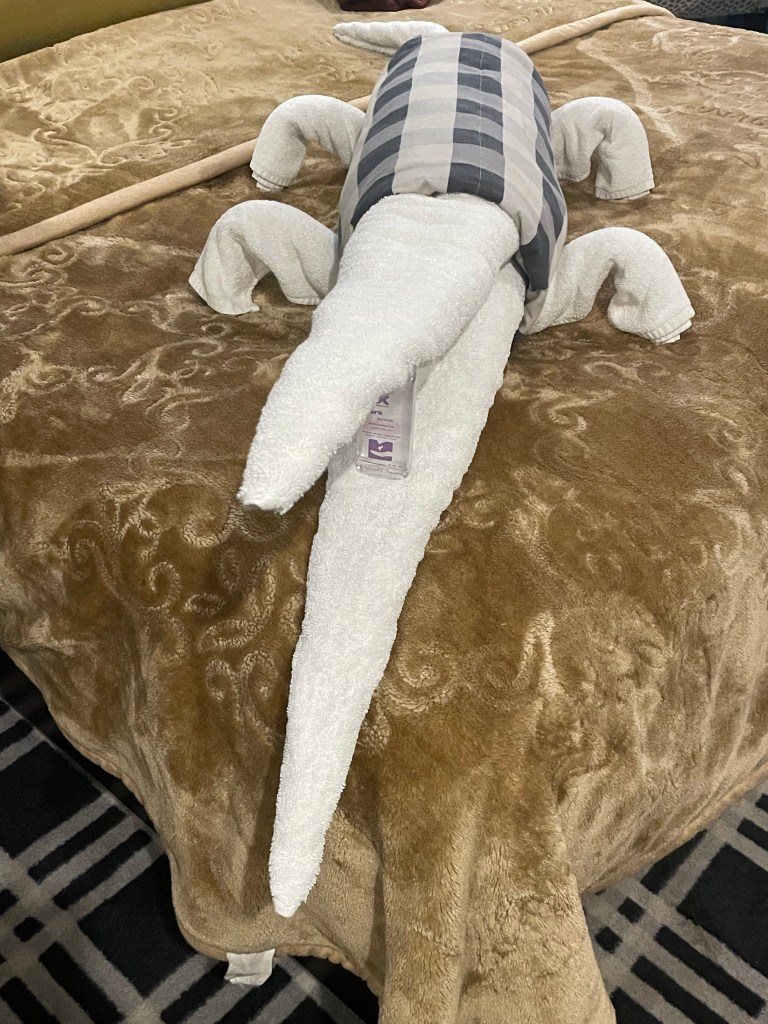
Dinner was at 7.30 and so we got all dressed up – but Lisa, Matt and I were the only 3 people to have dressed up on the whole boat, which I thought was super lame! There was a “party” after dinner which basically was just us sitting in the lounge upstairs waiting until our guide turned up dressed in his local galabaya, so we could oh and ah over him for a suitable period of time. We stayed for a little while then made our excuses to leave. Our cabin attendants had been busy in our absence and left us quite the towel display!!
We continued to chug away down the Nile until we reached and docked at Aswan at around 11pm. Yet again, it was Boat Stacking Time as we were snuggled up next to another cruise boat- so thank goodness for the heavy blackout drapes covering the big windows in our cabin!! Tomorrow is our last full day on the Nile – and indeed our last full day in Egypt before we head off to Jordan – and Petra!!
Day 8: Aswan
Last full day in Egypt and we started the day by piling into the van and driving through the city of Aswan to reach the eponymous dam. The city of Aswan has a very different energy to that of Cairo – its cleaner (for a start) and fewer of the buildings look as if they are on the verge of collapse! Manpanion TM was also appreciating the higher percentage of functioning sidewalks – a key metric in his critical engineering eyes – and reflective of the wealthier nature of its inhabitants. According to Wikipedia: “Aswan is a busy market and tourist centre located just north of the Aswan Dam on the east bank of the Nile at the first cataract. The modern city has expanded and includes the formerly separate community on the island of Elephantine. Aswan includes five monuments within the UNESCO World Heritage Site of the Nubian Monuments from Abu Simbel to Philae (despite Aswan being neither Nubian, nor between Abu Simbel and Philae); these are the Old and Middle Kingdom tombs of Qubbet el-Hawa, the town of Elephantine, the stone quarries and Unfinished Obelisk, the Monastery of St. Simeon and the Fatimid Cemetery.[5] The city’s Nubian Museum is an important archaeological center, containing finds from the International Campaign to Save the Monuments of Nubia prior to the Aswan Dam‘s flooding of all of Lower Nubia.” Aswan is also famous for producing granite (red, black, pink) which was used extensively in Cairo and in the Valley of the Kings – including the giant obelisk that we saw at the Temple of Luxor a couple of days ago. Later today, we’ll also be visiting a granite quarry so we can see How Its Made, which should be fun. Aswan also has a plethora of perfume shops (uh-oh) and Peter reminded us how the ancient Egyptians loved to douse themselves liberally in essential oils and that we’d have the opportunity to visit a store later in the day.
To get to the Aswan Dam we first drove over an earlier dam that was built by the Brits back around 1850 (I think) – that was then replaced by a dam built in the 1920s that was 47m high, before finally being replaced by the current high dam, built in 1960. Egypt didn’t have enough money to construct the dam all by themselves so they approached various countries for help. According to Peter, the US placed too many terms and conditions on their funding (ie they wanted to have a leadership role in the project) but that didn’t sit well with the Egyptians, so instead they got jiggy with the Soviets so the great dam at Aswan was funded by the Russians. It was an incredible feat of engineering – as you’d expect, there were a series of photographs on display documenting the various stages of construction – showcasing the harrowing and treacherous working conditions that seem to be the norm here. As well as being structurally ambitious, it was a very ballsy project in that it actually changed the course of the Nile river – and you could clearly see where the river had flowed previously, vs where it is now. The reservoir in front of the dam is called Nasser Lake (named for the Egyptian leader who commissioned the project) – and our Nile cruise ends here because there is (obviously?) no way to actually get across the dam by boat. There is a port on the other side so you can take a cruise on Lake Nasser – but apparently there’s not a huge amount to see plus they Have No Wifi on the cruise! Shock horror! Also – another fun (and dubious fact) – there are an estimated 40,000 crocodiles in Nasser Lake because, of course, the crocs can’t get through the dam so have nowhere really to go. So the lake is mostly crocodile, rather than water.
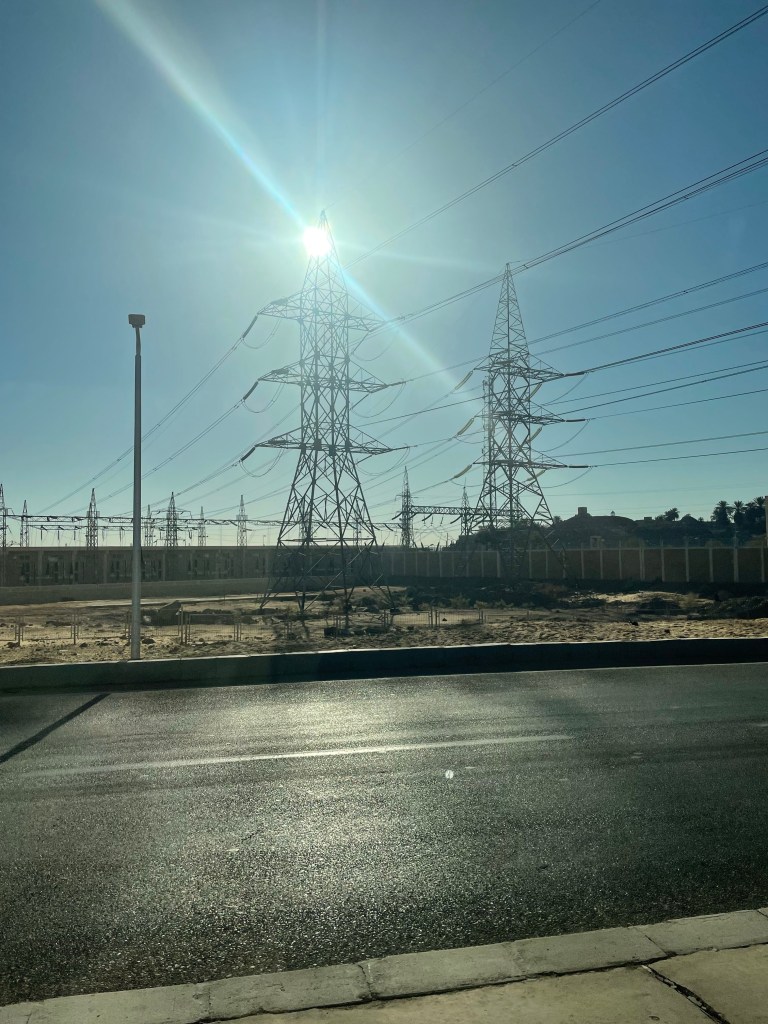

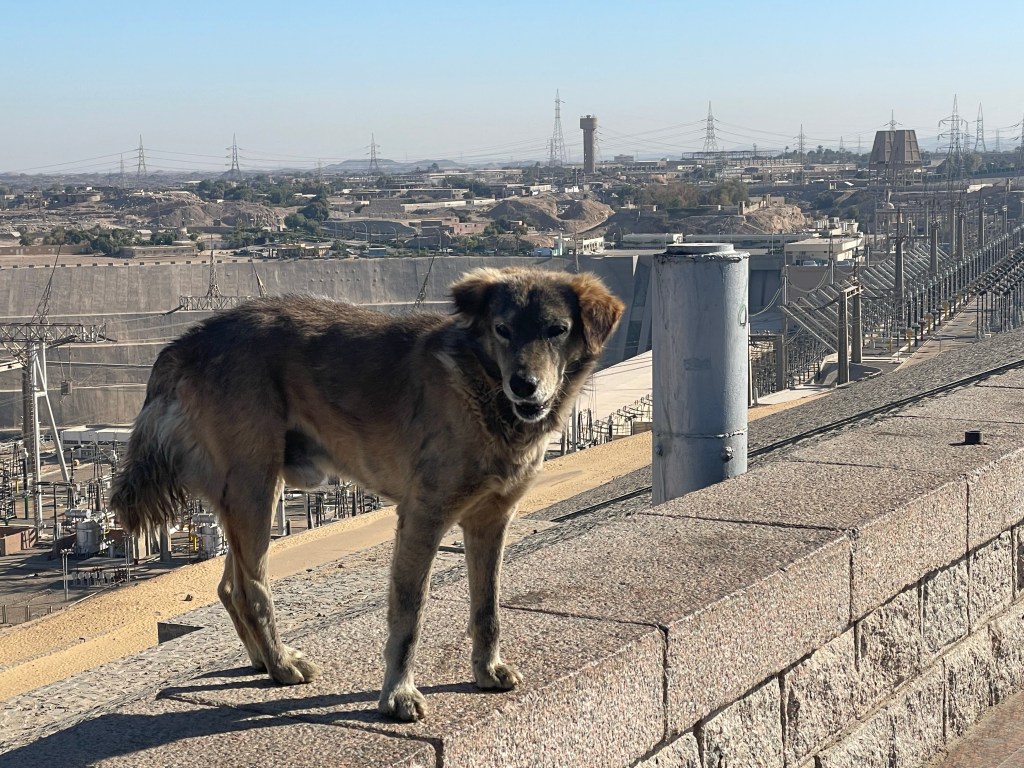
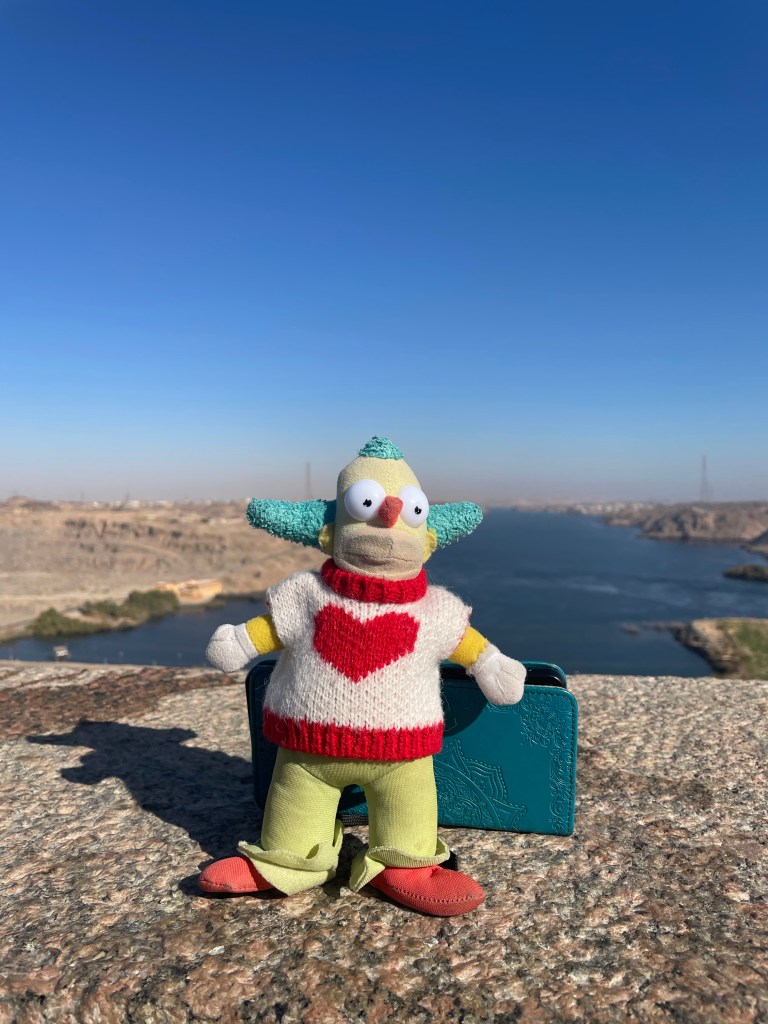
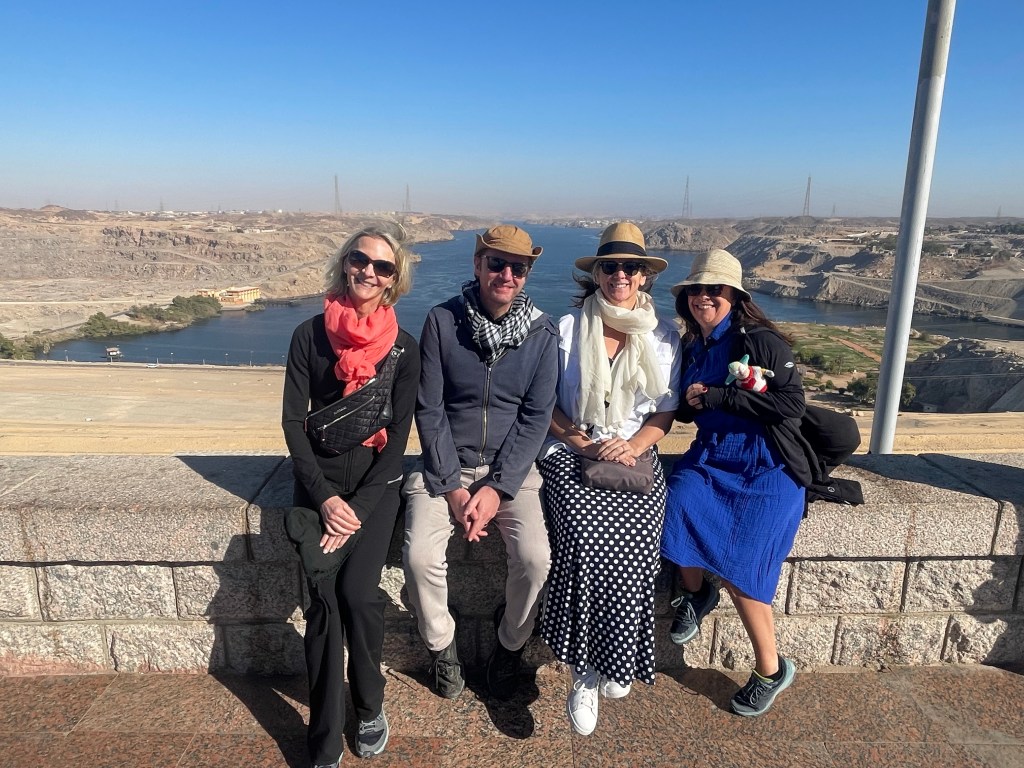
It took 11years to build (from 1960 – 1971) and the dam is 110m high – but 980m on the bottom and 70m on the top, so its basically shaped like a pyramid! Fun fact (which might even be true) – in terms of volume, the Aswan Dam is actually 16x bigger than the Great Pyramid of Giza. And that’s pretty dam-ned big. As you might expect, there is HEAVY security as you can imagine how huge of a terrorist target the dam is. You blow up this sucker and bam! All of downstream Egypt is fucked. The army is actually in control of the dam – so every vehicle is screened (they check underneath for bombs) and you have to drive past a big tank and lots of scary looking army guys (and their moustaches) touting machine guns.
After our trip to the dam (I have to say, I was a bit relieved to leave safely – I mean, they must have terrorists simply lining up on a daily basis to blow up that thing!), we took a trip out to a charming little place called Philae Island, home of Philae Temple, colossal monuments to Rameses II and numerous cats. The temple had actually been relocated, brick by brick, before the dam was finalized otherwise it would have been lost to the flooding of the area. As I’m sure you can imagine, the impact of the dam was massive – 50,000 people were displaced when it was completed and many archeological treasures were drowned. Other impacts are the gradual decline in the fertility of the Nile Delta, due to the lack of silt that use to be deposited when the river flooded. Of course, there were a lot of benefits too – but you eff about with Mother Nature too much, and its bound to bite you in the ass in the end. You can read more about it here: https://www.history.com/this-day-in-history/aswan-high-dam-completed
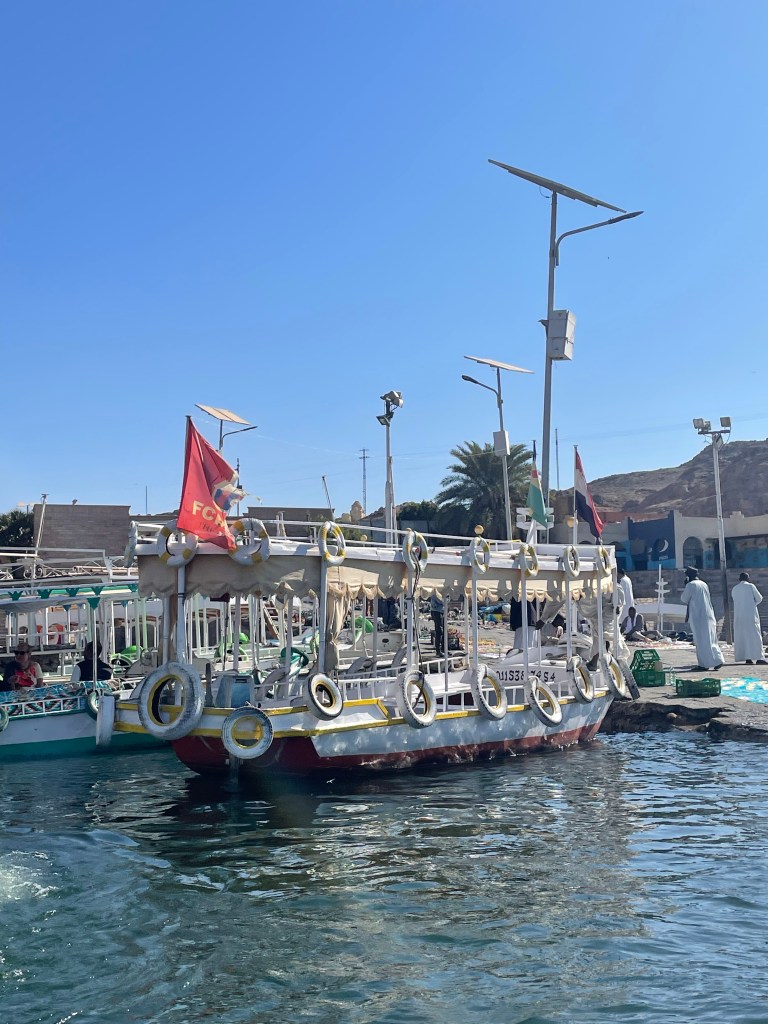
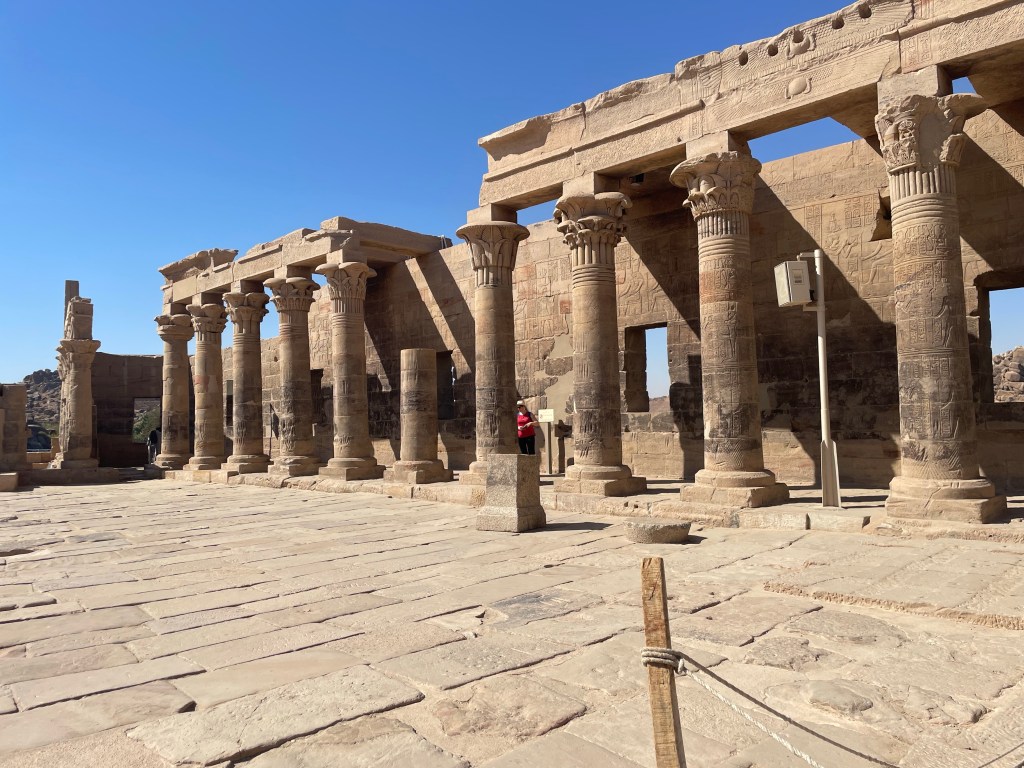
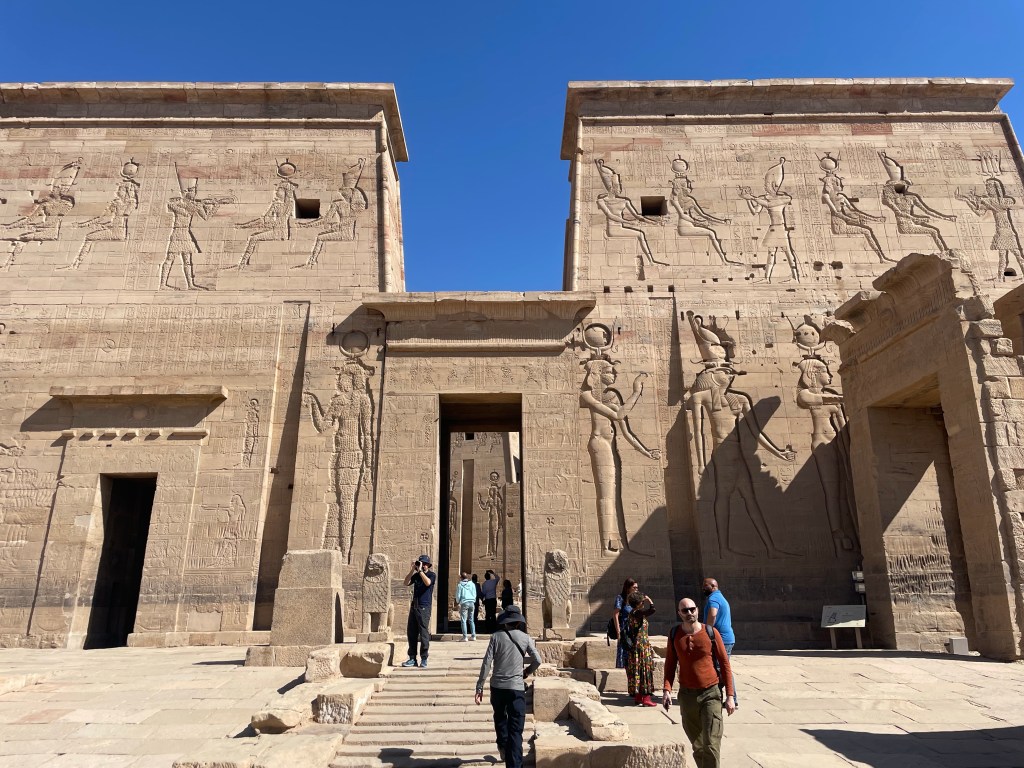
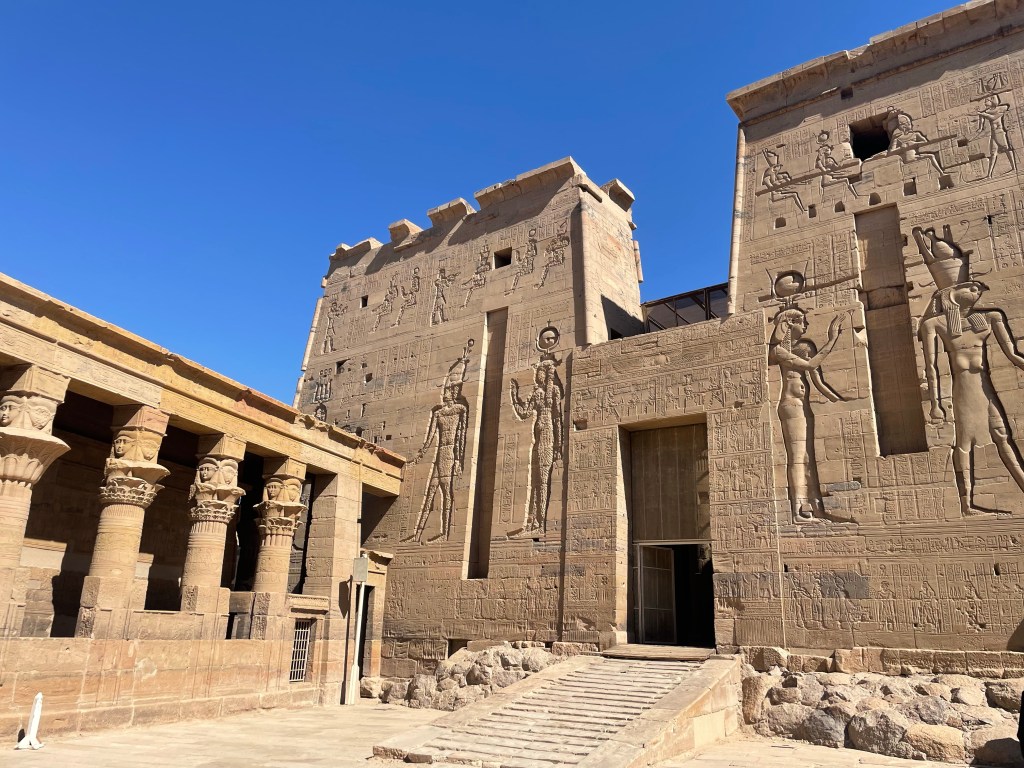
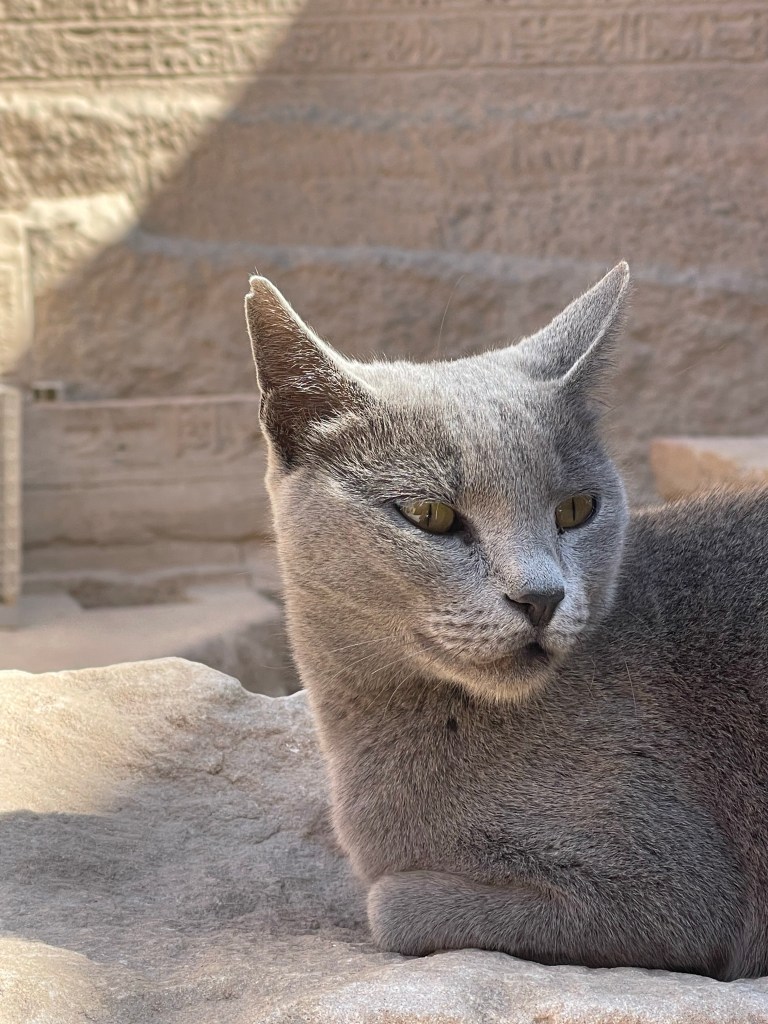
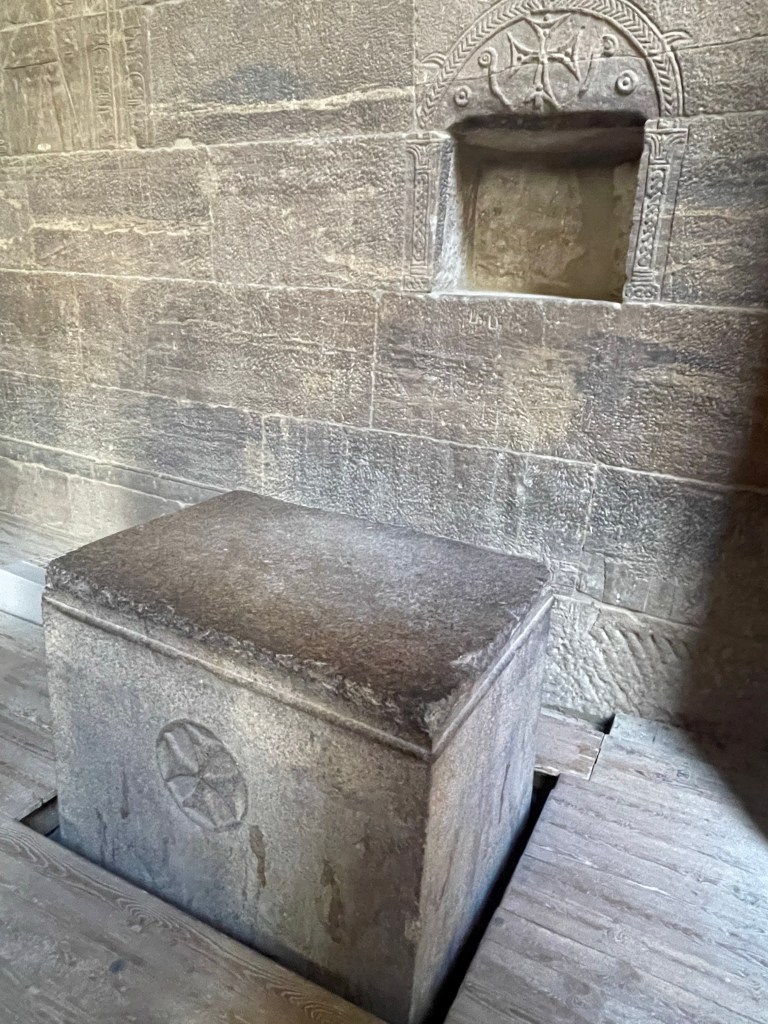

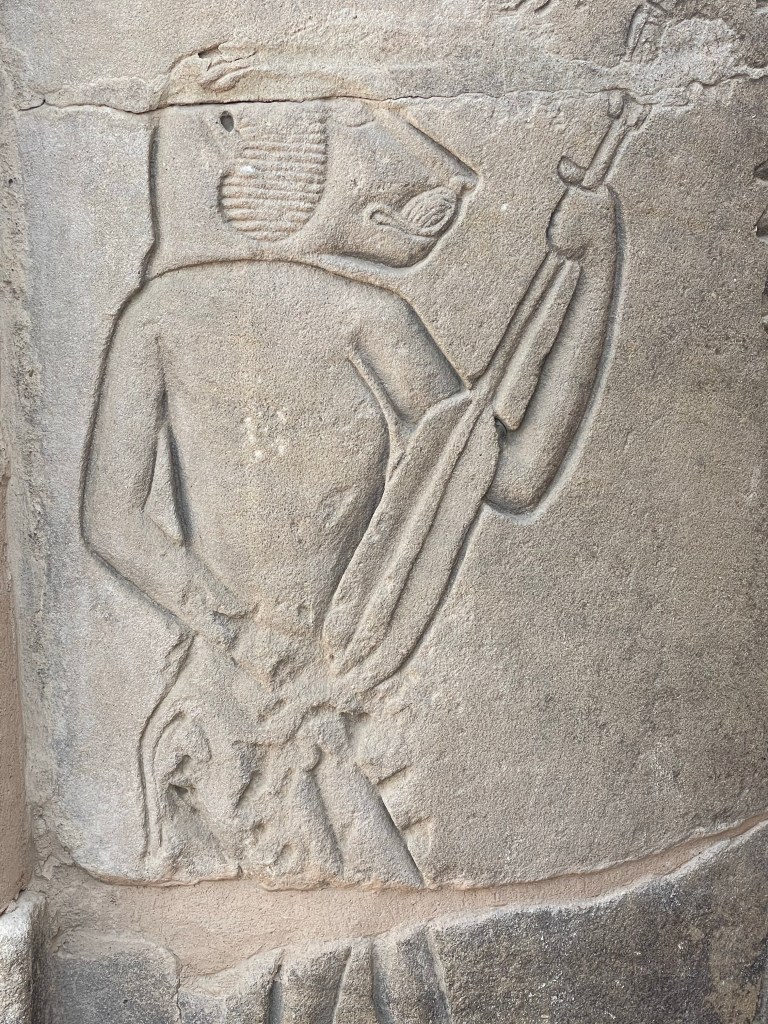
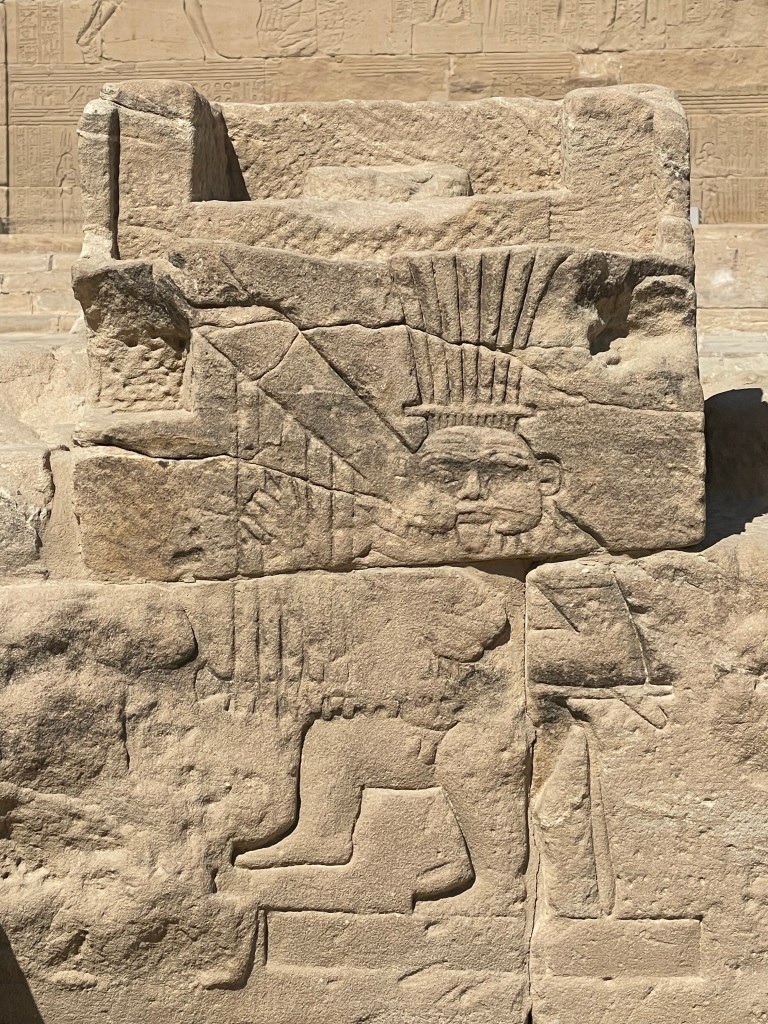
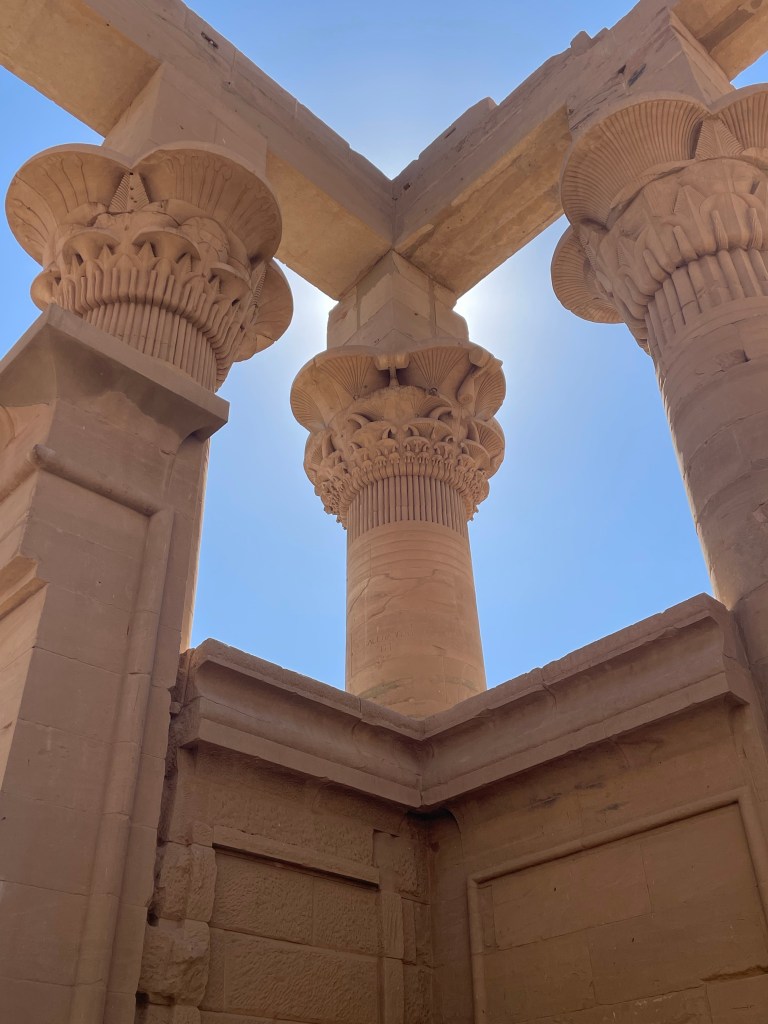
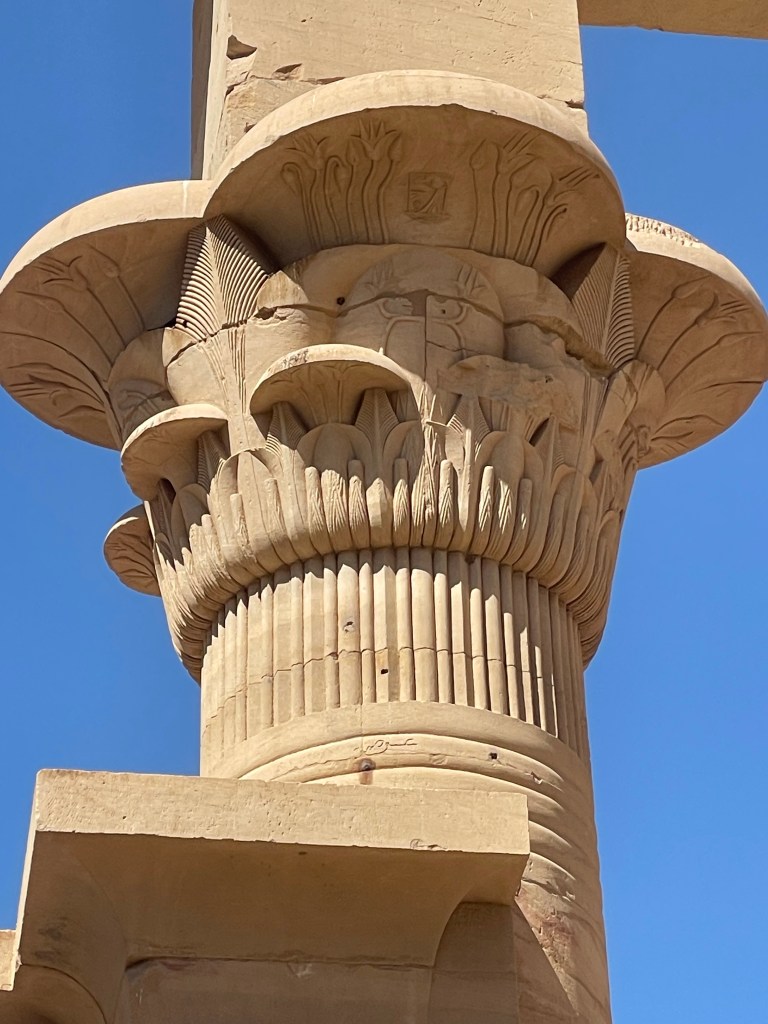
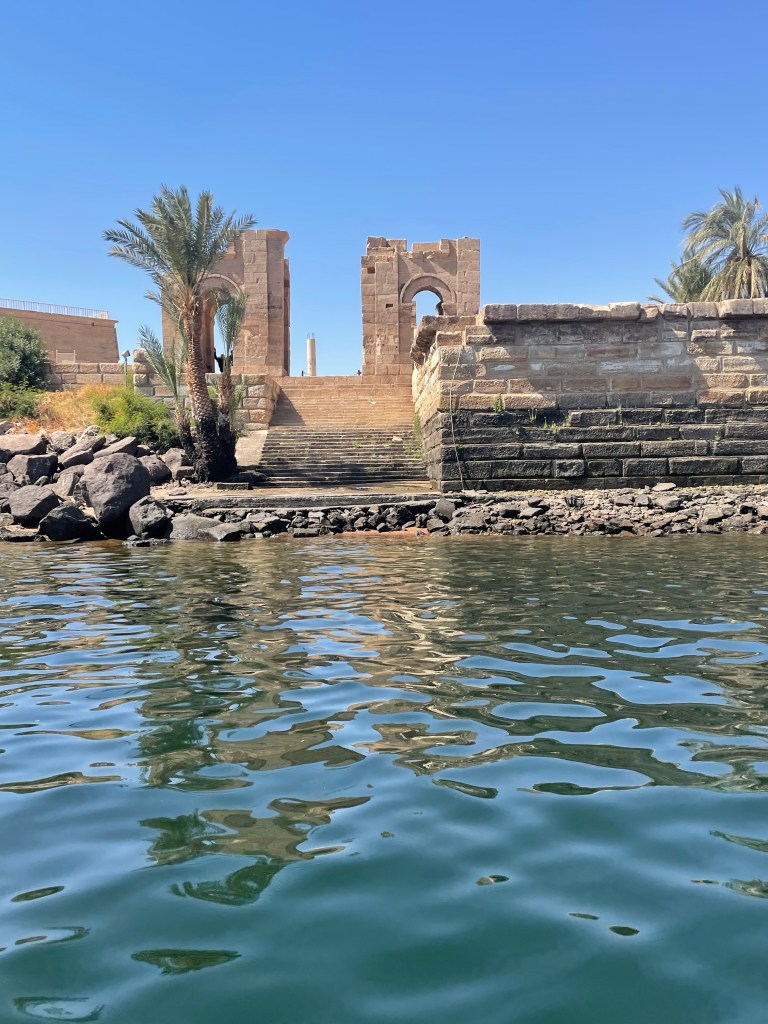
Anyway, the island was fun – again, chock full of hieroglyphs that Peter explained to us (at length). There is the first ever mention of Cleopatra here (the famous one – who was actually the 3rd or 4th Cleopatra!) as well as a depiction of a birthing chair (apparently the ancient Egyptians invented that too) with an gender reveal twist – I can’t remember exactly the details (sorry) but apparently barley signified it was going to be a girl while wheat signified it was going to be a boy. There were also some fun carvings of ancient dudes playing musical instruments – those Ancient Egyptians certainly liked to party! After about an hour, Peter left us to our own devices for a bit, so we wandered around and took a few more pictures, before heading to the nearest coffee shop, to get out of the sun and relax. It was right by the water and so was a lovely little bit of calm, interspersed into our hectic day!
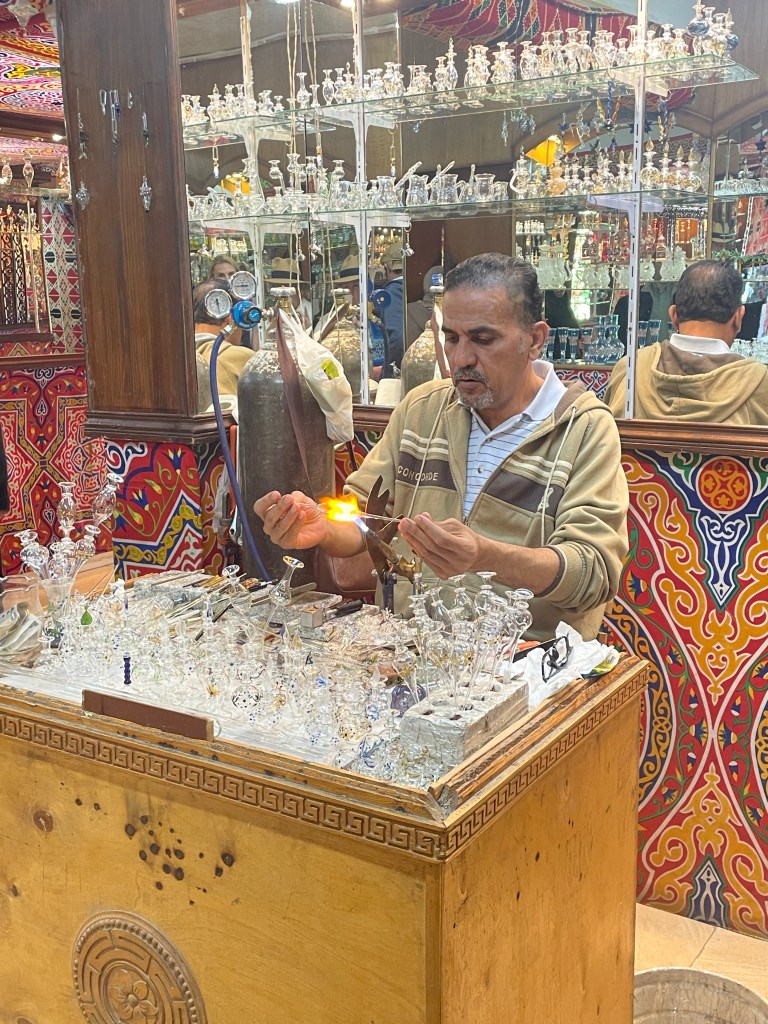
After our (surprisingly expensive) instant Nescafe was finished, it was time to find Peter and head back to our little boat to take us back to shore. On our drive back to Aswan and the ship, we did indeed stop at (another) perfume store. None of us thought we’d actually buy anything – but the lady who gave us our demo was actually really good so – surprise! – we all bought something! This time, I got some mint essence (AMAZING for clearing out your sinuses when you are congested), some frankincense and some myrrh (good for concentration) plus some amber (good for sleep). They also had a chap demonstrating the art of glass blowing and how to make those tacky looking perfume bottles that are everywhere. Alas, even after having been impressed with how he made them (involving a loud POP as he explodes a glass bubble during the process), I still can’t bring myself to buy one as they are just too fugly.

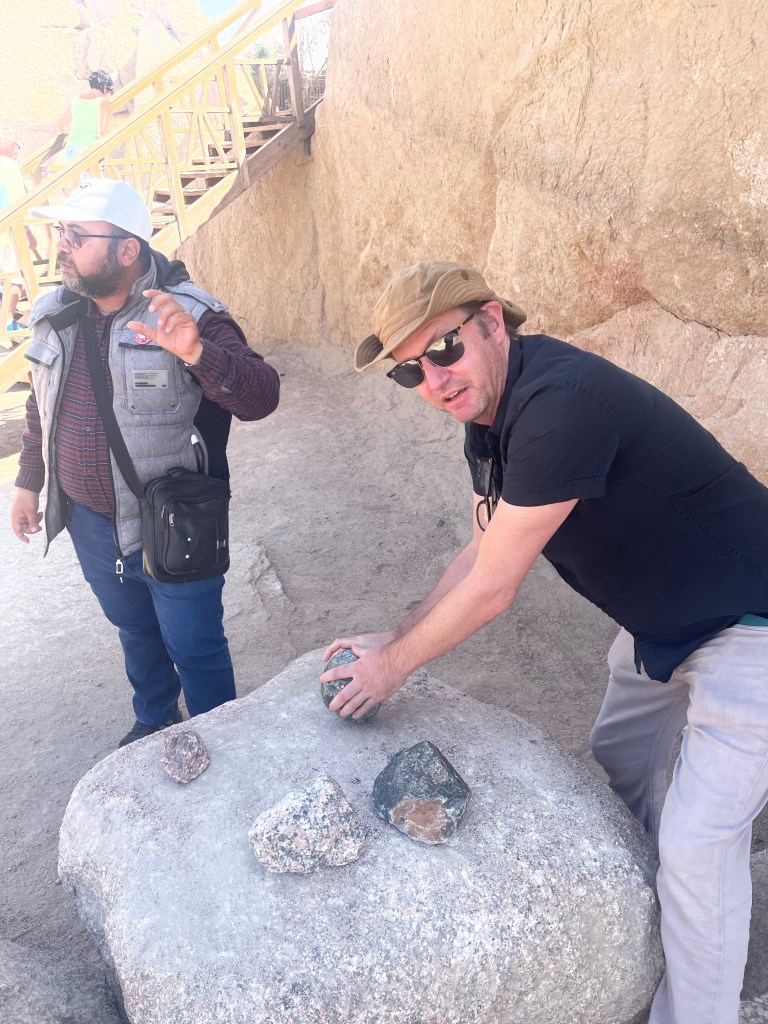
Our last stop before going back to the boat was to the granite quarry – the main attraction here is the Unfinished Obelisk which still lies in the ground, mostly carved out – and then abandoned after it developed a giant crack, rendering it unusable (they think it might have been intended for Hapshepshut). It was very cool to see it – the ancient Egyptians really had scale nailed. From giant pyramids and towering obelisks, to tiny and intricate pieces of jewelry and amulets. It really is incredibly impressive.

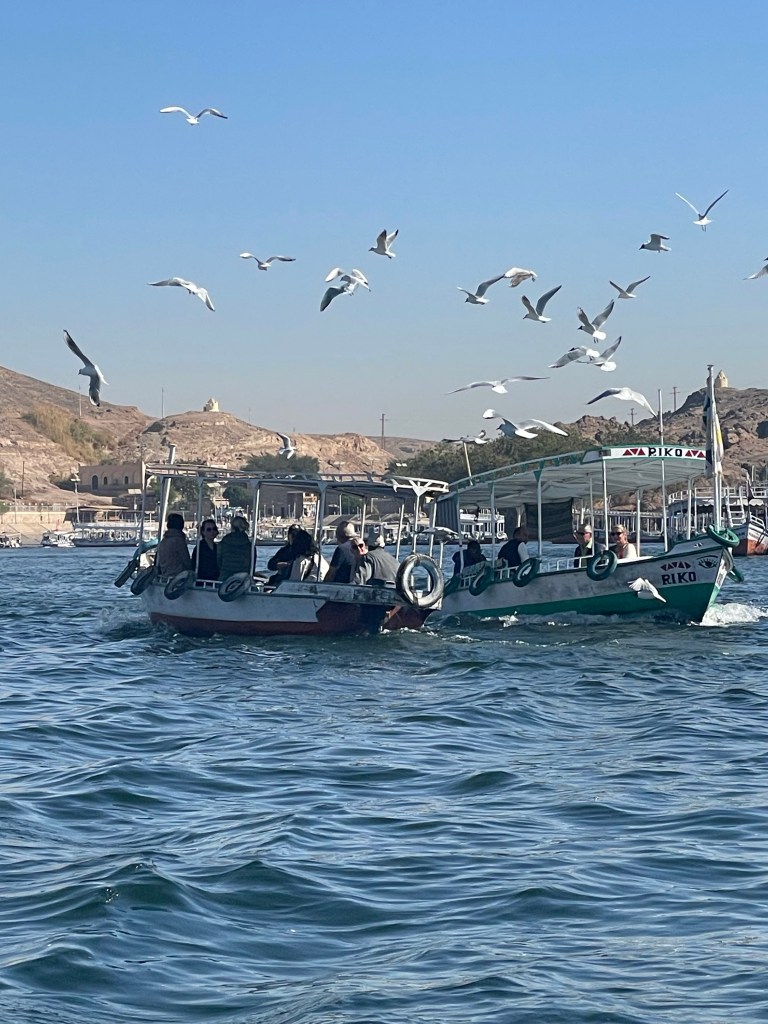
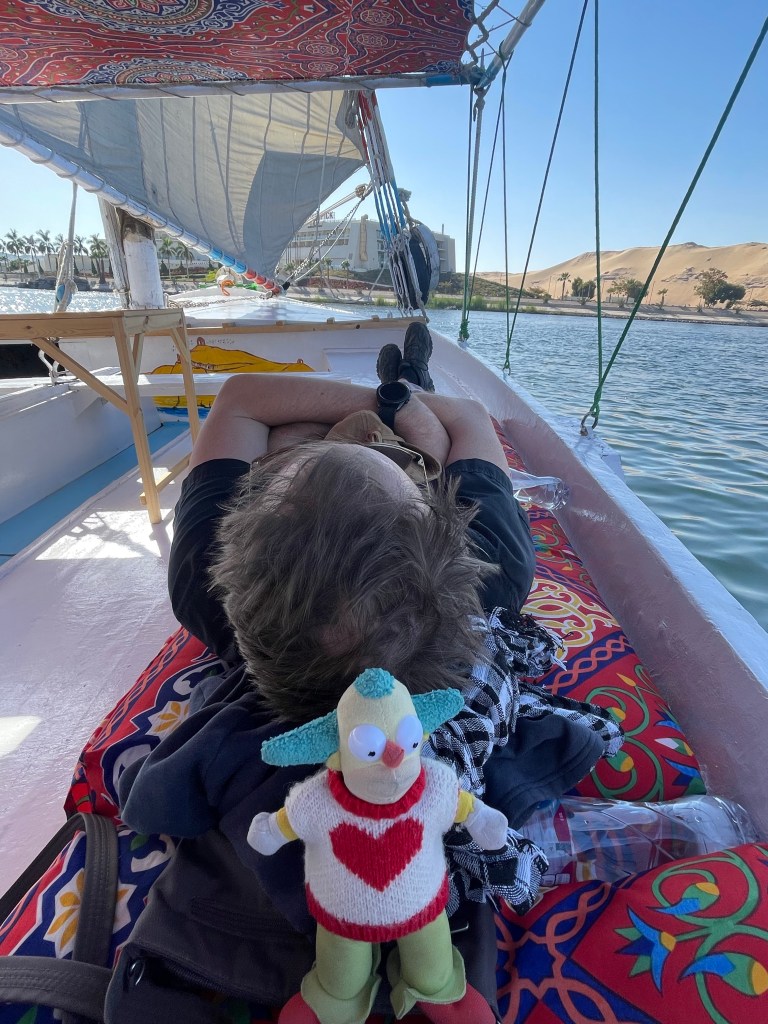
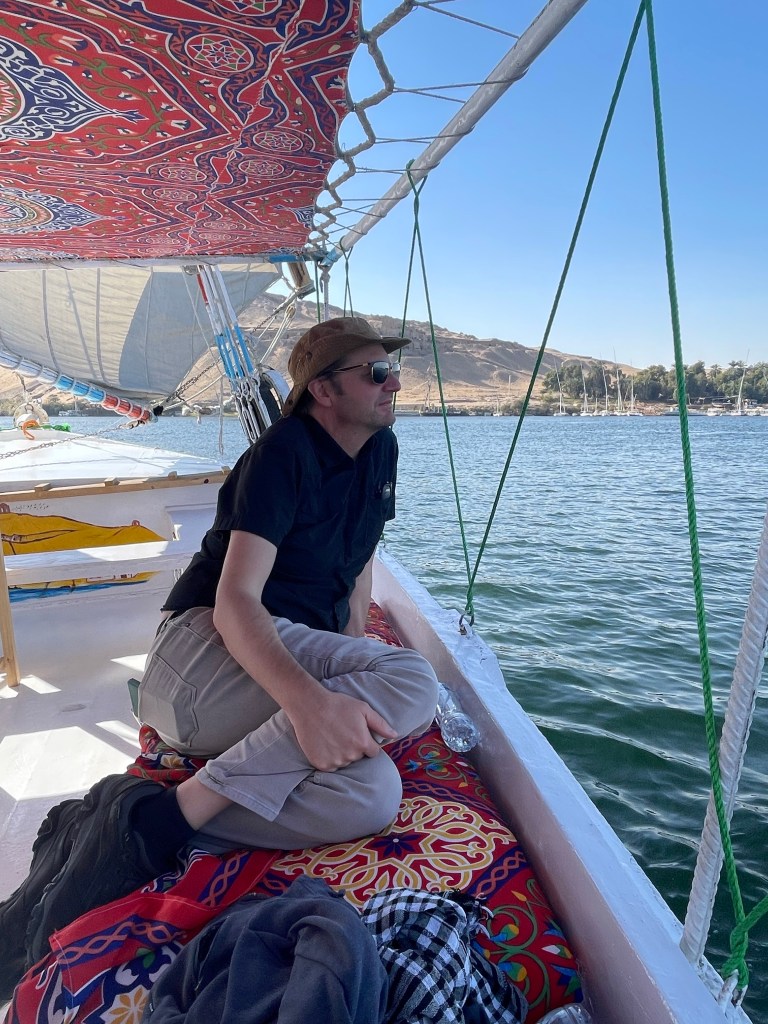
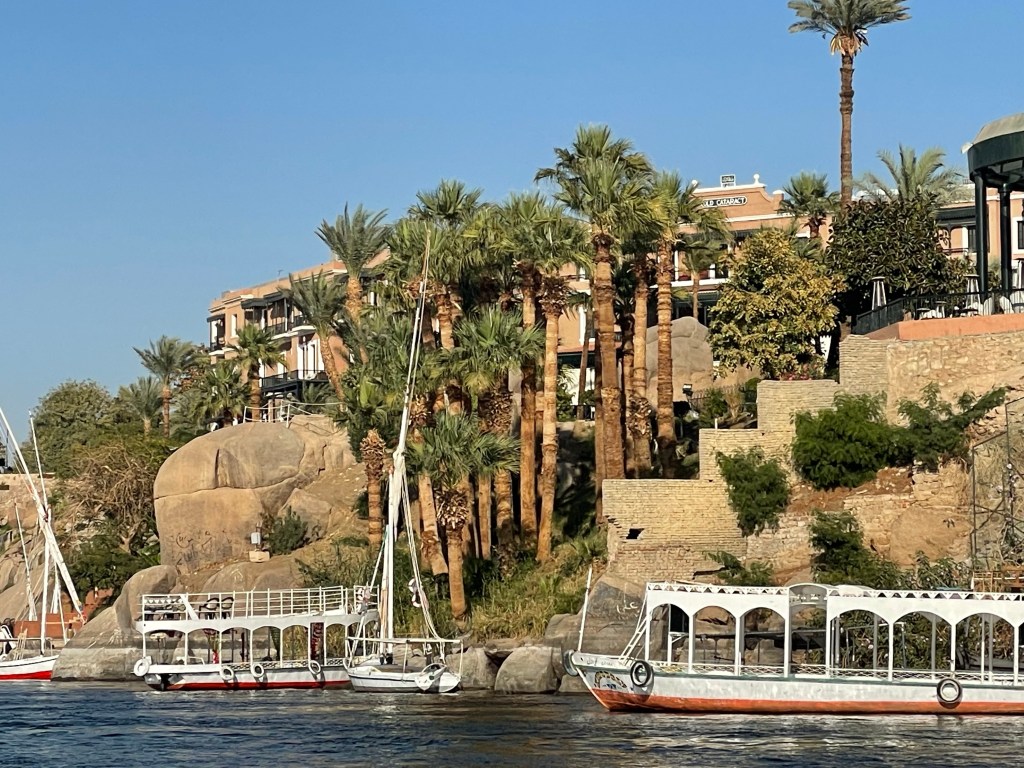
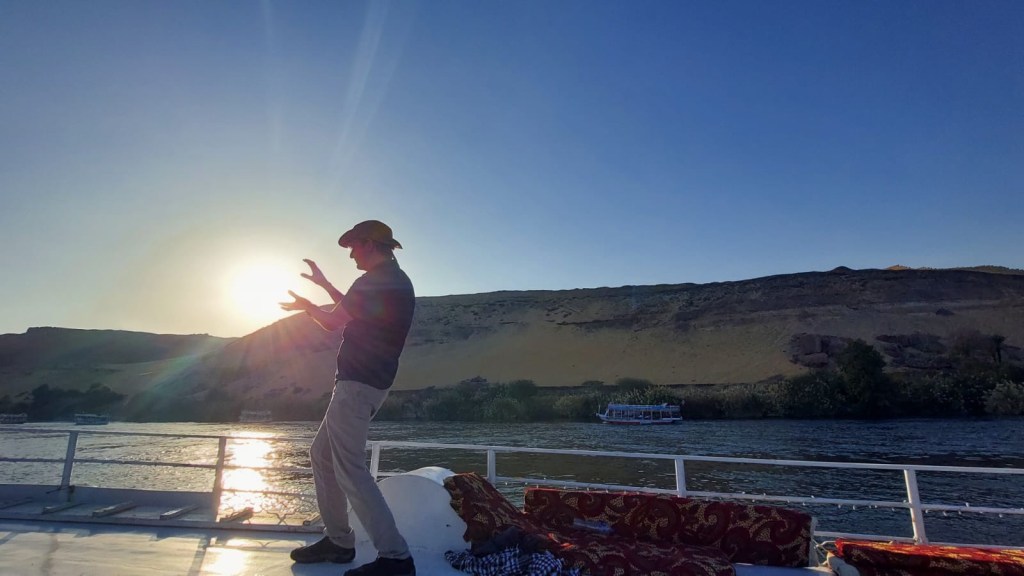
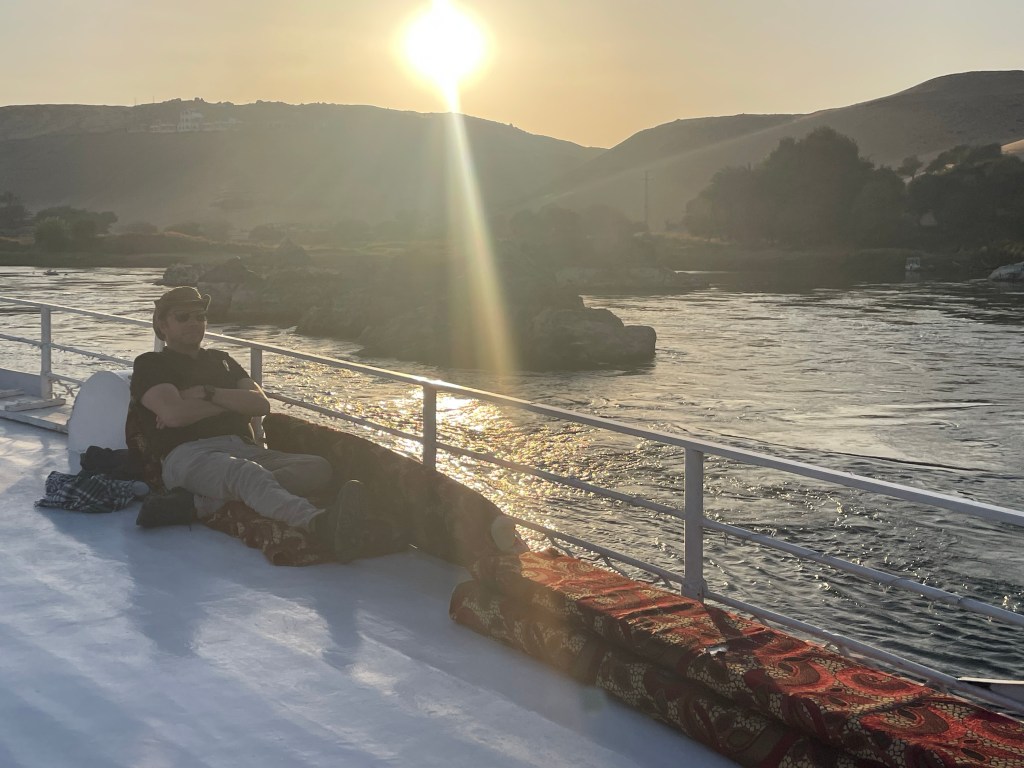
It was also pretty hot by this stage (its been slowly getting hotter through the week, so now we are in the mid 80s vs mid 70s!) so we were glad to hop back into the van (by way of an ATM) and head back to the boat. Only time for a quick rest after lunch (seafood buffet today – meh), though, as we were back out again for the final part of our itinerary – another afternoon sail in a falucca plus a visit to a Nubian village and market. The cruise was very nice and relaxing – it was fun to feed the seagulls who have learned that crazy tourists (and their guides) throw bread directly at them, in the hope they will swoop and catch it mid-air! We cruised past the hotel that Agatha Christie stayed at (and that may have been part of her inspiration for Death on the Nile) as well as Kitchener Island, named after Lord Kitchener who decided he quite fancied the island as a personal retreat, so claimed it (presumably with the use of a flag and his best Eddie Izzard accent) back in 1911. With the aid of the Ministry of Irrigation, Kitchener rapidly transformed the small 750m (2,460 ft) long island into a paradise of exotic trees, many from India, and plants in gardens with view walkways. It later passed into the property of the Egyptian government and was used as a research station called the Botanical Research Institute. The whole island is now called the Aswân Botanic Island and its a popular destination for locals to go and enjoy the beautiful gardens and wildlife.


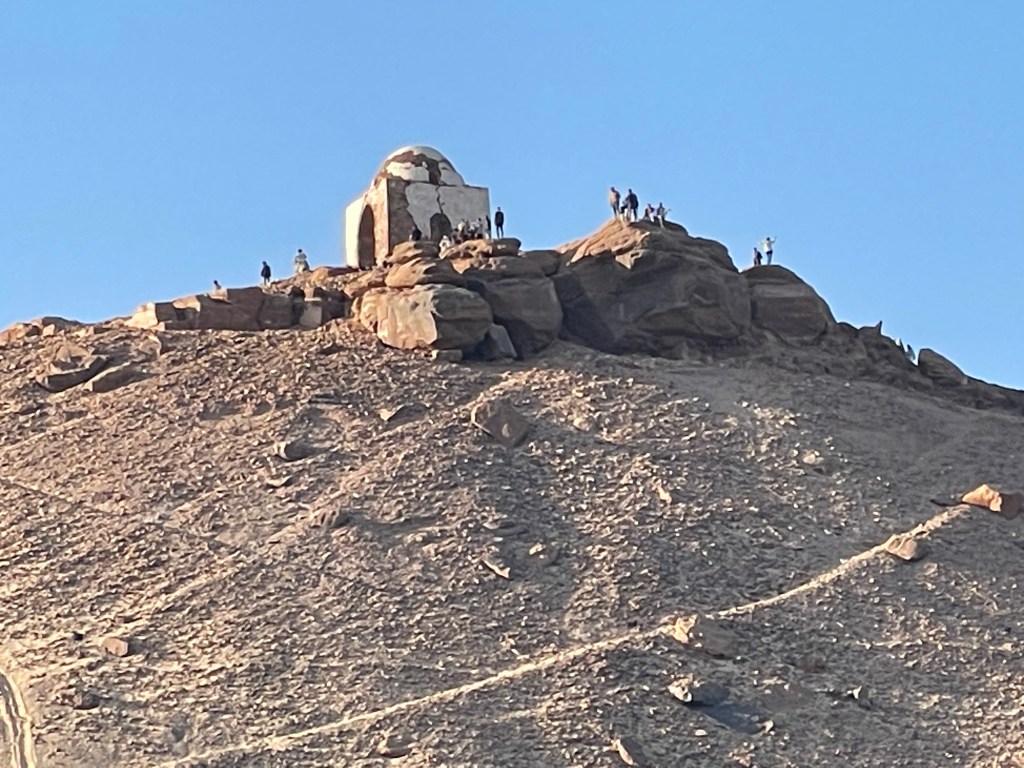
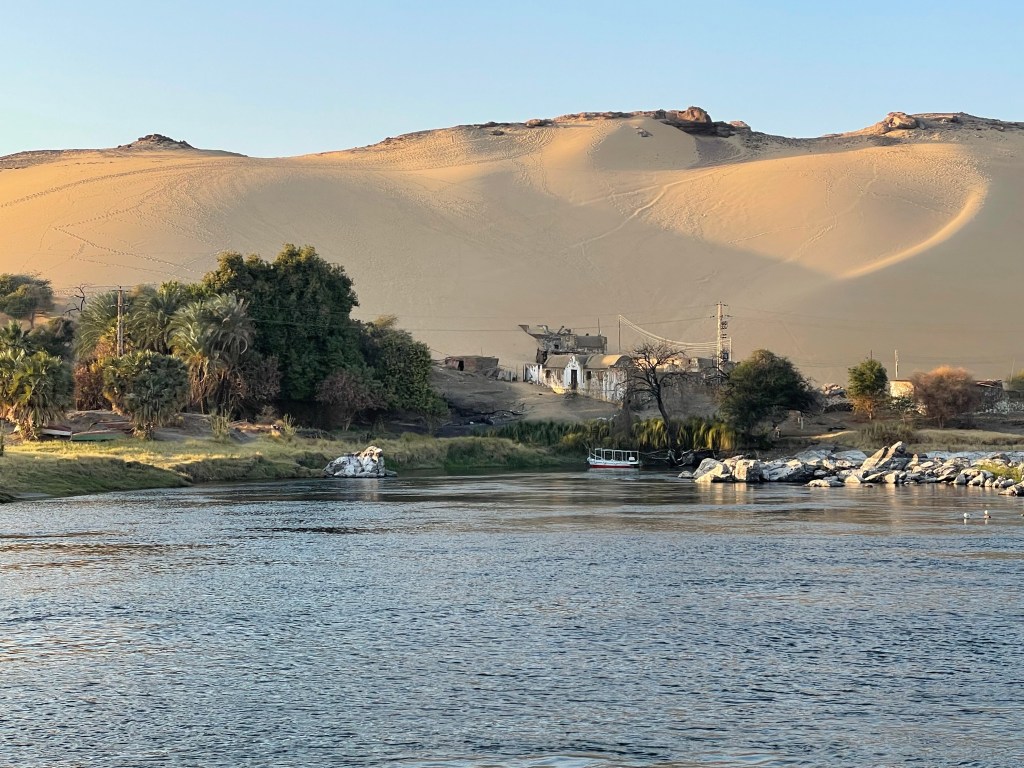
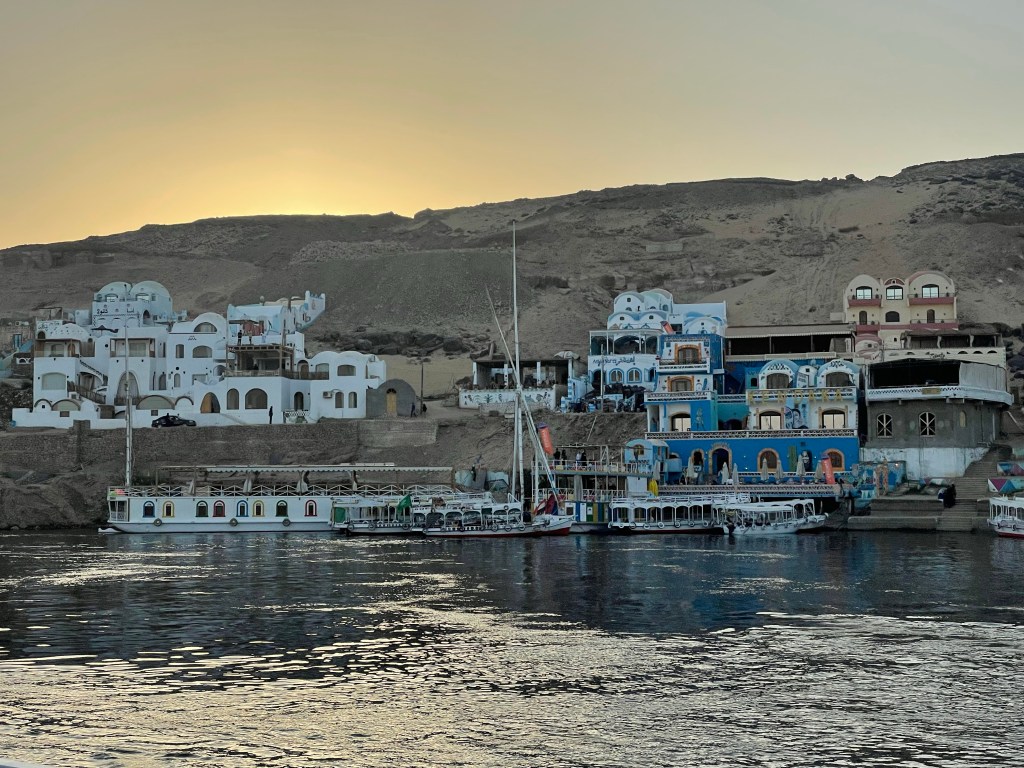
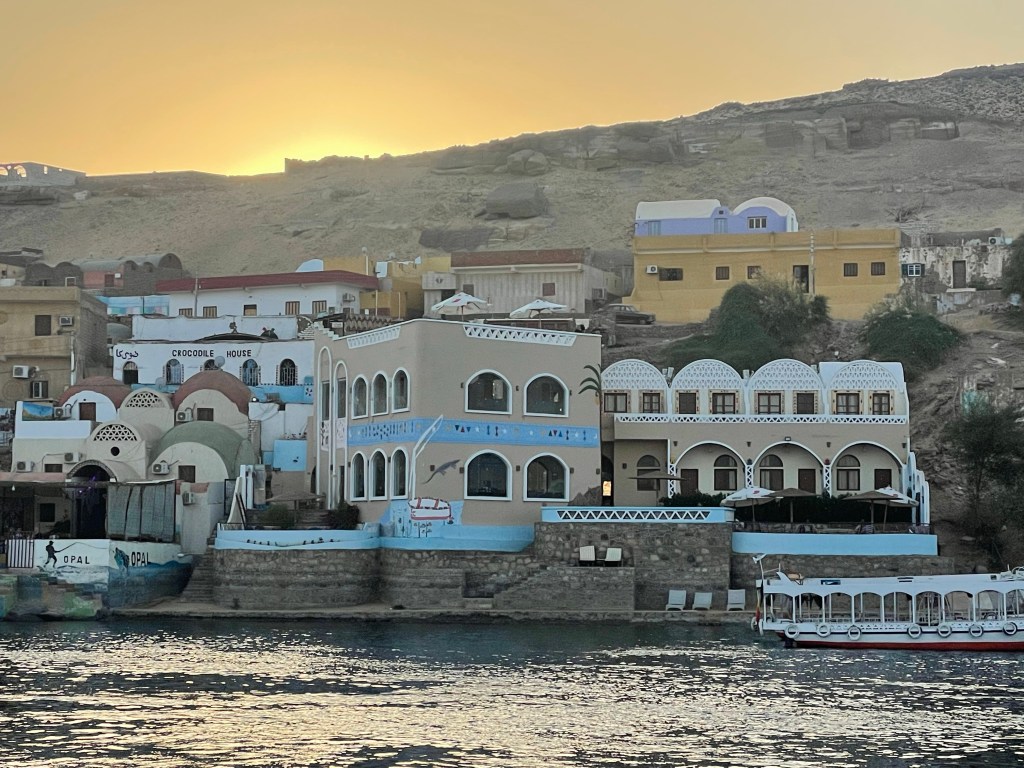
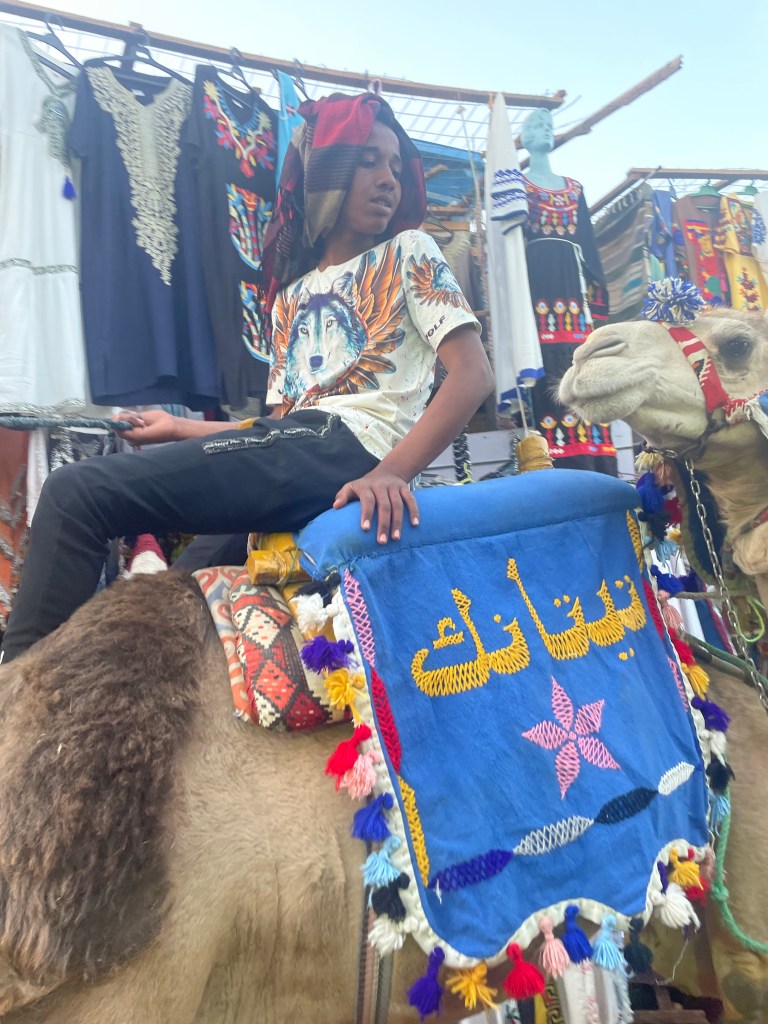
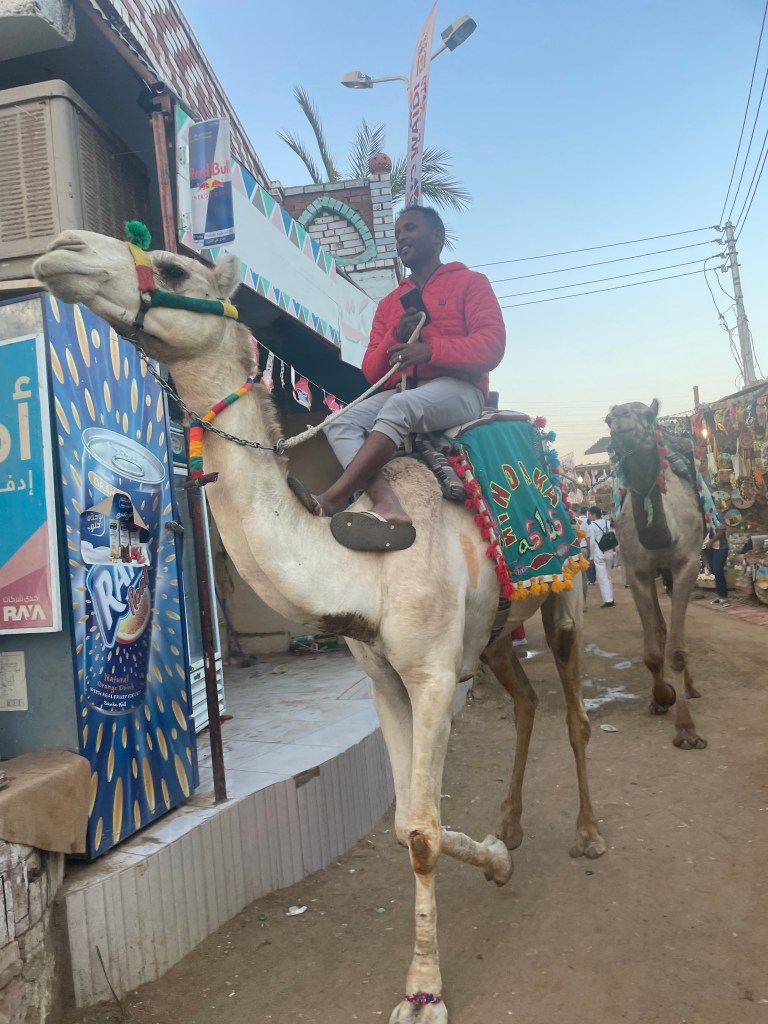
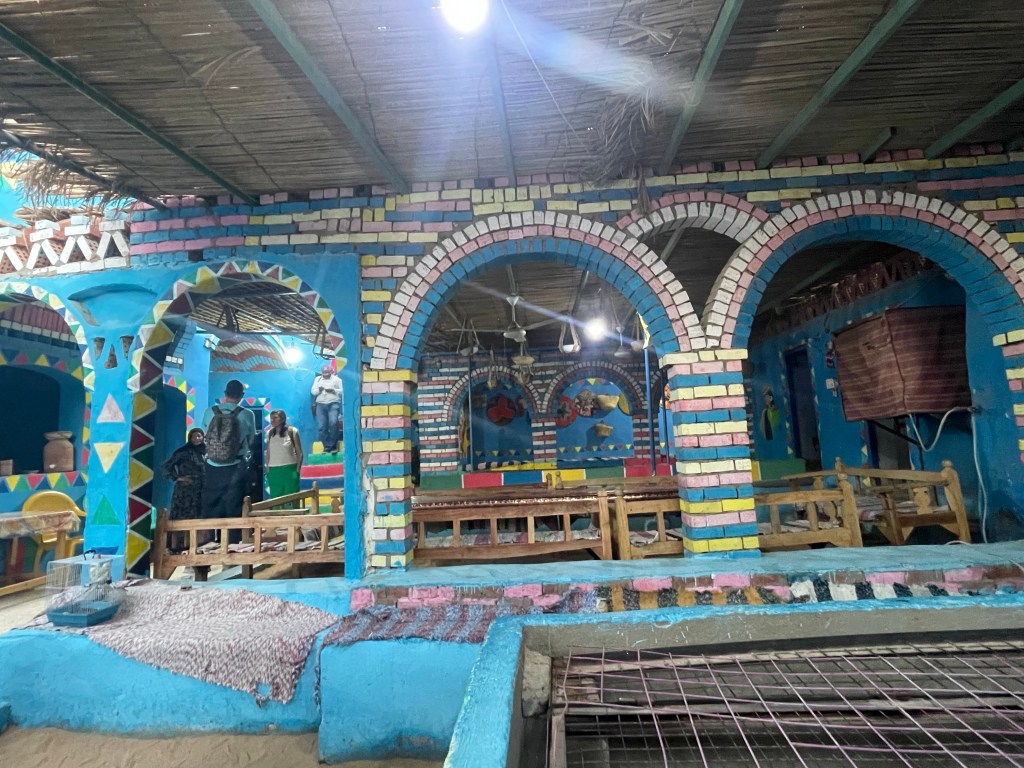
After about an hour, we arrived at the Nubian village – a riot of brightly colored “traditional houses”, stretching from the water back up into the hillside. Nubia was an ancient civilization (one of the oldest in the world) in a region that is now split between Egypt and Sudan. https://en.wikipedia.org/wiki/Nubia This Nubian village we visited was supposedly created with the construction of the dam – but I suspect it was actually just built as a tourist attraction. It was fun to visit – but it was VERY touristy with the streets lined with shops selling the same trash and trinkets you can find everywhere. It was fun to have to dodge the massive camels though, as they barreled down the narrow streets, sharing space with pedestrians, cars and mopeds!

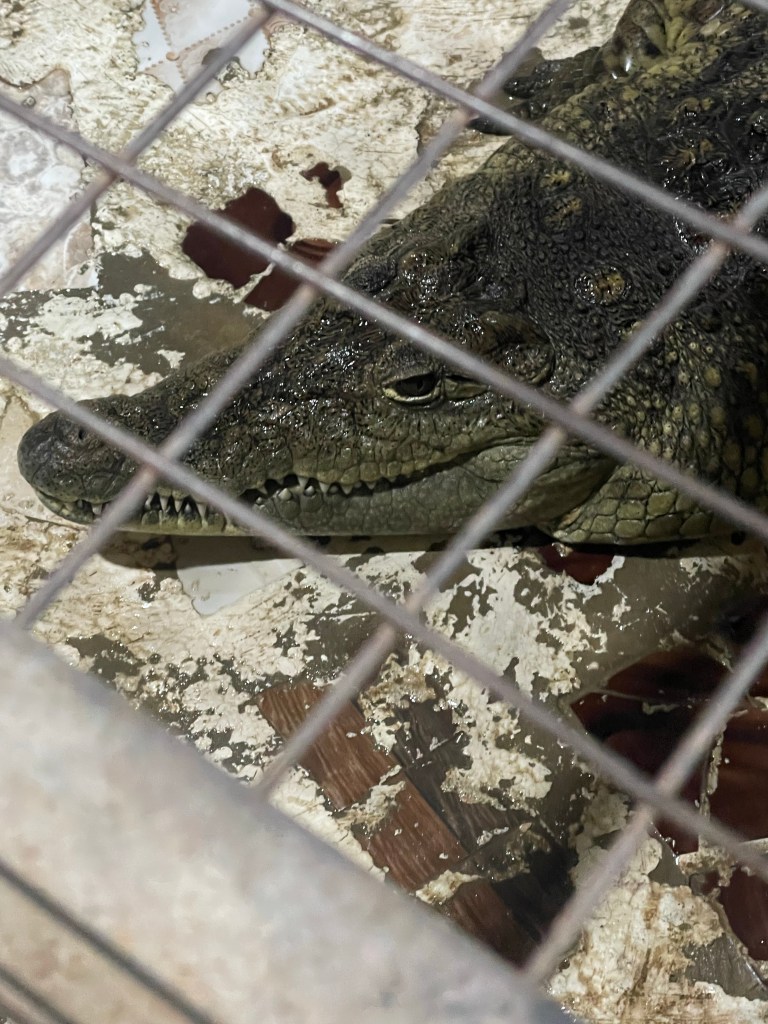
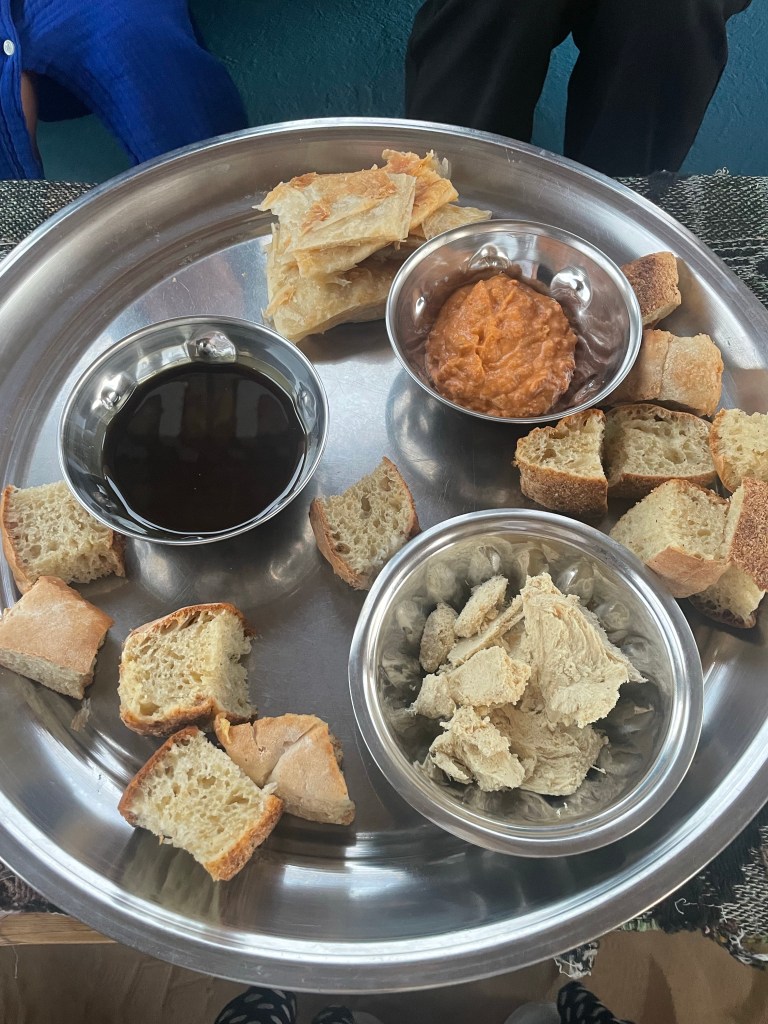
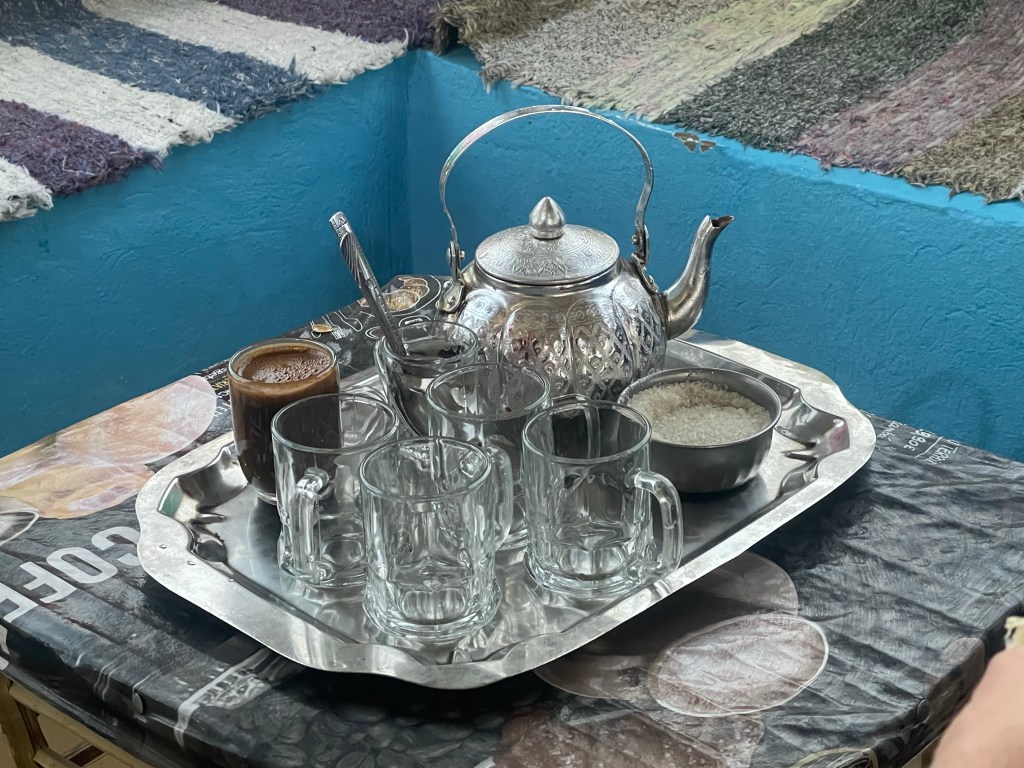
After a few minutes, we arrived at this traditional house, where we were shown upstairs and offered traditional refreshments of tea plus a platter of pita bread and three accompaniments. One was a dark sticky molasses type liquid (not too bad), the second was some sort of solid tahini (slightly sweet, odd texture) and the third was this abomination that was (allegedly) some form of cheese – it tasted terrible – sour, salty and slightly rancid. Apparently this was Peter’s favorite and he shared that any woman who wanted to be considered a good wife would be expected to make this! (he also said his mother makes the best version of this – we are getting more clues as to why Peter may still be single). Other than the Slightly Dubious Refreshments, the other Slightly Alarming thing was the crocodile that was kept in a tiny cage in the living room! Apparently crocodiles are still associated with good luck and prosperity (not for the crocodile, unfortunately) and so its not unusual for households to keep them. I wouldn’t want to be anywhere near if that croc ever got loose – it would be pissed!! Peter told us a bit about the style of the house – its built in a very clever way that maximizes the use of the breeze to keep it cool in summer and warm in winter – and it was certainly nice to look out from the balcony across the whole town and river.
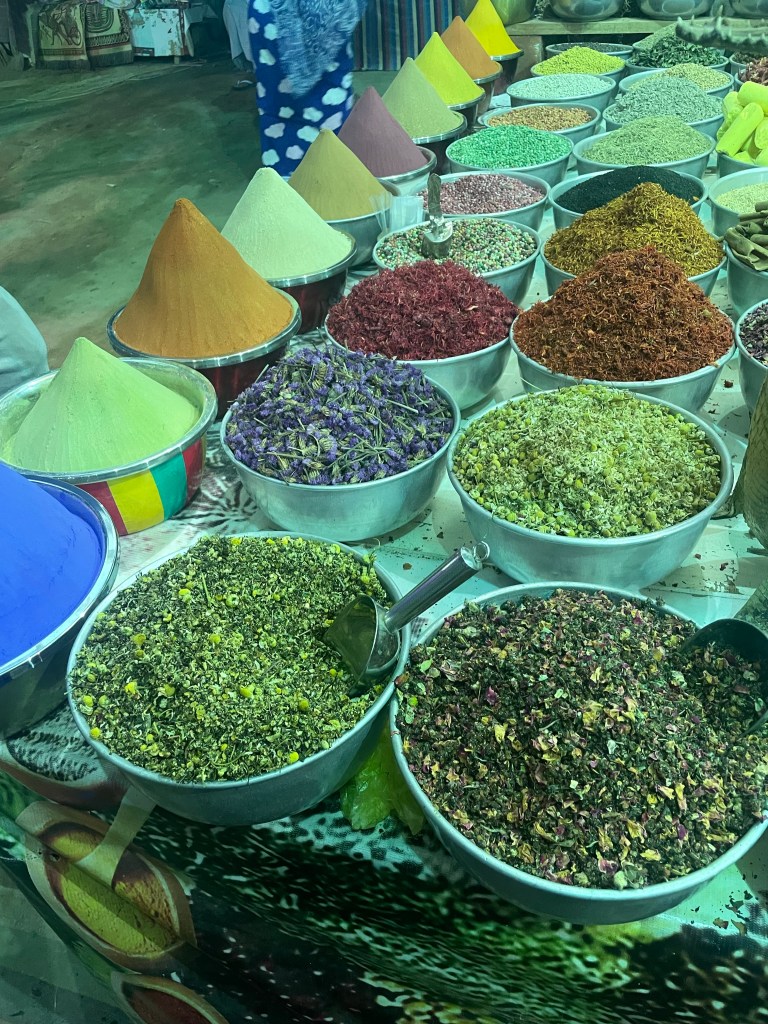
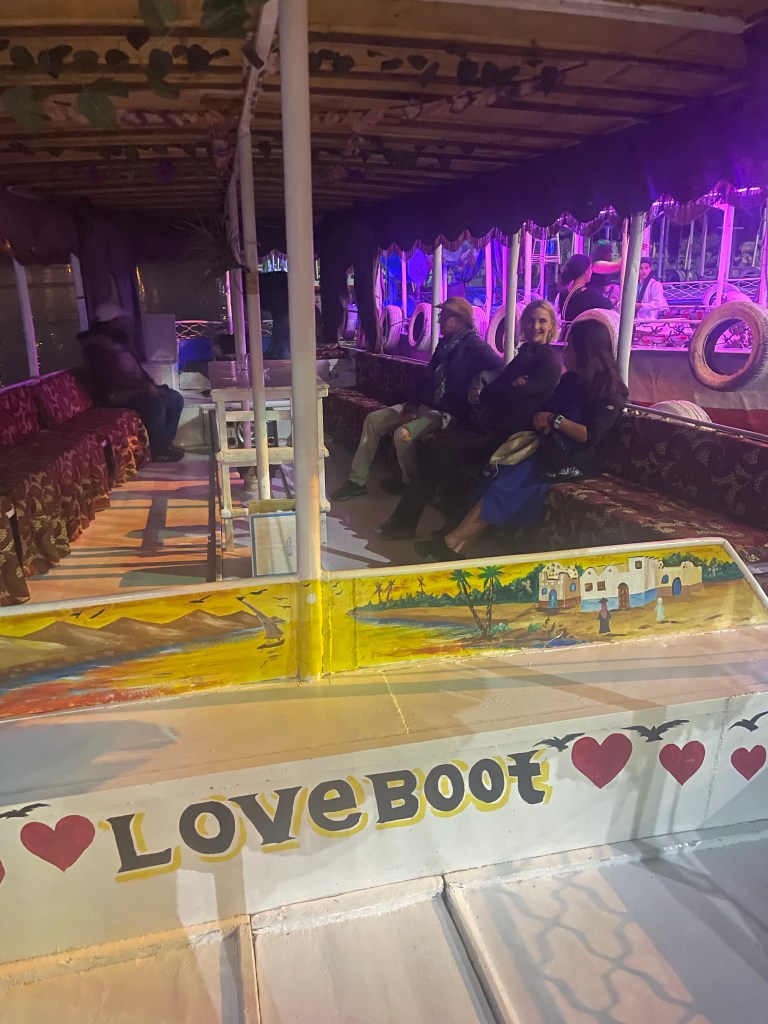
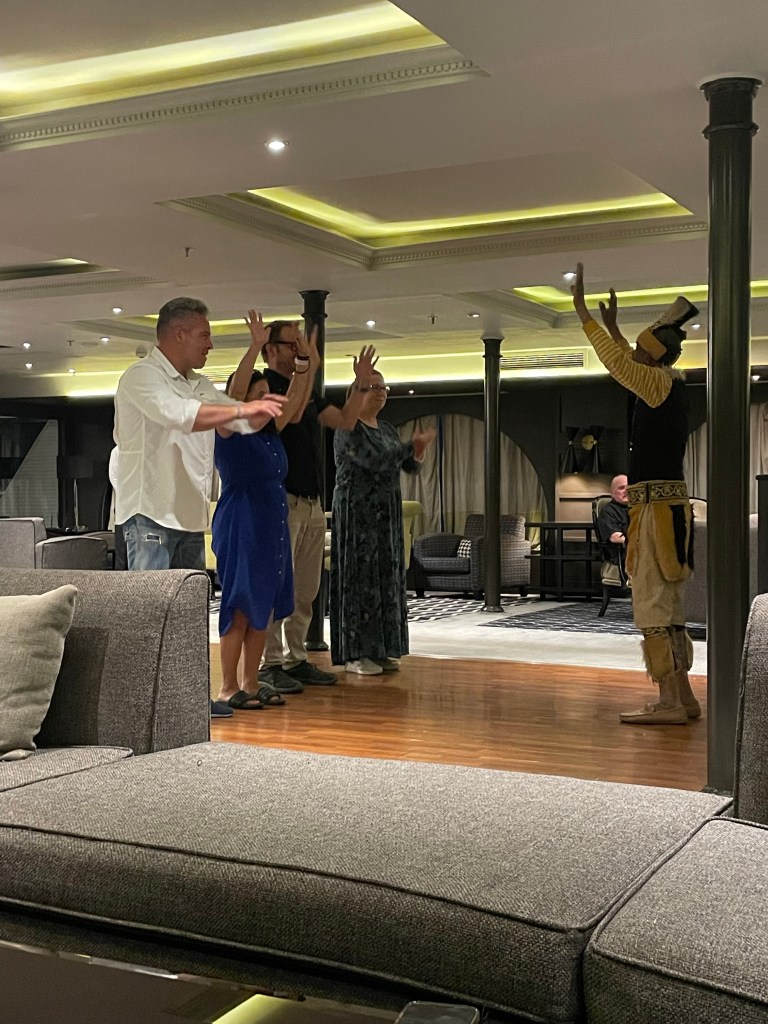
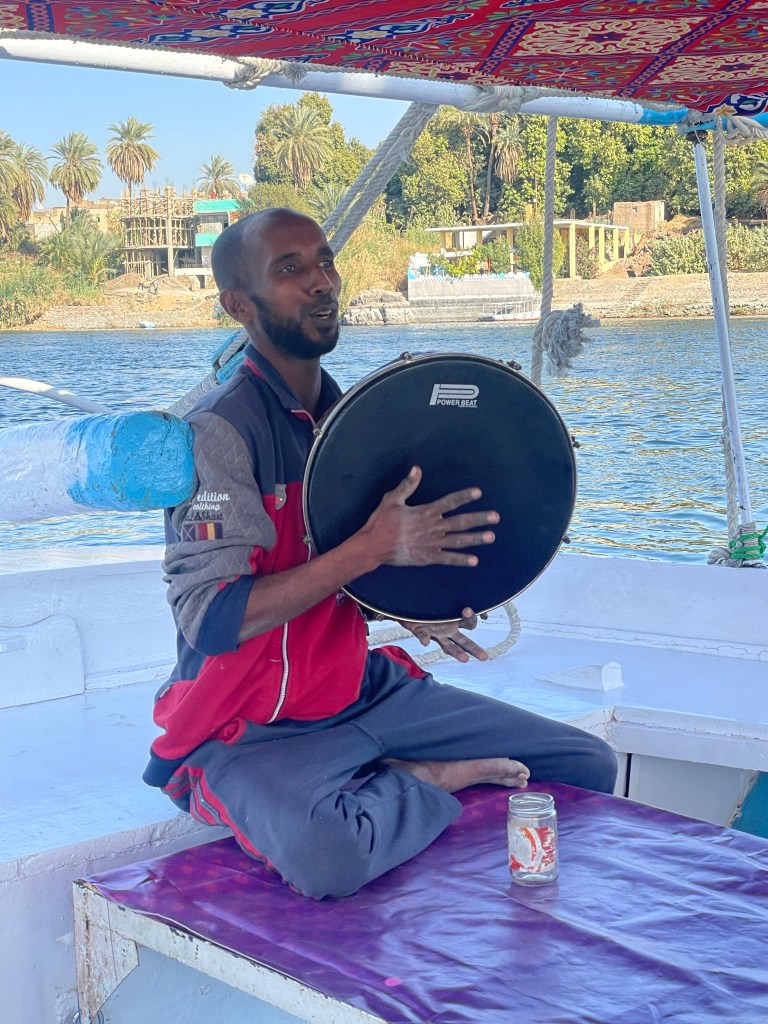
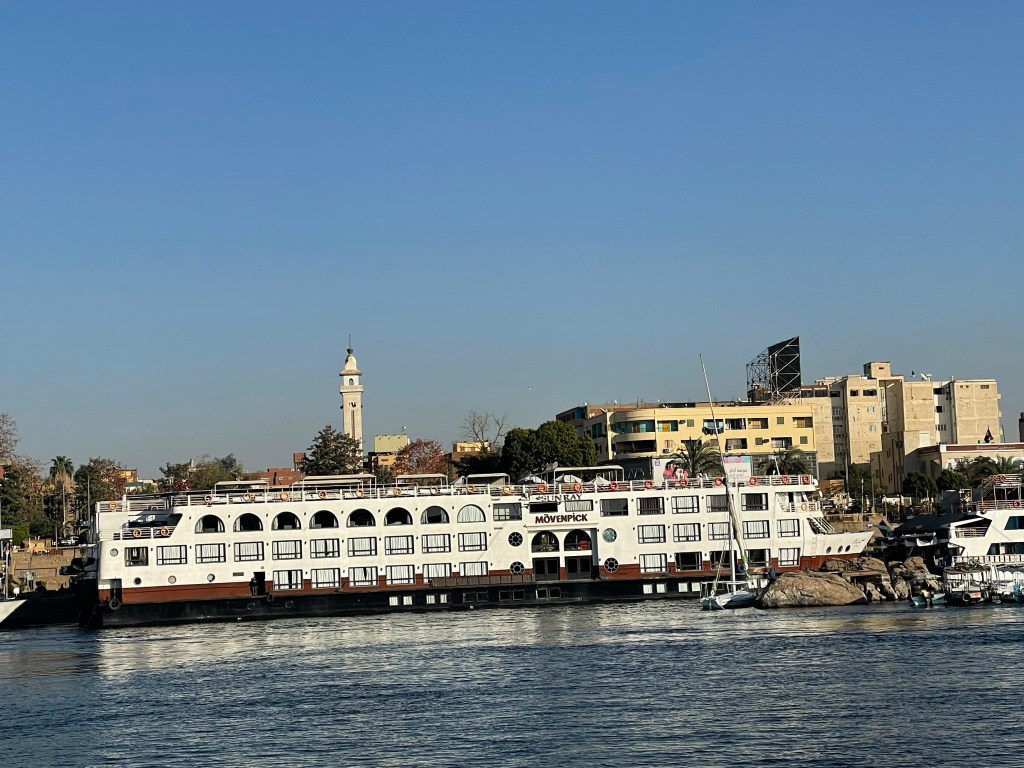
After tea and a quick stop at a spice shop to buy some saffron, it was time to make our way back to the boat. The sun had set by this point and it was 6.30pm by the time we got back on the “LoveBoot” for our short cruise back to the MS Movenpick. After dinner, there was more “entertainment” with some traditional musicians and dancers and – weirdly enough – a pantomime horse. I did feel a little bad for them as there were so few of us in the audience – but I guess as long as they are getting paid, they probably don’t care that much. And then it was time to retire, to enjoy our last towel sculpture from the cabin attendants and to pack up, ready for our flight back to Cairo and then to Amman tomorrow. We’ve had an incredible time in Egypt – and there’s even more fun to come with Petra and then Wadi Rum!!! Onwards!!!